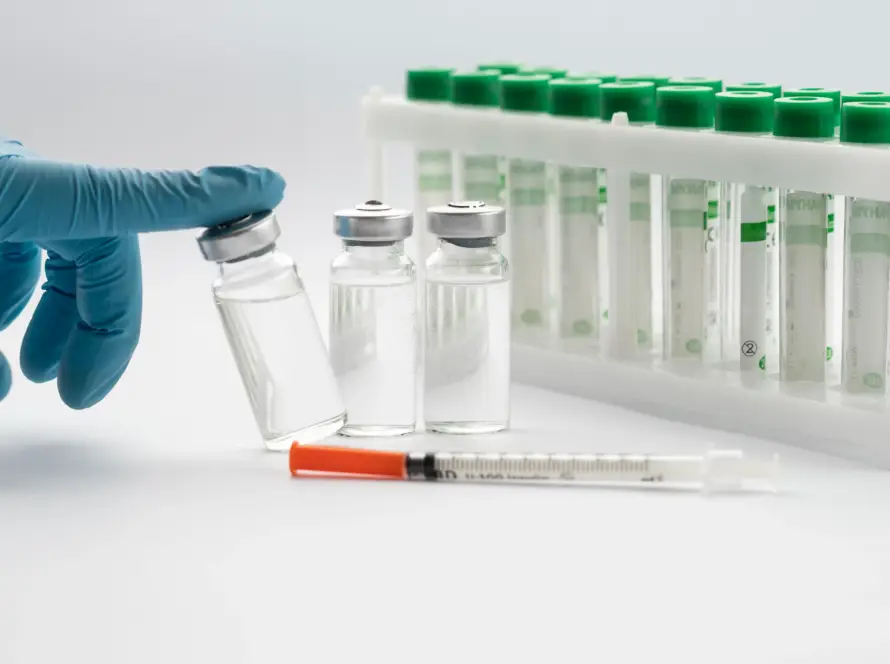
This article is intended for research and educational purposes only. CJC-1295 is a Research Use Only (RUO) compound supplied for laboratory investigation. It is not approved for human use, is not a medicine, and must not be administered to humans or animals outside of licenced research settings.
Introduction: GHRH Analogues as Research Tools for Adipose Biology
Growth hormone releasing hormone (GHRH) and its receptor (GHRHR) play a central role in regulating body composition through effects on adipose tissue lipolysis, lipogenesis, and adipokine secretion. CJC-1295 — a GHRH analogue modified with a drug affinity complex (DAC) technology that enables covalent albumin binding and dramatically extended half-life (t½ ~6–8 days compared to ~7 minutes for native GHRH) — provides sustained, amplified GH pulsatility for research purposes, making it a useful tool for studying GH-axis adipose biology in conditions that require prolonged GH elevation rather than acute pulse mimicry.
The distinction between CJC-1295 (with DAC) and CJC-1295 without DAC (also called Modified GRF 1-29 or Mod GRF 1-29) is mechanistically important: DAC-CJC-1295 produces sustained GH elevation through continuous GHRHR stimulation, whereas Mod GRF 1-29 produces a single GH pulse of extended duration (~2–3h) compared to native GHRH (~30min). Adipose research using these molecules must account for the pulsatile vs tonic GH stimulation paradigm, since pulsatile GH favours lipolysis while continuous GH exposure can attenuate receptor sensitivity through GHR downregulation.
🔗 Related Reading: For a comprehensive overview of CJC-1295 research, mechanisms, UK sourcing, and safety data, see our CJC-1295 Pillar Guide.
GHRHR Expression in Adipose Tissue
The classical view positions GHRHR expression exclusively in anterior pituitary somatotrophs, but evidence now establishes GHRHR mRNA and protein in multiple peripheral tissues including adipose. Subcutaneous and visceral adipose depots both express GHRHR at detectable levels by RT-PCR and in situ hybridisation, with visceral adipose showing modestly higher expression in some rodent studies. Mature adipocytes and preadipocyte SVF (stromal vascular fraction) cells both contribute to this signal, though the SVF enrichment suggests that the differentiating preadipocyte rather than the lipid-loaded mature adipocyte may be the primary adipose GHRHR target.
In addition to direct GHRHR activation, the GH receptor (GHR) is robustly expressed in mature adipocytes and is the principal mediator through which CJC-1295-induced GH pulses exert lipolytic, anti-lipogenic, and insulin-antagonistic effects. Radioligand binding using [¹²⁵I]-GH confirms depot-specific GHR expression with visceral > subcutaneous enrichment in some models, consistent with the known depot-differential responsiveness to GH-driven lipolysis.
GH Receptor Signalling in Adipocytes: The Jak2-STAT5b Axis and IRS-1 Counter-Signalling
Upon GH binding, GHR dimerises and transactivates Jak2, which phosphorylates STAT5b Tyr-694 leading to homodimerisation, nuclear translocation, and transcription of GH-responsive genes including IGF-1, ALS, SOCS2, and CIS. In adipocytes, STAT5b target genes relevant to lipid biology include hormone-sensitive lipase (HSL) transcriptional upregulation (though HSL activity is primarily regulated post-translationally by PKA-mediated Ser-660 phosphorylation) and PPAR-γ target gene suppression in a mechanism distinct from canonical STAT5b transcriptional activity.
The insulin-antagonistic action of GH in adipocytes occurs through Jak2-mediated IRS-1 Ser-307 phosphorylation, which impairs IRS-1-mediated PI3K-Akt signalling required for GLUT4 translocation and glucose uptake. This functional insulin resistance in adipocytes diverts glucose uptake toward muscle and redirects adipocyte metabolism toward fatty acid utilisation — the classical “anti-insulin” or partition-shift action of GH. CJC-1295-induced sustained GH elevation exaggerates this effect compared to pulsatile GH, and research designs must account for the metabolic state of the animal (euinsulinaemic vs hyperinsulinaemic-euglycaemic clamp) when interpreting adipose glucose utilisation data.
CJC-1295-Induced GH Pulses and Adipocyte Lipolysis
Lipolysis — the hydrolysis of stored triglyceride to fatty acids and glycerol — is the primary adipose biology endpoint in GH-axis research. GH drives lipolysis through several converging mechanisms: cAMP-PKA-mediated HSL Ser-660 phosphorylation and activation, ATGL (adipose triglyceride lipase) and its coactivator CGI-58 (ABHD5) upregulation, and perilipin-1 Ser-497 PKA phosphorylation (releasing CGI-58 from perilipin-1 sequestration).
In differentiated 3T3-L1 adipocytes (day 8–12 post-differentiation) or primary adipocyte cultures from epididymal or inguinal WAT, CJC-1295 treatment produces concentration-dependent increases in glycerol release (Sigma Free Glycerol Reagent colorimetric) and NEFA-C output (NEFA-C kit; Wako) into conditioned media, measured over 2–4h incubation windows. The lipolytic response requires GHR-Jak2 coupling, as Jak2 inhibitor (AZ960 or ruxolitinib) pre-treatment abolishes glycerol release without affecting cAMP-PKA-mediated HSL phosphorylation by β3-adrenergic receptor agonists (CL-316,243), demonstrating that GH-mediated and catecholamine-mediated lipolysis utilise distinct but converging pathways.
In vivo, CJC-1295 in diet-induced obese (DIO) C57BL/6 mice (HFD 60% kcal fat, 12–16 weeks) produces dose-dependent reductions in fat mass as measured by EchoMRI whole-body composition, with preferential mobilisation of visceral adipose over subcutaneous depots — a depot-differential response consistent with the known greater lipolytic responsiveness of visceral adipocytes to GH and catecholamines. Adipose depot dissection (epididymal, retroperitoneal, inguinal, perirenal) and depot-specific weighing provide the anatomical fat distribution readout. H&E-stained adipocyte cross-sections quantified by Adiposoft (ImageJ plugin) for median cell diameter characterise the cellular basis of fat mass reduction.
Anti-Lipogenic Mechanisms: SREBP-1c and De Novo Lipogenesis Suppression
While lipolysis increases fatty acid efflux from adipocytes, de novo lipogenesis (DNL) — conversion of glucose and acetyl-CoA to fatty acids — is simultaneously suppressed by GH in adipocytes. The primary mechanism is GH-mediated suppression of SREBP-1c (sterol regulatory element binding protein-1c, encoded by SREBF1) transcription and maturation, leading to reduced expression of DNL enzymes FAS (FASN), ACC1 (ACACA), and SCD1 (stearoyl-CoA desaturase-1).
In 3T3-L1 adipocytes treated with CJC-1295 or matched GH concentrations to mimic the CJC-1295-driven GH pulse profile, [¹⁴C]-acetate incorporation into fatty acids (measured by Folch extraction and scintillation counting of the lipid fraction) quantifies DNL reduction. SREBP-1c mRNA by qPCR and SREBP-1c p68 (nuclear cleaved active form) vs p125 (ER-membrane precursor) ratio by western blot are the molecular readouts. FAS and ACC1 protein expression and ACC1 Ser-79 AMPK-mediated phosphorylation (which inhibits ACC1 catalytic activity) provide complementary lipogenesis suppression markers.
The suppression of adipose DNL by GH-axis activation serves a metabolic repartitioning function: in the context of post-prandial insulin-driven lipogenesis in muscle, liver, and adipose, GH-induced insulin resistance specifically in adipocytes reduces the proportion of dietary carbohydrate converted to adipose triglyceride, while muscle IGF-1-driven protein synthesis continues under the GH-IGF-1 anabolic axis.
Adipokine Regulation by GH-Axis Activation
Adipose tissue is an endocrine organ secreting adipokines including adiponectin (anti-inflammatory, insulin-sensitising), leptin (satiety, immune modulation), resistin, chemerin, and CXCL5. GH-axis dysregulation is associated with adipokine profile alterations that contribute to metabolic syndrome risk in acromegaly (chronic GH excess) and GH deficiency (low adiponectin, high leptin, high CRP).
CJC-1295-induced GH pulsatility restoration in GH-deficient models elevates adiponectin in proportion to visceral fat reduction (adiponectin is inversely correlated with VAT accumulation) and reduces leptin (proportional to fat mass reduction). Total and high-molecular-weight (HMW) adiponectin are distinguished by ELISA (Otsuka/Alpco) and gel filtration chromatography, as HMW adiponectin — the hexamer and 18-mer assemblies — is the biologically active form acting on AdipoR1 (muscle) and AdipoR2 (liver) to activate AMPK-PPAR-α-β-oxidation pathways.
In DIO models, CJC-1295 treatment over 4–8 weeks produces Luminex adipokine panel changes (adiponectin, leptin, resistin, PAI-1, IL-6, TNF-α, chemerin) in both plasma and adipose tissue conditioned media. The distinction between circulating adipokine levels and local adipose paracrine/autocrine adipokine production requires both measurements, as local adipose inflammatory state (CLS — crown-like structures, F4/80+perilipin IHC) may diverge from systemic adipokine concentrations in the research applications phase.
Adipose Tissue Inflammation: Macrophage Polarisation and CLS Resolution
Visceral adipose tissue in obesity accumulates CD11c+CD206-F4/80+ M1-polarised macrophages that form crown-like structures (CLS) around necrotic adipocytes, producing TNF-α, IL-1β, IL-6, and MCP-1 (CCL2) that perpetuate insulin resistance and low-grade inflammation. Resolution of CLS through macrophage phenotypic switching to CD206+F4/80+ M2 polarisation represents an anti-inflammatory endpoint in adipose biology research.
CJC-1295-mediated fat mass reduction reduces the physical trigger for CLS formation (adipocyte hypertrophy and hypoxia-driven necrosis), but GH also has direct macrophage-level effects through GHR expressed on macrophages. GH-Jak2-STAT5b signalling in macrophages promotes anti-inflammatory IL-10 production and M2 polarisation markers (Arg1, CD163, MRC1), suggesting that CJC-1295 exerts adipose anti-inflammatory effects both through fat mass-dependent mechanisms and direct macrophage GHR actions.
Quantification of CLS uses F4/80 (pan-macrophage) and perilipin-1 (adipocyte membrane) double IHC on paraffin-embedded adipose sections, with CLS defined as ≥3 F4/80+ cells surrounding a perilipin-1-positive or perilipin-1-negative (post-necrotic) lipid droplet. CLS count per unit area, M1:M2 CD11c:CD206 ratio by flow cytometry (collagenase-digested SVF), and Luminex TNF-α-IL-1β-IL-10-IL-4 from adipose conditioned media are the inflammatory readout panel.
Brown Adipose Tissue and Thermogenic Research
Brown adipose tissue (BAT) expresses UCP1 (uncoupling protein-1) in the inner mitochondrial membrane, dissipating the proton gradient as heat rather than driving ATP synthesis — a process termed non-shivering thermogenesis. GH has established effects on BAT biology: GH receptor knockout mice have reduced BAT UCP1 expression and impaired cold-induced thermogenesis, while GH-transgenic animals show enhanced BAT activity.
CJC-1295 research in BAT biology employs cold challenge (4°C for 4–6 hours) to stimulate sympathetic-adrenergic BAT activation, with interscapular BAT temperature measured by FLIR thermal camera or implanted thermocouple as a functional thermogenesis readout. UCP1 protein by western blot (interscapular BAT lysate) and IHC, PRDM16 (BAT master transcription factor), PGC-1α Ser-570 (AMPK-phosphorylated, activating form), and Seahorse XF proton leak (oligomycin-resistant OCR) in primary brown adipocyte cultures quantify thermogenic capacity.
GH-axis restoration by CJC-1295 in aged animals — where BAT activity declines with age-related GH deficiency — is an area of interest for researchers studying thermogenic involution. Aged 18–24 month C57BL/6 mice treated with CJC-1295 show increased interscapular BAT weight, restored UCP1 and PGC-1α expression, and improved cold tolerance compared to age-matched vehicle controls, with young controls providing the positive biological reference.
Adipocyte Differentiation and Preadipocyte Biology
Adipogenesis — the differentiation of preadipocytes from the SVF into lipid-accumulating mature adipocytes — is regulated by a cascade of transcription factors including C/EBP-β, C/EBP-δ, C/EBP-α, and PPAR-γ2. GH has a complex, biphasic relationship with adipogenesis: early GH exposure (days 0–2 of differentiation induction) can be pro-adipogenic through IGF-1R-IRS-1-PI3K-Akt signalling, while later sustained GH exposure (days 4–8) is anti-adipogenic through GHR-Jak2-STAT5b-mediated PPAR-γ target gene suppression.
CJC-1295 in differentiation protocols (3T3-L1 or primary human SVF preadipocytes: IBMX 0.5mM + dexamethasone 1µM + insulin 5µg/mL for 48–72h induction, then insulin alone) modifies the adipogenic trajectory in a concentration and timing-dependent manner. Oil Red O staining and quantification (isopropanol extraction, OD 510nm) on days 8–12, PPAR-γ2 and C/EBP-α mRNA by qPCR, aP2/FABP4 protein by western blot, and adiponectin secretion by ELISA provide differentiation endpoint panels.
GHRHR expressed in SVF preadipocytes suggests that direct CJC-1295 GHRHR signalling in preadipocytes — independent of pituitary GH — may modulate adipogenesis, a finding that would require Hx or GHR-KO controls to deconvolute from GH-mediated effects. PKA-mediated CREB Ser-133 phosphorylation (measurable by phospho-specific western blot or ELISA) in preadipocytes 30–60 minutes after CJC-1295 treatment would serve as a functional readout of direct preadipocyte GHRHR coupling.
Depot-Specific Adipose Biology: Visceral vs Subcutaneous Differential Responses
Visceral and subcutaneous adipose depots differ fundamentally in their developmental origin (splanchnic vs paraxial mesoderm), adrenergic receptor expression (β-AR density higher in visceral), GHR abundance (higher in visceral), inflammatory macrophage burden, adipokine secretion profile, and metabolic fate of secreted fatty acids (portal drainage in visceral vs systemic in subcutaneous). These differences make depot-specific dissection essential in GH-axis adipose research.
CJC-1295 in DIO mice produces VAT:SAT ratio reduction — a more favourable fat distribution associated with lower metabolic risk — through preferential visceral lipolysis. Depot-specific fatty acid oxidation (β-HAD enzyme activity in VAT vs SAT homogenates), depot-specific HSL Ser-660 phosphorylation by phospho-specific western blot, depot-specific adipocyte size distributions by Adiposoft, and depot-specific inflammatory macrophage burden by flow cytometry characterise the depot-differential response profile.
Mesenteric adipose — a visceral depot with direct portal venous drainage and high portal NEFA delivery to the liver — deserves separate characterisation from epididymal adipose, given its anatomical position in NAFLD pathogenesis. Portal NEFA flux quantification using hepatic portal-systemic NEFA concentration gradient measurement at cull provides a functional readout of mesenteric adipose lipolytic output.
Experimental Design Considerations for CJC-1295 Adipose Research
CJC-1295’s DAC-albumin binding produces a fundamentally different GH stimulation profile than Mod GRF 1-29, GHRP-2, ipamorelin, or exogenous GH. The sustained GH elevation from DAC-CJC-1295 approximates the pharmacodynamic profile of a GH fusion protein rather than a GH secretagogue, and research designs must explicitly acknowledge this distinction. Pulsatile GH (physiological) and tonic GH (DAC-CJC-1295-induced) have distinct transcriptional signatures in hepatocytes and adipocytes, with pulsatile GH preferentially inducing STAT5b-target genes and tonic GH producing more pronounced IRS-1 Ser-307 phosphorylation and insulin-counter-regulatory signalling.
Appropriate controls for CJC-1295 adipose studies include: vehicle (sterile saline), equimolar Mod GRF 1-29 (to isolate DAC effect), exogenous recombinant GH at physiologically relevant doses (to recapitulate the downstream GH-receptor-mediated step without GHRHR engagement), IGF-1 alone (to isolate the IGF-1R-mediated adipose effects from GH-direct effects), and somatostatin analogue (octreotide, to suppress endogenous GH and confirm that effects are GH-dependent). GHR-KO or GHR-fl/fl×aP2-Cre adipocyte-specific KO animals allow definitive attribution of adipose effects to GHR rather than GHRHR or IGF-1R.
Sex differences in adipose GH responsiveness are marked: female rodents have more continuous (tonic) GH secretion compared to the pulsatile male pattern, leading to differential hepatic STAT5b target gene expression and adipose responsiveness. Sex-stratified experimental designs are important in CJC-1295 adipose research, particularly when translating to human obesity research contexts where sex-specific fat distribution is clinically significant.
🔗 Related Reading: For complementary GH-axis adipose biology from the ipamorelin angle, see our post on Ipamorelin and Liver Research.
Summary of Key Research Endpoints for CJC-1295 Adipose Studies
Across the adipose biology research contexts reviewed, standard endpoints for CJC-1295 studies include: EchoMRI body composition (fat mass, lean mass, fluid), adipose depot dissection and weighing (epididymal, inguinal, retroperitoneal, perirenal, mesenteric, interscapular BAT), adipocyte CSA by Adiposoft, glycerol and NEFA-C lipolysis assays in conditioned media and plasma, [¹⁴C]-acetate DNL incorporation, Oil Red O adipogenesis quantification, PPAR-γ2/C/EBP-α/aP2 adipogenesis markers, HSL Ser-660/ATGL/perilipin-1 protein, SREBP-1c/FAS/ACC1 lipogenesis markers, adiponectin (total and HMW)/leptin/resistin Luminex or ELISA, F4/80/CD11c/CD206 CLS IHC and flow cytometry, UCP1/PGC-1α/PRDM16 BAT thermogenics, and euglycaemic-hyperinsulinaemic clamp glucose infusion rate for systemic insulin sensitivity.
CJC-1295 is a research tool for studying GHRH receptor activation combined with sustained GH-axis stimulation in the adipose context — its DAC-albumin chemistry provides a pharmacological dissection tool for tonic vs pulsatile GH biology that simpler secretagogues or exogenous GH cannot replicate.
🇬🇧 UK Research Peptides: PeptidesLab UK supplies COA-verified CJC-1295 for research and laboratory use. View UK stock →