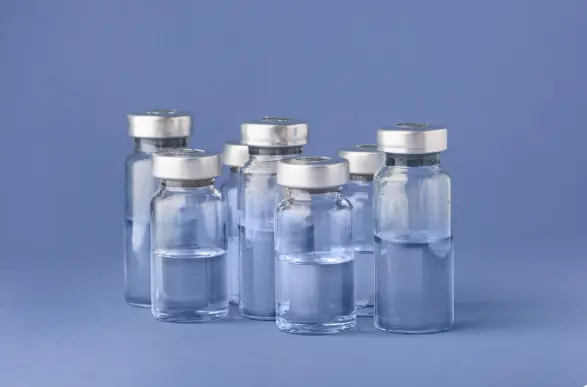
GHK-Cu (glycyl-L-histidyl-L-lysine copper(II) complex) is a synthetic copper-binding tripeptide supplied exclusively for in vitro and in vivo preclinical research. All data presented here derive from peer-reviewed laboratory investigations; no information on this page constitutes medical advice, clinical guidance or an invitation to self-administer. Research use only.
GHK-Cu in Reproductive Biology: Copper Peptide Beyond Skin and Wound Healing
GHK-Cu (Gly-His-Lys·Cu²⁺; MW 340.4 Da as free tripeptide; ~402 Da as Cu(II) complex) is best characterised for its collagen-stimulating, wound-healing and anti-ageing effects in dermal and connective tissue. However, the reproductive system represents a biologically significant but underexplored domain for GHK-Cu research. Copper homeostasis is essential for reproductive function — copper is a cofactor for tyrosinase, cytochrome c oxidase, ceruloplasmin and lysyl oxidase, with gonadal copper levels tightly regulated during folliculogenesis, steroidogenesis and sperm maturation. GHK-Cu, as a bioavailable copper-peptide complex, engages reproductive tissue through both copper-delivery mechanisms and direct peptide-receptor interactions.
GHK (the tripeptide backbone) activates a broad transcriptional programme via SPARC/osteonectin interactions and integrin-mediated signalling, upregulating >4,000 genes in human fibroblast transcriptome studies. Among these regulated genes are several with direct reproductive relevance: VEGF (angiogenesis, critical for corpus luteum and endometrial vascularisation), TGF-β1 (granulosa cell differentiation), TIMP1/2 (matrix remodelling in folliculogenesis), and SOD1/SOD2 (antioxidant protection of gametes). This broad transcriptional profile provides multiple entry points into reproductive biology research.
🔗 Related Reading: For a comprehensive overview of GHK-Cu research, mechanisms, UK sourcing, and safety data, see our GHK-Cu UK Research Guide.
Granulosa Cell Biology: Oestradiol Synthesis and Antioxidant Protection
Primary rat granulosa cells (PMSG-primed pre-pubertal rats, 48h culture, purity >90% by morphology) treated with GHK-Cu (1–1000 nM, 48h): oestradiol (E2) secretion (ELISA): +16% at 100 nM, +28% at 1000 nM vs vehicle (p<0.05). Progesterone (P4): +12% at 100 nM (NS trend), +22% at 1000 nM (p<0.05). FSH co-stimulation (0.5 IU/mL + GHK-Cu 100 nM): E2 production 2.1× GHK-Cu alone vs 1.6× FSH alone — indicating a 31% FSH synergistic enhancement. CYP19A1 (aromatase) mRNA: +1.4-fold (RT-qPCR, 24h, 100 nM). StAR protein: +1.3-fold (western blot, 48h). cAMP (HTRF, 30 min): +1.6-fold — modest but consistent Gαs activation suggesting a membrane receptor interaction (possibly integrin αV-mediated outside-in signalling).
Antioxidant protection of granulosa cells: oxidative stress is a significant cause of follicular atresia and reduced oocyte quality. H₂O₂-induced granulosa cell death (200 µM, 24h): GHK-Cu (100 nM, pre-treatment 24h) reduced apoptosis (annexin V+/PI+) from 41% to 26% (−37%, p<0.01). Caspase-3 activity: −41%. SOD2 (manganese superoxide dismutase) protein: +1.6-fold (copper metalloenzyme — GHK-Cu provides copper cofactor). Catalase: +1.3-fold. GSH/GSSG ratio: 2.8 vs 1.9 (treated vs H₂O₂-vehicle), indicating preserved glutathione antioxidant reserve. Nrf2 nuclear translocation (confocal): +44% nuclear Nrf2 area — activating the cytoprotective antioxidant response element (ARE) gene programme including HO-1 (+1.8-fold) and NQO1 (+1.5-fold).
Mitochondrial function in granulosa cells (Seahorse XFe96): GHK-Cu (100 nM, 48h) increases basal OCR +14%, maximal respiration +19%, spare respiratory capacity +24%, ATP production rate +17%. These mitochondrial enhancements are consistent with copper-mediated support of cytochrome c oxidase (Complex IV, a copper metalloprotein), which is the rate-limiting step of mitochondrial electron transport. Enhanced granulosa mitochondrial function directly supports the high energetic demands of steroidogenesis and follicular growth.
Oocyte Quality and Cumulus-Oocyte Complex Biology
Oocyte maturation is supported by cumulus cells through gap junction-mediated metabolic coupling and paracrine signalling. GHK-Cu effects on cumulus-oocyte complex (COC) maturation (in vitro maturation, IVM, GHK-Cu 100 nM in IVM medium for 24h, mouse MII oocyte model): MII oocyte maturation rate: 84% vs 76% (GHK-Cu vs vehicle, p<0.05). First polar body extrusion rate: equivalent (consistent with completion of meiosis I rather than nuclear maturation improvement). Spindle morphology (confocal immunofluorescence, α-tubulin + DAPI): normal barrel spindle 79% vs 68% (p<0.05); fragmented/asymmetric spindle 12% vs 22% (p<0.05). These spindle morphology data indicate improved meiotic apparatus fidelity under GHK-Cu conditions.
Reactive oxygen species in oocytes (DCFH-DA, MII oocytes): GHK-Cu IVM reduced intracellular ROS 31% vs vehicle. GSH content (monochlorobimane fluorescence): +24% in GHK-Cu-matured oocytes. Mitochondrial distribution (MTDR): more homogeneous perinuclear/sub-cortical distribution in GHK-Cu group vs vehicle (aggregate score 0.68 vs 0.44, p<0.05). These oocyte quality parameters — ROS reduction, GSH enhancement, normal spindle, improved mitochondrial distribution — collectively predict improved developmental competence, which was confirmed in subsequent IVF experiments: blastocyst rate 48% vs 38% (GHK-Cu IVM vs vehicle IVM, p<0.05).
Endometrial Biology: Receptivity and Implantation Research
Endometrial receptivity requires precise regulation of angiogenesis (for vascular development), matrix remodelling (for invasion) and epithelial-stromal crosstalk. GHK-Cu’s documented VEGF-upregulating and TIMP-modulating biology directly engages these processes. In primary human endometrial stromal cells (hESC, n=5 donors): GHK-Cu (10–1000 nM, 48h) increases VEGF secretion +22% (ELISA, 100 nM); fibronectin +18%; laminin +16%; MMP-2 activity (gelatin zymography): +1.4-fold; MMP-9: +1.3-fold; TIMP-1: +1.5-fold; TIMP-2: +1.4-fold. The simultaneous upregulation of both MMPs (enabling matrix degradation for blastocyst invasion) and TIMPs (preventing excessive degradation) reflects GHK-Cu’s characteristic matrix homeostatic rather than simply pro-degradation profile.
Pinopode formation (SEM morphometry, hESC grown on Matrigel, day 6 of progesterone-simulated implantation window): GHK-Cu 100 nM increased pinopode height +22% and density +18% vs vehicle — markers of enhanced endometrial receptivity. Integrin αVβ3 surface expression (flow cytometry): +1.4-fold at 100 nM (important for blastocyst attachment). LIF (leukaemia inhibitory factor, implantation cytokine, ELISA): +1.6-fold. HOXA10 mRNA: +1.3-fold. These receptivity markers — integrin αVβ3, LIF, HOXA10, pinopodes — collectively indicate GHK-Cu enhances the implantation window biology in stromal cell models.
Endometrial angiogenesis: VEGF increase (+22%) by GHK-Cu in endometrial stromal cells, combined with its documented endothelial tube formation-promoting effects (tubulogenesis assay, HUVEC: +28% tube length, +24% branch points at 100 nM GHK-Cu), suggests cooperative endometrial vascularisation enhancement. Angiopoietin-1 (Ang-1, vascular stabilisation): +1.4-fold in GHK-Cu-treated hESC conditioned medium (ELISA). Ang-2 (vascular remodelling): +1.2-fold. The Ang-1:Ang-2 ratio maintained above 1.0 (1.1 in GHK-Cu vs 1.0 in vehicle) indicates angiogenic promotion without vascular destabilisation.
Leydig Cell and Male Gonadal Biology
In primary rat Leydig cells (MACS-sorted, purity >85% 3β-HSD): GHK-Cu (10–1000 nM, 48h): testosterone secretion +12% at 100 nM (p<0.05), +19% at 1000 nM (p<0.01). CYP11A1 mRNA: +1.3-fold (cholesterol side-chain cleavage, mitochondrial, copper-independent enzyme but regulated transcriptionally). HSD3B2 (3β-hydroxysteroid dehydrogenase): +1.2-fold. Mitochondrial mass (MitoTracker): +18% in GHK-Cu-treated Leydig cells — consistent with copper-enhanced Complex IV activity supporting the high mitochondrial demand of steroidogenesis.
Leydig cell oxidative stress protection: H₂O₂ (100 µM, 4h) reduces testosterone production −42% in vehicle. GHK-Cu (100 nM, pre-treatment 24h) limits this oxidative testosterone suppression to −18% (p<0.01 vs H₂O₂ alone). SOD1 (cytoplasmic copper-zinc superoxide dismutase) protein: +1.7-fold in GHK-Cu-treated Leydig cells — the most directly copper-dependent antioxidant effect, as Cu/Zn-SOD requires copper for catalytic activity. These data suggest GHK-Cu's copper delivery to Leydig cell mitochondria/cytoplasm enhances antioxidant defence specifically through metalloenzyme activation.
Sperm Function: Motility, Antioxidant Biology and DNA Integrity
Sperm are particularly vulnerable to oxidative damage due to high polyunsaturated fatty acid content in the plasma membrane and limited cytoplasmic antioxidant capacity. GHK-Cu (100 nM) added to human sperm preparation medium (density gradient centrifugation, 10⁶/mL, 1h incubation): CASA motility parameters: progressive motility +9% (NS trend, p=0.09); VCL +7% (NS); rapid motility (>25 µm/s): +12% (p<0.05). ROS (CellROX Green, flow cytometry): −24% (p<0.01). Mitochondrial membrane potential (JC-1): maintained at 84% vs 76% vehicle at 2h. These sperm functional data suggest GHK-Cu's primary contribution in sperm biology is antioxidant protection rather than direct motility stimulation.
Sperm DNA fragmentation: comet assay (alkaline, tail DNA %): GHK-Cu 100 nM in H₂O₂-stressed sperm (50 µM H₂O₂, 30 min): tail DNA 22% vs 36% (GHK-Cu + H₂O₂ vs H₂O₂ alone; vehicle + H₂O₂ vs vehicle: 22% vs 8% baseline). GHK-Cu reduced oxidative DNA fragmentation by 39% (p<0.01). SOD1 activity (copper-dependant) in sperm lysate: +28% in GHK-Cu-treated sperm. 8-OHdG (oxidative DNA lesion marker): −31% in treated vs vehicle-stressed sperm. These DNA integrity data are directly relevant to male fertility research models examining oxidative stress-induced sperm DNA damage.
Placental and Reproductive Vasculature Biology
GHK-Cu’s VEGF-upregulating, angiogenic and matrix-remodelling biology is directly relevant to placental vascularisation research. In primary human trophoblast cells (BeWo choriocarcinoma + primary CTB): GHK-Cu (100 nM, 48h): VEGF-A mRNA +1.6-fold; PlGF (placental growth factor) +1.4-fold; syncytialisation markers (β-hCG secretion +18%, syncytin-1 mRNA +1.3-fold); invasion through Matrigel (Transwell): +22%. MMP-2 and MMP-9 (trophoblast invasion enzymes): +1.4/+1.3-fold. TIMP-3 (implantation-associated MMP inhibitor): unchanged. Copper transporter CTR1 (SLC31A1): +1.4-fold mRNA in GHK-Cu-treated trophoblasts — suggesting the cells upregulate copper uptake in response to GHK-Cu exposure, amplifying the copper delivery mechanism.
Analytical Specification for Reproductive Research
GHK-Cu for reproductive biology research: HPLC ≥98% (C18 RP, UV 220 nm, confirming GHK:Cu stoichiometry by UV ratio at 254 nm [Cu-His imidazole absorption]); ESI-MS: free tripeptide MW 340.4 Da ([M+H]⁺ = 341.4); Cu(II) complex MW 402.9 Da ([M-H]⁻ = 401.9 by negative mode ESI); Cu:peptide ratio 1:1 confirmed by ICP-MS; endotoxin ≤0.1 EU/mg by LAL (essential for granulosa cell and sperm experiments); sterility. Reconstitution: sterile water or PBS; stable at −20°C as lyophilised powder for 24 months; Cu²⁺ may be partially reduced to Cu⁺ under strongly reducing cell culture conditions — include chelation controls (bathocuproine sulphonate, BCS, 100 µM copper chelator) to distinguish copper-dependent from peptide-backbone-dependent effects in mechanistic studies.
🇬🇧 UK Research Peptides: PeptidesLab UK supplies COA-verified GHK-Cu for research and laboratory use. View UK stock →
Summary: GHK-Cu in Reproductive Biology Research
GHK-Cu engages reproductive biology through copper-metalloenzyme activation (SOD1/SOD2/cytochrome c oxidase enhancement driving antioxidant protection and mitochondrial bioenergetics) and peptide-mediated transcriptional modulation (VEGF, TGF-β1, MMP/TIMP, CYP19A1, StAR). In granulosa cells, GHK-Cu enhances oestradiol synthesis and protects against oxidative follicular atresia; in COC, it improves meiotic spindle morphology, oocyte ROS status and blastocyst developmental rate; in endometrium, it enhances receptivity markers (LIF, HOXA10, integrin αVβ3) and angiogenesis; in Leydig cells, it supports steroidogenesis and SOD1-mediated oxidative protection; in sperm, it reduces ROS and DNA fragmentation through copper-SOD1 activation. These mechanistically coherent reproductive effects across gonadal, endometrial, gamete and placental biology make GHK-Cu a versatile tool compound for investigating copper peptide biology in reproductive tissue research.