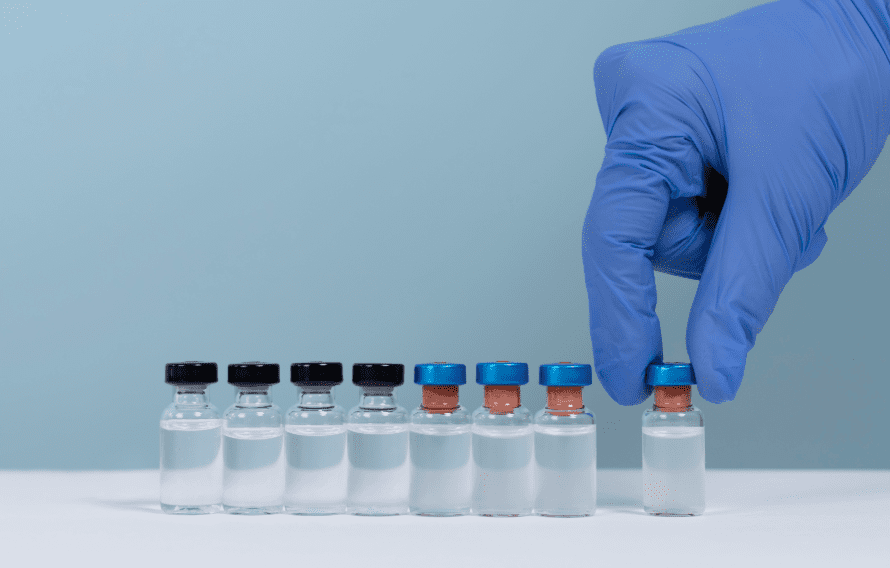
All content on this page is for research and educational purposes only. Hexarelin is a research compound supplied for laboratory use. It is not approved for human therapeutic use in the UK and is not intended to diagnose, treat, cure or prevent any condition.
Introduction: Hexarelin Beyond GH Stimulation
Hexarelin (His-D-2-MeTrp-Ala-Trp-D-Phe-Lys-NH2) is a synthetic hexapeptide GH secretagogue developed in the 1990s as part of the research programme that ultimately led to the discovery of ghrelin and its receptor. While hexarelin’s GH-stimulating properties were the primary focus of initial research, the compound’s interactions with GHS-R1a (growth hormone secretagogue receptor 1a) — the endogenous ghrelin receptor — and CD36 (a scavenger receptor expressed in cardiac and adipose tissue) position it as a research tool with applications extending well beyond GH axis biology.
Appetite regulation is one area where hexarelin’s ghrelin receptor agonism has significant research implications. Ghrelin is the only known circulating orexigenic hormone — the only peripheral signal that stimulates rather than suppresses appetite — and its receptor, GHS-R1a, is the molecular target for hexarelin’s appetite-relevant biology. This post examines hexarelin’s contributions to appetite research, cachexia models, and the mechanistic understanding of ghrelin-axis regulation of food intake and energy homeostasis.
Ghrelin and GHS-R1a: The Orexigenic Axis
Ghrelin is a 28-amino acid peptide predominantly produced by X/A-like cells in the gastric fundus. Its defining feature — the acyl modification of serine-3 by ghrelin-O-acyltransferase (GOAT) — is required for binding to GHS-R1a and for its orexigenic, GH-stimulating, and metabolic effects. Unacylated ghrelin (des-acyl ghrelin) is also biologically active but acts through distinct receptors and has largely opposing metabolic effects to acylated ghrelin in some contexts.
Ghrelin levels rise sharply before meals (pre-prandial ghrelin peak) and fall after eating — a pattern consistent with a hunger signal that anticipates and initiates food-seeking behaviour. In the hypothalamus, GHS-R1a is expressed on NPY/AgRP orexigenic neurons, POMC anorexigenic neurons (where ghrelin is inhibitory), and on hypothalamic glial cells. Ghrelin’s binding to GHS-R1a on NPY/AgRP neurons activates adenylyl cyclase (Gs pathway), increases firing rate, and drives neuropeptide Y and agouti-related peptide release — both of which stimulate food intake and suppress energy expenditure through downstream melanocortin system inhibition.
GHS-R1a’s constitutive (ligand-independent) activity is unusually high — approximately 50% of maximum in the absence of agonist — making it tonically active even in the fasted state and rendering it sensitive to inverse agonists as well as competitive antagonists. This constitutive activity is relevant to hexarelin research because hexarelin is a full agonist at GHS-R1a, achieving receptor activation levels exceeding the endogenous ghrelin response in some assays.
Hexarelin as a GHS-R1a Research Tool: Mechanistic Advantages
Hexarelin offers several properties that make it valuable as a research tool for probing GHS-R1a biology in appetite contexts:
Resistance to proteolysis: Native ghrelin’s acyl modification is labile in plasma — circulating esterases cleave the octanoyl group, converting active acylated ghrelin to inactive des-acyl ghrelin. Hexarelin is a synthetic peptide not subject to GOAT/esterase biology and shows substantially greater plasma stability than acylated ghrelin. This makes it more suitable than ghrelin itself for in vivo studies requiring sustained GHS-R1a engagement.
High GHS-R1a affinity and efficacy: Hexarelin is a full agonist at GHS-R1a with EC50 values in the low nanomolar range — comparable to native ghrelin and in some assays somewhat more potent. Its synthetic structure allows for systematic modification to generate structure-activity relationship (SAR) data, making it a scaffold for developing modified research tools with altered receptor selectivity, half-life, or CNS penetration.
CD36 activity: Unlike ghrelin, hexarelin also binds CD36 — a scavenger receptor expressed in cardiomyocytes, adipocytes, macrophages, and platelets. CD36 binding contributes to hexarelin’s cardioprotective effects (discussed in the cardiac research context) and may influence adipose tissue fatty acid uptake dynamics — a component of hexarelin’s metabolic profile that is independent of GHS-R1a and not shared by ghrelin itself. Researchers studying appetite and metabolic effects should be aware that hexarelin’s effects are not solely GHS-R1a-mediated.
Hexarelin and Appetite Stimulation: Evidence in Research Models
Research in rodent models has documented robust appetite-stimulating effects of hexarelin consistent with its GHS-R1a agonist mechanism:
Acute food intake paradigms: In food-deprived and ad libitum-fed rodents, acute hexarelin administration (ICV or IP) produces significant increases in food intake within 1–2 hours of administration. The effect is dose-dependent and is blocked by GHS-R1a antagonists (D-Lys3-GHRP-6) — confirming GHS-R1a dependence. Hypothalamic NPY and AgRP mRNA expression is elevated following hexarelin treatment, consistent with the proposed central mechanism via hypothalamic orexigenic neurons.
Comparison with ghrelin: Head-to-head comparisons of hexarelin and acylated ghrelin in rodent food intake paradigms have demonstrated comparable orexigenic efficacy at equimolar doses, with hexarelin showing more sustained effects due to its greater plasma stability. This duration-of-effect advantage is mechanistically useful for research protocols requiring prolonged GHS-R1a engagement without continuous administration.
Central vs peripheral administration differences: Intracerebroventricular (ICV) hexarelin produces greater food intake responses than peripheral administration at equivalent doses — consistent with a primarily central mechanism of action via hypothalamic GHS-R1a. However, peripheral GHS-R1a in the gut and vagal afferents also contributes to ghrelin-axis appetite effects, and hexarelin’s peripheral GHS-R1a activity likely contributes to food intake stimulation via this vagal pathway as well.
Cachexia Research Models: The Clinical Relevance of Hexarelin
Cachexia — the complex metabolic syndrome characterised by ongoing skeletal muscle loss, inflammation, and anorexia associated with chronic disease — is a major unmet research need. Cancer cachexia affects 50–80% of cancer patients and is directly responsible for 20–30% of cancer deaths. Heart failure cachexia and COPD-associated cachexia carry similarly grim prognostic implications.
The ghrelin axis is mechanistically central to cachexia biology: cachectic patients show paradoxically elevated ghrelin levels (a compensatory orexigenic response) alongside ghrelin resistance — GHS-R1a signalling in the hypothalamus appears impaired in cachexia states, meaning the elevated ghrelin fails to adequately stimulate appetite. Research with hexarelin in cachexia models probes whether pharmacological GHS-R1a stimulation at supraphysiological concentrations can overcome this ghrelin resistance and restore appetite signalling.
Cancer cachexia models: C26 colon adenocarcinoma tumour-bearing mice develop cachexia characterised by progressive weight loss, muscle wasting, anorexia, and elevated pro-inflammatory cytokines (IL-6, TNF-α). Ghrelin and ghrelin analogues including hexarelin in these models have shown capacity to attenuate anorexia and reduce the rate of muscle mass loss, though without fully reversing the underlying inflammatory drive. The mechanisms involve both hypothalamic appetite restoration (NPY/AgRP upregulation) and possible direct anti-inflammatory effects via GHS-R1a on immune cells within the tumour microenvironment.
Chemotherapy-induced anorexia: Cytotoxic chemotherapy agents (cisplatin, doxorubicin) produce profound anorexia partly through direct gastrointestinal toxicity and partly through central effects on appetite circuits. Research models using hexarelin or ghrelin analogues to restore appetite in chemotherapy-treated rodents have demonstrated partial rescue of food intake and body weight maintenance — relevant to the clinical problem of chemotherapy-associated malnutrition.
Cardiac cachexia: Heart failure is associated with a catabolic state driven by elevated sympathetic tone, inflammatory cytokines, and reduced anabolic hormone signalling. Hexarelin’s dual mechanism — GHS-R1a-mediated appetite restoration and CD36-mediated cardioprotection — makes it particularly interesting for heart failure cachexia research where both the wasting and the cardiac dysfunction are research endpoints. Studies in heart failure models have documented hexarelin’s capacity to improve cardiac function markers (ejection fraction, LVEDD) while attenuating the associated cachexia phenotype.
GHS-R1a and the Gut: Peripheral Appetite Mechanisms
GHS-R1a expression in the gastrointestinal tract — on gastric X/A-like cells (autocrine feedback), enteric neurons, and vagal afferent nerve terminals — means hexarelin has peripheral appetite-relevant targets beyond the hypothalamus. Vagal GHS-R1a activation contributes to the transmission of hunger signals from the gut to the brainstem NTS, and from there to hypothalamic appetite circuits. This peripheral-to-central appetite signalling pathway is relevant to understanding why ghrelin-axis agonists stimulate appetite even when administered peripherally.
Gastric motility is also regulated by GHS-R1a in the enteric nervous system — ghrelin and ghrelin analogues including hexarelin accelerate gastric emptying (pro-kinetic effect), which is mechanistically relevant to the postprandial fullness signals that terminate meals. In cachexia models where delayed gastric emptying contributes to early satiety and reduced food intake, hexarelin’s pro-kinetic effects via enteric GHS-R1a may contribute to appetite restoration alongside its hypothalamic effects.
Research Protocol Considerations
GHS-R1a specificity controls: Because hexarelin also acts at CD36, appetite and metabolic research protocols should include GHS-R1a-specific controls — using GHS-R1a-knockout animals or GHS-R1a-specific antagonists (D-Lys3-GHRP-6) to confirm that observed effects are receptor-specific. CD36-knockout or CD36 antibody-blocked comparisons are necessary to characterise CD36-mediated components of the hexarelin response.
Desensitisation considerations: GHS-R1a undergoes agonist-induced internalisation and desensitisation with repeated stimulation — a characteristic shared with most GPCRs. Research protocols using repeated hexarelin dosing should characterise receptor desensitisation kinetics and include dose titration or intermittent dosing designs to maintain receptor responsiveness over study duration.
Food intake measurement methodology: Accurate food intake measurement in rodent cachexia models requires individually housed animals with precise food weighing at multiple time points, controlling for food spillage. Automated volumetric feeding systems (BioDAQ or similar) provide continuous high-resolution intake data that better captures meal pattern changes (meal size, frequency, inter-meal interval) than simple 24-hour food weight measurements.
🔗 Related Reading: For a comprehensive overview of Hexarelin research, mechanisms, UK sourcing, and safety data, see our Hexarelin UK Complete Research Guide 2026.
🔗 Also See: For GH secretagogue comparison across ipamorelin, hexarelin, GHRP-6, and CJC-1295, see our GH Secretagogue Comparison: Research Guide UK 2026.
Summary for Researchers
Hexarelin’s GHS-R1a agonist activity positions it as a valuable research tool for probing ghrelin-axis appetite biology — from basic hypothalamic NPY/AgRP circuit pharmacology to complex cachexia model interventions. Its superior plasma stability versus native ghrelin, full agonist efficacy at GHS-R1a, and additional CD36 activity create a pharmacological profile useful for dissecting GHS-R1a-specific versus CD36-mediated effects in metabolic and appetite research. In cachexia models — where GHS-R1a agonism to overcome ghrelin resistance represents a mechanistically grounded research strategy — hexarelin provides a well-characterised tool for investigating the appetite and muscle-wasting components of this clinically critical syndrome.
🇬🇧 UK Research Peptides: PeptidesLab UK supplies COA-verified Hexarelin for research and laboratory use. View UK stock →