





No products in the cart.

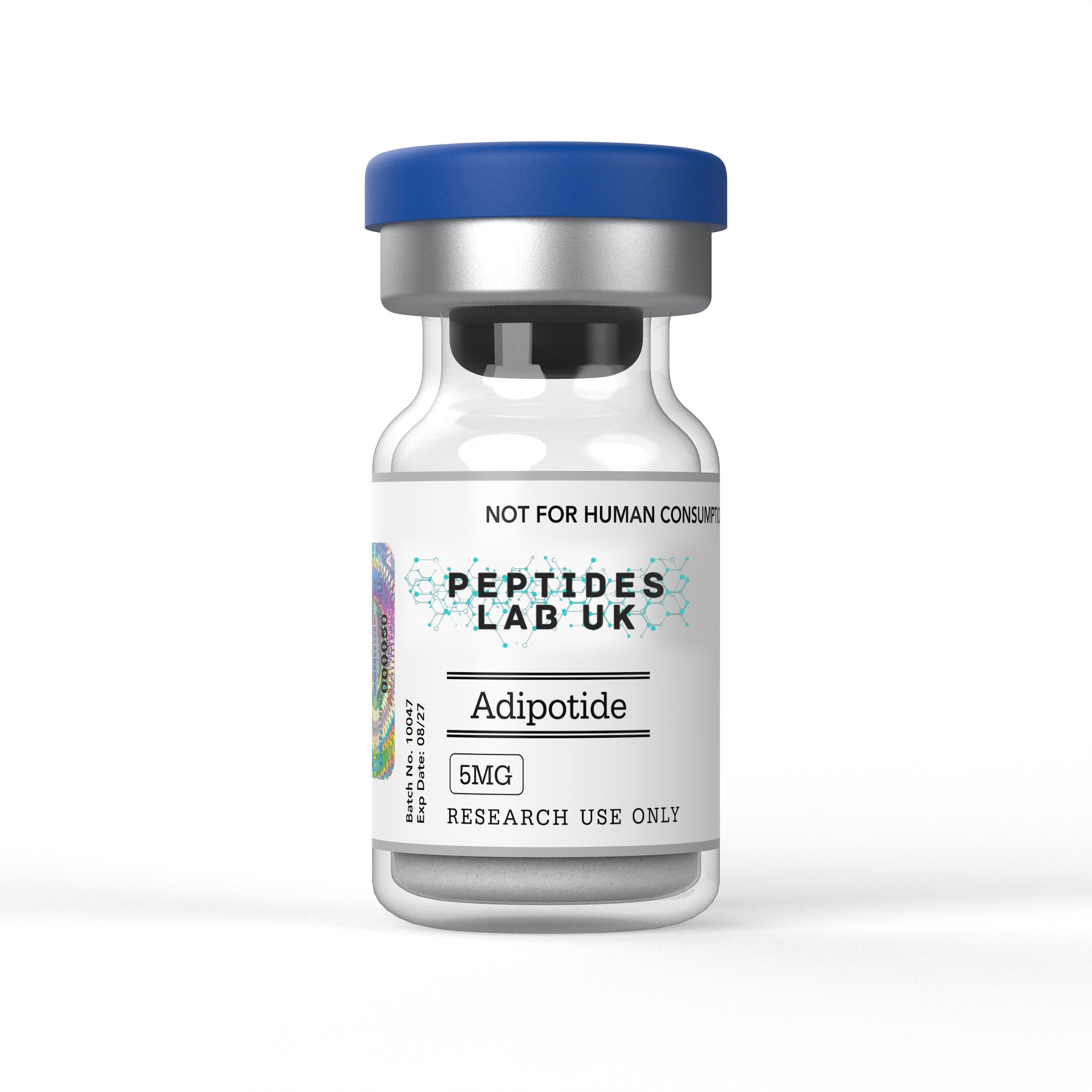
Adipotide For Lab Research
£179.99
Login for member prices★★★★★
✔︎ Quality checked
✔︎ Third party verified
Adipotide (FTPP) is a pro-apoptotic peptide targeting adipose vasculature, used in laboratory and in vitro research. Supplied at high purity with a full COA. For laboratory and in vitro research use only. Not for human consumption. Not a medicine.

Looking for a Certificate of Analysis?
If you are looking for a Certificate Of Analysis, please email research@peptideslabuk.com to have it sent to you.
Please Note: Many sites are displaying counterfeit COAs, so ours is provided upon request.
If you are looking for a Certificate Of Analysis, please email research@peptideslabuk.com to have it sent to you.
Please Note: Many sites are displaying counterfeit COAs, so ours is provided upon request.
You may also like…
-
Login for member prices

-
Login for member prices
Product Description
Adipotide Peptide | Buy Adipotide UK | FTPP | Fat-Targeted Proapoptotic Peptide | Research Use Only
Adipotide — also known as FTPP (Fat-Targeted Proapoptotic Peptide), Prohibitin-TP01, and TP-1 — is a synthetic dual-domain peptidomimetic with the sequence CKGGRAKDC-GG-D(KLAKLAK)₂, designed to selectively home to the vasculature of white adipose tissue, bind the endothelial surface receptors prohibitin and annexin A2 (ANXA2), and trigger targeted mitochondrial apoptosis in those vessels — making it a uniquely specific research tool for studying white adipose tissue vasculature, ligand-directed vascular targeting, and the role of adipose blood supply in energy balance and metabolic homeostasis. Buy Adipotide in the UK from Peptides Lab UK with >99% HPLC-verified purity, batch-specific COA, and fast UK dispatch for laboratory and in vitro research use only.
Distributed by Peptides Lab UK in lyophilised format for controlled laboratory research. Each batch is independently verified for purity. This compound is handled strictly in pre-clinical settings with no applications in human or veterinary medicine.
What Is Adipotide Peptide?
Adipotide (FTPP) is a synthetic chimeric peptidomimetic originally developed through in vivo phage display peptide library screening at MD Anderson Cancer Center by Kolonin, Pasqualini, Arap, and colleagues. It was designed by fusing two distinct functional peptide sequences into a single dual-domain construct: a white adipose tissue-homing motif chemically linked to a proapoptotic mitochondria-disrupting sequence.
The result is a compound unlike any other in the peptidomimetic research landscape — one that does not act through hormonal, enzymatic, or receptor-signalling pathways in the conventional sense, but instead delivers a targeted apoptotic signal specifically to the endothelial cells lining the blood vessels that supply white adipose tissue. Without an intact vascular supply, those adipocytes are deprived of oxygen and nutrients, resulting in secondary ischemic adipocyte death and progressive white fat mass regression.
Adipotide is selective for white adipose tissue (WAT) — it does not target brown adipose tissue (BAT), which does not express the same vascular receptor markers — making it a precise research tool for dissecting the differential biology of white and brown fat compartments.
Also Known As
- FTPP (Fat-Targeted Proapoptotic Peptide)
- Prohibitin-TP01 / TP-1
- CKGGRAKDC-GG-D(KLAKLAK)₂
How Does Adipotide Work?
Dual-Domain Architecture: Homing + Proapoptotic
Adipotide’s mechanism is built entirely on its two-part structure. The N-terminal homing domain (CKGGRAKDC) was identified via combinatorial in vivo phage display screening and selectively binds to a receptor complex of prohibitin (PHB) and annexin A2 (ANXA2) expressed on the surface of endothelial cells within the microvasculature of white adipose tissue. This receptor complex is not significantly expressed in the vasculature of other tissue types — including brown adipose tissue — conferring the compound’s tissue selectivity.
Once bound and internalised, the C-terminal D(KLAKLAK)₂ proapoptotic domain disrupts the integrity of mitochondrial membranes within those endothelial cells, triggering cytochrome c release and caspase-dependent programmed cell death.
Vascular Regression and Secondary Adipocyte Apoptosis
The apoptosis of targeted endothelial cells leads to collapse of the microvasculature supplying white adipocyte populations. Deprived of oxygen and nutrients, the downstream adipocytes undergo ischemic injury followed by secondary apoptosis. The resulting fat tissue regression and subsequent immune-mediated resorption of dead cell material produces progressive, measurable reductions in white adipose mass in research models.
Prohibitin-ANXA2-CD36 Fatty Acid Transport Axis
Beyond vascular apoptosis, research has revealed that the prohibitin-ANXA2 receptor complex targeted by Adipotide also interacts with the fatty acid transporter CD36 in white adipose tissue. This ANXA2-PHB-CD36 axis regulates fatty acid uptake into adipocytes, meaning that Adipotide binding may simultaneously disrupt fatty acid transport into adipose cells — providing an additional metabolic research angle beyond pure vascular apoptosis.
WAT-Selective, BAT-Sparing Mechanism
The tissue selectivity of Adipotide for white adipose tissue vasculature — and its absence of effect on brown adipose tissue — makes it a valuable tool in studies comparing WAT and BAT biology. Brown adipose tissue, which plays a key role in thermogenesis and adaptive energy expenditure, appears unaffected in research models, supporting studies that require selective WAT manipulation without disruption of BAT function.
Energy Balance and Food Intake Modulation
Pre-clinical research demonstrated that Adipotide-induced WAT regression produced a reduction in food intake that was independent of leptin signalling — despite circulating leptin levels falling alongside fat mass. This points to a previously uncharacterised relationship between white adipose tissue vasculature status and hypothalamic energy balance regulation, making Adipotide a unique research tool for studying the neuroendocrine consequences of WAT ablation independently of traditional leptin-mediated pathways.
What Does Adipotide Peptide Do in Research?
In laboratory and pre-clinical settings, Adipotide (FTPP) has been studied as the definitive ligand-directed vascular-targeting research tool for white adipose tissue biology. Research has examined its role in:
- White adipose tissue vasculature biology — prohibitin and ANXA2 receptor expression, vascular endothelial apoptosis, and WAT microvascular architecture
- Adipose tissue remodelling — WAT mass regression, adipocyte ischemic injury, and immune-mediated clearance of dead adipose tissue
- Ligand-directed vascular targeting methodology — phage display-derived homing peptides, tissue-selective receptor mapping, and targeted proapoptotic delivery strategies
- Energy balance and neuroendocrine research — leptin-independent food intake reduction, hypothalamic NPY/AgRP/POMC signalling downstream of WAT ablation
- Insulin sensitivity and glucose homeostasis — WAT mass reduction and its effect on insulin resistance, fasting glucose, and glucose tolerance in obese models
- Lipid metabolism research — serum triglyceride reduction, free fatty acid flux, and the ANXA2-PHB-CD36 fatty acid transport axis
- WAT vs BAT selectivity studies — differential receptor expression, tissue-selective vascular targeting, and BAT thermogenesis preservation
- Obesity and metabolic syndrome models — rodent and non-human primate obesity models, high-fat diet-induced obesity, and metabolic parameter normalisation
- Anti-angiogenic research strategies — comparison with pharmacological angiogenesis inhibitors (TNP-470, angiostatin) in adipose tissue contexts
- Oncology-adjacent research — prohibitin’s role in tumour vasculature, shared vascular markers between WAT and neoplastic tissue, and targeted proapoptotic peptide design strategies
- Vascular biology imaging — radiolabelled and fluorescently tagged Adipotide analogue development for tissue localisation and receptor mapping
- Reproductive and endocrine research — adipose-derived endocrine signals (adipokines, sex hormone aromatisation) in the context of targeted WAT depletion
What Do Studies Say About Adipotide?
The Foundational Discovery — Phage Display and WAT Vascular Targeting
The original 2004 study by Kolonin, Pasqualini, Arap et al. published in Nature Medicine used in vivo combinatorial phage display in mice to identify the CKGGRAKDC peptide motif as a selective homing sequence for white adipose tissue vasculature. The study confirmed prohibitin as the primary vascular receptor, demonstrated targeted apoptosis of WAT endothelium following administration of the proapoptotic chimera, and reported significant white fat mass regression with normalisation of metabolic parameters in obese murine models — establishing the foundational concept of targeted adipose vasculature ablation as a research strategy.
Primate Validation — Obese Rhesus Macaques
The landmark 2011 study by Barnhart, Kolonin, Arap, Pasqualini et al. published in Science Translational Medicine tested Adipotide in obese Old World monkeys — a significantly more translationally relevant model than rodents. MRI and DEXA imaging confirmed substantial reduction in white adipose tissue volume. Treated animals showed improved insulin resistance and reductions in serum free fatty acids. The primary observed side effect was reversible, mild renal tubular injury, establishing a dose-dependent nephrotoxic profile that informed subsequent safety characterisation. This study was pivotal in demonstrating Adipotide’s cross-species activity and positioning prohibitin/ANXA2 as translatable WAT vascular markers.
Energy Balance — Leptin-Independent Food Intake Reduction
Research by White et al. using both murine and rat models established that Adipotide-induced WAT regression produced a delayed but significant reduction in caloric intake that was not explained by circulating leptin levels — which actually declined alongside fat mass. Hypothalamic neuropeptide profiling showed reduced POMC gene expression, pointing to an adipose-to-hypothalamus signalling axis that regulates food intake independently of leptin. These findings position Adipotide as a unique tool for investigating previously unknown neuroendocrine feedback mechanisms linking white adipose tissue vasculature to hunger regulation.
Prohibitin-ANXA2-CD36 Fatty Acid Transport
Research identified that the PHB-ANXA2 receptor complex targeted by Adipotide co-localises with CD36 on white adipose endothelium to regulate fatty acid transport into adipocytes. Disruption of this complex was proposed as a secondary mechanism through which Adipotide may impair lipid uptake into WAT cells, independent of the primary apoptotic mechanism — opening an additional line of investigation into metabolic fatty acid handling research.
Human Tissue Confirmation
The annexin A2–prohibitin receptor complex targeted by Adipotide has been confirmed to be present in white adipose tissue vasculature from human subjects, establishing the biological relevance of the WAT vascular targeting strategy beyond rodent and non-human primate models alone.
Key Cited Studies
- Kolonin MG, Saha PK, Chan L, Pasqualini R, Arap W (2004) — Reversal of obesity by targeted ablation of adipose tissue. Nature Medicine 10(6):625–632. DOI: 10.1038/nm1048. PMID: 15133506
- Barnhart KF et al. (2011) — A peptidomimetic targeting white fat causes weight loss and improved insulin resistance in obese monkeys. Science Translational Medicine 3(108):108ra112. DOI: 10.1126/scitranslmed.3002621. PMC3666164
- White JD et al. (2013) — Dietary fat intake and energy balance regulation by proapoptotic peptide. International Journal of Obesity 37(12):1572–1579. DOI: 10.1038/ijo.2013.36
- Daquinag AC et al. (2016) — Prohibitin/annexin 2 interaction regulates fatty acid transport in adipose tissue. JCI Insight 1(10):e86351. DOI: 10.1172/jci.insight.86351
- Thuaud F et al. (2013) — Prohibitin ligands in cell death and survival: mode of action and therapeutic potential. Chemistry & Biology 20(3):316–331. DOI: 10.1016/j.chembiol.2013.02.006
Adipotide vs Other Adipose-Targeting Research Compounds
| Feature | Adipotide (FTPP) | TNP-470 | Angiostatin | AOD 9604 |
|---|---|---|---|---|
| Mechanism | Ligand-directed vascular apoptosis via prohibitin/ANXA2 | Non-selective angiogenesis inhibition (MetAP2) | Angiogenesis inhibition via plasminogen cleavage | GHRH fragment — lipolytic, anti-lipogenic |
| Target | White adipose tissue vasculature (endothelial cells) | Broad endothelial cells | Broad tumour/adipose vasculature | Adipocyte lipid metabolism |
| WAT Selectivity | High — prohibitin/ANXA2 expression-dependent | Low — non-selective | Low — non-selective | Moderate — adipocyte-level |
| BAT Sparing | Yes | No | No | Yes (no BAT thermogenesis disruption) |
| Apoptosis Mechanism | Mitochondrial disruption via D(KLAKLAK)₂ | Cell cycle arrest | Endothelial apoptosis via indirect mechanism | None — lipolytic signalling |
| Insulin Sensitivity | Improved in primate models | Improved in fat-depleted models | Not established | Modest improvement in pre-clinical models |
| Hormonal Activity | None | None | None | GHRH fragment — mild GH axis activity |
| Best Research Use | WAT vascular biology, ligand-directed targeting, obesity models | Angiogenesis inhibition reference | Tumour/adipose anti-angiogenesis reference | Lipid metabolism and lipolysis research |
| Species Validation | Mice, rats, rhesus macaques | Mice, rats | Mice, tumour models | Mice, rats |
Quality & Purity Assurance
Every batch of Adipotide from Peptides Lab UK is:
- >99% pure — HPLC and mass spectrometry verified
- Supplied with a full Certificate of Analysis (COA) on request
- Lyophilised powder for maximum stability and long shelf life
- Manufactured under strict, controlled laboratory conditions
- Consistent batch-to-batch quality for reproducible research results
Buy Adipotide UK — Product Specifications
| Property | Detail |
|---|---|
| Full Name | Adipotide / FTPP / Prohibitin-TP01 |
| Also Known As | TP-1, Fat-Targeted Proapoptotic Peptide, CKGGRAKDC-GG-D(KLAKLAK)₂ |
| Sequence | CKGGRAKDC-GG-D(KLAKLAK)₂ |
| Domain 1 (Homing) | CKGGRAKDC |
| Domain 2 (Proapoptotic) | D(KLAKLAK)₂ |
| Molecular Weight | ~2,600 Da |
| Receptor Targets | Prohibitin (PHB), Annexin A2 (ANXA2) |
| Purity | >99% (HPLC verified) |
| Form | Lyophilised powder |
| Storage | Store dry at -20°C; protect from light |
| Solubility | Sterile water, bacteriostatic water, or 0.5% DMSO/saline |
Adipotide Research Applications
Adipotide FTPP peptide UK is supplied strictly for the following in vitro and pre-clinical research uses:
- White adipose tissue vascular biology — prohibitin and ANXA2 receptor characterisation, endothelial apoptosis, and WAT microvasculature studies
- Ligand-directed vascular targeting methodology — phage display-derived homing peptide research and tissue-selective proapoptotic delivery
- Adipose tissue remodelling — WAT mass regression, ischemic adipocyte biology, and clearance pathway research
- Energy balance neuroendocrinology — leptin-independent food intake modulation and hypothalamic signalling downstream of WAT ablation
- Insulin resistance and glucose homeostasis research in obese pre-clinical models
- Lipid metabolism and fatty acid transport — ANXA2-PHB-CD36 axis and lipid flux in white adipose tissue
- WAT vs BAT selectivity and differential vascular receptor expression studies
- Obesity model pharmacology — rodent and non-human primate high-fat diet models
- Anti-angiogenic strategy comparison and adipose vascular biology reference studies
- Prohibitin biology — prohibitin’s roles in vascular endothelium, mitochondria, and cancer-adjacent research models
- Targeted proapoptotic peptidomimetic design and dual-domain chimeric peptide research
Why Buy Adipotide FTPP UK from Peptides Lab UK?
Peptides Lab UK is a trusted UK peptides supplier providing research-grade compounds verified by independent HPLC testing. When you buy Adipotide in the UK from us, you receive:
99% purity, HPLC and MS verified, third-party tested
- Full COA documentation per batch
- Fast same-day UK dispatch with tracked delivery
- Competitive pricing with bulk research discounts available
- Trusted by researchers across the UK and Europe
Related products: AOD 9604 | CJC-1295 No DAC | Ipamorelin | BPC-157 | SS-31 | Tesamorelin
Research Disclaimer
All products supplied by Peptides Lab UK are intended strictly for in vitro laboratory research and scientific study use only. They are not intended for human consumption, veterinary use, or any medical or therapeutic application. Adipotide (FTPP / Prohibitin-TP01) is not a licensed medicine or drug and has not been approved by the MHRA, FDA, or any regulatory authority for use in humans or animals. Clinical development of elamipretide-class compounds targeting this mechanism was discontinued; all published data referenced on this page relates exclusively to pre-clinical studies in rodent and non-human primate models and peer-reviewed mechanistic research. These citations do not constitute a claim of safety or therapeutic efficacy. Peptides Lab UK accepts no liability for any misuse of research compounds. By purchasing, you confirm that you are a qualified researcher and that the product will be used solely within a controlled laboratory environment in compliance with all applicable UK laws, regulations, and institutional guidelines.
Related products
-
Login for member prices
-
Login for member prices
-
Login for member prices
