




No products in the cart.

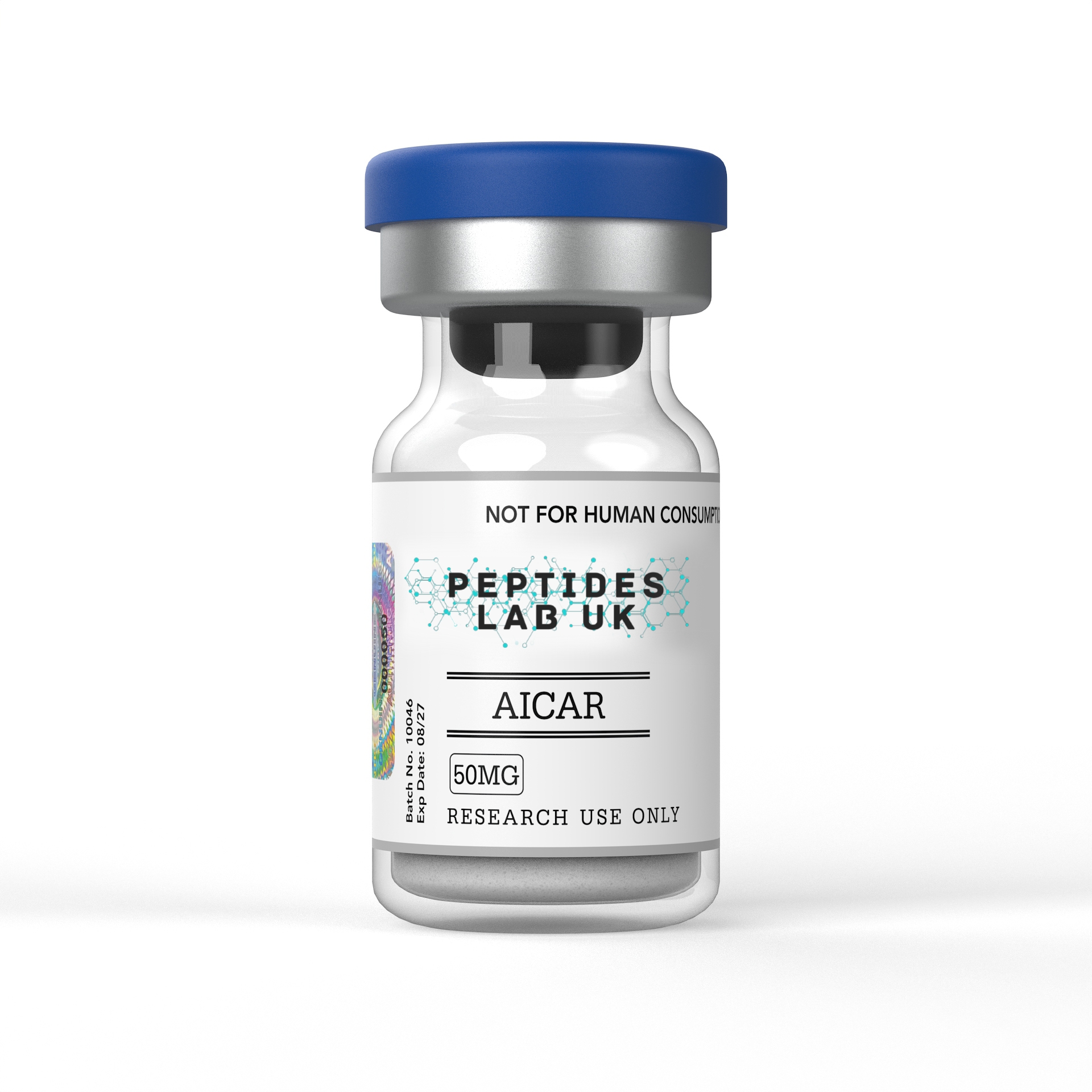
AICAR For Lab Research
£39.99
Login for member prices★★★★★
✔︎ Quality checked
✔︎ Third party verified
AICAR is an AMPK-activating compound for laboratory and in vitro research. Supplied at >99% purity with a full third-party Certificate of Analysis. For laboratory and in vitro research use only. Not for human consumption. Not a medicine.
Looking for a Certificate of Analysis?
If you are looking for a Certificate Of Analysis, please email research@peptideslabuk.com to have it sent to you.
Please Note: Many sites are displaying counterfeit COAs, so ours is provided upon request.
If you are looking for a Certificate Of Analysis, please email research@peptideslabuk.com to have it sent to you.
Please Note: Many sites are displaying counterfeit COAs, so ours is provided upon request.
You may also like…
Product Description
AICAR Peptide | Buy AICAR UK | Research Use Only
AICAR — also known as Acadesine, AICA Riboside, and 5-Aminoimidazole-4-carboxamide ribonucleoside — is a naturally occurring nucleoside analogue and intermediate in the purine biosynthesis pathway that, when administered exogenously in research settings, is taken up into cells via nucleoside transporters and phosphorylated to ZMP (AICAR monophosphate), an AMP-mimetic that allosterically activates AMP-activated protein kinase (AMPK) — the master cellular energy sensor — triggering a coordinated downstream shift toward fat oxidation, glucose uptake, mitochondrial biogenesis, and suppression of anabolic energy-consuming pathways, making it the most widely used pharmacological AMPK activator and exercise mimetic in pre-clinical metabolic research. Buy AICAR in the UK from Peptides Lab UK with >99% HPLC-verified purity, batch-specific COA, and fast UK dispatch for laboratory and in vitro research use only.
Distributed by Peptides Lab UK in lyophilised format for controlled laboratory research. Each batch is independently verified for purity. This compound is handled strictly in pre-clinical settings with no applications in human or veterinary medicine.
What Is AICAR?
AICAR (5-Aminoimidazole-4-carboxamide-1-β-D-ribofuranoside) is a synthetic cell-permeable nucleoside analogue and naturally occurring intermediate in the de novo purine biosynthesis pathway. Under normal physiological conditions, AICAR is present only transiently and at very low intracellular concentrations. When supplied exogenously in research models, it is transported into cells by the equilibrative nucleoside transporter ENT1 and rapidly phosphorylated by adenosine kinase to yield ZMP — the active intracellular species that mimics elevated AMP concentrations to engage the AMPK signalling cascade.
AICAR was first studied in the 1980s as a cardioprotective agent through its relationship with adenosine signalling. Its role as a direct AMPK activator was formally established in 1995 by Corton et al., following Sullivan et al.’s earlier demonstration that the intracellular nucleotide form of AICAR (ZMP) mimicked the allosteric effects of AMP on rat liver AMPK. Since then, AICAR has become the most extensively used pharmacological tool for studying AMPK biology across virtually every metabolic tissue type and disease model.
AICAR is classified as a prohibited substance under WADA regulations due to its metabolic activity profile in exercise models — making it relevant to both metabolic research and anti-doping assay development.
Also Known As
- Acadesine
- AICA Riboside / AICA-r
- AICAr
- 5-Aminoimidazole-4-carboxamide ribonucleoside
- ZMP precursor (intracellular active form: ZMP)
- CAS No. 2627-69-2
How Does AICAR Work?
Cellular Uptake and ZMP Conversion
AICAR enters cells primarily via the equilibrative nucleoside transporter ENT1 — a well-characterised, widely expressed nucleoside uptake pathway that does not require receptor-mediated internalisation. Once inside, adenosine kinase phosphorylates AICAR to its active form, ZMP (5-aminoimidazole-4-carboxamide ribonucleotide), which accumulates intracellularly and mimics the effects of elevated AMP on the AMPK system.
AMPK Activation — Allosteric and Phosphorylation Mechanisms
ZMP binds to the γ subunit of AMPK, allosterically activating the enzyme and stimulating upstream phosphorylation at Thr172 by liver kinase B1 (LKB1). ZMP binding also protects the Thr172 phosphorylation site from dephosphorylation, sustaining AMPK activation. Detection of pThr172 AMPK by Western blot in cell lysates following AICAR treatment is the standard assay methodology for confirming AMPK engagement in any given tissue or cell type.
AMPK-Dependent Downstream Effects
Activated AMPK coordinates a wide programme of downstream metabolic adaptations:
- GLUT4 translocation — increased glucose transporter expression and translocation to the plasma membrane in skeletal muscle cells, driving insulin-independent glucose uptake
- Fatty acid oxidation — phosphorylation and inhibition of acetyl-CoA carboxylase (ACC), reducing malonyl-CoA and de-suppressing carnitine palmitoyltransferase-1 (CPT1) to promote mitochondrial fatty acid import and oxidation
- mTORC1 inhibition — AMPK phosphorylates TSC2 and Raptor to suppress mTOR complex 1, inhibiting protein synthesis, ribosome biogenesis, and lipogenesis
- PGC-1α upregulation — AMPK drives expression of peroxisome proliferator-activated receptor gamma coactivator 1-alpha, promoting mitochondrial biogenesis and oxidative fibre gene expression
- Autophagy and mitophagy — AMPK phosphorylates ULK1 at Ser555, initiating autophagosome assembly and selective mitochondrial clearance (mitophagy)
- p53/p21 pathway — in stem cell and cancer models, AICAR-mediated AMPK activation engages p53/p21 to induce G1/S cell cycle arrest and modulate differentiation
AMPK-Independent Mechanisms — An Important Research Distinction
A major body of published research has established that several effects previously attributed to AMPK following AICAR administration are in fact AMPK-independent. These include direct interference with purine and pyrimidine nucleotide synthesis (via ZMP’s role as a substrate in the purine biosynthesis pathway), adenosine pathway modulation (AICAR competes for nucleoside transporters and inhibits adenosine deaminase, raising extracellular adenosine concentrations), and direct activation of the Akt/PI3K pathway independently of AMPK. This AMPK-independent profile makes AICAR both a more complex research tool and a broader-spectrum metabolic probe than a selective AMPK activator — and is a critical consideration in experimental design and result interpretation.
Adenosine Pathway Modulation
AICAR shares structural similarities with adenosine and competes for nucleoside transporters, increasing extracellular adenosine concentrations. It also inhibits adenosine deaminase and shifts ATP catabolism toward adenosine production rather than inosine — a mechanism exploited in its original cardioprotective research applications, where elevated adenosine reduces ischaemia-reperfusion injury.
What Does AICAR Do in Research?
In laboratory and pre-clinical settings, AICAR has been studied as the defining pharmacological AMPK activator and exercise mimetic reference compound across a broad spectrum of metabolic and disease research. Applications include:
- AMPK biology — Thr172 phosphorylation, γ-subunit allosteric activation, LKB1-mediated upstream signalling, and AMPK isoform profiling
- Exercise mimetic research — metabolic gene induction, oxidative fibre remodelling, and endurance capacity in sedentary animal models
- Skeletal muscle glucose uptake — GLUT4 translocation, insulin-independent glucose handling, and insulin resistance models
- Fatty acid oxidation — ACC phosphorylation, CPT1 de-suppression, malonyl-CoA reduction, and lipid oxidation flux
- Mitochondrial biogenesis — PGC-1α upregulation, OXPHOS gene expression, mitochondrial mass and morphology
- Autophagy and mitophagy — ULK1 Ser555 phosphorylation, autophagosome formation, and mitochondrial quality control
- mTOR/mTORC1 signalling — TSC2 and Raptor phosphorylation, S6K1 and 4E-BP1 downstream effects, and anabolic pathway suppression
- Obesity and metabolic syndrome models — high-fat diet rodent models, adiposity, lipid profiles, and insulin sensitivity
- Type 2 diabetes and glucose homeostasis — fasting glucose, glucose tolerance, and insulin resistance reversal in pre-clinical models
- Cardiovascular and cardiac ischaemia research — adenosine pathway modulation, ischaemia-reperfusion protection, and cardiac AMPK biology
- Cancer cell biology — AMPK/mTOR crosstalk, cell cycle arrest, apoptosis modulation, nucleotide synthesis interference, and metabolic stress vulnerability
- CLL and haematological malignancy models — acadesine’s AMPK-independent pro-apoptotic activity in lymphoid cell lines and relapsed/refractory CLL research
- Stem cell biology — pluripotency gene network modulation (Klf4, Klf2, Nanog, Oct4, Sox2), ES cell self-renewal, and osteogenic/adipogenic differentiation research
- Diabetic neuropathy models — AMPK-mediated mitophagy, DRG neuronal mitochondrial bioenergetics, and neuroprotection in T1D and T2D mouse models
- Neuroinflammation and neuroprotection — AMPK-dependent anti-inflammatory signalling and oxidative stress modulation in neuronal systems
- Anti-doping assay development — AICAR detection methodology for WADA-regulated analytical research
- AMPK-independent pharmacology — dissection of ZMP-mediated purine/pyrimidine biosynthesis interference and adenosine pathway effects independent of AMPK status
What Do Studies Say About AICAR?
AICAR as the Founding AMPK Activator
The foundational 1995 work by Corton et al. established AICAR as the first cell-permeable AMPK activator for use in intact cells, building on Sullivan et al.’s prior confirmation that ZMP mimicked AMP’s allosteric effects on AMPK. Together, these studies created the methodological framework used in thousands of subsequent AMPK research publications — making AICAR the most historically cited pharmacological AMPK tool in the literature.
The Exercise Mimetic Study — 44% Endurance Improvement
The landmark 2008 study by Narkar, Evans et al. published in Cell demonstrated that 4 weeks of AICAR treatment in sedentary mice — without any exercise training — induced a programme of oxidative metabolic gene expression in skeletal muscle and enhanced treadmill running endurance by 44%. Combined AICAR treatment and exercise training produced synergistic increases in oxidative myofibre content and endurance beyond either intervention alone, establishing AICAR as a true exercise mimetic and anchoring the AMPK-PGC-1α axis as a druggable target for metabolic reprogramming research.
AMPK-Independent Effects — A Critical Systematic Review
The comprehensive 2021 systematic review by Dembitz, Lalic et al. published in International Journal of Molecular Sciences catalogued the evidence base for AICAR’s AMPK-independent effects — including direct interference with nucleotide synthesis, adenosine pathway modulation, and Akt/PI3K activation — and called for caution in interpreting AICAR-based studies as evidence of pure AMPK biology. This review is essential reading for researchers using AICAR, as it recontextualises a significant portion of the existing AMPK literature and identifies research areas where AMPK-independent effects are most likely to confound results.
CLL and Cancer Research
Acadesine has been evaluated in clinical trials in patients with relapsed and refractory chronic lymphocytic leukaemia (CLL). Pre-clinical work confirmed selective cytotoxic activity in CLL cell lines through an AMPK-independent mechanism, establishing the drug as a candidate research compound for haematological malignancy models. Multiple phase I and II trials provided pharmacokinetic and safety data used to characterise the acadesine backbone.
Diabetic Polyneuropathy Models
A 2024/2025 study published in International Journal of Molecular Sciences confirmed that AICAR treatment prevented and reversed experimental diabetic polyneuropathy in both T1D and T2D mouse models. AICAR increased pAMPK in dorsal root ganglion (DRG) neuronal extracts by 3-fold in HFD-fed mice, promoted ULK1 Ser555 phosphorylation and LC3-II-mediated mitophagy, and restored ADP-stimulated state 3 mitochondrial respiration in DRG neurons — establishing a mitophagy-dependent neuroprotective mechanism in diabetic nerve disease models.
Stem Cell Pluripotency
Microarray analysis of AICAR-treated mouse embryonic stem cells confirmed significant upregulation of pluripotency-associated genes (Klf4, Klf2, Nanog, Oct4, Myc, Sox2) and downregulation of differentiation-associated transcription factors — demonstrating that AICAR engages both AMPK and non-AMPK pathways (including BMP, MAPK, and TGF-β) to modulate stem cell fate decisions and epigenetic modification.
Key Cited Studies
- Corton JM et al. (1995) — 5-Aminoimidazole-4-carboxamide ribonucleoside. A specific method for activating AMP-activated protein kinase in intact cells? Eur J Biochem 229(2):558–565. PMID: 7744080
- Sullivan JE et al. (1994) — Inhibition of lipolysis and lipogenesis in isolated rat adipocytes with AICAR, a cell-permeable activator of AMP-activated protein kinase. FEBS Lett 353(1):33–36. DOI: 10.1016/0014-5793(94)01006-4
- Narkar VA et al. (2008) — AMPK and PPARδ agonists are exercise mimetics. Cell 134(3):405–415. DOI: 10.1016/j.cell.2008.06.051. PMID: 18674809
- Dembitz V & Lalic H (2021) — AICAr, a widely used AMPK activator with important AMPK-independent effects: a systematic review. Int J Mol Sci 22(10):5271. DOI: 10.3390/ijms22105271. PMC8147799
- Van Den Neste E et al. (2010) — AICA-riboside (acadesine), an activator of AMP-activated protein kinase with potential for application in hematologic malignancies. Expert Opin Investig Drugs 19(5):571–578. DOI: 10.1517/13543781003703694
- Adamo A et al. (2012) — LKB1 regulates DNA damage-induced apoptosis in a cell-type-specific manner in pre-clinical models. (See also: AICAR in ES cell pluripotency — Shi et al. and Adamo et al. cited in STEMCELL Technologies product literature)
- Azmi S et al. (2024/2025) — Administration of AICAR, an AMPK activator, prevents and reverses diabetic polyneuropathy by regulating mitophagy. Int J Mol Sci 26(1):80. DOI: 10.3390/ijms26010080
AICAR vs Other AMPK Activators and Exercise Mimetics in Research
| Feature | AICAR (Acadesine) | Metformin | GW501516 (Cardarine) | Compound 991 |
|---|---|---|---|---|
| Primary Mechanism | ZMP-mediated AMPK allosteric activation | Complex I inhibition → AMPK indirect activation | PPARδ agonist | Direct AMPK β1/β2 activator |
| AMPK Selectivity | Moderate — significant AMPK-independent effects | Low — broad mitochondrial/metabolic effects | Not AMPK-dependent | High — direct allosteric AMPK activator |
| Cell Permeability | High (ENT1 transporter) | Moderate | High (passive diffusion) | Moderate |
| ZMP Conversion | Yes — active intracellular species | No | No | No |
| Purine Synthesis Interference | Yes (AMPK-independent) | No | No | No |
| Adenosine Pathway Effects | Yes — adenosine deaminase inhibition, extracellular adenosine elevation | No | No | No |
| Glucose Uptake | Yes — GLUT4 translocation (skeletal muscle) | Yes — hepatic glucose output reduction | Partial | Yes |
| Fatty Acid Oxidation | Yes — ACC phosphorylation, CPT1 activation | Yes | Yes (primary mechanism) | Yes |
| Mitochondrial Biogenesis | Yes — PGC-1α upregulation | Yes | Yes — PPARδ-driven | Yes |
| Exercise Mimetic Evidence | Yes — 44% endurance improvement (sedentary mice) | No | Yes — PPARδ-driven endurance | Limited |
| Cancer / CLL Research | Yes — CLL clinical trials, cell cycle arrest | Yes — broad cancer metabolism | Limited | No |
| WADA Prohibited | Yes | No | Yes | No |
| Best Research Use | AMPK biology reference, exercise mimetic, metabolic studies | Hepatic glucose/insulin research, AMPK indirect effects | PPARδ and endurance reference | Selective AMPK activation without purine biosynthesis interference |
Quality & Purity Assurance
Every batch of AICAR from Peptides Lab UK is:
- >99% pure — HPLC and mass spectrometry verified
- Supplied with a full Certificate of Analysis (COA) on request
- Lyophilised powder for maximum stability and long shelf life
- Manufactured under strict, controlled laboratory conditions
- Consistent batch-to-batch quality for reproducible research results
Buy AICAR UK — Product Specifications
| Property | Detail |
|---|---|
| Full Name | AICAR / Acadesine / AICA Riboside |
| Also Known As | 5-Aminoimidazole-4-carboxamide ribonucleoside, AICAr, ZMP precursor |
| CAS Number | 2627-69-2 |
| Molecular Formula | C₉H₁₄N₄O₅ |
| Molecular Weight | 258.23 g/mol |
| Active Intracellular Form | ZMP (phosphorylated by adenosine kinase) |
| Primary Target | AMP-activated protein kinase (AMPK) — γ subunit |
| Purity | >99% (HPLC verified) |
| Form | Lyophilised powder |
| Storage | Store dry at -20°C; protect from light |
| Solubility | Sterile water or PBS; highly water-soluble |
AICAR Research Applications
AICAR (Acadesine) UK is supplied strictly for the following in vitro and pre-clinical research uses:
- AMPK activation — Thr172 phosphorylation, allosteric activation, LKB1 upstream signalling, and AMPK isoform characterisation
- Exercise mimetic research — oxidative gene induction, PGC-1α/mitochondrial biogenesis, and endurance modelling in sedentary animal models
- Skeletal muscle glucose uptake — GLUT4 translocation, insulin-independent glucose handling, and insulin resistance models
- Fatty acid oxidation — ACC phosphorylation, CPT1 activity, and lipid oxidation flux studies
- mTOR/mTORC1 suppression and anabolic pathway inhibition research
- Autophagy and mitophagy — ULK1 Ser555 signalling and mitochondrial quality control research
- Obesity, type 2 diabetes, and metabolic syndrome pre-clinical models
- Cardiac ischaemia-reperfusion protection and adenosine pathway biology
- Cancer cell metabolism — AMPK/mTOR crosstalk, cell cycle arrest, and nucleotide synthesis interference
- CLL and haematological malignancy research — acadesine’s AMPK-independent cytotoxic mechanisms
- Stem cell pluripotency and differentiation — ES cell fate decision and epigenetic modification research
- Diabetic neuropathy models — AMPK-mediated mitophagy and DRG neuronal mitochondrial function
- AMPK-independent pharmacology research — purine/pyrimidine biosynthesis and adenosine pathway dissection
- Anti-doping and WADA-prohibited compound detection methodology development
Why Buy AICAR UK from Peptides Lab UK?
Peptides Lab UK is a trusted UK peptides supplier providing research-grade compounds verified by independent HPLC testing. When you buy AICAR in the UK from us, you receive:
99% purity, HPLC and MS verified, third-party tested
- Full COA documentation per batch
- Fast same-day UK dispatch with tracked delivery
- Competitive pricing with bulk research discounts available
- Trusted by researchers across the UK and Europe
Research Disclaimer
All products supplied by Peptides Lab UK are intended strictly for in vitro laboratory research and scientific study use only. They are not intended for human consumption, veterinary use, or any medical or therapeutic application. AICAR (Acadesine) is not a licensed medicine or drug and has not been approved by the MHRA or FDA for use outside of its limited historical clinical trial contexts in cardiac ischaemia and haematological malignancy. AICAR is classified as a prohibited substance under WADA anti-doping regulations and is not approved for use in competitive sport. All research citations on this page relate to pre-clinical studies and peer-reviewed pharmacological research and do not constitute a claim of safety or therapeutic efficacy in humans. Peptides Lab UK accepts no liability for any misuse of research compounds. By purchasing, you confirm that you are a qualified researcher and that the product will be used solely within a controlled laboratory environment in compliance with all applicable UK laws, regulations, and institutional guidelines.
Related products
-
Login for member prices£119.00 Select options This product has multiple variants. The options may be chosen on the product page
-
Login for member prices

-
Login for member prices
