




No products in the cart.

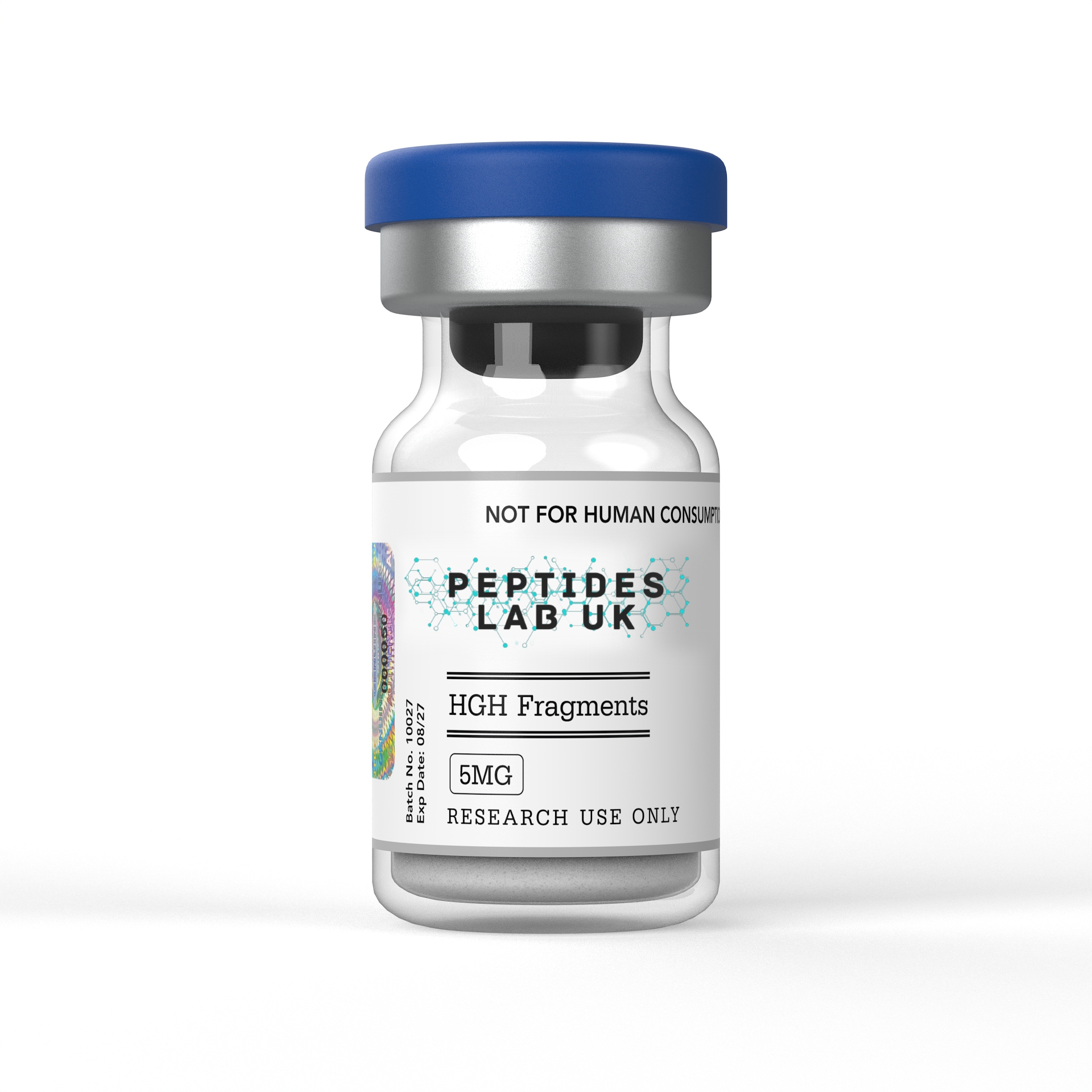
HGH Fragments For Lab Research
£58.99
Login for member prices★★★★★
✔︎ Quality checked
✔︎ Third party verified
HGH Fragment 176-191 is the C-terminal region of human growth hormone used in laboratory and in vitro research. Supplied at >99% purity with a full third-party COA. For laboratory and in vitro research use only. Not for human consumption. Not a medicine.
Looking for a Certificate of Analysis?
If you are looking for a Certificate Of Analysis, please email research@peptideslabuk.com to have it sent to you.
Please Note: Many sites are displaying counterfeit COAs, so ours is provided upon request.
If you are looking for a Certificate Of Analysis, please email research@peptideslabuk.com to have it sent to you.
Please Note: Many sites are displaying counterfeit COAs, so ours is provided upon request.
You may also like…
-
Login for member prices

-
Login for member prices
-
Login for member prices
Product Description
HGH Fragment | Buy HGH Frag UK | GH Lipolysis Fragment | Research Use Only
HGH Fragment is a synthetic 16-amino acid peptide corresponding to the C-terminal region (positions ) of human growth hormone, isolated for its potent lipolytic activity — stimulating fat breakdown and inhibiting lipogenesis in adipocytes without the growth-promoting or insulin-desensitising effects associated with full-length recombinant GH. As a research peptide available to buy in the UK, HGH Frag is the reference compound in pre-clinical adipose tissue metabolism and GH lipolysis pathway research, supplied by Peptides Lab UK at >99% HPLC-verified purity.
Distributed by Peptides Lab UK in lyophilised format for laboratory and in vitro research use only. Each batch is independently verified at >99% purity by HPLC and mass spectrometry. Not intended for human or veterinary use.
What Is HGH Fragment ?
HGH Fragment is a truncated peptide derived from the C-terminal tail of the 191-amino acid human growth hormone molecule. The fragment corresponds to amino acid positions 176 to 191 of hGH and was identified as the region of the GH molecule responsible for its lipolytic — fat-metabolising — activity, separate from the anabolic and growth-promoting effects mediated by the GH receptor binding domains at the N-terminal end of the full molecule.
The isolation and study of this fragment was motivated by the observation that full-length GH stimulates both anabolic tissue growth and fat mobilisation through distinct molecular mechanisms. By separating the lipolytic C-terminal region, researchers produced a compound with concentrated fat-metabolism activity and a significantly reduced side-effect profile compared to recombinant GH — particularly with respect to insulin sensitivity and IGF-1 axis stimulation, which are primary concerns with full GH administration in research models.
HGH Fragment does not bind the classical GH receptor and does not stimulate IGF-1 production or promote cellular proliferation — making it a highly selective research tool for studying adipocyte biology and GH-mediated lipid metabolism independent of the somatotropic axis.
How Does HGH Fragment Work?
Lipolysis Stimulation in Adipocytes
HGH Fragment stimulates lipolysis — the breakdown of stored triglycerides into free fatty acids — in adipocytes via a mechanism that is distinct from, but related to, the lipolytic signalling engaged by full-length GH. Research in adipocyte cell models has demonstrated that the fragment activates beta-3 adrenergic receptor-related signalling in fat cells, increasing intracellular cAMP and activating hormone-sensitive lipase (HSL) — the key enzyme in triglyceride hydrolysis — resulting in increased free fatty acid release from adipose tissue.
Inhibition of Lipogenesis
In addition to stimulating fat breakdown, HGH Fragment has been shown in pre-clinical studies to inhibit lipogenesis — the conversion of non-fat nutrients into stored fat — in adipocyte models. This dual action of promoting fat mobilisation while suppressing fat storage has made the fragment a key research tool in adipose tissue metabolism studies and in the investigation of GH-mediated anti-obesity mechanisms.
No GH Receptor Binding — No IGF-1 Stimulation
A defining pharmacological characteristic of HGH Fragment is that it does not bind the growth hormone receptor (GHR) and does not stimulate IGF-1 production. This distinguishes it from full-length GH and means that at research-relevant concentrations, the fragment does not produce the insulin resistance, glucose dysregulation, or tissue proliferation associated with GHR-mediated GH signalling — allowing isolated study of the GH lipolytic mechanism without these confounding effects.
Beta-3 Adrenergic and Adipocyte Receptor Interactions
The lipolytic mechanism of HGH Fragment involves interactions with adrenergic signalling pathways in adipocytes, particularly beta-3 adrenergic receptor-related cAMP elevation. Pre-clinical research has examined whether the fragment’s activity is mediated through a distinct adipocyte receptor or via cross-talk with established adrenergic pathways — with studies using beta-adrenergic antagonists suggesting that the fragment’s lipolytic activity is at least partly dependent on functional adrenergic signalling in adipose tissue.
What Does HGH Fragment Do in Research?
In laboratory and pre-clinical settings, HGH Fragment has been studied across a range of adipose tissue biology and metabolic research applications, including:
- Adipocyte lipolysis pathway characterisation — triglyceride hydrolysis, HSL activation, and free fatty acid mobilisation
- Lipogenesis inhibition and anti-adipogenic signalling in fat cell models
- GH C-terminal fragment receptor biology and adipocyte signalling mechanism studies
- Comparative GH fragment pharmacology — Fragment vs Fragment 177-191 vs full-length hGH
- Beta-adrenergic and cAMP pathway crosstalk in adipose tissue metabolism research
- Obesity and metabolic syndrome pre-clinical modelling — adipose depot regulation
- IGF-1-independent GH activity research — isolating lipolytic from somatotropic GH effects
- Insulin sensitivity and glucose homeostasis — absence of GHR-mediated insulin resistance
- Adipokine regulation and adipose tissue endocrine function studies
- Body composition research models — lean mass preservation and fat mass modulation
- GH fragment structure-activity relationship (SAR) studies
What Do Studies Say About HGH Fragment ?
Identification of the Lipolytic Domain of GH
Pre-clinical studies identifying the C-terminal region of GH as the locus of its lipolytic activity established that peptides corresponding to positions of hGH retained significant fat-mobilising activity in adipocyte models and in vivo, while lacking the growth-promoting and insulin-antagonistic effects of full-length GH. This work provided the pharmacological rationale for HGH Fragment as a selective lipolytic research tool.
Key Citation
Ng FM et al. (1990) — Metabolic studies with a growth hormone-releasing peptide — FEBS Letters 258(2):250–254. DOI: 10.1016/0014-5793(89)81659-8
In Vivo Lipolytic and Anti-Obesity Activity
Studies in obese mouse models demonstrated that administration of HGH Fragment produced significant reductions in body fat compared to controls without the growth-promoting or hyperglycaemic effects seen with recombinant GH — confirming the fragment’s selective lipolytic activity profile in vivo and establishing the pre-clinical basis for its use as a metabolic research tool.
Key Citation
Heffernan MA et al. (2001) — The effects of human GH and its lipolytic fragment (AOD9604) on lipid metabolism following chronic treatment in obese mice — Endocrinology 142(12):5182–5189. DOI: 10.1210/endo.142.12.8522
Absence of Insulin Resistance — Key Research Advantage
Comparative studies examining full-length GH versus HGH Fragment confirmed that the fragment does not produce the insulin resistance or glucose intolerance observed with full-length GH administration in pre-clinical models — a finding directly relevant to research contexts where metabolic effects need to be studied in isolation from GH-mediated insulin antagonism.
AOD9604 — The Clinical Development Derivative
A stabilised, modified form of HGH Fragment — designated AOD9604 — was advanced into clinical development for obesity research. Phase IIb/III trials investigated its effects on body weight and fat mass, contributing clinical-stage data to the understanding of GH C-terminal fragment biology. AOD9604 shares the same core lipolytic pharmacophore as Fragment , and the clinical data generated from its development provides indirect validation of the fragment’s pre-clinical pharmacological profile.
Key Citation
Stier H et al. (2013) — Safety and tolerability of the hexadecapeptide AOD9604 in humans — J Endocrinol Invest 36(3):195–199. DOI: 10.3275/8788
HGH Fragment vs Related GH Fragment Research Peptides
| Feature | HGH Frag | HGH Frag 177-191 | AOD9604 |
| Sequence Origin | hGH positions | hGH positions 177–191 | Modified Frag |
| Amino Acids | 16 | 15 | 16 (Tyr substitution) |
| GHR Binding | None | None | None |
| IGF-1 Stimulation | None | None | None |
| Lipolytic Activity | High | Moderate–High | High |
| Lipogenesis Inhibition | Yes | Yes | Yes |
| Clinical Data | Indirect (via AOD9604) | Pre-clinical only | Phase II/III trials |
| Best Research Use | Primary lipolysis reference compound | Comparative fragment SAR | Clinical-relevant metabolic modelling |
Buy HGH Fragment UK — Product Specifications
| Property | Detail |
| Full Name | HGH Fragment / Human Growth Hormone Fragment |
| Also Known As | HGH Frag , GH Fragment , hGH |
| Sequence | Tyr-Leu-Arg-Ile-Val-Gln-Cys-Arg-Ser-Val-Glu-Gly-Ser-Cys-Gly-Phe |
| Origin | C-terminal fragment of 191-amino acid human GH |
| Amino Acids | 16 |
| Molecular Weight | ~1,817.1 g/mol |
| GH Receptor Binding | None |
| IGF-1 Stimulation | None |
| Primary Activity | Lipolysis stimulation, lipogenesis inhibition |
| Purity | >99% (HPLC and MS verified) |
| Form | Lyophilised powder |
| Storage | Store dry at -20°C; protect from light and moisture |
| Solubility | Bacteriostatic water, sterile water, or suitable research solvents |
Quality & Purity Assurance
Every batch of HGH Fragment from Peptides Lab UK is:
- >99% pure — HPLC and mass spectrometry verified
- Supplied with a full Certificate of Analysis (COA) available on request
- Lyophilised powder format for maximum stability and extended shelf life
- Manufactured under strictly controlled laboratory conditions
- Consistent batch-to-batch quality for reproducible research results
Why Buy HGH Fragment from Peptides Lab UK?
Peptides Lab UK is a trusted UK peptides supplier, providing research-grade compounds verified by independent HPLC testing. When you buy HGH Fragment in the UK from Peptides Lab UK, you receive:
- >99% purity, HPLC and MS verified, third-party tested
- Full COA documentation per batch
- Fast same-day UK dispatch with tracked delivery
- Competitive pricing with bulk research discounts available
- Trusted by researchers across the UK and Europe
Research Disclaimer
All products supplied by Peptides Lab UK are intended strictly for in vitro laboratory research and scientific study use only. They are not intended for human consumption, veterinary use, or any medical or therapeutic application. HGH Fragment is not a licensed medicine or drug and has not been approved by the MHRA, FDA, or any regulatory authority for use in humans or animals. All research citations on this page relate to pre-clinical studies and peer-reviewed pharmacological research and do not constitute a claim of safety or therapeutic efficacy. Peptides Lab UK accepts no liability for any misuse of research compounds. By purchasing, you confirm that you are a qualified researcher and that the product will be used solely within a controlled laboratory environment in compliance with all applicable UK laws, regulations, and institutional guidelines.
Related products
-
Login for member prices
-
Login for member prices£51.99 Select options This product has multiple variants. The options may be chosen on the product page
-
Login for member prices
