




No products in the cart.

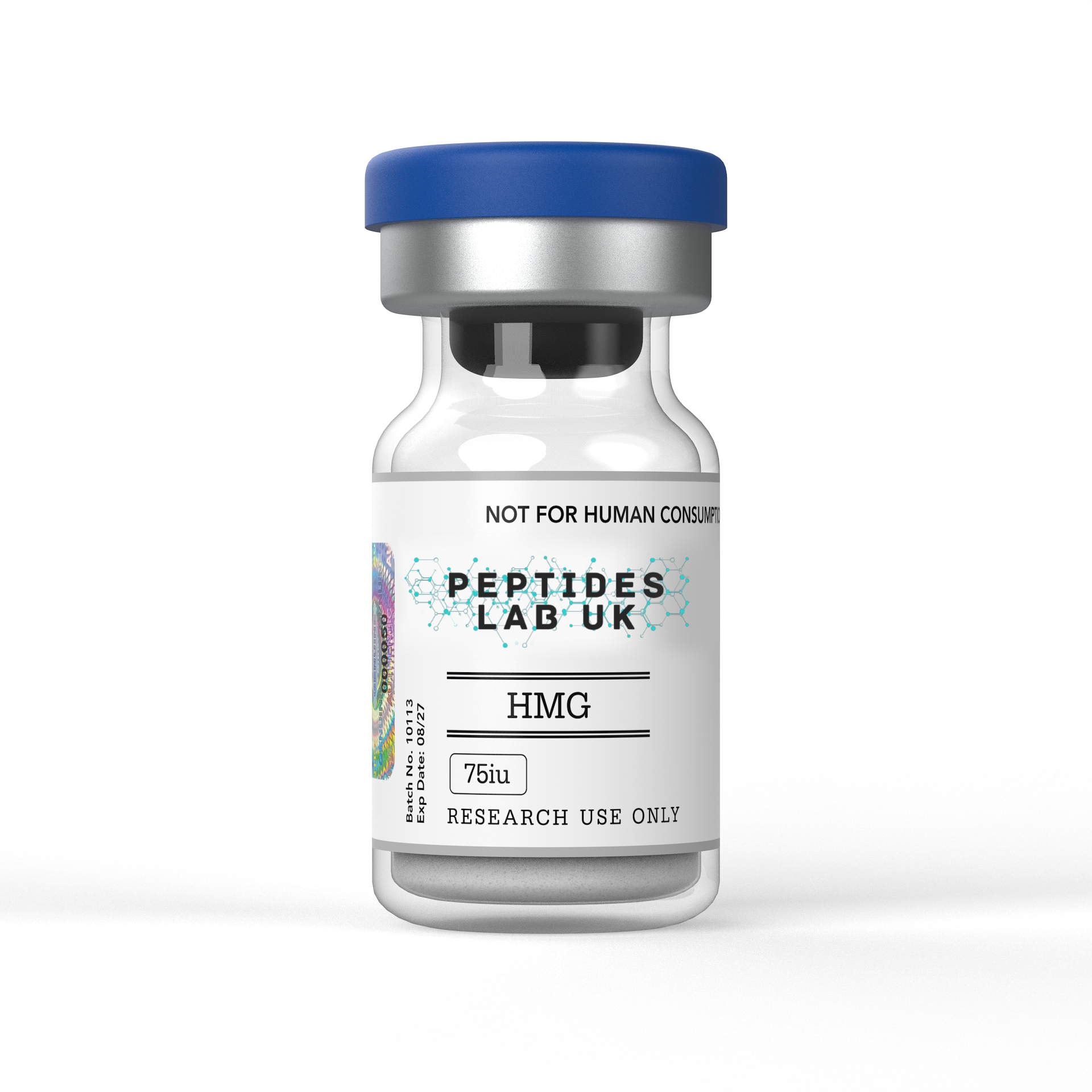
HMG For Lab Research
£42.00
Login for member prices★★★★★
✔︎ Quality checked
✔︎ Third party verified
HMG (Human Menopausal Gonadotropin) is a gonadotropin preparation containing FSH and LH for laboratory and in vitro research. Supplied at high purity with a full COA. For laboratory and in vitro research use only. Not for human consumption. Not a medicine.
Looking for a Certificate of Analysis?
If you are looking for a Certificate Of Analysis, please email research@peptideslabuk.com to have it sent to you.
Please Note: Many sites are displaying counterfeit COAs, so ours is provided upon request.
If you are looking for a Certificate Of Analysis, please email research@peptideslabuk.com to have it sent to you.
Please Note: Many sites are displaying counterfeit COAs, so ours is provided upon request.
You may also like…
-
Login for member prices

-
Login for member prices
Product Description
HMG (Human Menopausal Gonadotropin) – High-Purity Research Gonadotropin | Peptides Lab UK
HMG (Human Menopausal Gonadotropin), also known as menotropin, is a purified gonadotropin preparation containing follicle-stimulating hormone (FSH), luteinizing hormone (LH), and trace human chorionic gonadotropin (hCG) activity — key regulators of the hypothalamic-pituitary-gonadal (HPG) axis — supplied by Peptides Lab UK in lyophilised format at >99% purity (HPLC verified) for in vitro and pre-clinical laboratory research use only.
Available to buy in the UK from Peptides Lab UK, HMG is one of the longest-established and most extensively researched gonadotropin preparations in reproductive endocrinology, with a published literature base spanning more than six decades from its clinical introduction in 1961 through to contemporary comparative meta-analyses. Each batch is independently quality-tested and distributed in a controlled lyophilised powder form, suitable for precise laboratory handling and standardised in vitro research protocols.
What is HMG (Human Menopausal Gonadotropin)?
Human Menopausal Gonadotropin (HMG), also referred to by its pharmaceutical name menotropin, is a gonadotropin preparation extracted from the urine of postmenopausal women. Postmenopausal urine reflects the hypergonadotropic state of menopause — in the absence of ovarian feedback, the pituitary dramatically upregulates production of both FSH and LH, making postmenopausal urine the richest naturally occurring source of these hormones. HMG preparations contain a mixture of these gonadotropins — classically in a 1:1 ratio of FSH to LH activity (75 IU FSH : 75 IU LH per ampoule in standard preparations) — along with a small amount of hCG activity and, in early preparations, other urinary proteins.
First isolated in a clinically usable form by Piero Donini in 1949, HMG was successfully introduced into clinical use by Bruno Lunenfeld in 1961, making it the foundational gonadotropin preparation in reproductive medicine. Over subsequent decades, purification processes advanced significantly — moving from early preparations with high urinary protein contamination requiring intramuscular administration, through to highly purified HMG (HP-hMG) preparations suitable for subcutaneous administration with minimal non-gonadotropin protein content.
The biological activity of HMG rests on the two-cell, two-gonadotropin model of follicular steroidogenesis — one of the most well-established paradigms in reproductive endocrinology. According to this model, FSH acts on granulosa cells to stimulate aromatase activity and oestrogen synthesis from androgen precursors, while LH acts on theca cells to stimulate androgen (androstenedione and testosterone) production. Together, FSH and LH drive coordinated follicular development and steroidogenesis in a way that neither hormone can achieve alone — a principle that has underpinned the design of gonadotropin research protocols for more than 60 years.
HMG – Key Research Facts
- Classification: Urinary-derived gonadotropin preparation (menotropin)
- Active components: FSH (follicle-stimulating hormone), LH (luteinizing hormone), trace hCG
- Standard ratio: 75 IU FSH : 75 IU LH activity per ampoule in classical preparations
- Source: Extracted and purified from postmenopausal urine
- First clinical use: 1961 (Bruno Lunenfeld) — over 60 years of published research history
- Receptor targets: FSHR (FSH receptor, granulosa cells), LHR/CGHR (LH/hCG receptor, theca cells and Leydig cells)
- Biological model: Two-cell, two-gonadotropin model of follicular steroidogenesis
- Key signalling: cAMP-mediated PKA signalling downstream of both FSHR and LHR/CGHR
- Highly purified form: HP-hMG — reduced urinary protein content; suitable for subcutaneous administration in clinical settings
- Research scope: HPG axis biology, gonadotropin receptor pharmacology, folliculogenesis, steroidogenesis, spermatogenesis, ovarian biology
What Does HMG Do in Research?
In laboratory and pre-clinical research settings, HMG is used as a source of both FSH and LH activity, allowing researchers to study the combined gonadotropin signalling that drives follicular development and steroidogenesis through dual receptor engagement. Unlike recombinant FSH preparations — which provide pure FSH activity without LH — HMG’s dual-hormone composition makes it the reference preparation for studies investigating the two-cell, two-gonadotropin model and the specific contributions of LH bioactivity to follicular development, oocyte maturation, and steroidogenic output.
At the receptor level, FSH in HMG binds to the FSH receptor (FSHR) — a G protein-coupled receptor on granulosa cells — activating adenylyl cyclase, increasing intracellular cAMP, and stimulating protein kinase A (PKA)-mediated phosphorylation cascades that drive aromatase gene expression, granulosa cell proliferation, and inhibin production. The LH component of HMG (including its hCG-derived LH bioactivity in HP-hMG preparations) binds the LH/CG receptor (LHCGR) on theca cells, driving cAMP-mediated androgen biosynthesis and — in the late follicular phase — triggering the LH surge-dependent processes of oocyte maturation, ovulation, and luteinisation.
A particularly important research application of HMG is in the study of hypogonadotropic hypogonadism models. In the absence of endogenous FSH and LH, HMG provides the dual-gonadotropin stimulation required to restore both folliculogenesis in females and spermatogenesis in males — making it a critical research tool for studies investigating HPG axis re-activation, testicular Leydig and Sertoli cell function, and gonadotropin-dependent spermatogenic maintenance in pre-clinical and translational endocrinology research.
Key Research Areas for HMG
- FSH receptor (FSHR) and LH/CG receptor (LHCGR) binding and downstream cAMP/PKA signalling studies
- Two-cell, two-gonadotropin steroidogenesis pathway research — granulosa/theca cell co-culture models
- Folliculogenesis and oocyte maturation pathway studies in vitro
- HPG axis biology — hypothalamic-pituitary-gonadal feedback and gonadotropin regulation research
- Comparative gonadotropin pharmacology — HMG vs. recombinant FSH vs. recombinant LH receptor engagement
- Spermatogenesis and male reproductive endocrinology — Leydig cell and Sertoli cell function studies
- Hypogonadotropic hypogonadism model research — dual-gonadotropin HPG axis re-activation
- LH bioactivity characterisation — hCG-derived LH activity vs. pituitary LH in gonadotropin preparations
- Ovarian reserve and follicular response studies across simulated endocrine environments
- Steroidogenesis pathway research — androgen biosynthesis, aromatase activity, oestradiol synthesis
What Do Studies Say About HMG?
HMG has one of the most extensive published research bases of any gonadotropin preparation, spanning basic receptor pharmacology, comparative clinical trials, and meta-analyses across more than six decades of reproductive endocrinology research.
Historical Narrative Review — 60+ Years of HMG Research (F&S Reviews, 2021)
A comprehensive narrative review published in Fertility & Sterility Reviews documented the full historical arc of HMG research from its pre-ART origins to contemporary highly purified preparations. The review confirmed that despite the arrival of recombinant FSH preparations in the early 1990s — which were originally predicted to replace HMG — highly purified hMG preparations remained part of standard treatment options for ovarian stimulation more than 25 years later. Meta-analyses over this period consistently showed a similar or slight advantage in ART outcomes — including implantation, ongoing pregnancy, and live birth rates — for hMG preparations compared to recombinant FSH. Mounting evidence indicated that specific subgroups — including women with low endogenous LH levels, older women, and those prone to hyper-responding — are particularly likely to benefit from hMG’s dual FSH/LH activity in ovarian stimulation protocols.
Reference: F&S Reviews (2021). Rooted in pre-assisted reproductive technology times menotropins are still used today: a narrative review of literature. Fertility & Sterility Reviews. DOI: 10.1016/j.xfnr.2021.01.004.
Meta-Analysis — HMG vs. Recombinant FSH in IVF/ICSI (Fertility & Sterility, 2003)
A meta-analysis published in Fertility & Sterility pooled data from five randomised trials that used a long GnRH agonist protocol to compare HMG against recombinant FSH in IVF/ICSI cycles. The pooled analysis found a significantly higher clinical pregnancy rate for HMG compared with recombinant FSH (relative risk 1.22, 95% CI 1.03–1.44). No differences were found in gonadotropin dose used, oocytes retrieved, miscarriage rate, or multiple pregnancy rate. The authors cited the two-cell, two-gonadotropin model as the theoretical basis for HMG’s potential advantage, noting that in hypogonadotropic women, administration of FSH without LH results in lower estradiol and inhibin concentrations and reduced oocyte fertilisation rates — and that no term pregnancies have occurred in women treated with FSH alone in such models.
Reference: Westergaard LG et al. (2003). Human menopausal gonadotropin versus recombinant follicle-stimulating hormone in normogonadotropic women down-regulated with a gonadotropin-releasing hormone agonist who were undergoing in vitro fertilization and intracytoplasmic sperm injection: a prospective randomized study. Fertility and Sterility. DOI: 10.1016/j.fertnstert.2003.09.046.
HMG vs. HP-FSH — Fertilisation Rates & Pre-Embryo Development (PubMed, 1996)
A randomised controlled trial published on PubMed compared HMG against highly purified urinary FSH (HP-FSH) in GnRH agonist down-regulated normogonadotropic women undergoing IVF. While clinical outcomes — including ongoing pregnancy rate per started cycle (33% HMG vs. 29% HP-FSH) and implantation rate (30% in each group) — were similar between the two groups, the study documented beneficial effects of HMG’s LH activity on fertilisation rates and pre-embryo development compared to HP-FSH. The authors attributed these effects to differences in LH content and FSH isoform composition between the two preparations — an observation that directly supports the research utility of HMG for studying the specific contribution of LH bioactivity to fertilisation and early embryo development pathways.
Reference: Andersen AN et al. (1996). The effect of human menopausal gonadotrophin and highly purified, urine-derived follicle stimulating hormone on the outcome of in-vitro fertilization in down-regulated normogonadotrophic women. Human Reproduction. PubMed PMID: 8671425.
HMG in Hypogonadotropic Hypogonadism — Spermatogenesis Research (ScienceDirect / PMC)
A case series examining hCG and HMG in azoospermic men with hypogonadotropic hypogonadism evaluated the roles of FSH and LH in spermatogenic maintenance. The study found that while hCG alone (providing LH bioactivity via the LHCGR on Leydig cells) was sufficient to stimulate testosterone production, sperm counts decreased gradually when FSH — the HMG-derived component — was withdrawn. The study identified that FSH is essential for the maintenance of quantitatively normal spermatogenesis, and that high doses of hCG alone are insufficient to sustain full spermatogenic output — directly demonstrating the necessity of HMG’s dual FSH/LH composition for complete gonadotropin-dependent spermatogenesis research models.
Reference: Depenbusch M et al. Case series in hypogonadotropic hypogonadism, cited in: ScienceDirect Topics — Human Menopausal Gonadotropin. Available at: sciencedirect.com/topics/medicine-and-dentistry/human-menopausal-gonadotropin.
HMG Supplementation in GnRH Antagonist Protocols — LH Deficiency Subgroup (ScienceDirect, 2021)
A retrospective study published in ScienceDirect compared r-FSH alone against r-FSH + HMG supplementation in patients with high anti-Müllerian hormone (AMH) undergoing GnRH antagonist protocols. While overall outcomes were similar across groups, the study found that HMG supplementation may be particularly appropriate for women with an initially inadequate response to r-FSH or intracycle LH deficiency — supporting the hypothesis that HMG’s LH bioactivity provides a research-relevant advantage in specific endocrine contexts. The study also confirmed that higher numbers of matured metaphase-II oocytes are obtained in subgroups where LH supplementation is indicated, a finding consistent across multiple comparative gonadotropin studies in the published literature.
Reference: ScienceDirect (2021). Supplementation with human menopausal gonadotropin in the gonadotropin-releasing hormone antagonist cycles of women with high AMH: Pregnancy outcomes and serial hormone levels. DOI: 10.1016/j.rbmo.2021.05.013.
HMG UK – Specifications
Product Details
- Purity:>99% (HPLC verified)
- Form: Lyophilised powder
- Active components: FSH and LH activity (with trace hCG)
- Storage: Store dry at –20°C; protect from light
- Solubility: Bacteriostatic water, sterile water, or suitable laboratory solvents
- Distributed by: Peptides Lab UK
- Quality assurance: Rigorous batch-level analysis; certificate of analysis available on request
Research Applications
Suitable Laboratory Uses for HMG
- FSHR and LHCGR receptor binding, activation, and downstream cAMP/PKA signalling studies
- Two-cell, two-gonadotropin steroidogenesis pathway research — granulosa/theca co-culture models
- Folliculogenesis and oocyte maturation pathway studies in vitro
- HPG axis biology and gonadotropin-regulated feedback pathway research
- Comparative gonadotropin pharmacology — HMG vs. recombinant FSH vs. recombinant LH
- Spermatogenesis research — Leydig cell and Sertoli cell function and FSH dependency studies
- Hypogonadotropic hypogonadism model research — dual-gonadotropin HPG axis re-activation
- LH bioactivity characterisation — hCG-mediated vs. pituitary LH receptor engagement studies
- Androgen biosynthesis, aromatase activity, and oestradiol synthesis pathway investigations
- Molecular analysis and controlled laboratory experiments
Why Buy HMG in the UK from Peptides Lab UK?
Peptides Lab UK is a trusted UK-based supplier of research-grade peptides and hormone preparations. All products are distributed in lyophilised format with batch-verified purity documentation. Whether you are looking to buy HMG in the UK, sourcing Human Menopausal Gonadotropin for pre-clinical laboratory research, or searching for a reliable UK peptides supplier with documented quality control, Peptides Lab UK provides consistent quality with rigorous third-party analysis on every batch.
HMG’s unique dual FSH/LH composition makes it irreplaceable for research protocols that require both gonadotropin activities simultaneously — a profile that neither recombinant FSH nor recombinant LH can replicate independently. For researchers studying the two-cell model, gonadotropin receptor pharmacology, or HPG axis biology, sourcing a purity-verified HMG preparation from a reputable UK peptides supplier is essential for reproducible and reliable experimental outcomes.
Related Search Terms
Researchers searching for: buy HMG UK, Human Menopausal Gonadotropin UK, HMG peptide UK, menotropin research UK, buy HMG research peptide UK, FSH LH gonadotropin UK research, UK peptides research grade, Peptides UK lab supply, HMG for sale UK, HMG gonadotropin UK, gonadotropin research peptide UK, buy menotropin UK, HPG axis research peptide UK, FSH LH research UK — Peptides Lab UK supplies this compound for qualified laboratory researchers within the United Kingdom.
Important Notice & Research Disclaimer
⚠️ This product is supplied by Peptides Lab UK strictly for laboratory research use only. HMG (Human Menopausal Gonadotropin) as distributed by Peptides Lab UK is not intended for, and must not be used for, human consumption, medical treatment, self-administration, veterinary applications, or any use outside of a controlled laboratory environment. This compound is handled exclusively in controlled research settings for in vitro and pre-clinical studies, with no applications in human or veterinary medicine.
Handling must only be performed by qualified and trained laboratory professionals in accordance with applicable regulations and institutional guidelines. Peptides Lab UK accepts no liability for any use of this compound outside of its intended laboratory research purpose.
References to clinical trials and published research throughout this description are provided for informational and research context only and do not constitute medical claims or endorsements of any therapeutic application of this product.
Related products
-
Login for member prices
-
Login for member prices
-
Login for member prices
