



No products in the cart.

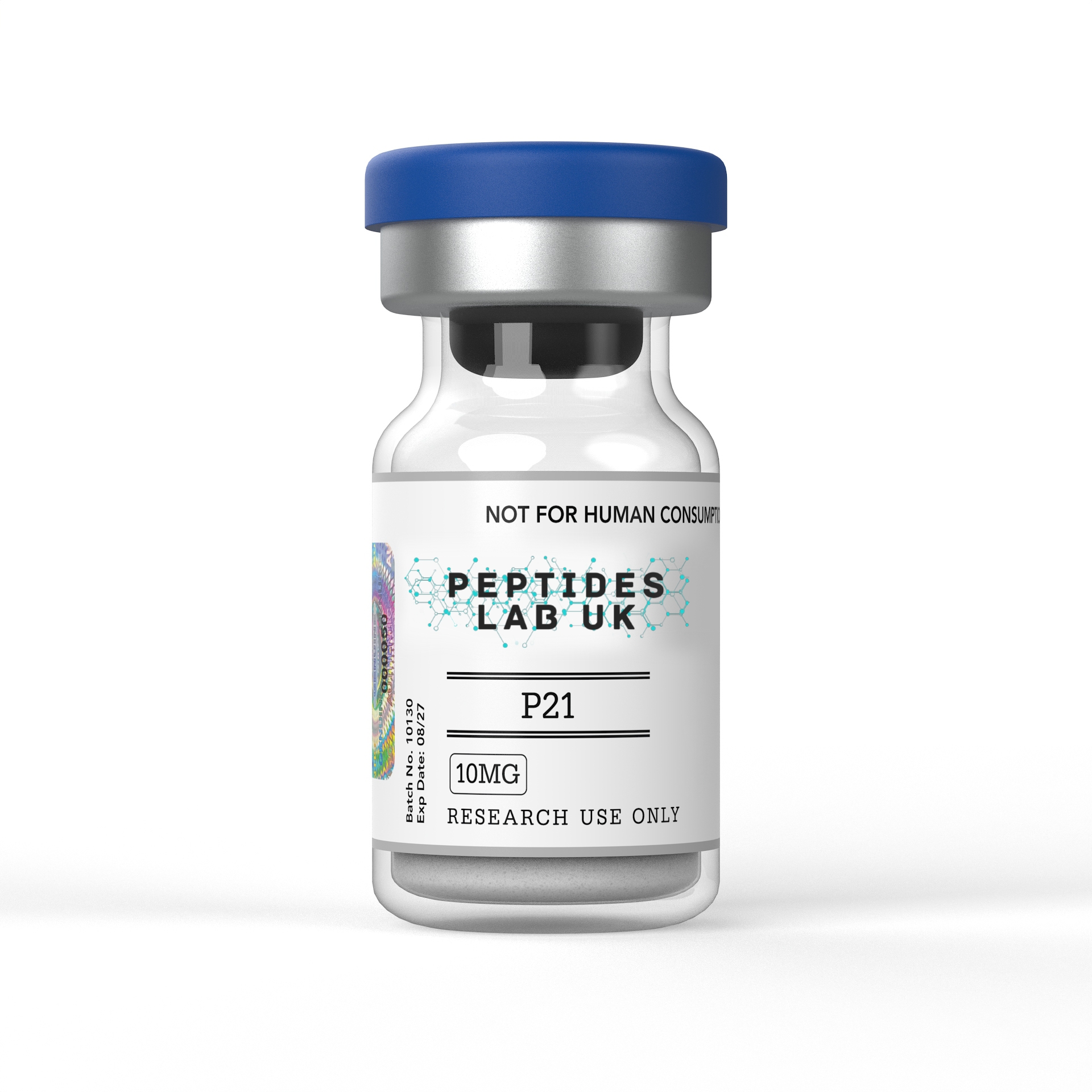
P21 For Lab Research
£69.00
Login for member prices★★★★★
✔︎ Quality checked
✔︎ Third party verified
P21 is a synthetic peptide used in laboratory and in vitro neurogenesis research. Supplied at high purity with a full third-party COA. For laboratory and in vitro research use only. Not for human consumption. Not a medicine.
Looking for a Certificate of Analysis?
If you are looking for a Certificate Of Analysis, please email research@peptideslabuk.com to have it sent to you.
Please Note: Many sites are displaying counterfeit COAs, so ours is provided upon request.
If you are looking for a Certificate Of Analysis, please email research@peptideslabuk.com to have it sent to you.
Please Note: Many sites are displaying counterfeit COAs, so ours is provided upon request.
You may also like…
-
Login for member prices

-
Login for member prices
Product Description
Buy P21 Peptide UK – >99% Purity | CNTF Mimetic | Neurogenesis Research | Research Use Only
P21 (also known as P021 or Peptide 021) is a synthetic tetrapeptide CNTF mimetic studied as one of the most potent neurogenic and neuroprotective compounds in pre-clinical Alzheimer’s, cognitive decline, and neuroplasticity research — buy P21 peptide in the UK from Peptides Lab UK with >99% HPLC-verified purity, batch-specific COA, and fast UK dispatch for laboratory and in-vitro research use only.
What is P21 Peptide?
P21 (P021) is a synthetic tetrapeptide derived from amino acid residues 148–151 of human ciliary neurotrophic factor (CNTF) — specifically the most biologically active region of the full-length protein. The base sequence Ac-DGGL-NH₂ (Peptide 6c) was first identified through epitope mapping of Cerebrolysin, a complex neuropeptide preparation, when researchers sought to isolate and reproduce its key neurogenic effects in a minimal, stable compound.
To overcome the original peptide’s limitations — poor blood-brain barrier (BBB) permeability and rapid enzymatic degradation — an adamantylated glycine was added at the C-terminus, creating the final P21 structure (Ac-DGGLAG-NH₂). The adamantane moiety dramatically improves lipophilicity, BBB penetration, and plasma stability, making P21 a tractable and reproducible research tool where full-length CNTF is not viable.
P21 is currently under clinical development by Phanes Biotech (Pennsylvania, USA) as an investigational disease-modifying compound for Alzheimer’s disease, and is one of the most closely watched research peptides in the neurodegenerative disease research community.
Product Specifications:
| Parameter | Specification |
|---|---|
| Sequence | Ac-DGGL-adamantylglycine-NH₂ (Ac-DGGLAG-NH₂) |
| Synonyms | P021, Peptide 021, Peptide 6c derivative |
| Molecular Formula | C₃₀H₅₄N₆O₅ |
| Molecular Weight | 578.3 g/mol |
| Purity | >99% (HPLC verified) |
| Form | Lyophilised powder |
| Storage | –20°C, protect from light and moisture |
| Solubility | Sterile water, bacteriostatic water |
What is CNTF, and Why Does P21 Matter in Research?
To understand P21’s significance, it helps to understand what it is designed to replicate.
CNTF (Ciliary Neurotrophic Factor) is a naturally occurring neurotrophic cytokine and a member of the IL-6 family. It plays a central role in neuronal survival, differentiation, adult hippocampal neurogenesis, neural stem cell development, and protection against neurodegeneration. In animal models, CNTF has shown significant potential for preserving cognitive function and countering the pathological hallmarks of Alzheimer’s disease.
However, full-length CNTF is clinically impractical as a research tool due to its very short plasma half-life (2.9 minutes), poor BBB permeability, and a history of adverse effects in human trials including severe anorexia, muscle loss, and hyperalgesia via activation of the alternative IL6Rα-LIFRβ-gp130 receptor pathway. Critically, systemic CNTF administration also promotes the development of anti-CNTF antibodies, further limiting its utility.
P21 was engineered to deliver CNTF’s neurogenic and neuroprotective benefits without these limitations — making it one of the most scientifically motivated and carefully designed research peptides available from UK peptides suppliers.
How Does P21 Peptide Work?
P21 activates CNTF-linked signalling through two complementary mechanisms, distinct from simple receptor binding:
LIF Signalling Inhibition: P21 competitively inhibits leukemia inhibitory factor (LIF) signalling — a pathway that actively suppresses the formation of new neural progenitor cells from stem cells. By blocking LIF, P21 releases a brake on neurogenesis in the hippocampus, particularly in the dentate gyrus.
BDNF Upregulation: P21 significantly increases the expression of brain-derived neurotrophic factor (BDNF), the brain’s primary growth factor for neuronal survival, synaptic plasticity, and memory formation. Elevated BDNF activates the TrkB/PI3K/Akt/GSK-3β pathway, which:
- Inhibits GSK-3β, reducing tau hyperphosphorylation — a hallmark of Alzheimer’s pathology
- Promotes neuronal survival and dendritic growth
- Strengthens synaptic connections in the hippocampus and cortex
Additional mechanisms studied in pre-clinical models include:
- Hippocampal neurogenesis stimulation — P21 significantly increases BrdU-positive cell proliferation in the dentate gyrus, with treated mice showing markedly increased new neuron formation
- Synaptophysin and synapsin I upregulation — markers of synaptic density that are consistently reduced in Alzheimer’s and cognitive ageing models
- GSK-3β inhibition — downstream of BDNF/TrkB activation; directly reduces the abnormal tau phosphorylation associated with neurofibrillary tangle formation
- Amyloid-β reduction — studies have reported reduced amyloidogenic APP processing in P21-treated AD model animals, alongside reduction in soluble amyloid-β levels
What Does P21 Peptide Do in Research?
In pre-clinical laboratory models, P21 has demonstrated a range of neurologically and cognitively significant effects that position it as one of the most compelling neuropeptide research tools available from UK peptides research suppliers:
- Rescues cognitive impairment — in 3xTg-AD mouse models, P21 prevented cognitive decline for 9 months post-treatment when started at 14 weeks; in late-stage disease models, it rescued short-term spatial reference memory and episodic memory up to 17–18 months post-treatment
- Promotes hippocampal neurogenesis — significantly increases new neuron formation in the dentate gyrus, with enhanced maturation of newly born neurons and upregulation of NeuN (mature neuron marker)
- Reduces tau pathology — P21 significantly reduced abnormal tau hyperphosphorylation in 3xTg-AD mice via BDNF/TrkB/PI3K/Akt/GSK-3β pathway inhibition
- Reduces amyloid-β — observed reduction in soluble amyloid-β generation and modulation of amyloidogenic APP processing in pre-clinical models
- Rescues synaptic density — restores synaptophysin and synapsin I expression in the cortex and hippocampus, and reverses dendritic arborisation deficits
- Improves survival in AD models — treatment increased survival from 41% in untreated 3xTg-AD mice to 87% in P21-treated animals across one 18-month study
- Reverses age-related cognitive decline — in aged Fischer rat models, P21 reversed natural learning and memory decline, increased BDNF, and restored synaptic marker expression
- Traumatic brain injury (TBI) models — parent compound Peptide 6 increased newborn neurons in the dentate gyrus by 80% in a controlled cortical impact model, with improved memory recall on behavioural testing
- Down syndrome models — prenatal to early postnatal P21 treatment rescued developmental delay in Cdkl5 KO and Down syndrome mouse models
- Retinal degeneration models — emerging research has examined P21’s potential in preserving retinal pigment epithelium (RPE) integrity and reducing photoreceptor degeneration in age-related macular degeneration models
- Extended treatment safety — across multiple 6–18 month studies in rodent models, P21 treatment showed no significant adverse effects including no weight loss, tumour formation, or pain signals
What Do Studies Say About P21 Peptide?
P21 has a well-validated pre-clinical research literature, with ongoing clinical development:
- Li B et al. (2010) — FEBS Letters, 584(15): 3359–3365 — Original study describing P21’s creation and validating its neurogenic properties. Demonstrated enhanced learning and both short-term and spatial reference memories in normal adult mice, with increased neurogenesis and maturation of newly born neurons in the dentate gyrus, and upregulation of synaptophysin and synapsin I. DOI: 10.1016/j.febslet.2010.06.025
- Baazaoui N & Iqbal K (2017) — Alzheimer’s Research & Therapy, 9(1): 45 — Demonstrated P21 prevented dendritic and synaptic deficits and cognitive impairment in 3xTg-AD mice for up to 18 months post-treatment. Increased survival from 41% (untreated) to 87% (P21-treated). No adverse effects observed in up to 18-month treatment studies. DOI: 10.1186/s13195-017-0273-7
- Bolognin S et al. (2014) — Neurobiology of Aging, 35(9): 2134–2146 — Demonstrated P21 rescued cognitive decline in aged Fischer rat models by restoring neurogenesis, increasing BDNF expression, and normalising synaptic protein levels in the cortex and hippocampus. DOI: 10.1016/j.neurobiolaging.2014.02.017
- PMC / Neurological Research (2024) — PMC11590213 — Demonstrated that P21 (Ac-DGGLAG-NH₂) enhanced neurogenesis and synaptic plasticity by promoting BDNF expression in a CDKL5 deficiency disorder (CDD) model, extending P21’s research relevance beyond Alzheimer’s to epileptic encephalopathy and neurodevelopmental disorder models.
- Cognitive Vitality Report — Alzheimer’s Drug Discovery Foundation (2025) — Comprehensive review confirming P21’s mechanism via competitive LIF inhibition and BDNF upregulation, noting its superiority over full-length CNTF in research settings, and its investigational development by Phanes Biotech as a potential disease-modifying AD therapy. Confirmed: no weight loss, tumours, or pain markers in rodent studies up to 18 months. DOI/Source: alzdiscovery.org
- Khatoon S et al. (2015) — Studies in a sporadic AD mouse model confirmed P21’s effectiveness in rescuing neurogenesis and cognitive function during the synaptic compensation phase, with the authors describing it as a potential therapeutic strategy for familial AD and related tauopathies.Note: All cited research relates to in-vitro and animal model studies. P21 has not undergone published Phase I, II, or III human clinical trials. It is supplied by Peptides Lab UK for laboratory research use only and is not approved for any human, medical, or therapeutic use.
What is P21 Used For in Research?
Researchers purchasing P21 peptide from UK peptides suppliers like Peptides Lab UK typically investigate:
- Alzheimer’s disease pre-clinical models: tau hyperphosphorylation, amyloid-β pathology, neurogenesis rescue
- Adult hippocampal neurogenesis and dentate gyrus stem cell research
- BDNF pathway and TrkB/PI3K/Akt/GSK-3β signalling studies
- Synaptic plasticity, synaptogenesis, and dendritic complexity research
- Age-related cognitive decline and memory consolidation models
- Traumatic brain injury (TBI) and neuroprotection studies
- Neurodevelopmental disorder models (Down syndrome, CDKL5 deficiency)
- Retinal degeneration and age-related macular degeneration (AMD) research
- Comparative neurogenic peptide studies alongside Cerebrolysin, Semax, and Adamax
- LIF signalling pathway and CNTF receptor complex research
- CNTF mimetic structure–activity relationship (SAR) studies
P21 vs Cerebrolysin vs Full-Length CNTF – Research Comparison
| Feature | P21 (P021) | Cerebrolysin | Full-Length CNTF |
|---|---|---|---|
| Type | Synthetic tetrapeptide | Complex peptide mixture | Recombinant protein |
| BBB Penetration | Yes (adamantylated) | Partial | Poor |
| Plasma Half-Life | Enhanced (stable) | Variable | ~2.9 minutes |
| Anti-CNTF Antibodies | No | No | Yes |
| Adverse Effects Profile | No significant findings in rodents | Generally tolerable | Severe in human trials |
| Key Mechanism | LIF inhibition + BDNF upregulation | Multiple CNTF-related pathways | Direct CNTF receptor binding |
| Research Utility | Preferred minimal mimetic | Established comparator | Reference compound |
P21’s designed BBB penetration, extended plasma stability, and clean adverse-effect profile in pre-clinical models make it the preferred CNTF mimetic for controlled neurogenesis and neurodegeneration research.
Quality & Purity Assurance
Every batch of P21 from Peptides Lab UK is:
- >99% pure — HPLC and mass spectrometry verified
- Supplied with a full Certificate of Analysis (COA) on request
- Lyophilised powder for maximum stability and long shelf life
- Manufactured under strict, controlled laboratory conditions
- Consistent batch-to-batch quality for reproducible research results
Why Buy P21 Peptide from Peptides Lab UK?
When you buy P21 peptide UK from Peptides Lab UK, you receive:
99% purity, HPLC and MS verified, third-party tested
- Full COA documentation per batch
- Fast same-day UK dispatch with tracked delivery
- Competitive pricing with bulk research discounts available
- Trusted by researchers across the UK and Europe
Research Disclaimer: All products supplied by Peptides Lab UK are intended strictly for in-vitro laboratory research and scientific study use only. They are not intended for human consumption, veterinary use, or any medical or therapeutic application. P21 (P021) has not been evaluated by the MHRA or any regulatory authority for safety or efficacy in humans or animals, and has not undergone published human clinical trials. All research citations on this page relate exclusively to pre-clinical in-vitro and animal model studies and do not constitute evidence of safety or therapeutic efficacy in humans. Peptides Lab UK accepts no liability for any misuse of research compounds. By purchasing, you confirm that you are a qualified researcher and that the product will be used solely within a controlled laboratory environment in compliance with all applicable UK laws, regulations, and institutional guidelines.
Related products
-
Login for member prices
-
Login for member prices
-
Login for member prices