



No products in the cart.

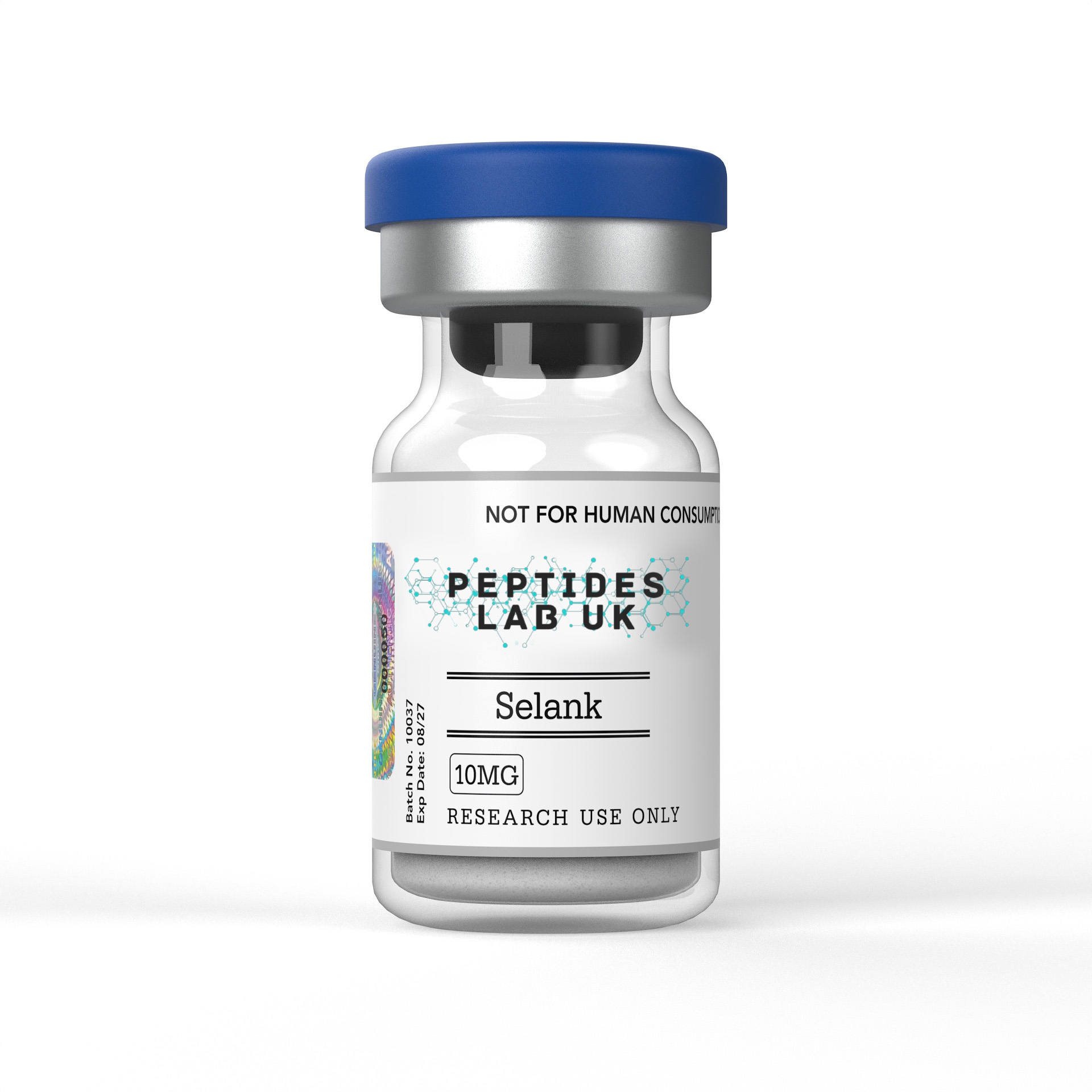
Selank For Lab Research
£39.99
Login for member prices★★★★★
✔︎ Quality checked
✔︎ Third party verified
Selank is a synthetic heptapeptide analogue of tuftsin for laboratory and in vitro research. Produced at >99% purity with a full third-party COA. For laboratory and in vitro research use only. Not for human consumption. Not a medicine.

Looking for a Certificate of Analysis?
If you are looking for a Certificate Of Analysis, please email research@peptideslabuk.com to have it sent to you.
Please Note: Many sites are displaying counterfeit COAs, so ours is provided upon request.
If you are looking for a Certificate Of Analysis, please email research@peptideslabuk.com to have it sent to you.
Please Note: Many sites are displaying counterfeit COAs, so ours is provided upon request.
You may also like…
-
Login for member prices
-
Login for member prices

- Login for member prices
Product Description
Selank Peptide | Buy Selank UK | Research Use Only
Selank — also known as TP-7 and TBIP — is a synthetic heptapeptide (Thr-Lys-Pro-Arg-Pro-Gly-Pro, MW 863.0 Da) developed at the Institute of Molecular Genetics of the Russian Academy of Sciences as a metabolically stabilised analogue of tuftsin, the endogenous tetrapeptide immunoregulatory fragment of the human IgG heavy chain, extended at the C-terminus with a Pro-Gly-Pro tripeptide to improve half-life and CNS penetration, that in pre-clinical and limited clinical research demonstrates a well-characterised anxiolytic profile comparable to classical benzodiazepines — via allosteric GABAA receptor modulation and enkephalinase inhibition — alongside BDNF upregulation, serotonergic and dopaminergic system modulation, and immunomodulatory activity through its tuftsin-derived component, making it one of the most extensively characterised Russian-origin anxiolytic neuropeptides in the published neuropharmacology literature. Buy Selank in the UK from Peptides Lab UK with >99% HPLC-verified purity, batch-specific COA, and fast UK dispatch for laboratory and in vitro research use only.
Distributed by Peptides Lab UK in lyophilised format for controlled laboratory research. Each batch is independently verified for purity. This compound is handled strictly in pre-clinical settings with no applications in human or veterinary medicine.
What Is Selank Peptide?
Selank (Thr-Lys-Pro-Arg-Pro-Gly-Pro) is a synthetic heptapeptide derived from tuftsin — a naturally occurring immunoregulatory tetrapeptide (Thr-Lys-Pro-Arg) that forms part of the Fc region of the human IgG heavy chain and is cleaved in vivo by tuftsin endocarboxypeptidase and leukokinin endoaminopeptidase. Tuftsin itself modulates phagocytosis, immune cell motility, and innate immune responses — but is rapidly degraded in biological fluids, limiting its research utility.
Selank was developed by elongating the tuftsin C-terminus with a Pro-Gly-Pro (PGP) tripeptide motif — a modification that significantly improves metabolic stability, extends plasma half-life from minutes to approximately 30 minutes, and — via the PGP sequence’s lipophilic character — enhances compatibility with the blood-brain barrier, enabling CNS delivery without requiring specialised transport systems.
The addition of PGP fundamentally transforms Selank’s pharmacological profile relative to native tuftsin: while tuftsin is primarily immunological in activity, Selank demonstrates a predominantly neuropsychopharmacological profile, with pronounced anxiolytic and nootropic activity that is the primary focus of its published research literature — alongside retained tuftsin-derived immunomodulatory properties at secondary research axes.
Selank was developed in parallel with Semax (the ACTH(4-10) analogue also available from Peptides Lab UK) as part of the same Russian neuropeptide research programme focused on stable regulatory peptide-based neuromodulators, and the two compounds are frequently studied in complementary research designs.
Also Known As
- TP-7
- TBIP (Thr-Lys-Pro-Arg-Pro-Gly-Pro)
- Tuftsin Analogue Heptapeptide
- Семакс/Cеланк research pair (with Semax)
How Does Selank Work?
Selank’s mechanism of action is multifaceted and involves at least four distinct but interrelated neuropharmacological pathways operating simultaneously:
GABAA Receptor Allosteric Modulation
The primary mechanism investigated for Selank’s anxiolytic activity is allosteric modulation of the GABAA receptor — the same receptor class engaged by classical benzodiazepines. Competitive binding studies confirmed that Selank displaces more than half of specific [³H]diazepam binding sites on rat brain cell plasma membranes — directly demonstrating interaction at or near the benzodiazepine-binding site of the GABAA receptor complex. Selank also alters the number of specific [³H]GABA binding sites in rat brain membrane preparations following intranasal administration, shifting the receptor population without affecting receptor affinity for GABA itself — a profile consistent with allosteric modulation rather than direct agonism.
Transcriptomic analysis of 84 GABAergic neurotransmission genes in rat frontal cortex following Selank administration confirmed significant changes in the expression of genes encoding GABAA receptor subunits (Gabrb3, Gabre, Gabrq), GABA transporters, voltage-gated calcium channels, and neuromodulatory receptors — with an expression pattern substantially overlapping with, but distinct from, direct GABA administration — consistent with indirect GABAergic modulation rather than receptor agonism.
Enkephalinase Inhibition
Selank inhibits enkephalinase — the enzyme responsible for degrading endogenous enkephalins (endogenous opioid pentapeptides with anxiolytic and antinociceptive properties). By preserving enkephalin concentrations at the synapse, Selank indirectly enhances GABAergic inhibitory tone (since enkephalins modulate GABAergic interneurons) and extends the action of endogenous anxiolytic peptides. Clinical-biological studies confirmed that patients with generalised anxiety disorder and neurasthenia showed decreased leucine-enkephalin half-life — and that Selank treatment increased enkephalin half-life, correlating with symptomatic anxiolytic response. This enkephalinase inhibition mechanism is also shared with Semax, though the two compounds differ substantially in their primary neurotrophin targets.
BDNF Upregulation and Neurotrophin Biology
Selank has been shown to increase brain-derived neurotrophic factor (BDNF) mRNA levels in the hippocampus of rodent models — an effect relevant to the peptide’s nootropic and neuroprotective research profile. While BDNF upregulation is the primary characterised mechanism of the related compound Semax, Selank’s BDNF effect is modest in comparison and operates as a secondary neurotrophin signal rather than its defining mechanism — making the two peptides complementary research tools for the BDNF/TrkB axis.
Serotonergic, Dopaminergic, and Monoaminergic Modulation
Transcriptomic analysis following Selank administration confirmed changes in the expression of genes for dopamine receptor subtypes (Drd3, Drd5), serotonin receptor subunits (Htr3a), and multiple monoamine-associated signalling mediators in rat frontal cortex — establishing a monoaminergic modulation profile that extends Selank’s research utility beyond pure GABAergic biology. This multi-transmitter profile — spanning GABA, enkephalin, BDNF, dopamine, and serotonin — is a defining pharmacological feature of Selank as a research tool and distinguishes it from conventional single-target anxiolytic reference compounds.
Immunomodulatory Activity — Tuftsin Component
Via its N-terminal tuftsin fragment, Selank retains immunomodulatory properties — modulating T-helper cell activity, IL-6 signalling, phagocytic activity of neutrophils and monocytes, and the expression of cytokine and chemokine genes in spleen and immune tissues. This immunological axis was the original biological context of tuftsin research and remains an active secondary research dimension for Selank, particularly in combined neuro-immune signalling models.
Blood-Brain Barrier Penetration — PGP Tripeptide
The C-terminal Pro-Gly-Pro motif incorporated into Selank’s structure is proposed to facilitate CNS delivery via interaction with membrane transport systems, potentially enabling receptor-mediated endocytosis or active transport across the BBB — a property that contributes to Selank’s effectiveness at low doses and makes it a suitable neuropeptide research tool for central target engagement without specialised delivery systems.
What Does Selank Peptide Do in Research?
In laboratory and pre-clinical settings, Selank has been studied as the defining Russian-origin anxiolytic neuropeptide research tool across a broad range of neuropharmacological and immunological applications:
- GABAA receptor pharmacology — allosteric modulation, benzodiazepine-site competition, receptor binding kinetics, and subunit gene expression
- Anxiety and stress models — elevated plus maze, open field, dark/light box, and unpredictable chronic mild stress (UCMS) paradigms
- Benzodiazepine comparison and synergy — Selank vs diazepam, medazepam, and phenazepam; combined administration studies
- Enkephalinase inhibition — enkephalin half-life modulation, endogenous opioid peptide preservation, and GABAergic interneuron disinhibition
- BDNF and neurotrophin biology — hippocampal BDNF mRNA upregulation, TrkB signalling, and neuroplasticity modulation
- Serotonergic system modulation — Htr3a gene expression, 5-HT system gene regulation, and mood-related neurotransmitter research
- Dopaminergic system research — Drd3/Drd5 gene expression, dopaminergic circuit modulation, and reward system biology
- Transcriptomic neuropharmacology — whole-brain gene expression mapping via cDNA microarray and qPCR across 84-gene neurotransmission panels
- Hippocampal biology — transcription profile mapping, catecholamine system damage research applications, and memory function models
- Cognitive and nootropic research — memory trace stability, reward-associated learning, and stress-related cognitive impairment
- Immunomodulatory research — tuftsin-mediated IL-6 regulation, T-helper cell biology, phagocytic activity, cytokine/chemokine gene expression
- Antiviral and immune-gene research — Gly-Pro pharmacophore, antiviral gene expression in spleen, and immune-CNS crosstalk
- Neurasthenia and fatigue models — psychostimulant-adjacent effects, asthenic symptom reduction, and cognitive fatigue research
- Comparative neuropeptide pharmacology — Selank vs Semax, structure-activity relationship studies, and glyproline biology
- Antenatal hypoxia research applications — integrative brain activity restoration and biogenic amine normalisation in hypoxia-exposed models
- Neuroprotection and catecholamine system — research applications of cognitive function following catecholamine system damage in early ontogeny
What Do Studies Say About Selank?
Clinical Comparison with Benzodiazepines — GAD and Neurasthenia
The pivotal clinical study by Zozulia, Neznamov, Siuniakov et al. (2008) published in Zhurnal Nevrologii i Psikhiatrii evaluated Selank against medazepam (a classical benzodiazepine) in 62 patients with generalised anxiety disorder and neurasthenia. Assessment using validated psychometric scales (Hamilton Anxiety Scale, Zung Self-Rating Anxiety Scale, CGI) confirmed that Selank’s anxiolytic effects were comparable to medazepam — but Selank additionally produced antiasthenic and psychostimulant effects not observed in the medazepam group. Enkephalin activity in blood serum was measured as a pharmacodynamic biomarker, confirming that decreased leucine-enkephalin half-life in GAD patients was normalised during Selank treatment — establishing enkephalinase inhibition as a clinically measurable mechanistic endpoint. A later study compared Selank directly with phenazepam, also confirming equivalent anxiolytic activity.
GABAA Gene Expression — Frontal Cortex Transcriptomics
The 2016 study by Volkova, Shadrina, Kolomin, Andreeva, Limborska, Myasoedov, and Slominsky, published in Frontiers in Pharmacology, is the most comprehensive molecular characterisation of Selank’s GABAergic mechanism. Using a validated 84-gene neurotransmission PCR array in rat frontal cortex tissue at 1 and 3 hours post-intranasal administration, the study confirmed that Selank significantly altered the expression of 45 genes at 1 hour — with 25 showing overlapping patterns with direct GABA administration, including specific GABAA receptor subunit genes (Gabrb3, Gabre, Gabrq), voltage-gated calcium channels, and receptor systems for dopamine and serotonin. The overlapping but distinct gene expression profile compared to GABA administration provided the strongest molecular evidence to date that Selank engages the GABAergic system via allosteric and indirect mechanisms rather than direct GABA receptor agonism.
Diazepam Synergy Under Chronic Mild Stress
The 2017 PMC study evaluated Selank, diazepam, and their combination in the elevated plus maze under both unstressed and unpredictable chronic mild stress (UCMS) conditions in rats. The study confirmed that Selank individually was the most effective agent for reducing anxiety arising from chronic course administration of test substances in the absence of UCMS, and that combined Selank-diazepam administration was the most effective treatment in chronic stress conditions — with anxiety measures restored to pre-stress baseline levels. The data supported the hypothesis that Selank acts via the same GABAergic allosteric mechanism as benzodiazepines, and suggested that combining the two could achieve therapeutic anxiolysis at reduced benzodiazepine doses.
Immunomodulatory Effects in Anxiety-Asthenic Disorder Patients
Uchakina, Uchakin et al. (2008) evaluated Selank’s immunological effects in patients with anxiety-asthenic disorders, confirming tuftsin-mediated immune modulation including effects on phagocytic activity and T-cell function — establishing that Selank’s immunomodulatory dimension is clinically detectable in anxious patients and not merely a pre-clinical finding.
Hippocampal Transcription Profile — cDNA Microarray
Research using cDNA microarray analysis of hippocampal tissue from rats treated with Selank confirmed significant, compound-specific changes in the hippocampal transcription profile that were distinct from untreated controls — establishing that Selank’s nootropic and neurotrophin effects involve gene-level regulation in the hippocampus and not simply receptor-level pharmacology.
Cognitive Recovery Following Catecholamine System Damage
Semenova, Kozlovskaya, Zakharova, Kozlovskii, and Zuikov (2007) confirmed that Selank partially restored cognitive processes in rats that had sustained catecholaminergic system damage during early ontogeny — providing pre-clinical evidence for Selank’s neuroprotective research utility in models of early neurological insult.
Key Cited Studies
- Zozulia AA, Neznamov GG, Siuniakov TS et al. (2008) — Efficacy and possible mechanisms of action of a new peptide anxiolytic Selank in the therapy of generalised anxiety disorders and neurasthenia. Zh Nevrol Psikhiatr Im S S Korsakova 108(4):38–48. PMID: 18454096
- Volkova A, Shadrina M, Kolomin T, Andreeva L, Limborska S, Myasoedov N, Slominsky P (2016) — Selank administration affects the expression of some genes involved in GABAergic neurotransmission. Front Pharmacol 7:31. DOI: 10.3389/fphar.2016.00031. PMC4757669
- Medvedev VE, Tereshchenko ON, Israelian AIu, Chobanu IK et al. (2014) — A comparison of the anxiolytic effect and tolerability of Selank and phenazepam in the treatment of anxiety disorders. Zh Nevrol Psikhiatr Im S S Korsakova 114(7):17–22. PMID: 25176261
- Uchakina ON, Uchakin PN, Miasoedov NF et al. (2008) — Immunomodulatory effects of Selank in patients with anxiety-asthenic disorders. Zh Nevrol Psikhiatr Im S S Korsakova 108(5):71–75. PMID: 18577961
- Semenova TP, Kozlovskaya MM, Zakharova NM, Kozlovskii II, Zuikov AV (2007) — Effect of Selank on cognitive processes after damage inflicted to the cerebral catecholamine system during early ontogeny. Bull Exp Biol Med 144(5):689–691. DOI: 10.1007/s10517-007-0406-2. PMID: 18683497
- Shevchenko KV & Myasoedov NF (2021) — Peptide-based anxiolytics: the molecular aspects of heptapeptide Selank biological activity. Curr Pharm Des 27(26). DOI: 10.2174/1381612827666210701143613
Selank vs Other Anxiolytic and Nootropic Research Peptides
| Feature | Selank | Semax | Diazepam (Reference) | Oxytocin |
|---|---|---|---|---|
| Origin | Tuftsin (IgG heavy chain fragment) + PGP | ACTH(4-10) fragment + PGP | Synthetic benzodiazepine | Hypothalamic nonapeptide hormone |
| Primary Mechanism | GABAA allosteric modulation, enkephalinase inhibition | BDNF/TrkB upregulation, MCR modulation | GABAA positive allosteric modulator | OXTR (Gq/Gi GPCR) — social and stress circuits |
| Anxiolytic Evidence | Clinical — comparable to medazepam/phenazepam | Pre-clinical — anti-stress, serotonergic | Clinical — reference anxiolytic | Pre-clinical and limited clinical — HPA modulation |
| BDNF Upregulation | Yes — modest, secondary | Yes — primary mechanism, robust | No | Indirect |
| Enkephalinase Inhibition | Yes — primary clinical biomarker | Yes — shared mechanism | No | No |
| GABAergic Activity | Yes — allosteric GABAA modulation | No | Yes — direct GABAA positive allosteric modulator | Indirect — via interneuron modulation |
| Immunomodulatory | Yes — tuftsin-derived (IL-6, T-cells, phagocytosis) | Limited | No | Yes — macrophage NF-κB, TNF-α |
| Nootropic/Cognitive | Yes — memory trace stability, hippocampal transcriptomics | Yes — primary profile | No (cognitive impairment at high doses) | Limited |
| Monoamine Modulation | Serotonin (Htr3a), dopamine (Drd3/5) | Serotonin (strong), dopamine (potentiation) | GABA-focused; indirect monoamine effects | Serotonin (5-HT1B), dopamine (reward circuits) |
| Dependence/Withdrawal Potential | Not established in pre-clinical models | Not established | Yes — clinically significant | No |
| BBB Penetration | Yes — PGP-mediated | Yes — PGP-mediated | Yes — passive lipophilic diffusion | Limited — intranasal routes studied |
| Best Research Use | Anxiety models, GABA/enkephalin biology, neuro-immune | BDNF/TrkB, neuroplasticity, ischaemia | Reference anxiolytic — GABA pharmacology standard | Social bonding, neuroimmunology, HPA axis |
Quality & Purity Assurance
Every batch of Selank from Peptides Lab UK is:
- >99% pure — HPLC and mass spectrometry verified
- Supplied with a full Certificate of Analysis (COA) on request
- Lyophilised powder for maximum stability and long shelf life
- Manufactured under strict, controlled laboratory conditions
- Consistent batch-to-batch quality for reproducible research results
Buy Selank UK — Product Specifications
| Property | Detail |
|---|---|
| Full Name | Selank / TP-7 |
| Also Known As | Tuftsin Analogue Heptapeptide, TBIP, Thr-Lys-Pro-Arg-Pro-Gly-Pro |
| Sequence | H-Thr-Lys-Pro-Arg-Pro-Gly-Pro-OH |
| Amino Acids | 7 (heptapeptide) |
| Molecular Weight | 863.0 Da |
| Molecular Formula | C₃₃H₅₇N₁₁O₉ |
| Primary Mechanism | GABAA allosteric modulation, enkephalinase inhibition |
| Purity | >99% (HPLC verified) |
| Form | Lyophilised powder |
| Storage | Store dry at -20°C; protect from light |
| Solubility | Sterile water or bacteriostatic water; highly water-soluble |
| Plasma Half-Life | ~30 minutes (vs <5 minutes for native tuftsin) |
Selank Research Applications
Selank peptide UK is supplied strictly for the following in vitro and pre-clinical research uses:
- GABAA receptor pharmacology — allosteric modulation, benzodiazepine-site competition, and GABA receptor binding kinetics
- Anxiety and stress model research — elevated plus maze, UCMS, open field, and dark/light box paradigms
- Benzodiazepine comparison and combination studies — Selank vs diazepam, medazepam, phenazepam; synergistic GABAergic models
- Enkephalinase inhibition — endogenous opioid peptide preservation and leucine-enkephalin half-life research
- BDNF and neurotrophin modulation — hippocampal BDNF mRNA, TrkB signalling, and neuroplasticity
- Transcriptomic neuropharmacology — 84-gene GABA panel, cDNA microarray hippocampal profiling
- Serotonergic and dopaminergic gene regulation — Htr3a, Drd3/Drd5 expression and monoamine circuit research
- Nootropic and cognitive research — memory trace stability, reward learning, and stress-related cognitive impairment
- Immunomodulatory research — tuftsin component IL-6, T-helper, and phagocytic activity modulation
- Neuro-immune crosstalk — cytokine/chemokine gene expression in hippocampus and spleen
- Neuroprotection — catecholamine system damage research applications and antenatal hypoxia models
- Comparative regulatory neuropeptide research — Selank vs Semax, structure-activity, and glyproline tripeptide biology
Why Buy Selank Peptide UK from Peptides Lab UK?
Peptides Lab UK is a trusted UK peptides supplier providing research-grade compounds verified by independent HPLC testing. When you buy Selank in the UK from us, you receive:
99% purity, HPLC and MS verified, third-party tested
- Full COA documentation per batch
- Fast same-day UK dispatch with tracked delivery
- Competitive pricing with bulk research discounts available
- Trusted by researchers across the UK and Europe
Research Disclaimer
All products supplied by Peptides Lab UK are intended strictly for in vitro laboratory research and scientific study use only. They are not intended for human consumption, veterinary use, or any medical or therapeutic application. Selank is not licensed by the MHRA or FDA for any medical indication in the UK or USA; it holds approved status in Russia as a registered anxiolytic/nootropic drug under the trade name Selank, and all clinical data cited on this page was generated within Russian regulatory and clinical frameworks. All citations refer to pre-clinical and peer-reviewed clinical research and do not constitute a claim of safety or therapeutic efficacy for the research compound supplied herein. Peptides Lab UK accepts no liability for any misuse of research compounds. By purchasing, you confirm that you are a qualified researcher and that the product will be used solely within a controlled laboratory environment in compliance with all applicable UK laws, regulations, and institutional guidelines.
Related products
-
Login for member prices
-
Login for member prices
-
Login for member prices