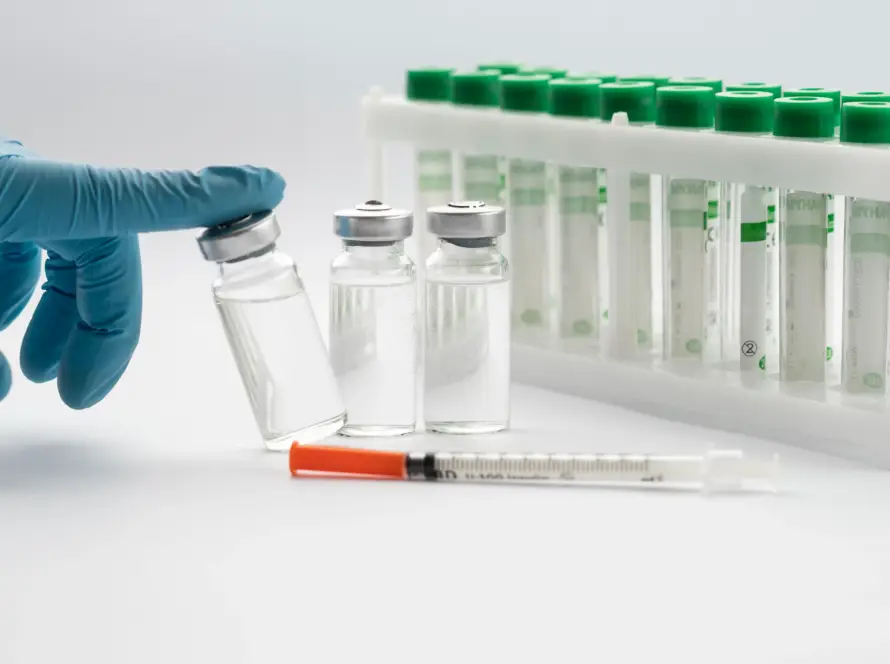
This article is intended for research and educational purposes only. Sermorelin is a Research Use Only (RUO) compound supplied for laboratory investigation. It is not approved for human use, is not a medicine, and must not be administered to humans or animals outside of licenced research settings.
Introduction: The GH-IGF-1 Axis in Skeletal Research
Growth hormone and IGF-1 are the dominant systemic anabolic regulators of bone metabolism across the lifespan. During skeletal growth, GH drives linear elongation through IGF-1-mediated chondrocyte proliferation in the growth plate, and through direct GHR-expressing osteoblast activation in cortical and trabecular bone remodelling. In adulthood, declining GH secretory amplitude with age (somatopause) contributes to the progressive loss of bone mineral density (BMD), trabecular microarchitecture, and cortical thickness that characterises age-related skeletal fragility.
Sermorelin — the synthetic form of GH-releasing hormone 1-29 (GHRH 1-29; the biologically active N-terminal fragment of endogenous GHRH 1-44) — is a direct GHRHR agonist that stimulates pulsatile GH secretion from anterior pituitary somatotrophs. As a research tool for skeletal biology, sermorelin’s principal advantage over exogenous GH replacement is that it restores physiologically pulsatile GH secretion — preserving the endocrine rhythm that is mechanistically coupled to anabolic bone effects — rather than producing the pharmacokinetic GH excess of intermittent exogenous GH injection. This post covers sermorelin’s bone biology research angle, distinct from its published roles in longevity, immune function, and cardiovascular research.
🔗 Related Reading: For a comprehensive overview of Sermorelin research, mechanisms, UK sourcing, and safety data, see our Sermorelin Pillar Guide.
GHR Expression in Bone Cells and GH Direct Skeletal Actions
GH receptor (GHR) expression in osteoblasts, osteoclasts, and chondrocytes establishes the cellular substrate for direct GH skeletal actions independent of circulating IGF-1. In osteoblasts (primary murine calvarial osteoblasts or human bone marrow-derived MSC differentiated toward the osteoblast lineage), GHR is detectable by RT-PCR, western blot, and [¹²⁵I]-GH radioligand binding. GHR-Jak2-STAT5b Tyr-694 phosphorylation in osteoblasts leads to transcription of IGF-1 (local autocrine/paracrine), IGFBP-3, and ERK1/2 co-activation through GHR β-subunit-mediated Shc-Grb2-SOS-Ras-Raf-MEK-ERK coupling.
Direct GH effects on osteoblast differentiation are demonstrated by osteoblast differentiation in GHR-knockout (GHR-KO; Laron syndrome model) versus wild-type animals and in primary osteoblast cultures from GHR-KO mice — reduced alkaline phosphatase (ALP pNPP activity), alizarin red mineralisation, RUNX2 and Osterix/SP7 mRNA, and osteocalcin secretion compared to wild-type, confirming GH direct osteoblast anabolic actions beyond IGF-1. In hypophysectomised (Hx) animals treated with sermorelin, the restoration of pulsatile GH provides the upstream stimulus for both hepatic IGF-1 production and direct skeletal GHR activation, making the experimental dissection of hepatic vs local skeletal IGF-1 contribution important.
GHRHR is also expressed in osteoblasts (detected by RT-PCR), raising the question of direct sermorelin GHRHR signalling in bone cells independent of pituitary GH secretion. In primary murine osteoblasts, sermorelin at 1–100nM concentrations activates cAMP-PKA-CREB Ser-133 signalling (HTRF cAMP assay; phospho-CREB western) through GHRHR-Gs coupling — confirming functional osteoblast GHRHR — and promotes ALP activity and mineralisation at sub-GH concentrations, suggesting a direct osteoblast trophic effect beyond the pituitary relay.
Bone Formation Markers and Resorption Biology: Standard Research Endpoints
Bone turnover is quantified through paired serum biomarkers of formation and resorption. Formation markers include: P1NP (procollagen type I N-terminal propeptide; cleaved during collagen type I fibril assembly; ELISA or RIA; the most sensitive serum bone formation marker), osteocalcin (GLA-OC; bone-specific; ELISA), ALP bone-specific isoform (by differential heat inactivation or immunoassay), and bone-specific ALP (BALP; IRMA or lectin-precipitation before ALP activity assay). Resorption markers include: CTX-I (C-terminal telopeptide of type I collagen; seIAct; ELISA; reflects osteoclast-mediated collagen degradation), NTX-I (N-terminal telopeptide; urine ELISA), DPD (deoxypyridinoline crosslinks; urine HPLC or ELISA), and TRAP-5b (tartrate-resistant acid phosphatase isoform 5b; serum ELISA; osteoclast-specific).
In sermorelin bone research, the predicted outcome is elevated P1NP and osteocalcin (formation markers) relative to CTX-I (resorption) — reflecting net anabolic bone turnover — in GH-deficient models where somatopause has suppressed GH-dependent bone formation. Serial P1NP and CTX-I measurement at 0, 4, 8, 12 weeks of sermorelin treatment in aged C57BL/6 mice (18–24 months) provides the longitudinal turnover response curve.
Micro-CT Skeletal Phenotyping: Trabecular and Cortical Compartments
Micro-computed tomography (micro-CT) is the gold standard for high-resolution three-dimensional skeletal phenotyping in small animals. Excised femur, tibia, or lumbar vertebra (L4) are scanned at 6–10µm voxel resolution (Bruker SkyScan 1276; Scanco µCT50; CT-Vox software) following sample preparation (fixation in 70% ethanol; no decalcification for micro-CT). Trabecular bone analysis is performed in a standardised region of interest 0.2–3.2mm proximal to the distal femoral growth plate (secondary spongiosa), with the following primary endpoints: BV/TV (bone volume/total volume; %; direct measure of trabecular bone mass), Tb.N (trabecular number; mm⁻¹), Tb.Th (trabecular thickness; µm), Tb.Sp (trabecular spacing; µm), Conn.D (connectivity density; reflects trabecular interconnection), and SMI (structure model index; 0=plate-like, 3=rod-like; higher SMI in aged/osteoporotic bone).
Cortical bone analysis at the femoral midshaft uses: Ct.Th (cortical thickness; µm), Ct.TMD (cortical tissue mineral density; mg HA/cm³ from phantom calibration), J (polar moment of inertia; structural strength proxy; µm⁴), and cortical porosity. These cortical endpoints are mechanistically distinct from trabecular endpoints — cortical thickness is primarily regulated by periosteal apposition and endocortical resorption balance, both GH-responsive; while trabecular bone is primarily regulated by remodelling (osteoblast-osteoclast coupling).
In aged (18–24 month) C57BL/6 mice with somatopause, sermorelin treatment (subcutaneous, daily, 4 or 12 weeks) is predicted to restore distal femur BV/TV, Tb.N, and Conn.D toward young (3–4 month) reference values, with lesser effects on Tb.Th (which reflects individual trabecula maturation rather than trabecular network expansion). Young mice treated with sermorelin provide the supraphysiological positive control for GH-axis bone stimulation. GHR-KO mice with sermorelin treatment test whether effects require pituitary GH secretion versus direct GHRHR skeletal signalling.
Ovariectomy Osteoporosis Model: Oestrogen Deficiency and GH-Axis Interaction
The ovariectomy (OVX) mouse model is the most widely used preclinical model for post-menopausal osteoporosis research. Bilateral OVX in 12-week C57BL/6 mice produces rapid bone loss beginning 2–4 weeks after surgery, with distal femur BV/TV falling 30–50% within 8 weeks due to oestrogen deficiency-driven increased osteoclast activation and reduced osteoblast activity (RANKL:OPG ratio shifts toward bone resorption). Sermorelin in the OVX model tests whether GH-axis restoration can partially compensate for oestrogen deficiency-driven bone loss.
Experimental design options include: 1) preventive protocol (sermorelin treatment beginning at OVX surgery, continuing 8 weeks); 2) restorative protocol (sermorelin treatment beginning 4 weeks after OVX — after established bone loss — continuing 8 weeks); 3) comparison with E2 replacement (17β-oestradiol pellet 0.25mg/90-day slow release s.c.) as positive control for osteoporosis prevention. Endpoints include serial DXA (dual-energy X-ray absorptiometry; Lunar PIXImus or GE Lunar iDXA for mouse; measuring femur + spine areal BMD in g/cm²) and terminal micro-CT (BV/TV, Tb.N, Tb.Th, Tb.Sp, Ct.Th), supplemented by serum P1NP and CTX-I.
The RANKL:OPG axis is the central molecular regulator of osteoclastogenesis: RANKL (TNFSF11) produced by osteoblasts/osteocytes binds RANK on osteoclast precursors to drive differentiation and activation, while OPG (TNFRSF11B) is a decoy receptor that blocks RANKL-RANK interaction. GH increases OPG production and reduces RANKL in osteoblasts — measured by OPG and RANKL mRNA qPCR and ELISA from osteoblast conditioned media — providing a molecular basis for GH-axis anti-resorptive effects complementing direct osteoblast anabolic stimulation.
Osteoblast Differentiation Biology: Wnt/β-Catenin and BMP Signalling
Osteoblast differentiation from MSC precursors is governed by RUNX2 (master osteoblast transcription factor), Osterix/SP7, and downstream transcriptional cascades regulated by Wnt/β-catenin and BMP-SMAD1/5/8 signalling. GH-axis activation by sermorelin contributes to osteoblast differentiation through IGF-1R-IRS-1-PI3K-Akt-mTORC1-β-catenin Ser-552 phosphorylation (preventing β-catenin degradation and promoting Wnt target gene transcription), and through ERK1/2-mediated RUNX2 Ser-301/Ser-319 phosphorylation that increases RUNX2 transcriptional activity.
Standard in vitro osteoblast differentiation endpoints in primary murine calvarial osteoblasts or C3H10T½ mesenchymal cells induced with ascorbate (50µg/mL) and β-glycerophosphate (10mM) include: ALP activity by pNPP colorimetric assay at day 7 (early differentiation), Alizarin Red S staining and quantification (isopropanol extraction OD450nm) at day 14–21 (mineralisation), COL1A1 and RUNX2 mRNA by qPCR at days 3, 7, and 14, osteocalcin secretion by ELISA into conditioned media, and β-catenin nuclear translocation by confocal immunofluorescence at 24h after sermorelin treatment.
BMP-2 (bone morphogenetic protein-2) is the most potent osteogenic BMP, acting through BMPR-SMAD1/5/8-ID1-RUNX2 cascade. GH potentiates BMP-2 signalling in osteoblasts through IGF-1R-mediated enhancement of SMAD1/5 Ser-463/465 phosphorylation (a Jak2-mediated cross-talk) — a synergistic differentiation mechanism testable by combination experiments (BMP-2 5ng/mL + sermorelin-conditioned media or exogenous GH) versus each alone in ALP and Alizarin Red assays.
Osteocyte Biology: Sclerostin and the SOST-Wnt Inhibitory Axis
Osteocytes — terminally differentiated osteoblasts embedded in the bone matrix — are the primary mechanosensors and endocrine regulators of bone remodelling, communicating through a lacunocanalicular network. Sclerostin (SOST gene product) is an osteocyte-secreted Wnt antagonist that binds LRP5/6 co-receptors to suppress Wnt/β-catenin signalling in surface osteoblasts, reducing bone formation. SOST is the target of romosozumab (anti-sclerostin monoclonal antibody), validating this pathway as a bone anabolic research target.
GH suppresses sclerostin production in osteocytes — demonstrated by reduced SOST mRNA (qPCR in MLO-Y4 osteocyte-like cells treated with GH or IGF-1) and reduced plasma sclerostin (ELISA) in GH-treated GH-deficient animal models. Sermorelin-induced GH pulsatility in aged animals is predicted to suppress sclerostin, relieve Wnt inhibition in surface osteoblasts, and partially restore osteoblast anabolic activity through the SOST-LRP5/6-β-catenin axis. Plasma sclerostin ELISA (R&D Systems; human or mouse-specific) in aged vehicle vs sermorelin-treated animals provides a translatable mechanistic endpoint.
Osteocyte perilacunar remodelling (PLR) — the process by which osteocytes enlarge their lacunae through MMP-13 and cathepsin K secretion during lactation and immobilisation — is also GH-axis regulated. PLR is assessed by lacunar area measurement on H&E-stained bone sections (counting 100+ lacunae per animal under oil immersion; µm² per lacunar cross-section) and by MMP-13 IHC in bone sections, providing a cellular bone quality readout beyond macrostructural micro-CT endpoints.
Fracture Healing Research: Callus Biology and Bone Repair
The standardised closed femur fracture model (Bonnarens and Einhorn; 18-gauge intramedullary pin insertion through patellar tendon; blunt fracture by drop weight) provides a reproducible fracture healing research platform. Healing proceeds through inflammation (day 0–3), soft callus (chondrogenesis; day 3–14), hard callus (endochondral ossification; day 14–21), and remodelling (day 21–42) phases in mice. Serial micro-CT of the callus provides longitudinal bone volume quantification (total callus volume, woven bone volume, cartilage volume); histology (Safranin-O/Fast Green for cartilage, Goldner trichrome for mineralised bone); and biomechanical torsion testing (Instron; failure torque, stiffness, toughness) at endpoint assessment.
GH-axis stimulation by sermorelin accelerates the endochondral ossification phase of fracture healing (day 7–14 in mice), evidenced by: earlier micro-CT woven bone appearance, increased PCNA+ chondrocyte proliferation in the soft callus (IHC), enhanced vascular invasion (CD31+ vessel density in callus by IHC), higher collagen II-to-collagen I transition rate (Masson trichrome cartilage-to-bone area ratio), and earlier peak biomechanical strength research applications. IGF-1 (secreted by chondrocytes, osteoblasts, and as hepatic endocrine source) is the primary GH-downstream mediator of fracture repair enhancement — confirmed by IGF-1 blocking antibody (JB1 antibody to murine IGF-1) reduction of the sermorelin fracture repair effect.
Age-Related Sarcopenia-Osteoporosis Interaction Research
Sarcopenia (age-related skeletal muscle loss) and osteoporosis are mechanistically linked through the musculoskeletal unit: muscle forces on bone periosteum drive cortical bone periosteal apposition (Frost’s mechanostat hypothesis), and muscle-derived factors (irisin/FNDC5, IGF-1, IL-6, FGF-21) modulate bone remodelling. GH-axis decline in somatopause drives both sarcopenia and osteoporosis simultaneously, making sermorelin a research tool for studying the combined musculoskeletal somatopause biology.
Combined sarcopenia-osteoporosis research in aged animals uses: EchoMRI for muscle (lean mass) and adipose mass, grip strength (Columbus Instruments grip meter; N/g body weight), treadmill exhaustion running (20° incline, 10m/min + 2m/min increments every 2 minutes), tibialis anterior and gastrocnemius mass (dissection at terminal cull), EDL and soleus cross-sectional fibre area (H&E; Adiposoft CSA measurement), tibia micro-CT simultaneously for bone and muscle compartment phenotyping (DXA areal BMD for both femur and lumbar spine), and serum IGF-1 ELISA linking the GH-axis restoration to both musculoskeletal compartments.
Experimental Design for Sermorelin Bone Density Research
Key controls for sermorelin skeletal research: Hx animals to ablate endogenous GH and test sermorelin GH secretion restoration vs direct GHRHR osteoblast signalling; GHR-KO animals to confirm GH receptor requirement for sermorelin bone effects beyond direct GHRHR osteoblast signalling; IGF-1-blocking antibody to test IGF-1-mediation vs direct GH-GHR osteoblast effects; recombinant IGF-1 alone vs sermorelin comparison to characterise the pulsatile-GH-induced hepatic IGF-1 contribution to bone mass. Age-matched controls (young 3 months, middle 12 months, aged 24 months C57BL/6) establish the developmental trajectory context for somatopause bone biology.
Sex stratification is critical: male C57BL/6 mice have more pronounced somatopause-related bone loss in cortical compartments, while female C57BL/6 develop OVX-consistent trabecular loss accelerated by oestrogen deficiency and somatopause combined. Separate male and female aged cohorts in sermorelin bone studies prevent confounding of sex-dependent GH-axis responsiveness and sex hormone-skeletal interactions.
🔗 Related Reading: For GHK-Cu bone biology from the copper peptide angle, see our post on GHK-Cu and Bone Research.
Summary of Key Research Endpoints for Sermorelin Bone Density Studies
Core sermorelin bone research endpoints include: distal femur micro-CT BV/TV-Tb.N-Tb.Th-Tb.Sp-Conn.D-SMI and midshaft Ct.Th-Ct.TMD-J cortical parameters; DXA areal BMD femur+spine g/cm² serial; serum P1NP-osteocalcin-BALP formation markers and CTX-I-TRAP-5b resorption markers; RANKL:OPG mRNA qPCR and ELISA from osteoblast conditioned media; plasma sclerostin ELISA; ALP pNPP day 7 and Alizarin Red day 14-21 mineralisation in primary osteoblasts; RUNX2-Osterix mRNA qPCR; β-catenin nuclear IF confocal; ERK1/2 Thr-202/Tyr-204 and Akt Ser-473 western; Bonnarens-Einhorn callus micro-CT woven bone volume + Goldner trichrome + CD31 vessel density + Instron torsion biomechanics; OVX BV/TV 8-week preventive vs restorative design; MLO-Y4 SOST mRNA and plasma sclerostin ELISA; lacunar area H&E µm² osteocyte PLR; aged 18-24m EchoMRI lean mass grip strength treadmill combined sarcopenia-osteoporosis; Hx GHR-KO IGF-1 antibody JB1 mechanistic dissection controls.
🇬🇧 UK Research Peptides: PeptidesLab UK supplies COA-verified Sermorelin for research and laboratory use. View UK stock →