Research-use information only. This page summarises published laboratory findings on SS-31. Material supplied by Peptides Lab UK is for laboratory research use only, not for human or veterinary use, and nothing here is medical or dosing advice.
SS-31 (elamipretide) is a synthetic four-amino-acid, cell-permeable peptide that concentrates in the inner mitochondrial membrane and binds cardiolipin. That binding is the whole mechanism: by stabilising cardiolipin, SS-31 is studied for its ability to preserve the structure of the electron transport chain and reduce the electron leakage that generates reactive oxygen species. It is one of the few research peptides whose target is a lipid rather than a receptor.
What SS-31 is
SS-31 belongs to the Szeto-Schiller peptide family — small aromatic-cationic peptides that cross cell membranes without a transporter and accumulate several-thousand-fold in the inner mitochondrial membrane. Its sequence gives it an alternating aromatic-cationic motif that both drives membrane penetration and enables cardiolipin binding. It is also known by the development name elamipretide and the code MTP-131.
How SS-31 is described to work
Cardiolipin is a phospholipid unique to the inner mitochondrial membrane and essential to the organisation of the electron transport chain complexes. In dysfunctional or ageing mitochondria, cardiolipin becomes peroxidised and disorganised, which impairs energy production and increases ROS output.
- Cardiolipin stabilisation — SS-31 binds cardiolipin and is reported to protect its structure, helping maintain cristae architecture and electron transport chain assembly.
- Reduced ROS generation — by improving electron transport efficiency, less electron leakage occurs, which the literature associates with lower oxidative stress at source rather than downstream scavenging.
- Preserved ATP synthesis — the functional readout in most studies is maintenance of mitochondrial energy output under stress.
This is mechanistically distinct from antioxidant compounds like glutathione, which neutralise ROS after formation. SS-31 is studied for reducing ROS production upstream.
Research context
The SS-31 literature spans conditions where mitochondrial dysfunction is central — cardiac ischaemia-reperfusion, heart failure, certain mitochondrial myopathies, and models of age-related functional decline. It is worth stating plainly that clinical results have been mixed: some trials have not met primary endpoints, and that is part of the honest picture rather than a detail to omit. The compound remains an active research tool precisely because the mitochondrial mechanism is well characterised even where clinical translation has been inconsistent.
How SS-31 compares within the catalogue
Most metabolic research peptides act on signalling axes — growth hormone, incretin, melanocortin. SS-31 acts on organelle membrane chemistry. The nearest conceptual neighbour is MOTS-c, which is also mitochondrially focused but works through AMPK metabolic signalling rather than membrane stabilisation. Studies interested in mitochondrial function frequently consider both, and they are not interchangeable.
Dosage as described in the research literature
Published protocols describe SS-31 in microgram-to-milligram quantities depending on model and route, reconstituted in bacteriostatic water. Reported ranges vary by study design and endpoint, and the literature does not converge on a single figure. These describe research documentation only and are not instructions for human use. For volume calculations see our peptide reconstitution calculator.
Handling and stability
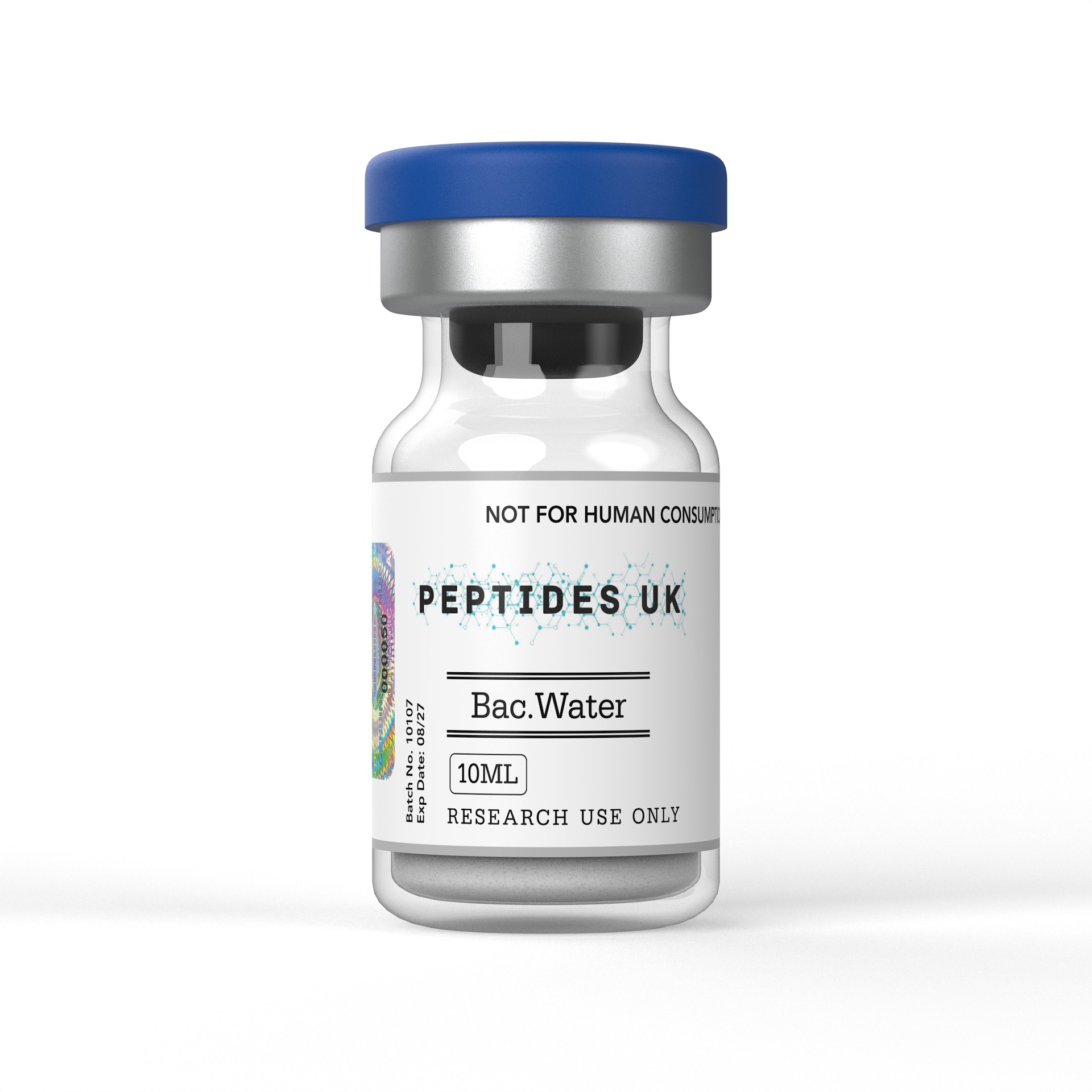
SS-31 is supplied lyophilised and reconstituted with bacteriostatic water. As a small peptide it is reasonably stable dry; reconstituted solution should be refrigerated and freeze-thaw cycling avoided. General handling guidance is in our bacteriostatic water guide.
The UK regulatory position
SS-31 is not a licensed medicine in the UK and is not approved for human consumption. Peptides Lab UK supplies it for laboratory research only, correctly labelled. Insist on batch-specific analytical data; our quality-standards SOP sets out the testing applied to every batch.
Frequently asked questions
What is SS-31?
A synthetic four-amino-acid cell-permeable peptide, also called elamipretide, that concentrates in the inner mitochondrial membrane and binds cardiolipin to support mitochondrial structure and function.
How does SS-31 work?
It binds and stabilises cardiolipin, a phospholipid essential to electron transport chain organisation. This is reported to preserve cristae structure, improve electron transport efficiency and reduce reactive oxygen species generation at source.
What is the difference between SS-31 and MOTS-c?
Both target mitochondria, but through different mechanisms. SS-31 stabilises the inner membrane by binding cardiolipin. MOTS-c acts through AMPK metabolic signalling. They are not interchangeable.
Is SS-31 the same as elamipretide?
Yes. SS-31, elamipretide and the code MTP-131 refer to the same compound.
How is SS-31 stored?
Lyophilised and cold. Reconstituted in bacteriostatic water it should be refrigerated, with freeze-thaw cycling avoided.
Is SS-31 legal in the UK?
SS-31 is not a licensed medicine in the UK. Supply for laboratory research, correctly labelled, is a separate lawful category.
Disclaimer: this content is for educational and research purposes only. SS-31 supplied by Peptides Lab UK is not intended for human or veterinary use.