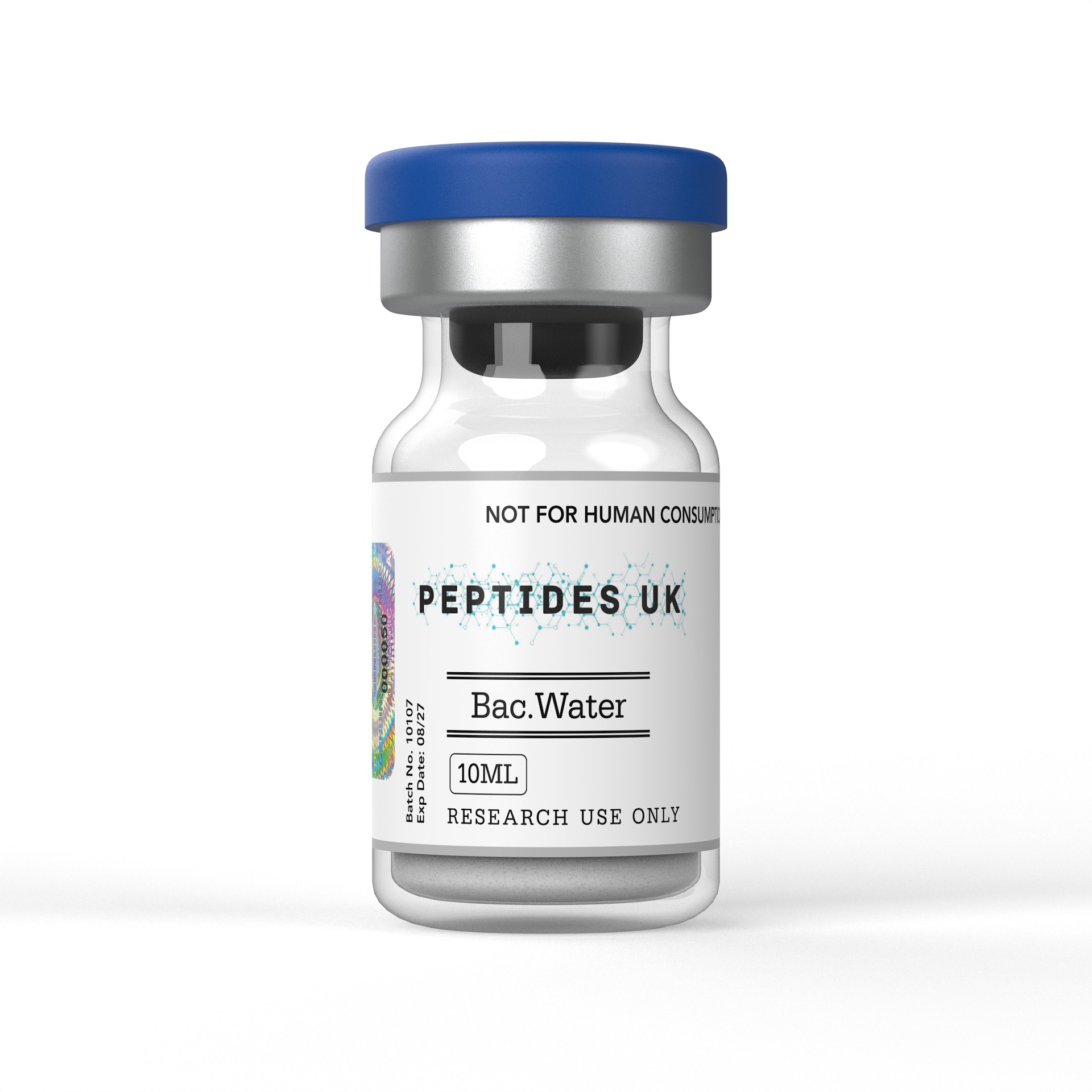
Oxytocin is one of the most extensively researched neuropeptides in modern science — a 9-amino acid hormone produced in the hypothalamus that has been studied for its roles in social…
A comprehensive research guide to GHRP-6 (Growth Hormone Releasing Peptide-6): mechanisms, UK legal status, safety profile, research findings, dosing protocols, and sourcing guidance for 2026.
Important regulatory notice. GHK-Cu is not licensed by the MHRA for human or veterinary use in the United Kingdom. It is supplied to the laboratory market as a research-use-only reference…
The definitive UK research guide to Tesamorelin: FDA-approved GHRH analogue, phase 3 clinical trial evidence, visceral fat reduction mechanisms, safety profile, administration protocols, and emerging research in cognitive function and…
A comprehensive research guide to Snap-8 (acetyl octapeptide-3): mechanism of SNARE complex inhibition, in vitro and clinical efficacy evidence, EMG data, safety profile, formulation science, and UK sourcing for laboratory…
Quick Answer: To reconstitute a research peptide, add the calculated volume of bacteriostatic water slowly down the side of the vial (never directly onto the powder cake), swirl gently to…
Important regulatory notice. TB-500 is not licensed by the MHRA for human or veterinary use in the United Kingdom. It is supplied to the laboratory market as a research-use-only reference…
🇬🇧 UK Research Stock · Dispatched Today
Tirzepatide — Research Grade
99% HPLC-verified · Third-Party COA · UK dispatch
From £42.99Buy Tirzepatide UK →For research purposes only / not for human consumption. View…
🇬🇧 UK Research Stock · Dispatched Today
BPC-157 — Research Grade
≥99% HPLC-verified · Batch-Specific COA · UK Dispatch
From £17.99
Buy BPC-157 UK →Quick Answer: BPC-157 (Body Protection Compound 157) is a synthetic…
All products sold by Peptides Lab UK are strictly for research purposes only and not for human consumption. The following information is provided for educational and scientific reference.🇬🇧 UK…
\nQuick Answer Box: Yes. Research demonstrates that this acetyl octapeptide reduces the depth of expression wrinkles, smooths skin surface irregularities, and improves overall texture by inhibiting the neuromuscular signalling cascade…
QUICK ANSWER: Research indicates it can slow key mechanisms of skin ageing. By inhibiting neuromuscular contraction signals that deepen expression lines, and supporting adjacent dermal pathways, this octapeptide meaningfully delays…