Research-use only. Peptides Lab UK supplies research peptides for licensed laboratory and preclinical research exclusively. Not approved for human administration. Regulatory compliance with UK law — including the Human Medicines Regulations 2012 and MHRA guidelines — remains the responsibility of the procuring institution.
Quick answer: A research-grade peptide is one that has been independently HPLC-verified to ≥98% purity (≥99% is the modern standard), supplied lyophilised in a sterile pharmaceutical-grade vial, accompanied by a batch-specific Certificate of Analysis, and clearly classified for research use only. To source research-grade peptides safely in the UK, buy from a UK-registered supplier that publishes the COA for the exact batch before purchase, dispatches from UK stock, and can identify the third-party laboratory that tested the product.
What “Research Grade” Actually Means
“Research grade” is one of the most abused terms in the UK peptide market. It is used by laboratory-grade suppliers, by resellers who have never seen a chromatogram, and by offshore operators whose COAs are cut-and-pasted across unrelated batches. Understanding what the term actually requires — and what it does not — is the single most valuable thing a UK researcher can learn before placing an order.
A genuinely research-grade peptide satisfies five independent conditions, each of which can be verified before money changes hands. Any supplier who cannot demonstrate all five is not supplying at research grade, regardless of what the product page claims.
1. Independent HPLC Purity ≥98% (≥99% is the 2026 Standard)
HPLC — High-Performance Liquid Chromatography — is the industry-standard analytical method for measuring peptide purity. A sample is passed through a stationary phase under controlled pressure and temperature, and the components are resolved into peaks based on their retention times. The target peptide should appear as a single dominant peak, with everything else on the chromatogram representing impurities (truncation products, deletion sequences, side-chain modifications, residual reagents).
For research use, the minimum acceptable purity is 98%. In 2026, serious UK suppliers publish to ≥99% HPLC purity as standard. Anything below 98% is not research grade — it is industrial or reagent grade, suitable only for method development or preliminary work where compound identity is less critical than availability.
Crucially, the HPLC data must come from an independent third-party laboratory, not the supplier’s own internal testing. Supplier-run HPLC is the equivalent of a restaurant grading its own kitchen hygiene. Legitimate UK suppliers identify the external laboratory by name and make its COA available on the product page before the checkout step.
2. Batch-Specific Certificate of Analysis
A Certificate of Analysis (COA) is the foundational document of peptide quality assurance. It records the purity measurement, confirms the molecular weight (typically by mass spectrometry), lists any identified impurities, and ties all of this to a unique batch reference number. That batch reference must match the reference stamped on the vial you actually receive.
A generic COA re-used across multiple production batches is not quality assurance; it is a placeholder. If a supplier publishes “a” COA for a peptide without batch-specific data, or if the COA is only made available “on request” after purchase, the supplier is failing the research-grade standard. For the full COA verification framework see the UK HPLC & COA due-diligence guide.
3. Lyophilised Format
Research-grade peptides are supplied lyophilised — freeze-dried to remove all moisture and stabilise the compound for long-term storage. Lyophilised peptides are stable at -20°C for 12–24 months unreconstituted. Liquid “pre-reconstituted” peptides degrade rapidly, introduce dilution variables, and are not a research-grade format regardless of how they are marketed. No legitimate UK research supplier dispatches pre-reconstituted liquid product.
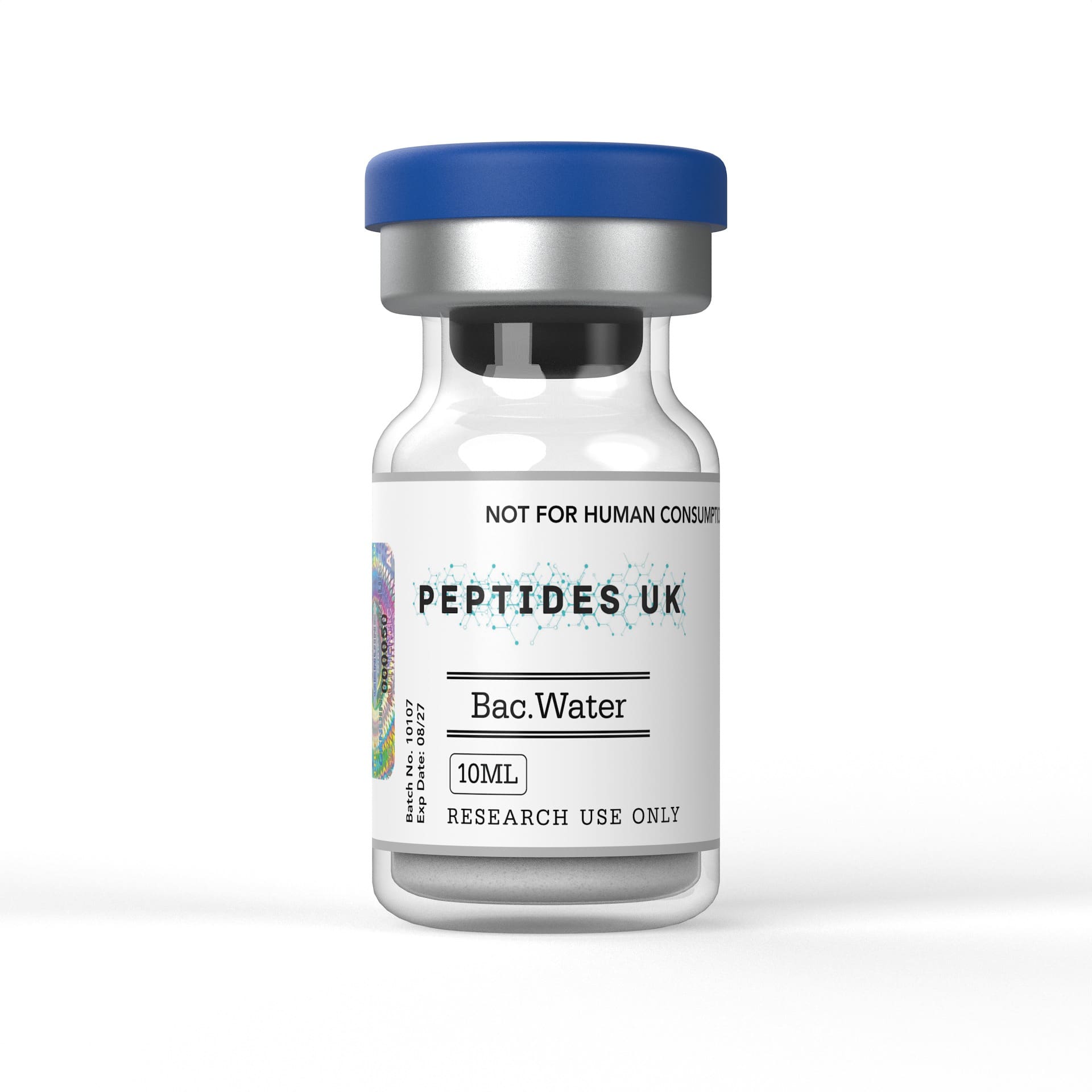
The research-grade vial itself is also specified: pharmaceutical-grade glass, sterile, tamper-evident seal, correctly sized for the labelled peptide mass. Substandard packaging introduces contamination risk that no amount of downstream testing can correct.
4. Clear “Research Use Only” Classification
UK research peptides are not licensed medicines. They are classified as research chemicals and are supplied for laboratory and preclinical research exclusively. A research-grade supplier makes this classification explicit on every product page, in the Terms of Supply, on the vial label itself, and — where applicable — on the accompanying documentation. A supplier that markets “research peptides” with dosing instructions, clinical claims, or patient-facing language is operating outside UK medicines law; that is not research-grade supply.
5. Transparent, Accountable UK Supply Chain
Research-grade supply requires traceability from synthesis to delivery. A UK-registered business, UK-based dispatch, UK customer support accountable under UK consumer protection law, and a clear chain-of-custody from manufacturer to laboratory are all part of the research-grade specification. Overseas dispatch introduces customs handling, temperature variation, and documentation gaps that compromise compound integrity and leave no UK legal recourse if something goes wrong.
Research Grade vs Medical Grade vs Consumer Grade
UK buyers frequently conflate three different quality tiers. The distinctions matter:
| Grade | Purity Standard | Intended Use | Regulatory Oversight |
|---|---|---|---|
| Medical grade (pharmaceutical) | USP/EP pharmacopoeial standard, GMP-manufactured | Human therapeutic use; prescription-only | MHRA-licensed; clinical trials data; prescribing authority required |
| Research grade | ≥98% HPLC (≥99% preferred); batch-specific COA | Licensed laboratory & preclinical research | Research-use classification; supplier responsible for purity documentation |
| Consumer / reagent grade | No published minimum; often 95% or unstated | General laboratory reagent, method development | Minimal; no batch-level documentation expected |
Research-grade is the correct tier for UK laboratory research on investigational peptides. It is a higher quality bar than reagent grade (which is fit for teaching or qualitative work) and a lower bar than pharmaceutical grade (which requires an MHRA licence the compound does not hold). Peptides Lab UK supplies exclusively at research grade to the ≥99% HPLC standard.
How to Source Research-Grade Peptides Safely in the UK
Sourcing safely is a checklist exercise. Work through these points before placing an order with any UK supplier.
Verify the COA Before You Buy
The COA for the current batch should be visible on the product page, before checkout. If you have to ask for it, request it by email, or receive it only after dispatch, that supplier is not meeting the research-grade standard. The COA should show: peptide name, molecular formula, molecular weight, HPLC purity percentage, mass spectrometry data, production date, a unique batch reference, and the name of the testing laboratory.
Cross-Check the Batch Reference on Delivery
The batch number on the vial you receive must match the COA published at the time of purchase. A mismatch — or an unnumbered vial — is a red flag that should stop any experimental use until resolved with the supplier.
Confirm UK Registration and UK Dispatch
Check the supplier’s Companies House registration, VAT number, and UK dispatch address. Suppliers that appear to be UK-based but actually dispatch from outside the UK (common with drop-shipping operations) are not meeting the research-grade supply chain standard. UK dispatch means your product never leaves temperature-controlled UK logistics between the supplier’s storage and your laboratory.
Avoid Pre-Filled Pens and Injectors
Any UK vendor offering “research peptide” pre-filled pens, auto-injectors, or pre-reconstituted liquid products (especially for investigational compounds such as Retatrutide or Tirzepatide) is not supplying research grade. These formats imitate pharmaceutical finished products, collapse the research-use-only classification, and are a strong signal that the supplier is operating outside UK medicines law.
Check the Product Range for Grade Discipline
A research-grade supplier’s entire range should be research grade. If a supplier sells ≥99% HPLC lyophilised peptides alongside consumer-branded “wellness” products, that is a red flag: either the quality controls are inconsistent, or the classification discipline is loose. The Peptides Lab UK range is research-grade across every SKU without exception.
Confirm Accessible UK Support
A UK-accountable supplier has a reachable contact route: email, ticket system, and ideally a phone line, staffed by people who can answer technical questions about batch data, reconstitution protocols, and storage. If the only support channel is a WhatsApp number or a chatbot, the accountability is absent.
Common Red Flags in the UK Peptide Market
- No batch-specific COA — or COA only available post-purchase
- HPLC purity listed without a testing laboratory name — indicates supplier-only testing
- Pre-reconstituted liquid peptides — not a research-grade format
- “Research pens” or auto-injectors — indicates operation outside research-use classification
- Dosing instructions on the product page — collapses the research-use boundary
- No UK business registration details — no accountability under UK law
- Dispatch from outside the UK despite UK branding — chain-of-custody gap
- Prices substantially below market — correlated with sub-specification product
- Generic or stock-photo vial images — suggests no physical UK stock
- Mixed research / consumer branding — indicates loose grade discipline
Which Peptides Are Most Commonly Sourced at Research Grade in the UK?
UK laboratories in 2026 concentrate research peptide procurement on a narrow set of well-characterised compounds. Each of these is available at research grade (≥99% HPLC, batch-specific COA, UK dispatch) from Peptides Lab UK:
- Retatrutide — GLP-1R/GIPR/GCGR triple incretin; the most-researched metabolic peptide in UK labs in 2026
- Tirzepatide — GLP-1R/GIPR dual incretin (Mounjaro active ingredient); extensively studied for obesity, diabetes, and PCOS research
- BPC-157 — the most-researched tissue-repair pentadecapeptide
- TB-500 — thymosin beta-4 fragment; the complementary tissue-repair pillar
- CJC-1295 + Ipamorelin — the most-researched growth hormone secretagogue stack
- MT-2 (Melanotan-2) — the highest-demand melanocortin research peptide in the UK
- Semax and Selank — the two most-researched nootropic peptides
- MOTS-C and SLU-PP-332 — the leading mitochondrial research peptides in UK 2026 procurement
Is It Legal to Buy Research-Grade Peptides in the UK?
Yes. Research peptides are legal to purchase in the UK for research purposes. They are not controlled substances under the Misuse of Drugs Act 1971 or the Psychoactive Substances Act 2016. They are not licensed medicines and are classified as research chemicals under UK medicines law. Legal UK procurement requires purchase from a supplier who classifies products as research-use-only, accompanied by batch documentation, with no purchase for or use in human consumption. The Human Medicines Regulations 2012 prohibit the sale or marketing of unlicensed medicines for human use — a research-grade supplier operates entirely outside that framework by supplying research-use material to research buyers.
For the full UK legal framework, see the detailed article on whether peptides are legal in the UK.
How Peptides Lab UK Meets Research-Grade Specification
Every product in the Peptides Lab UK range meets each point of the research-grade standard without exception:
- ✅ Independent third-party HPLC testing on every batch — testing laboratory identified on the COA
- ✅ Batch-specific COA published before purchase — tied to the exact vial dispatched
- ✅ ≥99% HPLC purity as standard — verified, not claimed
- ✅ Lyophilised in pharmaceutical-grade sterile vials — no liquid formats, no pens
- ✅ UK-dispatched from UK-based, temperature-controlled storage
- ✅ Clear research-use-only classification on every product
- ✅ UK customer support accountable under UK consumer protection law
👉 View the full Peptides Lab UK catalogue →
Related UK Research Peptide Resources
- Peptides UK 2026: Complete Guide to Buying Research Peptides in the United Kingdom
- Buy Research Peptides UK: HPLC, COA & Supplier Due-Diligence Guide (2026)
- GLP-1 Peptides UK: Complete Research Hub 2026
- Retatrutide UK: Complete Research Guide 2026
- Tirzepatide UK: Complete Research Guide 2026
- BPC-157 UK: Complete Research Guide 2026
- TB-500 UK: Complete Research Guide 2026
- How to Choose a Research Peptide Supplier UK
- Are Peptides Legal in the UK?
- How to Reconstitute Peptides: Complete UK Laboratory Guide
Frequently Asked Questions
What does “research grade” mean for peptides?
Research-grade peptides are independently HPLC-verified to ≥98% purity (≥99% is the modern UK standard), supplied lyophilised in sterile pharmaceutical-grade vials, documented with a batch-specific Certificate of Analysis, and classified for research use only. They are distinct from pharmaceutical-grade peptides (MHRA-licensed medicines) and from consumer/reagent-grade material (no published purity minimum).
How do I know a UK peptide supplier is genuinely research grade?
Verify five points: (1) batch-specific COA published on the product page before purchase; (2) independent third-party HPLC testing with the laboratory name identified; (3) ≥98% purity minimum (≥99% preferred); (4) lyophilised format only — no liquids or pens; (5) UK-registered business with UK-dispatched stock. Any supplier missing one or more of these markers is not supplying at research grade.
Is it legal to buy research-grade peptides in the UK?
Yes. Research peptides are legal to purchase for research purposes. They are not controlled substances under the Misuse of Drugs Act 1971 or the Psychoactive Substances Act 2016. They are not licensed medicines and must not be sold for or used in human consumption under the Human Medicines Regulations 2012.
What is the difference between a research-grade peptide and a pharmaceutical peptide?
Pharmaceutical peptides are MHRA-licensed medicines, manufactured to GMP standard, with clinical trial data and prescribing authority — e.g. Mounjaro (tirzepatide) as a prescription medicine. Research-grade peptides are the same molecules supplied for laboratory research, verified to ≥98% HPLC purity, documented with a batch-specific COA, and classified for research use only. They are not licensed for human therapeutic use.
Why does batch-specific COA matter so much?
Peptide purity varies between production runs even from the same manufacturer. A batch-specific COA confirms the purity of the exact production run you are buying from, tied to a unique batch reference number that matches your vial. A generic COA re-used across batches is not quality assurance — it is a placeholder that tells you nothing about the vial you will actually receive.
Can I source research-grade peptides from outside the UK?
Technically yes, but overseas supply introduces customs handling, temperature variation during transit, delayed delivery, documentation gaps, and no UK consumer protection recourse if the product is sub-specification. UK dispatch from UK-based temperature-controlled storage is part of the research-grade supply chain standard for UK researchers — overseas dispatch compromises it.
What purity should I insist on?
≥98% is the minimum for research grade; ≥99% is the 2026 UK standard and is supplied by Peptides Lab UK across the full range. Purity below 98% is consumer or reagent grade and is not suitable for research where compound identity and reproducibility matter.
What reconstitution and storage protocols apply to research-grade peptides?
Lyophilised peptides are stored at -20°C long-term (12–24 months) or 2–8°C short-term. Reconstitute with bacteriostatic water (0.9% benzyl alcohol preserved) for research protocols spanning more than 24 hours; reconstituted peptide is stable at 2–8°C for approximately 28 days. Avoid freeze-thaw cycles on reconstituted solution. See the full reconstitution guide for protocol detail.
For research purposes only / not for human consumption.