



No products in the cart.
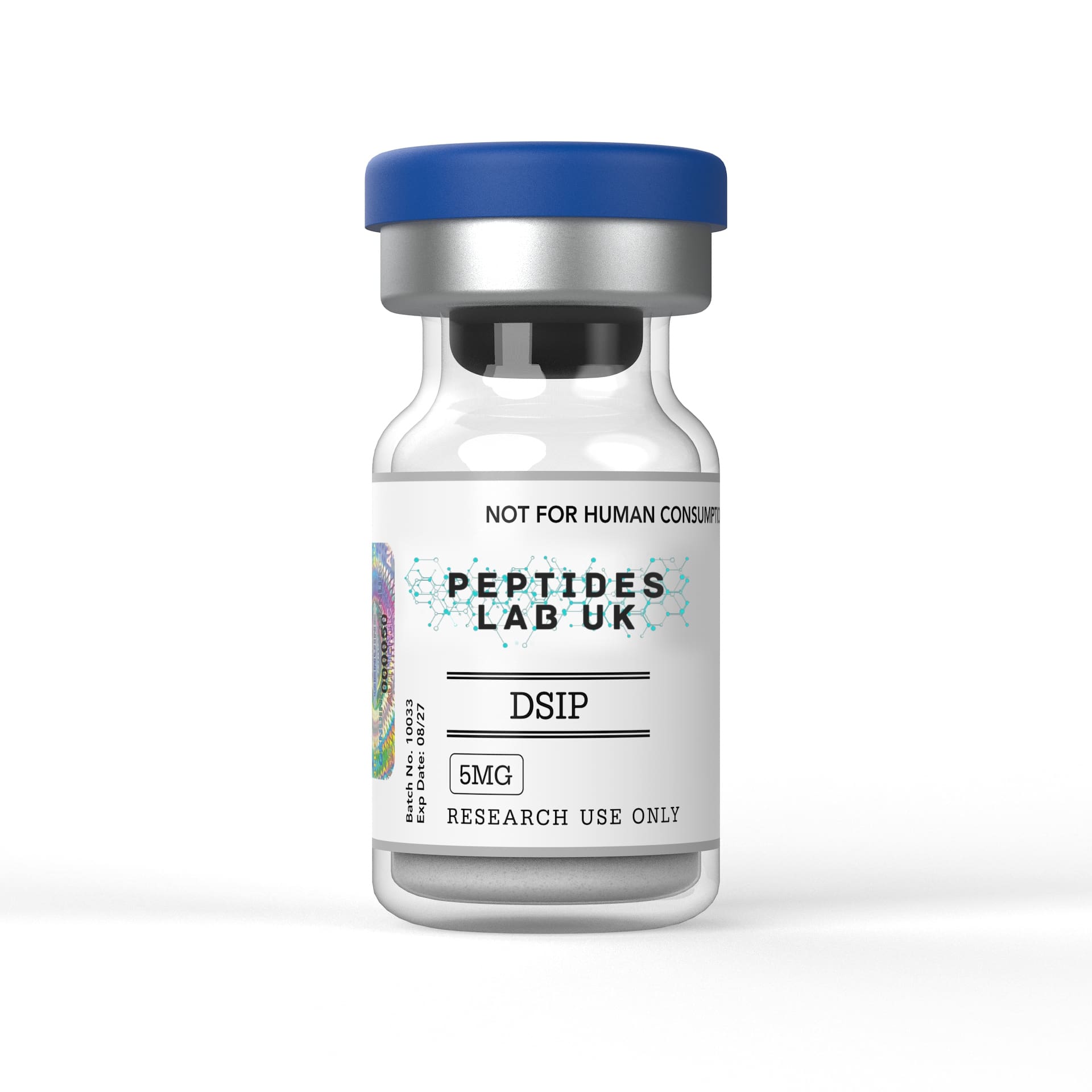
DSIP For Lab Research
£22.99
Login for member prices★★★★★
✔︎ Quality checked
✔︎ Third party verified
DSIP (Delta Sleep Inducing Peptide) is a neuropeptide used in laboratory and in vitro research. Supplied at >99% purity with a full third-party Certificate of Analysis. For laboratory and in vitro research use only. Not for human consumption. Not a medicine.
Looking for a Certificate of Analysis?
If you are looking for a Certificate Of Analysis, please email research@peptideslabuk.com to have it sent to you.
Please Note: Many sites are displaying counterfeit COAs, so ours is provided upon request.
If you are looking for a Certificate Of Analysis, please email research@peptideslabuk.com to have it sent to you.
Please Note: Many sites are displaying counterfeit COAs, so ours is provided upon request.
You may also like…
-
Login for member prices

-
Login for member prices
Product Description
DSIP Peptide | Buy DSIP UK | Research Use Only
DSIP — Delta Sleep-Inducing Peptide — is a naturally occurring amphiphilic nonapeptide (Trp-Ala-Gly-Gly-Asp-Ala-Ser-Gly-Glu, MW 849 Da) first isolated from rabbit cerebral venous blood in 1977 by the Schoenenberger-Monnier group at the University of Basel, found in both free and bound forms in the hypothalamus, limbic system, pituitary, gut, pancreas, and body fluids, that in pre-clinical and limited clinical research demonstrates a uniquely broad neuromodulatory profile — promoting delta-wave slow-wave sleep (SWS), modulating corticotropin and GH release, exerting stress-protective and adaptogenic activity, reducing mitochondrial oxidative stress under hypoxia, demonstrating anticonvulsant and antinociceptive activity, accelerating motor research applications post-stroke, and exhibiting geroprotective and anticarcinogenic properties in long-term murine studies — making it one of the most pharmacologically diverse endogenous regulatory neuropeptides in the sleep and stress research literature, despite its receptor remaining formally unidentified. Buy DSIP in the UK from Peptides Lab UK with >99% HPLC-verified purity, batch-specific COA, and fast UK dispatch for laboratory and in vitro research use only.
Distributed by Peptides Lab UK in lyophilised format for controlled laboratory research. Each batch is independently verified for purity. This compound is handled strictly in pre-clinical settings with no applications in human or veterinary medicine.
What Is DSIP?
Delta Sleep-Inducing Peptide (DSIP) is a nine-amino acid regulatory neuropeptide first identified in 1977 by Marcel Monnier and colleagues at the University of Basel, isolated from the cerebral venous blood of rabbits following low-frequency hypnogenic electrical stimulation of the intralaminar thalamic nuclei. The isolated fraction induced delta-wave (slow-wave) sleep when injected into recipient animals — giving the peptide its name — and initiated one of the most distinctive research trajectories in neuropeptide biology: a compound with a clearly demonstrated biological name-property, an exceptionally wide pharmacological activity profile, and — nearly five decades later — a receptor that remains formally uncharacterised.
DSIP is found in both free and protein-bound forms in the hypothalamus, limbic system, and pituitary gland, as well as in peripheral organs including the gut secretory cells, pancreas (where it co-localises with glucagon), and plasma — with brain and plasma DSIP concentrations showing a marked diurnal variation that correlates with circadian rhythm in humans, with levels lowest in the morning and higher in the afternoon. DSIP-like material has also been confirmed in human breast milk at concentrations of 10–30 ng/mL.
DSIP crosses the blood-brain barrier freely — an unusual property for a peptide of its size — via a non-competitive, non-saturable passive mechanism whose physicochemical determinants (lipophilicity, charge, molecular weight, and protein-binding) are now well characterised. It is also reportedly absorbed intact from the gastrointestinal tract without enzymatic denaturation — a property that distinguishes it from the vast majority of peptides of comparable size.
In vitro, DSIP has a half-life of approximately 15 minutes due to the action of a specific aminopeptidase-like enzyme. In vivo, plasma half-life has been measured at 7–8 minutes — suggesting that in the body, DSIP may complex with carrier proteins that protect it from rapid degradation, or exist as a component of a larger precursor molecule (whose gene and structure have not yet been identified).
Also Known As
- DSIP / Delta-Sleep-Inducing Peptide
- DSIP-LI (DSIP-like immunoreactivity — used in assay contexts)
- Deltaran (Russian medical product name)
- CAS No. 62568-57-4
How Does DSIP Work?
An Important Research Context — The Unresolved Receptor Question
DSIP’s mechanism of action is, by the frank admission of the research field, partially unresolved. No specific, confirmed DSIP receptor has been identified, making it unusual among characterised neuropeptides. Despite this, a substantial body of pre-clinical and limited clinical research has mapped DSIP’s pharmacological effects across multiple systems, identifying several probable mechanistic axes — including NMDA receptor modulation, adrenergic system regulation, MAPK/ERK cascade interaction, and mitochondrial respiration effects — while acknowledging that the existence of an undiscovered DSIP-like endogenous peptide(s) may account for part of the DSIP-like immunoreactivity observed in tissue distribution studies. Researchers working with DSIP should be aware of this mechanistic ambiguity and design experiments accordingly.
Delta-Wave Sleep Promotion — Neuromodulatory Rather Than Sedative
DSIP promotes a specific type of sleep characterised by an increase in the delta rhythm of the EEG (slow-wave sleep / SWS), distinct from sedation. The research literature consistently describes DSIP as a sleep-promoting neuromodulator — not a hypnotic or sedative agent — with a modulating effect on sleep and wake functions that is most pronounced when sleep is disturbed, and minimal in healthy subjects without sleep disruption. A dose administered during the course of the day promotes improved sleep on the subsequent night and for several nights thereafter — a temporal profile incompatible with direct sedation and consistent with a neuromodulatory mechanism acting on sleep homeostatic systems. No tolerance has been demonstrated following repeated administration in research models.
A U-shaped dose-response and time-of-infusion curve has been documented — an important design consideration for DSIP research, as both sub-threshold and supra-threshold doses may produce attenuated effects relative to the optimal dose range.
NMDA Receptor Modulation
In brain research models, DSIP’s effects appear to be at least partly mediated via NMDA receptors — a glutamatergic ionotropic receptor family central to synaptic plasticity, learning and memory, and excitatory neurotransmission. NMDA receptor modulation is consistent with DSIP’s observed effects on cortical EEG activity, delta-wave induction, and neuroprotective properties in stroke and hypoxia models.
MAPK/ERK Cascade and GILZ Homology
Computational and molecular research identified structural homology between DSIP and GILZ (glucocorticoid-induced leucine zipper) — a glucocorticoid-regulated protein that prevents Raf-1 activation and thereby inhibits ERK phosphorylation via the MAPK cascade. DSIP is proposed to interact with components of the MAPK cascade via this mechanism — providing a potential molecular basis for its glucocorticoid-related biology, anti-proliferative activity, and stress-protective effects. This GILZ homology is also proposed to underlie observed links between DSIP expression and adipogenesis, metabolic syndrome, and the transcriptional response to glucocorticoid challenge.
Adrenergic System Modulation
DSIP normalises monoamine oxidase (MAO) activity through serotonin-adrenergic systems — a mechanism directly relevant to its stress-protective and adaptogenic profile. In amphetamine-induced stereotypy models (a pre-clinical model of schizophrenia-like conditions), DSIP normalised brain metabolism and MAO activity disrupted by long-term amphetamine treatment, establishing a role for adrenergic system normalisation as a mechanism of DSIP’s neuroprotective activity.
Mitochondrial Respiration — Stress-Protective Hypoxia Effects
DSIP has been shown to exert direct effects on brain mitochondrial respiration — significantly increasing ADP-stimulated (state 3) mitochondrial respiration activity under conditions of experimental hypoxia. This mitochondrial respiratory enhancement under oxidative stress conditions is proposed as a primary mechanism of DSIP’s stress-protective and neuroprotective potency — and connects DSIP biology to the broader field of mitochondria-targeted neuropeptide research.
Neuroendocrine Regulation — Corticotropin, LH, and GH
DSIP reduces basal corticotropin (ACTH) levels — a consistently replicated finding across multiple studies — and stimulates secretion of luteinising hormone (LH) and the release of somatotropin (GH) and somatoliberin (GHRH). This multi-axis neuroendocrine regulatory profile positions DSIP as a broad hypothalamic-pituitary axis modulator, not merely a sleep-specific peptide, and makes it a research tool for studying the neuroendocrine consequences of altered sleep homeostasis and circadian rhythm disruption.
Anticonvulsant Activity
In rats with metaphit-induced epilepsy, DSIP acted as a potent anticonvulsant — significantly decreasing both the incidence and duration of epileptic seizures. This anticonvulsant activity is consistent with DSIP’s proposed NMDA receptor modulation and adrenergic normalisation mechanisms, and establishes a neuroprotective research dimension distinct from its sleep biology.
Antinociceptive and Analgesic Effects
DSIP demonstrated a potent antinociceptive effect when administered intracerebroventricularly or intracisternally in rodent models — establishing central analgesic activity independent of peripheral opioid mechanisms. This antinociceptive profile may reflect DSIP’s interaction with endogenous opioid peptide systems and/or NMDA receptor modulation at spinal cord and supraspinal pain processing sites.
What Does DSIP Peptide Do in Research?
In laboratory and pre-clinical settings, DSIP has been studied as a uniquely multifunctional endogenous regulatory neuropeptide across sleep, stress, neuroendocrine, neuroprotection, and geroprotective research applications:
- Sleep biology — delta-wave SWS promotion, sleep homeostasis modulation, sleep efficiency and sleep latency research
- Sleep EEG research — delta-wave induction, SWS vs REM sleep architecture, and sleep stage analysis via polysomnography
- Sleep neuromodulator pharmacology — DSIP vs sedatives and hypnotics; tolerance-free sleep promotion; daytime administration for nocturnal sleep effects
- Circadian rhythm biology — diurnal plasma DSIP variation, circadian correlation, and sleep-wake cycle regulation
- Stress biology and adaptogen research — acute emotional stress resistance, cardiovascular stress response, HPA axis modulation
- ACTH/corticotropin regulation — basal ACTH suppression and stress-induced ACTH response modulation
- GH and LH neuroendocrine research — somatotropin release, somatoliberin (GHRH) stimulation, and LH secretion modulation
- NMDA receptor pharmacology — glutamatergic modulation, synaptic plasticity, and cortical excitability research
- MAPK/ERK cascade biology — GILZ homology, Raf-1/ERK inhibition, and glucocorticoid-related transcriptional research
- Adrenergic system normalisation — MAO activity, serotonin-adrenergic crosstalk, and amphetamine model research applications
- Mitochondrial respiration research — ADP-stimulated state 3 respiration, brain mitochondria, and hypoxia-protective biology
- Stroke and neuroprotection models — MCAO motor research applications, intranasal delivery, and BBB-penetrant neuroprotective peptide research
- Anticonvulsant research — epilepsy models, seizure incidence and duration reduction, and NMDA-linked excitotoxicity
- Antinociception and analgesia — central pain modulation, intracerebroventricular and intracisternal administration paradigms
- Geroprotective and anticarcinogenic biology — lifetime tumour incidence reduction, oestrous cycle preservation, chromosome aberration reduction, and maximum lifespan extension in rodent models
- Depression and mood disorder research — plasma and CSF DSIP deviation in MDD, GILZ-adipogenesis-metabolic syndrome links
- BBB-penetrant peptide delivery — DSIP as a carrier scaffold for BBB-crossing fusion peptide research
- DSIP analogue and SAR research — structure-activity relationships, stability-enhanced DSIP analogues, and SWS-promoting analogue development
- Human milk neuropeptide biology — DSIP-like material in breast milk and neonatal sleep regulation research
What Do Studies Say About DSIP?
The Discovery — Rabbit Thalamic Stimulation (1977)
The original 1977 isolation by the Schoenenberger-Monnier group at Basel confirmed DSIP as a nonapeptide of MW 849 Da inducing primarily delta-sleep in rabbits, rats, mice, and humans — with a more pronounced effect on REM sleep observed in cats — establishing the species-dependent variation in DSIP’s sleep-promoting profile that remains relevant to experimental design today. The foundational U-shaped dose-response relationship was also documented in this original research programme.
First Human Study — 59% Increase in Total Sleep Time
The landmark study by Schoenenberger et al. (1981) published in European Neurology administered DSIP as a slow intravenous infusion at 25 nmol/kg to six healthy volunteers in a double-blind crossover design. Subjects immediately reported a feeling of sleep pressure, and total sleep time increased by 59% (median) within a 130-minute interval compared to placebo. Delayed effects on subsequent night sleep included shorter sleep onset, reduced stage 1 percentage, and improved sleep efficiency. Critically, sophisticated EEG analysis confirmed no sedation in the classical pharmacological sense — establishing that DSIP sustains natural sleep functions rather than inducing pharmacological sedation.
Chronic Insomnia Double-Blind Trial
The double-blind matched-pairs study by Schneider-Helmert (1988) evaluated DSIP at 25 nmol/kg IV administered on three consecutive afternoons in 16 chronic insomniac patients. Polysomnography confirmed higher sleep efficiency and shorter sleep latency with DSIP compared to placebo. While the study concluded that short-term DSIP treatment was unlikely to be of major therapeutic benefit — noting that statistically significant effects were weak and partly attributable to incidental placebo group change — it provided the most methodologically rigorous human sleep architecture dataset for DSIP and confirmed the compound’s specific effect on objective, not merely subjective, sleep quality parameters.
Stroke Recovery — Motor Function Restoration
The 2021 MDPI Molecules study investigated intranasal DSIP (120 µg/kg for 8 days) in rats following transient middle cerebral artery occlusion (MCAO). Although brain infarction volume reduction did not reach statistical significance, motor performance in the rotarod test significantly recovered in DSIP-treated animals compared to vehicle controls — confirming a functionally relevant neuroprotective effect at the behavioural level and establishing intranasal delivery as a viable route for CNS DSIP research.
Mitochondrial Respiration and Hypoxia Protection
The 2003 study by Khvatova, Samartzev, Zagoskin, Prudchenko, and Mikhaleva published in Peptides confirmed that DSIP significantly increased ADP-stimulated mitochondrial respiration in rat brain mitochondria under experimental hypoxia conditions — establishing a direct mitochondrial respiratory mechanism for DSIP’s stress-protective potency and linking DSIP biology to the emerging field of mitochondria-targeted neuroprotective peptides.
Geroprotective and Anticarcinogenic Activity — Lifetime Murine Studies
Long-term studies in mice demonstrated that DSIP administration over a lifetime decreased total spontaneous tumour incidence 2.6-fold compared to untreated controls, slowed age-related switching-off of oestrous function, decreased the frequency of chromosome aberrations in bone marrow cells by 22.6%, and increased maximum lifespan by 24.1% compared to control groups — a multi-parameter geroprotective profile that is among the most striking reported for any short regulatory peptide, and that has generated sustained interest in the DSIP analogue research field.
The “Unresolved Riddle” — Kovalzon 2006 Review
The important 2006 review by Kovalzon published in the Journal of Neurochemistry is required reading for researchers entering the DSIP field. It formally characterises DSIP as “a still unresolved riddle” — acknowledging that no specific DSIP receptor has been confirmed, that the existence of DSIP-like endogenous peptides distinct from DSIP itself may account for a substantial proportion of DSIP-like immunoreactivity data, and that the most robust SWS-promoting activity in rodent studies has been demonstrated for synthetic DSIP structural analogues rather than native DSIP itself. The review calls for simultaneous registration of physiological effects and binding site detection as the methodology most likely to resolve DSIP’s mechanism.
DSIP-CBBBP Fusion Peptide — BBB Delivery Research (2024)
The 2024 Frontiers in Pharmacology study by Shao and colleagues investigated a DSIP-CBBBP (cell-penetrating peptide) fusion construct expressed in Pichia pastoris in a PCPA-induced insomnia mouse model. The fusion peptide demonstrated sleep-promoting effects, influenced neurotransmitter levels (5-HT, glutamate, dopamine, melatonin), and confirmed that the Tat cell-penetrating sequence was the more effective BBB carrier of two tested candidates — establishing DSIP as a validated active scaffold for BBB-crossing fusion peptide sleep research and supporting the development of next-generation DSIP-based neuromodulatory tools.
Key Cited Studies
- Monnier M, Dudler L, Gächter R, Schoenenberger GA (1977) — Delta-sleep inducing peptide (DSIP): EEG and motor activity in rabbits following intravenous administration. Neurosci Lett 6(1):9–13. PMID: 19605103
- Schoenenberger GA et al. (1981) — Acute and delayed effects of DSIP (delta sleep-inducing peptide) on human sleep behavior. Eur Neurol 20(5):391–405. PMID: 6895513
- Schneider-Helmert D (1988) — Effects of delta sleep-inducing peptide on sleep of chronic insomniac patients. A double-blind study. Sleep 11(4):378–387. PMID: 1299794
- Kovalzon VM (2006) — Delta sleep-inducing peptide (DSIP): a still unresolved riddle. J Neurochem 97(Suppl 1):148–153. DOI: 10.1111/j.1471-4159.2006.03693.x. PMID: 16539679
- Khvatova EM, Samartzev VN, Zagoskin PP, Prudchenko IA, Mikhaleva II (2003) — Delta sleep inducing peptide (DSIP): effect on respiration activity in rat brain mitochondria and stress protective potency under experimental hypoxia. Peptides 24(2):307–311. DOI: 10.1016/S0196-9781(03)00040-8. PMID: 12668216
- Pavlova IV et al. (2021) — Delta Sleep-Inducing Peptide Recovers Motor Function in SD Rats after Focal Stroke. Molecules 26(17):5173. DOI: 10.3390/molecules26175173. PMC8430548
- Shao J et al. (2024) — Pichia pastoris secreted peptides crossing the blood-brain barrier and DSIP fusion peptide efficacy in PCPA-induced insomnia mouse models. Front Pharmacol 15:1439536. DOI: 10.3389/fphar.2024.1439536
DSIP vs Other Sleep and Stress Neuropeptides in Research
| Feature | DSIP | Selank | Semax | Oxytocin |
|---|---|---|---|---|
| Primary Origin | Rabbit thalamus (isolated) / hypothalamus (endogenous) | Synthetic tuftsin analogue + PGP | Synthetic ACTH(4-10) analogue + PGP | Hypothalamic paraventricular/supraoptic nuclei |
| Peptide Length | 9 amino acids (nonapeptide) | 7 amino acids | 7 amino acids | 9 amino acids (nonapeptide) |
| Named Sleep Effect | Yes — delta-wave SWS induction | No — anxiolytic, indirect sleep benefit | No — cognitive/neuroprotective | Indirect — stress buffering |
| Confirmed Receptor | No — unidentified | GABAA (allosteric), enkephalinase | MCR / BDNF/TrkB | OXTR (Gq/Gi-GPCR) |
| NMDA Modulation | Yes — proposed primary CNS mechanism | No | No | No |
| BBB Penetration | Yes — passive, non-saturable | Yes — PGP-mediated | Yes — PGP-mediated | Limited |
| Gut Absorption | Yes — absorbed intact without denaturation | Not established | Not established | No |
| Mitochondrial Effects | Yes — ADP-stimulated respiration, hypoxia protection | No | No | No |
| Stress/Adaptogenic | Yes — acute emotional stress resistance | Yes — anxiolytic, GABAergic | Yes — antistress, serotonergic | Yes — HPA axis buffering |
| Geroprotective Evidence | Yes — lifespan extension, tumour reduction (murine) | No | No | No |
| Anticonvulsant | Yes — metaphit epilepsy models | No | No | No |
| Neuroendocrine | ACTH suppression, GH/LH stimulation | Immunomodulatory | Serotonin, dopamine | LH/FSH (via GnRH inhibition), cortisol |
| Tolerance | Not demonstrated | Not established | Not established | Not applicable (endogenous) |
| Best Research Use | Sleep architecture, neuromodulation, geroprotection, mitochondria | GABA/anxiety, neuro-immune | BDNF/TrkB, ischaemia, cognitive | Social bonding, HPA, bone, GI |
Quality & Purity Assurance
Every batch of DSIP from Peptides Lab UK is:
- >99% pure — HPLC and mass spectrometry verified
- Supplied with a full Certificate of Analysis (COA) on request
- Lyophilised powder for maximum stability and long shelf life
- Manufactured under strict, controlled laboratory conditions
- Consistent batch-to-batch quality for reproducible research results
Buy DSIP UK — Product Specifications
| Property | Detail |
|---|---|
| Full Name | DSIP / Delta Sleep-Inducing Peptide |
| Also Known As | Delta Sleep Peptide, Deltaran (Russian), DSIP-LI (immunoreactivity assay context) |
| Sequence | H-Trp-Ala-Gly-Gly-Asp-Ala-Ser-Gly-Glu-OH |
| Amino Acids | 9 (nonapeptide) |
| Molecular Weight | 849.0 Da |
| Molecular Formula | C₃₅H₄₈N₈O₁₅ |
| CAS Number | 62568-57-4 |
| Plasma Half-Life | 7–8 minutes (in vivo); ~15 minutes in vitro |
| BBB Penetration | Yes — passive, non-saturable mechanism |
| GI Stability | Yes — absorbed intact from gut without enzymatic denaturation |
| Purity | >99% (HPLC verified) |
| Form | Lyophilised powder |
| Storage | Store dry at -20°C; protect from light |
| Solubility | Sterile water or bacteriostatic water; water-soluble |
DSIP Research Applications
DSIP (Delta Sleep-Inducing Peptide) UK is supplied strictly for the following in vitro and pre-clinical research uses:
- Sleep architecture and EEG biology — delta-wave SWS induction, sleep homeostasis, and sleep efficiency research
- Sleep neuromodulator pharmacology — tolerance-free sleep promotion, daytime administration paradigms, and sedation-free sleep quality modulation
- Circadian rhythm and diurnal plasma variation research
- Stress biology and adaptogen research — acute emotional and cardiovascular stress resistance models
- HPA axis and corticotropin regulation — basal ACTH suppression and stress-induced corticotropin modulation
- GH/LH neuroendocrine research — somatotropin release and LH secretion modulation
- NMDA receptor modulation and glutamatergic neurotransmission research
- MAPK/ERK cascade — GILZ homology, Raf-1/ERK inhibition, glucocorticoid-related transcriptional research
- Adrenergic system normalisation — MAO activity, serotonin-adrenergic crosstalk, and amphetamine model research applications
- Mitochondrial respiration and hypoxia neuroprotection research
- Stroke and neuroprotection models — MCAO motor research applications and intranasal BBB-penetrant delivery
- Anticonvulsant research — epilepsy models, NMDA-linked excitotoxicity
- Antinociception and central analgesia — intracerebroventricular paradigms
- Geroprotective and anticarcinogenic biology — lifespan extension, tumour incidence, and chromosome stability models
- Depression and metabolic syndrome research — plasma DSIP deviation in MDD and GILZ-adipogenesis links
- BBB-penetrant peptide fusion research — DSIP as scaffold for cell-penetrating peptide sleep constructs
- DSIP analogue SAR research — stability-enhanced analogues and SWS-promoting analogue development
Why Buy DSIP Peptide UK from Peptides Lab UK?
Peptides Lab UK is a trusted UK peptides supplier providing research-grade compounds verified by independent HPLC testing. When you buy DSIP in the UK from us, you receive:
99% purity, HPLC and MS verified, third-party tested
- Full COA documentation per batch
- Fast same-day UK dispatch with tracked delivery
- Competitive pricing with bulk research discounts available
- Trusted by researchers across the UK and Europe
Research Disclaimer
All products supplied by Peptides Lab UK are intended strictly for in vitro laboratory research and scientific study use only. They are not intended for human consumption, veterinary use, or any medical or therapeutic application. DSIP (Delta Sleep-Inducing Peptide) is not a licensed medicine or drug and has not been approved by the MHRA, FDA, or any regulatory authority for use in humans or animals. Deltaran, the Russian medical product derived from DSIP, is a separate preparation and is not the compound supplied herein. All citations on this page refer to pre-clinical and peer-reviewed clinical research and do not constitute a claim of safety or therapeutic efficacy for the research compound supplied. Researchers should note that DSIP’s receptor and complete mechanism of action remain formally uncharacterised — this pharmacological ambiguity is accurately reflected in the published literature and should be considered in experimental design. Peptides Lab UK accepts no liability for any misuse of research compounds. By purchasing, you confirm that you are a qualified researcher and that the product will be used solely within a controlled laboratory environment in compliance with all applicable UK laws, regulations, and institutional guidelines.
Related products
-
Login for member prices
-
Login for member prices
-
Login for member prices