




No products in the cart.

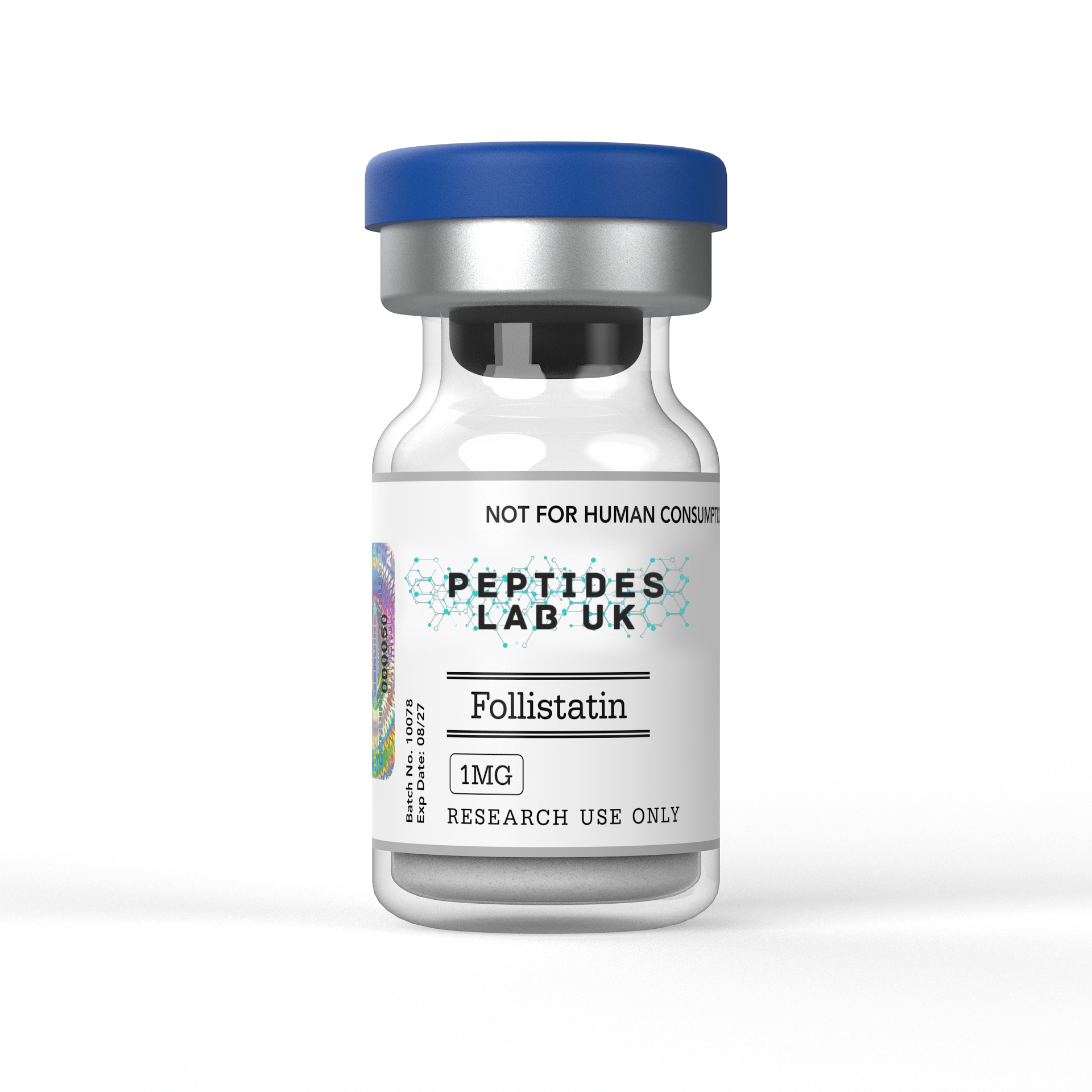
Follistatin For Lab Research
£229.00
Login for member prices★★★★★
✔︎ Quality checked
✔︎ Third party verified
Follistatin is a myostatin-antagonist glycoprotein for laboratory and in vitro research. Supplied at high purity with a full third-party COA. For laboratory and in vitro research use only. Not for human consumption. Not a medicine.

Looking for a Certificate of Analysis?
If you are looking for a Certificate Of Analysis, please email research@peptideslabuk.com to have it sent to you.
Please Note: Many sites are displaying counterfeit COAs, so ours is provided upon request.
If you are looking for a Certificate Of Analysis, please email research@peptideslabuk.com to have it sent to you.
Please Note: Many sites are displaying counterfeit COAs, so ours is provided upon request.
You may also like…
-
Login for member prices
-
Login for member prices
Product Description
Follistatin Peptide | Buy Follistatin UK | Myostatin Inhibitor & TGF-β Antagonist | Research Use Only
Follistatin is a naturally occurring autocrine glycoprotein encoded by the FST gene and expressed in virtually all tissues of higher animals, studied extensively in laboratory research for its potent inhibition of myostatin, activin A, and other members of the TGF-β superfamily — making it one of the most broadly studied regulatory proteins in skeletal muscle biology, reproductive endocrinology, and metabolic research today. Buy Follistatin in the UK from Peptides Lab UK with >99% HPLC-verified purity, batch-specific COA, and fast UK dispatch for laboratory and in vitro research use only.
Distributed by Peptides Lab UK in a high-purity lyophilised format, for laboratory research use only. This compound is handled in controlled settings for in vitro and pre-clinical studies, with no applications in human or veterinary medicine. Each batch undergoes rigorous quality analysis to ensure >99% purity (HPLC verified).
What Is Follistatin?
Follistatin is a potent antagonist of myostatin, first isolated from porcine ovarian follicular fluid and named for its ability to suppress follicle-stimulating hormone (FSH) from the pituitary gland. It has since been characterised as a far broader regulatory glycoprotein, functioning as a high-affinity binding protein for multiple members of the TGF-β superfamily — most notably myostatin and activin A, but also bone morphogenetic proteins (BMPs) including BMP-2, BMP-5, BMP-7, and BMP-8.
Follistatin is synthesised in three protein isoforms: FST-288, FST-303 and FST-315. FST-315 is the predominant form, accounting for 95% of all follistatins, and consists of an N-terminal domain, three follistatin domains (FSD1, FSD2, and FSD3), and a C-terminal acidic tail that reduces heparin binding affinity. FST-315 is found primarily in blood circulation, while FST-288 lacks the C-terminal tail and is a tissue-bound isoform, and FST-303 contains only part of the C-terminal tail and is gonad-specific.
The isoform most studied in the context of muscle biology research is FS-315, derived from the FS344 transcript. This isoform carries a 10-fold lower affinity for pituitary activin compared to FS-288, and by avoiding cell surface binding through heparan sulphate proteoglycans, it circulates systemically — making it the preferred isoform for muscle-targeted research applications where minimising reproductive axis interference is a priority.
As a research compound, Follistatin UK is one of the most extensively studied glycoproteins in pre-clinical muscle biology, reproductive endocrinology, and metabolic pathway research, with a decades-long body of peer-reviewed literature behind it.
How Does Follistatin Work?
Follistatin’s primary mechanism of action is the direct, stoichiometric binding and bioneutralisation of TGF-β superfamily ligands — principally myostatin and activin A — preventing them from engaging their downstream receptors on target cells.
Myostatin Inhibition via ActRIIB Blockade
The role follistatin plays in any tissue is fundamentally based in its ability to neutralise the effect of various TGF-β ligands, including myostatin and components of the activin-inhibin complex, through competitive inhibition of binding to the ActRIIB receptors. If the myostatin pathway is not inhibited, the active myostatin dimer binds to ActRIIB, which recruits and activates the type I receptor (ALK4 or ALK5) by transphosphorylation — initiating a cascade through Smad 2, Smad 3, and Smad 4 that enters the nucleus to activate target gene transcription suppressing muscle growth.
Simultaneous Myostatin and Activin A Inhibition
Follistatin inhibits several members of the TGF-β superfamily simultaneously, including both myostatin and activin A — two independent suppressors of muscle growth via the ActRIIB receptor. Research in myostatin knockout mice found that follistatin overexpression produced muscle mass increases that reached the same magnitude even in the absence of myostatin, suggesting that activin inhibition contributes independently and significantly to follistatin’s muscle-regulatory activity.
FS-288 vs FS-315 Isoform Binding Differences
Surface plasmon resonance experiments confirmed that the Kd of FS-288 for activin A was approximately 46.5 pM versus 432 pM for FS-315 — a nearly 10-fold difference in binding affinity. FS-288 also inhibited the binding of activin to its type II receptor more markedly than FS-315, with its greater potency attributed to its high affinity for heparan sulphate proteoglycans on cell surfaces.
Smad Pathway Suppression and Gene Expression
Follistatin’s inhibition of myostatin and activin suppresses the canonical Smad signalling pathway in muscle and fibrous tissue, including Smad3 phosphorylation and downstream p38 MAPK and Akt pathways. This enhances therapeutic potential not only for muscle enlargement but also by simultaneously decreasing muscle fibrosis — a feature that distinguishes follistatin from selective myostatin-only inhibitors.
What Does Follistatin Do in Research?
In laboratory and pre-clinical settings, Follistatin has been studied across a remarkably wide range of biological systems. Research has examined its role in:
- Myostatin inhibition and skeletal muscle mass regulation via TGF-β/ActRIIB pathway blockade
- Satellite cell proliferation and myogenic differentiation studies
- Activin A neutralisation and downstream Smad signalling pathway research
- BMP pathway modulation in bone formation, embryogenesis, and differentiation biology
- FSH suppression and hypothalamic-pituitary-gonadal axis research
- Adipose tissue biology and hepatic steatosis pathway investigations
- Glucose tolerance and insulin sensitivity research in high-fat diet models
- Polycystic ovary syndrome (PCOS) and reproductive biology research
- Neuromuscular disease model studies — muscular dystrophy, sarcopenia, cachexia
- AAV-mediated gene delivery models as a vector payload for pre-clinical research
Follistatin and Skeletal Muscle Mass Research
Transgenic mice overexpressing follistatin demonstrate muscle mass increases of 194–327% compared to wild-type animals, substantially exceeding the approximately 100% increase seen with myostatin gene knockout alone. This enhanced response is attributed to follistatin’s ability to simultaneously neutralise both myostatin and activin A — two TGF-β ligands that independently suppress muscle growth through the ActRIIB receptor.
Follistatin and Satellite Cell Biology
Follistatin overexpression increased muscle weight by approximately 37% in control animals, but only by 20% in irradiated muscle where satellite cell proliferative capacity was destroyed — directly confirming that satellite cell proliferation is a significant contributor to follistatin-induced hypertrophy alongside myofibre enlargement.
Follistatin and Adipose/Metabolic Research
In follistatin-derived peptide transgenic mice, myostatin inhibition produced increased skeletal muscle mass and decreased fat accumulation even on a standard diet. On a high-fat diet, transgenic mice were resistant to obesity and hepatic steatosis, had lower hepatic fatty acid levels, altered fatty acid composition, smaller adipocytes, and improved glucose tolerance compared to wild-type controls.
Follistatin and N-Terminal Domain Research
Research investigating the functional domains of follistatin found that the N-terminal domain is specifically required for skeletal muscle mass regulation — with N-terminal deletion or mutation abolishing the muscle-building effect while moderately preserving fat-reducing activity — findings that are informing the design of domain-selective follistatin analogues for research purposes.
What Do Studies Say About Follistatin?
Follistatin has accumulated one of the most extensive research profiles of any endogenous regulatory protein, with peer-reviewed studies spanning pre-clinical muscle biology, gene therapy, reproductive biology, and metabolic science.
Follistatin in Non-Human Primate Research
In a landmark study, AAV1-FS344 was injected into the quadriceps of cynomolgus macaque monkeys, inducing pronounced and durable increases in muscle size and strength. Long-term expression of the transgene produced no abnormal changes in the morphology or function of key organs, and reproductive hormone levels including oestradiol, testosterone, LH, and FSH remained within normal physiological ranges throughout 15 months of treatment.
Follistatin in Muscular Dystrophy Research
In mdx mice crossed with follistatin-derived peptide transgenic mice, the resulting animals exhibited increased skeletal muscle mass and reduced cellular infiltration in muscles, with muscle strength also recovered — confirming the potential of myostatin inhibition via follistatin-derived peptides in muscular dystrophy pre-clinical research models.
Follistatin Gene Therapy Research in Humans
Phase 1/2a clinical trial data for AAV1-FS344 in Becker muscular dystrophy patients demonstrated a statistically significant average 11.5% improvement in six-minute walk test performance at 6 months (p = 0.02), with the degree of pre-existing muscle fibrosis at baseline identified as the strongest predictor of treatment response.
Follistatin SAR and Derived Peptide Research
A follistatin-derived 14-mer myostatin inhibitory peptide, DF-3, was identified through bioassay of synthetic N-terminal domain fragment peptides. DF-3 effectively inhibits myostatin but fails to inhibit activin A or TGF-β1 in vitro, and when injected intramuscularly significantly increases skeletal muscle mass in mice — establishing a platform for the development of selective, follistatin-derived muscle enhancement research tools.
Key cited studies:
- Rodino-Klapac LR et al. (2009) — Inhibition of Myostatin with Emphasis on Follistatin as a Therapy for Muscle Disease — Muscle Nerve 39(3):283–296. PMC2717722. DOI: 10.1002/mus.21244
- Haidet AM et al. (2008) — Long-term Enhancement of Skeletal Muscle Mass and Strength by Single Gene Administration of ACE-031 — PNAS. PMC2852878
- Nakatani M et al. (2011) — Follistatin-Derived Peptide Expression in Muscle Decreases Adipose Tissue Mass and Prevents Hepatic Steatosis — Am J Physiol Endocrinol Metab. PubMed ID: 21205933
- Kalista S et al. (2012) — Follistatin Induces Muscle Hypertrophy Through Satellite Cell Proliferation and Inhibition of Myostatin and Activin — Am J Physiol Endocrinol Metab. DOI: 10.1152/ajpendo.00193.2009
- Xiao X et al. (2017) — Follistatin N Terminus Differentially Regulates Muscle Size and Fat In Vivo — Exp Mol Med 49:e377. DOI: 10.1038/emm.2017.135
- Takayama K et al. (2020) — Discovery of a Follistatin-Derived Myostatin Inhibitory Peptide — Biochem Biophys Res Commun. PubMed ID: 31874826
- Mendell JR et al. (2015) — Follistatin Gene Therapy Improves Ambulation in Becker Muscular Dystrophy — PMC5240576
Follistatin vs Other Myostatin-Inhibition Research Tools
| Feature | Follistatin (FS-315) | Follistatin (FS-288) | Myostatin Antibody | Myostatin Propeptide |
|---|---|---|---|---|
| Primary Target | Myostatin + Activin A + BMPs | Myostatin + Activin A + BMPs | Myostatin only | Myostatin only |
| Muscle Mass Effect | 194–327% increase (transgenic) | High but tissue-bound | ~25–30% increase | Moderate |
| Selectivity | Broad TGF-β antagonism | Broad TGF-β antagonism | Myostatin-selective | Myostatin-selective |
| Activin Affinity | Low (~432 pM Kd) | High (~46.5 pM Kd) | None | None |
| Cell Surface Binding | No (circulating) | Yes (HS proteoglycan-bound) | N/A | N/A |
| Clinical Research Stage | Phase 1/2a (gene therapy) | Pre-clinical | Phase 2 (completed) | Pre-clinical |
| Fibrosis Reduction | Yes (via Smad3/p38 MAPK) | Yes | Limited | Limited |
Follistatin’s simultaneous neutralisation of both myostatin and activin A — combined with its downstream Smad pathway suppression and anti-fibrotic properties — makes it a uniquely comprehensive research tool for studies where myostatin-only inhibition is insufficient to model the full scope of muscle-regulatory biology.
Quality & Purity Assurance
Every batch of Follistatin from Peptides Lab UK is:
- >99% pure — HPLC and mass spectrometry verified
- Supplied with a full Certificate of Analysis (COA) on request
- Lyophilised powder for maximum stability and long shelf life
- Manufactured under strict, controlled laboratory conditions
- Consistent batch-to-batch quality for reproducible research results
Buy Follistatin UK — Product Specifications
| Property | Detail |
|---|---|
| Gene | FST (chromosome 5q11.2) |
| Primary Isoforms | FS-288 (288 aa, tissue-bound) / FS-315 (315 aa, circulating) |
| Molecular Weight | ~31–44 kDa (isoform and glycosylation dependent) |
| Purity | >99% (HPLC verified) |
| Form | Lyophilised powder |
| Storage | Store dry at -20°C; protect from light |
| Solubility | Bacteriostatic water, sterile water, or suitable laboratory solvents |
Follistatin Research Applications
Follistatin peptide UK is supplied strictly for the following in vitro and pre-clinical research uses:
- Myostatin and activin A inhibition via TGF-β superfamily antagonism studies
- Skeletal muscle hypertrophy, satellite cell proliferation, and myogenic differentiation research
- ActRIIB receptor and Smad signalling pathway investigations
- BMP pathway modulation in bone formation and embryogenesis studies
- FSH suppression and hypothalamic-pituitary-gonadal axis biology research
- Adipose tissue dynamics and hepatic steatosis pathway investigations
- Glucose tolerance, insulin sensitivity, and metabolic syndrome model studies
- Neuromuscular disease model research — muscular dystrophy, sarcopenia, cancer cachexia
- Follistatin isoform comparison and structure–activity relationship (SAR) investigations
- PCOS and reproductive biology studies
Why Buy Follistatin from Peptides Lab UK?
Peptides Lab UK is a trusted UK peptides supplier, providing research-grade compounds verified by independent HPLC testing. When you buy Follistatin in the UK from us, you receive:
- >99% purity, HPLC and MS verified, third-party tested
- Full COA documentation per batch
- Fast same-day UK dispatch with tracked delivery
- Competitive pricing with bulk research discounts available
- Trusted by researchers across the UK and Europe
Research Disclaimer All products supplied by Peptides Lab UK are intended strictly for in vitro laboratory research and scientific study use only. They are not intended for human consumption, veterinary use, or any medical or therapeutic application. Follistatin is not a licensed medicine or drug and has not been approved by the MHRA, FDA, or any regulatory authority for use in humans or animals. All research citations on this page relate to pre-clinical studies, gene therapy research, and peer-reviewed pharmacological literature and do not constitute a claim of safety or therapeutic efficacy. Peptides Lab UK accepts no liability for any misuse of research compounds. By purchasing, you confirm that you are a qualified researcher and that the product will be used solely within a controlled laboratory environment in compliance with all applicable UK laws, regulations, and institutional guidelines.
Related products
-
Login for member prices

-
Login for member prices
-
Login for member prices
