




No products in the cart.

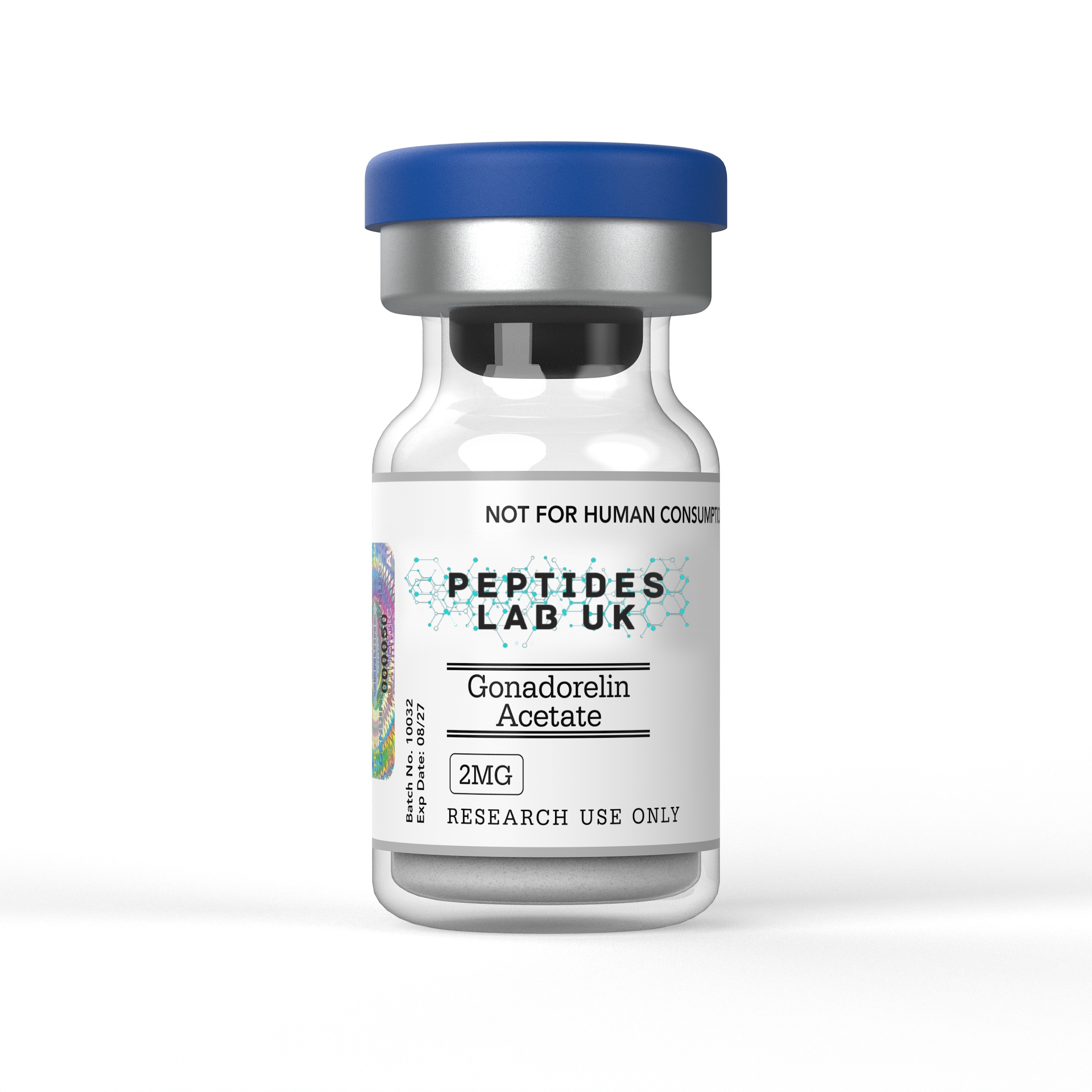
Gonadorelin Acetate For Lab Research
£42.99
Login for member prices★★★★★
✔︎ Quality checked
✔︎ Third party verified
Gonadorelin Acetate is a synthetic GnRH decapeptide for laboratory and in vitro research. Supplied at >99% purity with a full third-party Certificate of Analysis. For laboratory and in vitro research use only. Not for human consumption. Not a medicine.
Looking for a Certificate of Analysis?
If you are looking for a Certificate Of Analysis, please email research@peptideslabuk.com to have it sent to you.
Please Note: Many sites are displaying counterfeit COAs, so ours is provided upon request.
If you are looking for a Certificate Of Analysis, please email research@peptideslabuk.com to have it sent to you.
Please Note: Many sites are displaying counterfeit COAs, so ours is provided upon request.
You may also like…
-
Login for member prices

-
Login for member prices
Product Description
Gonadorelin | Buy Gonadorelin UK | Research Use Only
Gonadorelin — the synthetic form of native gonadotropin-releasing hormone (GnRH / LHRH), sequence pGlu-His-Trp-Ser-Tyr-Gly-Leu-Arg-Pro-Gly-NH₂, MW 1,182.3 Da — is the structurally identical laboratory equivalent of the endogenous hypothalamic decapeptide that serves as the master upstream regulator of the entire hypothalamic-pituitary-gonadal (HPG) axis, binding the GnRH receptor (GnRHR) on anterior pituitary gonadotroph cells to drive pulsatile LH and FSH secretion in a frequency- and amplitude-dependent manner, with pulsatile administration producing sustained gonadotropin stimulation and continuous administration producing receptor desensitisation and gonadotropin suppression — making it the definitive physiological reference compound for HPG axis pharmacology, pituitary function testing, pulse frequency-response research, GnRH analogue comparative studies, hypogonadotropic hypogonadism models, spermatogenesis research, and ovulation induction biology. Buy Gonadorelin in the UK from Peptides Lab UK with >99% HPLC-verified purity, batch-specific COA, and fast UK dispatch for laboratory and in vitro research use only.
Distributed by Peptides Lab UK in lyophilised format for controlled laboratory research. Each batch is independently verified for purity. This compound is handled strictly in pre-clinical and research settings, distinct from any licensed pharmaceutical formulation.
What Is Gonadorelin?
Gonadorelin is the International Nonproprietary Name (INN) for the synthetic form of gonadotropin-releasing hormone — a decapeptide produced naturally in the hypothalamic arcuate nucleus and preoptic area by a sparse but functionally critical population of approximately 1,000–2,000 GnRH-secreting neurons in humans. These neurons project their axon terminals to the median eminence, releasing GnRH directly into the hypophyseal portal blood supply in discrete, rhythmic pulses of roughly 60–90 minutes that reach the anterior pituitary in high concentrations before rapid dilution in the systemic circulation.
Gonadorelin is structurally identical to endogenous GnRH — it is not an analogue or modification, but the same ten-amino acid sequence that the hypothalamus produces endogenously. This makes it unique among GnRH-related research compounds: where triptorelin (D-Trp6), leuprolide (D-Leu6), and goserelin (D-Ser(tBu)6) are all superagonist analogues engineered to outperform endogenous GnRH in receptor affinity and enzymatic resistance, gonadorelin represents the unmodified physiological signal — the baseline against which all GnRH analogue potency, receptor binding, and pharmacodynamic comparisons are calculated.
The Nobel Prize in Physiology or Medicine was awarded in 1977 jointly to Roger Guillemin and Andrew Schally for the isolation and characterisation of hypothalamic regulatory hormones — including GnRH, whose structure Schally’s group confirmed in 1971 as the decapeptide pGlu-His-Trp-Ser-Tyr-Gly-Leu-Arg-Pro-Gly-NH₂. This foundational work is the scientific origin of the entire GnRH analogue research field and all downstream clinical applications.
Gonadorelin vs GnRH Analogues — The Critical Distinction
Gonadorelin is frequently confused with GnRH analogues in lay literature, but the distinction is pharmacologically fundamental:
| Compound | Position 6 Residue | Half-Life | LH Potency vs GnRH | Receptor Effect |
|---|---|---|---|---|
| Gonadorelin (GnRH) | Gly (native) | 2–10 minutes | 1× (reference) | Pulsatile: stimulation; Continuous: suppression |
| Triptorelin | D-Trp | ~30 minutes | 13–100× | Acute: flare; Sustained: suppression |
| Leuprolide | D-Leu | ~3 hours (depot) | ~100× | Acute: flare; Sustained: suppression |
| Goserelin | D-Ser(tBu) | ~2 hours (depot) | ~100× | Acute: flare; Sustained: suppression |
| Degarelix | Antagonist design | ~23–28 days | Competitive blockade | Immediate suppression; no flare |
This table encapsulates why gonadorelin holds a unique research position: it is the only GnRH-class compound that can faithfully model endogenous hypothalamic pulse dynamics at physiological doses without the accumulated receptor desensitisation that any superagonist introduces even at sub-maximal exposure.
Also Known As
- GnRH / Gonadotropin-Releasing Hormone
- LHRH / Luteinising Hormone-Releasing Hormone
- Factrel (Wyeth pharmaceutical; US — diagnostic use)
- Lutrepulse (Ferring; pulsatile pump indication)
- Fertiral (EU)
- CAS No. 33515-09-2
How Does Gonadorelin Work?
Pulsatile Delivery — The Fundamental Pharmacodynamic Principle
The biological effect of gonadorelin is inseparable from its pattern of delivery — a principle established by Ernst Knobil in pioneering experiments that remain cornerstones of reproductive neuroendocrinology. Knobil demonstrated that normal LH and FSH secretion in rhesus monkeys requires pulsatile GnRH discharge at a critical frequency and amplitude, with the self-priming effect of GnRH — upregulating its own receptors on pituitary gonadotroph cells — manifesting only at the physiological periodicity of 60–90 minutes. Slower frequency causes anovulation and amenorrhoea through inadequate pituitary stimulation; higher frequency or continuous GnRH exposure causes anovulation by downregulating GnRHR expression, abolishing gonadotropin responses.
This frequency-response relationship is the mechanistic basis for the paradox that gonadorelin — and all GnRH agonists — can either stimulate or suppress gonadotropin secretion depending entirely on how they are administered.
GnRHR Binding — Gq/11-Coupled GPCR Signalling
Gonadorelin binds the GnRH receptor (GnRHR) — a seven-transmembrane Gq/11-coupled GPCR — on the surface of pituitary gonadotroph cells, activating phospholipase C (PLC) to generate IP3 and DAG. IP3 drives intracellular calcium mobilisation from the endoplasmic reticulum, triggering secretory granule exocytosis and release of LH and FSH. DAG activates PKC, which drives gonadotropin gene transcription (LHβ, FSHβ, and common α-subunit). The self-priming effect of gonadorelin — whereby acute receptor activation increases GnRHR expression and sensitivity — is mediated through PKC-dependent and ERK1/2-dependent transcriptional upregulation of GnRHR mRNA.
Receptor research applications following a physiological gonadorelin pulse is rapid — returning to near-baseline sensitivity within one to two pulse intervals (60–90 minutes) — confirming that physiological pulse dosing sustains receptor responsiveness rather than inducing desensitisation.
LH and FSH Release — Differential Regulation by Pulse Frequency
Low-frequency GnRH pulses preferentially drive FSH secretion, while high-frequency pulses shift the gonadotropin output toward LH — a differential regulation mechanism that governs the hormonal transitions of puberty, the mid-cycle LH surge, and the luteal-to-follicular phase transition in the female reproductive cycle. This pulse-frequency-dependent differential secretion is a primary research application for gonadorelin, as it can only be faithfully modelled with native GnRH (or gonadorelin), not with long-acting superagonists that eliminate the frequency variable.
Pituitary Self-Priming — GnRHR Upregulation
A critical property of gonadorelin under pulsatile conditions is receptor self-priming: each gonadorelin pulse not only triggers gonadotropin release but simultaneously upregulates GnRHR expression on the gonadotroph surface, increasing pituitary sensitivity to the subsequent pulse. This self-priming mechanism — absent under continuous GnRH exposure and attenuated with high-potency long-acting analogues — is one of the key reasons gonadorelin rather than a GnRH superagonist is the preferred research tool for studies of pituitary plasticity, gonadotroph reserve, and HPG axis research applications.
Downstream HPG Axis — Leydig Cells, Testosterone, Spermatogenesis
LH released following gonadorelin-stimulated pituitary activation binds LH receptors on testicular Leydig cells, driving steroidogenesis and testosterone production via the cAMP/PKA pathway. FSH binds FSH receptors on Sertoli cells to support the blood-testis barrier, Sertoli cell metabolism, and the paracrine factors required for spermatid maturation. In female models, LH triggers ovulation from the pre-ovulatory follicle and drives corpus luteum steroidogenesis; FSH governs follicular recruitment, granulosa cell aromatisation, and oestradiol production.
Short Half-Life — The Defining Research Design Consideration
Gonadorelin’s plasma half-life of 2–10 minutes — a consequence of rapid cleavage at the Tyr5-Gly6 and Pro9-Gly10 bonds by endogenous peptidases — means that in research applications requiring sustained pituitary stimulation, pulse frequency must be carefully controlled. This short half-life is not a limitation for research purposes but rather an asset: it allows the researcher to precisely define the duration and frequency of each GnRHR stimulus and to measure GnRHR research applications kinetics in the intervals between pulses — a degree of experimental control impossible with long-acting analogues.
What Does Gonadorelin Do in Research?
In laboratory and pre-clinical settings, gonadorelin is studied as the definitive endogenous GnRH reference compound and the gold-standard tool for physiological HPG axis modelling:
- GnRH receptor pharmacology — baseline Kd, Bmax, and Gq/11 signalling kinetics; receptor binding competition reference
- Pulse frequency-response research — LH vs FSH differential secretion as a function of GnRH pulse frequency and amplitude
- GnRHR self-priming and upregulation — receptor expression under pulsatile stimulation; PKC and ERK1/2-mediated GnRHR mRNA regulation
- Pituitary function testing — GnRH stimulation test for LH/FSH reserve assessment in hypogonadism models
- Hypogonadotropic hypogonadism (HH) models — HPG axis reactivation, pulsatile GnRH pump paradigms, and gonadotropin research applications
- Spermatogenesis research — pulsatile gonadorelin pump-induced FSH/LH restoration, Sertoli cell biology, and sperm maturation
- Congenital hypogonadotropic hypogonadism (CHH) — pulsatile GnRH therapy vs gonadotropin injection comparative pharmacology
- Ovulation induction biology — LH surge triggering, follicular maturation, and pre-ovulatory receptor priming by oestradiol
- Hypothalamic amenorrhoea models — HPG axis reactivation, pulse frequency and amplitude restoration
- Kisspeptin-GnRH axis — upstream kisspeptin/NKB neuron regulation of GnRH pulse generator, and downstream gonadorelin pharmacology
- GnRH analogue potency benchmarking — establishing the denominator for triptorelin 13×, leuprolide 100×, and all other GnRH agonist fold-potency ratios
- Comparative GnRH receptor biology — gonadorelin vs superagonist receptor occupancy, desensitisation onset, and research applications kinetics
- HPG axis research applications after androgen suppression — exogenous androgen-induced HPG suppression reversal; pulsatile GnRH vs hCG vs SERM comparative research applications research
- Cryptorchidism models — pulsatile GnRH and HPG axis development, testicular descent biology
- Puberty research — delayed puberty stimulation, GnRH pulse generator activation, and sex steroid priming
- Ovarian protection during chemotherapy — temporary HPG suppression via continuous gonadorelin for gonadal protection models
- Cancer biology — GnRHR expression in GnRH-sensitive tumour lines; continuous gonadorelin as a research tool for HPG suppression in prostate and breast cancer models
- Neuroendocrinology — GnRH neuron firing, pulse generator biology, and seasonal reproductive rhythm research
- In vitro pituitary cell biology — dispersed rat anterior pituitary cell LH/FSH release assays; GnRHR binding reference standard
What Do Studies Say About Gonadorelin?
The Foundational Discovery — Nobel Prize 1977
Andrew Schally’s laboratory confirmed the structure of GnRH in 1971 as the decapeptide pGlu-His-Trp-Ser-Tyr-Gly-Leu-Arg-Pro-Gly-NH₂ — a finding shared with Roger Guillemin’s group — for which Schally and Guillemin were jointly awarded the 1977 Nobel Prize in Physiology or Medicine. This discovery established the molecular basis of the entire HPG axis, directly enabling the development of all synthetic GnRH analogues and the pharmaceutical class that includes triptorelin, leuprolide, and goserelin.
Knobil’s Pulsatile Frequency-Response Experiments — The Defining HPG Research Paradigm
Ernst Knobil’s classical rhesus monkey experiments established that normal LH and FSH secretion requires pulsatile GnRH at a critical frequency of approximately 60–90 minutes — and that both slower and faster frequencies, as well as continuous GnRH exposure, abolish gonadotropin responses. This body of work is the most-cited mechanistic foundation for gonadorelin research and for all GnRH-based reproductive endocrinology that followed.
Pulsatile Gonadorelin Pump vs Cyclical Gonadotropin Therapy — CHH Spermatogenesis
The 2019 study by Zhang, Cai, Wang et al. published in American Journal of Men’s Health directly compared pulsatile gonadorelin pump (10 µg every 90 minutes subcutaneously) versus cyclical HCG/HMG gonadotropin therapy in men with congenital hypogonadotropic hypogonadism. The pulsatile gonadorelin pump group achieved earlier spermatogenesis onset than the cyclical gonadotropin group — confirming the mechanistic superiority of upstream HPG axis reactivation via pulsatile GnRH over downstream gonadotropin replacement for restoring spermatogenesis, with the two approaches achieving comparable overall spermatogenesis rates by final follow-up. This study directly established pulsatile gonadorelin pump therapy as the faster spermatogenesis-inducing modality in CHH research.
Differential LH/FSH Regulation by Pulse Frequency — Kaiser et al. Review
The seminal 1997 review by Kaiser, Sabbagh, Chen, and Wierman in Endocrine Reviews synthesised the evidence base for GnRH regulation of gonadotropin gene expression — confirming that LHβ and FSHβ mRNA levels in pituitary gonadotrophs are differentially regulated by GnRH pulse frequency and amplitude, with physiological pulsatile gonadorelin being the appropriate experimental tool for studying this differential transcriptional regulation in vitro.
Ovulation Induction — Single-Dose LH Surge Triggering
Research by Ferré-Dolcet and colleagues confirmed that a single gonadorelin administration stimulates ovulation in research models via a transient but potent LH surge — demonstrating that the peri-ovulatory follicle, when primed by preceding oestradiol exposure, undergoes high-affinity GnRHR engagement with a single bolus of native GnRH sufficient to trigger the ovulatory cascade — providing a mechanistically precise model for studying ovulation induction without the prolonged receptor occupancy of superagonist analogues.
HPG Axis Recovery — Testosterone from 4.5 to 13.3 nmol/L
Clinical research demonstrated that following exogenous androgen-induced HPG axis suppression — where testosterone fell to approximately 4.5 nmol/L and LH/FSH dropped below 0.5 IU/L — pulsatile gonadorelin administration was associated with HPG axis research applications and testosterone restoration to approximately 13.3 nmol/L, with improvements persisting for over 12 months after treatment cessation — providing a clinically relevant HPG axis research applications dataset directly applicable to exogenous androgen suppression models.
GnRH Stimulation Test — Pituitary Reserve Benchmark
The gonadorelin stimulation test — administering a bolus of native GnRH and measuring peak LH and FSH response over 60–90 minutes — remains the reference methodology for assessing pituitary gonadotroph reserve in hypogonadism models, differentiating hypothalamic from pituitary causes of gonadotropin deficiency, and validating HPG axis integrity following research applications from gonadotropin suppression. This diagnostic application is explicitly dependent on native gonadorelin rather than any GnRH superagonist analogue.
Key Cited Studies
- Schally AV et al. (1971) — Gonadotropin-releasing hormone: one polypeptide regulates the secretion of luteinising and follicle-stimulating hormones. Science 173(4001):1036–1038. DOI: 10.1126/science.173.4001.1036. PMID: 4938639
- Knobil E (1980) — The neuroendocrine control of the menstrual cycle. Recent Prog Horm Res 36:53–88. PMID: 6996818
- Conn PM & Crowley WF Jr (1994) — Gonadotropin-releasing hormone and its analogues. N Engl J Med 330(7):476–485. DOI: 10.1056/NEJM199402173300707. PMID: 8289853
- Kaiser UB, Sabbagh E, Chen SR, Wierman ME (1997) — Gonadotropin-releasing hormone regulation of pituitary gonadotropin gene expression. Endocr Rev 18(5):605–645. DOI: 10.1210/edrv.18.5.0315. PMID: 9331547
- Zhang L, Cai K, Wang Y et al. (2019) — The pulsatile gonadorelin pump induces earlier spermatogenesis than cyclical gonadotropin therapy in congenital hypogonadotropic hypogonadism men. Am J Mens Health 13(1):1557988318818280. DOI: 10.1177/1557988318818280. PMC6354248
- Schopohl J et al. (1991) — Pulsatile GnRH versus HMG/HCG therapy in male patients with hypogonadotropic hypogonadism. Fertil Steril 56(6):1143–1150. PMID: 1743327
Gonadorelin vs Other HPG Axis Research Tools
| Feature | Gonadorelin (GnRH) | Triptorelin (D-Trp6-GnRH) | Kisspeptin-10 | hCG |
|---|---|---|---|---|
| Compound Type | Native decapeptide — structurally identical to endogenous GnRH | Synthetic GnRH superagonist analogue | Kisspeptin fragment (KP-10) | Gonadotropin — LH structural analogue |
| Target | GnRHR (pituitary gonadotrophs) | GnRHR (pituitary gonadotrophs) | Kiss1R on GnRH neurons (upstream) | LH receptor (Leydig cells / ovarian granulosa) |
| Pulsatile: Stimulates HPG | Yes | Yes (acute flare) | Yes | N/A — bypasses pituitary |
| Continuous: Suppresses HPG | Yes — receptor desensitisation | Yes — sustained suppression | Limited — receptor desensitisation | No — sustains testicular stimulation |
| Half-Life | 2–10 minutes | ~30 minutes | ~10–28 minutes | ~24–36 hours |
| Receptor Self-Priming | Yes — physiological upregulation per pulse | Attenuated (high potency reduces research applications between pulses) | Indirect — via GnRH pulse upregulation | No |
| Pulse Frequency Research | Yes — ideal reference compound | Limited — excessive potency obscures frequency effects | Yes — upstream pulse generator biology | N/A |
| Pituitary Function Testing | Yes — GnRH stimulation test gold standard | Not used for diagnostic testing | Not established | No |
| Analogue Potency Reference | Yes — defines the 1× denominator | 13–100× above gonadorelin | N/A | N/A |
| Spermatogenesis Research | Yes — pulsatile pump CHH studies | Yes — depot suppression/research applications models | Indirect | Yes — direct Leydig stimulation |
| Nobel Prize | Yes — Schally & Guillemin 1977 | No | No | No |
| Best Research Use | HPG axis physiology, pulse frequency, pituitary function, CHH, analogue comparisons | GnRHR pharmacology, desensitisation, oncology, SAR | GnRH neuron biology, upstream pulse regulation | Direct gonadal stimulation, TRT preservation models |
Quality & Purity Assurance
Every batch of Gonadorelin from Peptides Lab UK is:
- >99% pure — HPLC and mass spectrometry verified
- Supplied with a full Certificate of Analysis (COA) on request
- Lyophilised powder for maximum stability and long shelf life
- Manufactured under strict, controlled laboratory conditions
- Consistent batch-to-batch quality for reproducible research results
Buy Gonadorelin UK — Product Specifications
| Property | Detail |
|---|---|
| Full Name | Gonadorelin / GnRH / LHRH |
| Also Known As | Gonadotropin-Releasing Hormone, Luteinising Hormone-Releasing Hormone, Factrel, Lutrepulse, Fertiral |
| Sequence | pGlu-His-Trp-Ser-Tyr-Gly-Leu-Arg-Pro-Gly-NH₂ |
| Position 6 Residue | Gly (vs D-Trp in triptorelin — key structural distinction) |
| Amino Acids | 10 (decapeptide) |
| Molecular Weight | 1,182.3 Da |
| Molecular Formula | C₅₅H₇₅N₁₇O₁₃ |
| CAS Number | 33515-09-2 |
| Plasma Half-Life | 2–10 minutes |
| GnRHR Binding | Kd ~1–2 nM (anterior pituitary gonadotrophs) |
| Purity | >99% (HPLC verified) |
| Form | Lyophilised powder |
| Storage | Store dry at -20°C; protect from light |
| Solubility | Freely soluble in sterile water and aqueous buffers |
Gonadorelin Research Applications
Gonadorelin (GnRH) UK is supplied strictly for the following in vitro and pre-clinical research uses:
- GnRHR pharmacology — native ligand Kd, Bmax, Gq/11 signalling kinetics, and GnRH analogue competition assays
- Pulse frequency-response research — LH vs FSH differential regulation as a function of gonadorelin pulse frequency and amplitude
- GnRHR self-priming — pulsatile receptor upregulation, PKC/ERK1/2-mediated GnRHR mRNA regulation
- Pituitary function testing — GnRH stimulation test design and LH/FSH reserve assay reference compound
- Hypogonadotropic hypogonadism models — HPG axis reactivation, pulsatile GnRH pump paradigm research
- Congenital hypogonadotropic hypogonadism (CHH) — pulsatile gonadorelin vs gonadotropin therapy comparison
- Spermatogenesis research — Sertoli cell biology, FSH-mediated sperm maturation, and pulsatile pump spermatogenesis induction
- Ovulation induction biology — LH surge triggering, pre-ovulatory follicle oestradiol priming, and GnRHR occupancy kinetics
- Hypothalamic amenorrhoea — HPG axis frequency and amplitude restoration
- Kisspeptin-GnRH pulse generator axis — downstream gonadorelin pharmacology and upstream kisspeptin regulation
- GnRH analogue potency benchmarking — establishing the 1× reference denominator for superagonist fold-potency comparisons
- HPG axis research applications after androgen suppression — pulsatile GnRH vs hCG vs SERM research applications research
- Cryptorchidism models — HPG axis development and testicular descent biology
- Puberty research — delayed puberty HPG stimulation and GnRH pulse generator activation
- Cancer biology — continuous gonadorelin HPG suppression reference; GnRHR-expressing tumour pharmacology baseline
- Neuroendocrinology — GnRH neuron biology, seasonal reproduction, and HPG feedback loop research
- In vitro dispersed pituitary cell assays — LH/FSH release reference standard
Why Buy Gonadorelin UK from Peptides Lab UK?
Peptides Lab UK is a trusted UK peptides supplier providing research-grade compounds verified by independent HPLC testing. When you buy Gonadorelin in the UK from us, you receive:
99% purity, HPLC and MS verified, third-party tested
- Full COA documentation per batch
- Fast same-day UK dispatch with tracked delivery
- Competitive pricing with bulk research discounts available
- Available alongside Triptorelin Acetate for parallel GnRH vs GnRH superagonist experimental designs
- Trusted by researchers across the UK and Europe
Research Disclaimer
All products supplied by Peptides Lab UK are intended strictly for in vitro laboratory research and scientific study use only. They are not intended for human consumption, veterinary use, or any medical or therapeutic application. The research-grade lyophilised gonadorelin supplied by Peptides Lab UK is not a pharmaceutical product and is distinct from licensed pharmaceutical gonadorelin formulations (Factrel, Lutrepulse, Fertiral) approved by regulatory authorities for clinical diagnostic and therapeutic use in humans. Gonadorelin is a potent hypothalamic-pituitary hormone with significant endocrine activity — it must not be self-administered or used outside a controlled laboratory environment. All citations on this page refer to published pre-clinical and peer-reviewed clinical research and do not constitute a claim of safety or therapeutic efficacy for the research compound supplied herein. Peptides Lab UK accepts no liability for any misuse of research compounds. By purchasing, you confirm that you are a qualified researcher and that the product will be used solely within a controlled laboratory environment in compliance with all applicable UK laws, regulations, and institutional guidelines.
Related products
-
Login for member prices
-
Login for member prices
-
Login for member prices
