





No products in the cart.

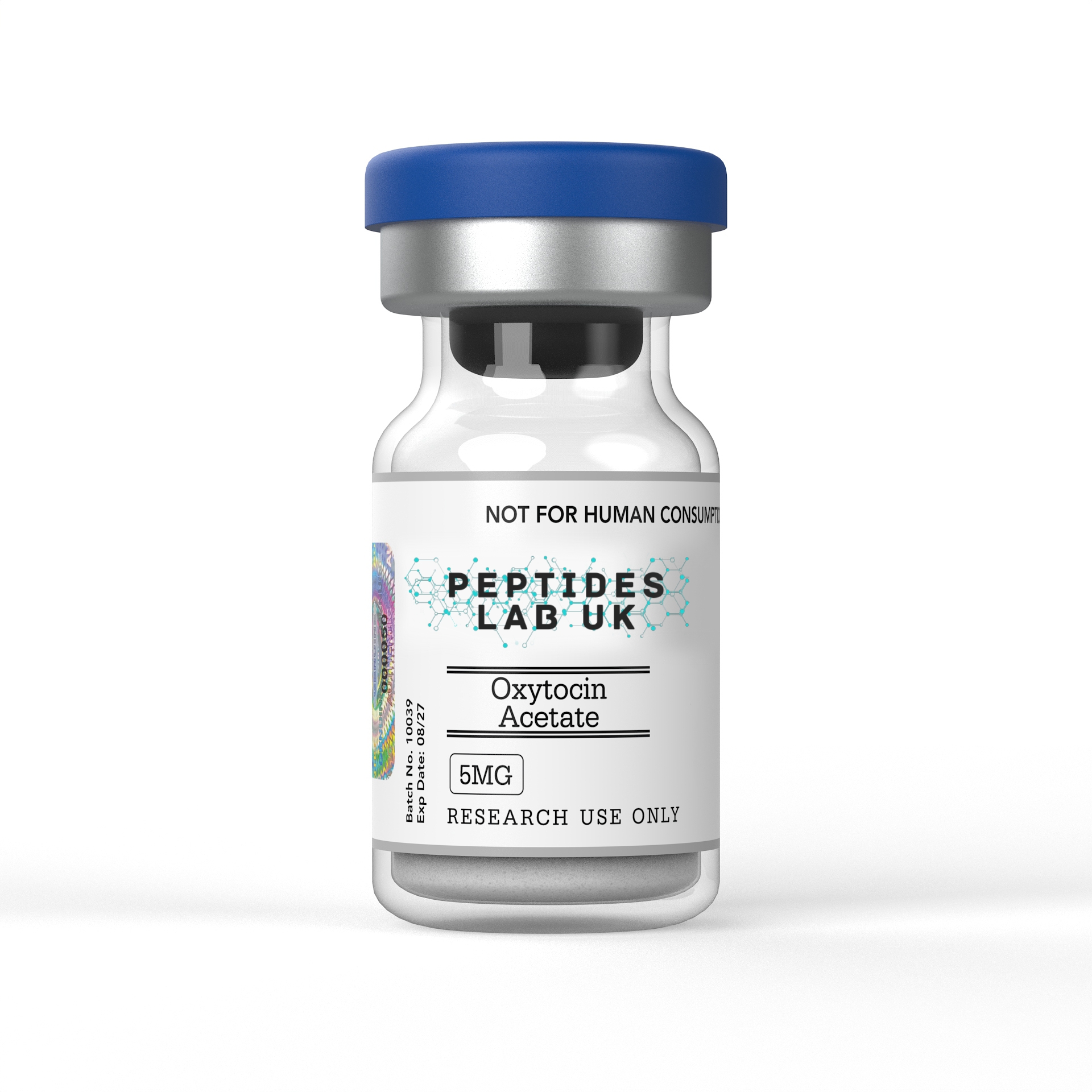
Oxytocin – 5mg | High Purity Research Peptide
£25.99
Login for member prices★★★★★
✔︎ Quality checked
✔︎ Third party verified
Oxytocin Acetate is a synthetic nonapeptide for laboratory and in vitro research. Supplied as a 5mg vial at >99% purity with a full third-party COA. For laboratory and in vitro research use only. Not for human consumption. Not a medicine.
Looking for a Certificate of Analysis?
If you are looking for a Certificate Of Analysis, please email research@peptideslabuk.com to have it sent to you.
Please Note: Many sites are displaying counterfeit COAs, so ours is provided upon request.
If you are looking for a Certificate Of Analysis, please email research@peptideslabuk.com to have it sent to you.
Please Note: Many sites are displaying counterfeit COAs, so ours is provided upon request.
You may also like…
-
Login for member prices

-
Login for member prices
-
Login for member prices
Product Description
Oxytocin Peptide | Buy Oxytocin UK | Research Use Only
Oxytocin — also known as OXT, the Love Hormone, and the Bonding Neuropeptide — is an endogenous cyclic nonapeptide (Cys-Tyr-Ile-Gln-Asn-Cys-Pro-Leu-Gly-NH₂, MW 1,007 Da) synthesised in the hypothalamic paraventricular and supraoptic nuclei and released both peripherally via the posterior pituitary and centrally into brain circuits, where it signals through the oxytocin receptor (OXTR) — a seven-transmembrane Gq/Gi-coupled GPCR — to regulate uterine contraction, milk ejection, social bonding, maternal behaviour, pair-bonding, anxiety, neuroinflammation, immune modulation, bone metabolism, gastrointestinal function, and wound healing across one of the most extensively researched neuropeptide systems in modern biology, with nearly 25,000 publications since 1930. Buy Oxytocin 5mg in the UK from Peptides Lab UK with >99% HPLC-verified purity, batch-specific COA, and fast UK dispatch for laboratory and in vitro research use only.
Distributed by Peptides Lab UK in lyophilised format for controlled laboratory research. Each batch is independently verified for purity. This compound is handled strictly in pre-clinical settings with no applications in human or veterinary medicine outside of licensed clinical contexts.
What Is Oxytocin?
Oxytocin is a nine-amino acid cyclic disulphide neuropeptide hormone — the first peptide hormone ever to be synthesised in the laboratory, achieved by Vincent du Vigneaud in 1953, for which he was awarded the Nobel Prize in Chemistry in 1955. It is one of only two hormones stored and secreted by the posterior pituitary gland (neurohypophysis), the other being arginine vasopressin (AVP), to which oxytocin is closely structurally related — differing by only two amino acid positions (position 3: Ile in OXT vs Phe in AVP; position 8: Leu in OXT vs Arg in AVP).
This structural similarity means oxytocin and vasopressin share partial cross-reactivity at each other’s receptors — a pharmacologically important consideration in research design that requires appropriate receptor-selective controls. The Oxt gene in humans is located on chromosome 20, approximately 8 kb from the AVP gene, with the nonapeptide encoded within the first of three exons alongside its associated neurophysin carrier protein.
Endogenously, oxytocin is produced primarily in the hypothalamic paraventricular nucleus (PVN) and supraoptic nucleus (SON), with both magnocellular neurons (projecting to the posterior pituitary for systemic release) and parvocellular neurons (projecting to limbic, brainstem, and spinal targets for central neuromodulatory release) contributing to its diverse physiological profile. Local synthesis in peripheral tissues — including the ovary, testis, uterus, heart, thymus, and bone — has also been confirmed.
Oxytocin is one of the most extensively studied neuropeptides in biology. The OXTR system has generated nearly 25,000 peer-reviewed publications since 1930, spanning reproductive biology, social neuroscience, immunology, metabolic physiology, musculoskeletal biology, and gastrointestinal research.
Also Known As
- OXT / OT
- Love Hormone / Bonding Hormone / Trust Hormone (lay terms)
- Pitocin (pharmaceutical oxytocin used in obstetrics)
- Syntocinon (nasal spray formulation)
- CAS No. 50-56-6
How Does Oxytocin Work?
Oxytocin Receptor (OXTR) — Gq/Gi-Coupled GPCR Signalling
Oxytocin exerts its biological effects by binding to the oxytocin receptor (OXTR / OTR), a seven-transmembrane G protein-coupled receptor whose primary signalling pathway engages Gq proteins to activate phospholipase C (PLC), generating inositol trisphosphate (IP3) and diacylglycerol (DAG). IP3 drives intracellular calcium mobilisation from the endoplasmic reticulum — the basis of uterine smooth muscle contraction and myoepithelial cell contraction during milk ejection — while DAG activates protein kinase C (PKC). OXTR also couples to Gi proteins in certain contexts to inhibit adenylate cyclase and modulate cAMP signalling, and activates MAPK/ERK pathways in cell survival and proliferation contexts.
The OXTR is expressed broadly across central and peripheral tissues — including the uterus, mammary gland, kidney, heart, bone, gastrointestinal tract, thymus, macrophages, and multiple brain regions including the amygdala, hippocampus, nucleus accumbens, PVN, BNST, and cerebral cortex — making the OXT/OXTR system one of the most anatomically widespread neuroendocrine signalling axes in mammalian biology.
Central Social Neuroscience — Amygdala, Reward, and Social Salience
In the brain, oxytocin modulates social behaviour through two primary mechanisms: direct action on OXTR-expressing neurons in limbic and reward circuits, and indirect modulation of dopaminergic, serotonergic, and GABAergic neurotransmitter systems. Oxytocin projections from the PVN and BNST directly influence social recognition, social approach and reward, sexual behaviour, maternal behaviour, and pair bonding, with the amygdala, BNST, lateral septum, and nucleus accumbens emerging as key functional nodes.
At the cellular level, oxytocin increases the salience of social sensory information — described in the research literature as analogous to turning up the volume on social cues — via widespread effects on neural excitability, synaptic gain, and signal-to-noise ratio in social processing circuits. It also activates serotonin release from the dorsal raphe nucleus projection to the nucleus accumbens, with 5-HT1B receptor interactions in the accumbens mediating long-term depression of excitatory synapses following social reward.
Sex-Dependent Amygdala Effects
Research using fMRI paradigms established that oxytocin modulates amygdala function in sex-specific ways: enhancing the salience of positive social attributes in female subjects while increasing the salience of negative social attributes in male subjects — a divergence proposed to reflect evolutionarily complementary roles in ensuring reproductive success, with females sensitised to prosocial affiliative cues and males to protective threat-detection.
Hypothalamic-Pituitary-Adrenal Axis Modulation — Stress and Anxiety
Oxytocin reduces HPA axis reactivity and cortisol responses in stress paradigms across rodent and human models. This anxiolytic and stress-buffering profile is mediated through OXTR expression on corticotropin-releasing factor (CRF) neurons and on downstream targets in the amygdala and brainstem — making oxytocin a key research tool for studying the neuroendocrine stress axis and its relationship with social experience and early life adversity.
Anti-Inflammatory and Immune Modulation
Peripheral OXTR expression on macrophages increases during immune challenge, and oxytocin binding suppresses NF-κB signalling in LPS-stimulated macrophages — significantly inhibiting TNF-α, IL-6, and other pro-inflammatory cytokine release. Concurrently, STAT6 phosphorylation is stimulated and beta-arrestin 2-mediated macrophage polarisation is enhanced, shifting the immune response toward an anti-inflammatory M2 phenotype. Oxytocin also upregulates PPARγ, a potent transcription factor that further dampens inflammatory gene programmes — establishing a multi-pathway anti-inflammatory mechanism that underpins its cytoprotective research profile across immune, wound healing, and sepsis models.
Bone Metabolism — OTR/ERK1/2/RUNX2 Osteogenic Pathway
OXTR activation in osteoblasts increases intracellular calcium and activates the ERK1/2 pathway, leading to phosphorylation of RUNX2 (Runt-related transcription factor 2 / CBFA-1) — a master transcription factor for osteoblast differentiation and bone matrix gene expression. Mice lacking oxytocin or its receptor develop severe osteopenia correctable by oxytocin administration, and oxytocin has demonstrated efficacy in reducing bone loss in ovariectomy-induced osteopenia models.
Gastrointestinal and Visceral Nociception
The OT/OXTR system is increasingly characterised as a major regulator of gastrointestinal motility, secretion, gut permeability, and visceral pain. OXTR activation centrally engages the opioid system to modulate visceral sensation; OTR expression is upregulated on colonic nociceptors under inflammatory conditions; and local OTR stimulation at the gut wall level reduces spinal cord nociceptor activation and triggers visceral analgesia in IBS-relevant pre-clinical pain models. The 2024 ChemRxiv study confirmed that gut-stable OT analogues achieving >24-hour intestinal stability (compared to <10-minute half-life of native OT in intestinal fluid) retain full potency and significantly reduce colonic mechanical hypersensitivity — establishing OXTR as an active drug target for gut pain research.
Muscle Satellite Cell Activation and Tissue Repair
Oxytocin has been shown to activate muscle satellite stem cells — the resident progenitor population responsible for skeletal muscle regeneration — via OXTR-expressing satellite cell biology, reversing age-related decline in muscle repair capacity in aged mouse models and pointing to a role for the OXT system in musculoskeletal biology that extends beyond reproductive and social functions.
Wound Healing and Social Context
The OXT system is mechanistically linked to wound healing through its anti-inflammatory, immune-modulatory, and tissue repair mechanisms. Oxytocin administration has been shown to rescue the impaired wound healing caused by social isolation in rodent models — a finding consistent with the established neuroendocrine pathway connecting social experience, OXT release, and downstream immune competence. A recent RCT in humans examined oxytocin’s effect on suction blister wound healing and neuroendocrine stress parameters across a structured 7-day observational window.
What Does Oxytocin Do in Research?
In laboratory and pre-clinical settings, oxytocin (OXT) is studied across one of the broadest research application landscapes of any neuropeptide. Key research areas include:
- Social behaviour neuroscience — maternal behaviour, mother-infant bonding, pair bonding, social recognition, social memory, and affiliation in rodent and primate models
- OXTR pharmacology — receptor binding, Gq/Gi-coupled intracellular signalling, MAPK/ERK activation, receptor expression regulation, and OXTR-selective ligand development
- Neural circuit research — PVN, SON, amygdala, nucleus accumbens, BNST, lateral septum, hippocampus, and dorsal raphe nucleus circuit mapping
- Anxiety, stress, and HPA axis modulation — cortisol response, CRF pathway, and social stress buffering research
- Neurotransmitter crosstalk — serotonergic (5-HT1B/dorsal raphe), dopaminergic (reward/nucleus accumbens), and GABAergic modulation
- Sex differences in social cognition — amygdala fMRI paradigms, sex-dependent OXT effects, and reproductive biology
- Anti-inflammatory and immune research — macrophage polarisation, NF-κB suppression, TNF-α/IL-6 inhibition, PPARγ, STAT6
- Bone metabolism — OTR/ERK1/2/RUNX2 osteogenic pathway, osteopenia models, and osteoblast differentiation
- Gastrointestinal research — GI motility, secretion, gut permeability, visceral pain, IBS/IBD models, and OTR-targeted analgesia
- Wound healing — social isolation wound healing models, immune-mediated tissue repair, and skin barrier biology
- Muscle regeneration and sarcopenia — satellite cell activation, age-related muscle repair decline, and OXT-mediated regenerative capacity
- Autism spectrum disorder (ASD) models — social cognition, OXTR genetics, intranasal delivery, and circuit-based mechanisms
- Reproductive biology — parturition, uterine contraction, milk ejection, lactation, and peri-partum neuroendocrinology
- Early life experience and developmental neuroscience — neonatal OXT system, social deprivation, and long-term OXTR programming
- Cardiovascular models — cardioprotection, septic cardiomyopathy, CSE/OTR crosstalk, and anti-inflammatory cardiac biology
- Pair bonding and vole model biology — prairie vs meadow vole OXTR receptor distribution and pair-bond research
- OXTR evolutionary biology — cross-species receptor distribution, nematocin, isotocin, and invertebrate OXT homologue research
What Do Studies Say About Oxytocin?
The Foundational Social Bonding Evidence — Prairie Vole Model
The prairie vole/meadow vole comparative model — established by Young, Carter, Insel and colleagues — is the most-cited pre-clinical system for studying oxytocin’s role in affiliative behaviour. Prairie voles, which display monogamous pair bonding, have dense OXTR expression in the BNST and lateral amygdala — circuits implicated in maternal behaviour and social attachment. Meadow voles, which live largely alone, show a complementary, non-overlapping OXTR distribution pattern. Pharmacological blockade of oxytocin in prairie voles reverses pair bonding, directly establishing OXTR activity as necessary for this affiliative phenotype. This receptor distribution model has been used across hundreds of subsequent studies to link receptor-level GPCR biology to complex social behaviour.
Deconstruction of the Social Peptide Narrative — A Critical Research Context
The influential 2022 review by Leng, Leng, and Ludwig in Philosophical Transactions of the Royal Society B subjected the most-cited oxytocin social behaviour literature to systematic critical analysis, finding that the evidence base for many widely repeated claims — particularly from human intranasal oxytocin studies — is frequently underpowered, inconsistently replicated, and characterised by inflated early effect sizes. This review is now a landmark reference in the field, not as a refutation of oxytocin biology, but as a call for more rigorous experimental design — and is essential reading for researchers entering the OXT field.
OXT/OXTR Gastrointestinal Research — 2024 Review
The 2024 review published in PMC (accepted October 2024) synthesised the complete OT/OXTR gastrointestinal literature, confirming anti-nociceptive, barrier-protective, motility-regulating, and anti-inflammatory roles for the OXT system across the alimentary canal — and identifying the OT/OTR axis as a promising target for GI disorder research, with microbiota-mediated endogenous OXT elevation emerging as a novel research strategy.
Wound Healing and Social Isolation — Pre-Clinical and Clinical Evidence
A 2025 ScienceDirect publication confirmed that oxytocin administration rescues impaired wound healing in socially isolated mice, providing a mechanistic link between OXT’s prosocial and immune-regulatory functions at the tissue repair level. A separate randomised, placebo-controlled, double-blind RCT in human couples (data collected 2011–2013; analyses conducted December 2023 to February 2025, published in PMC) examined intranasal oxytocin’s effect on suction blister wound healing and cortisol across a structured 7-day protocol — providing one of the most methodologically rigorous human wound healing datasets for the OXT system.
Bone Biology — OTR Knockout Evidence
Studies in oxytocin and OXTR knockout mice confirmed that loss of OXT signalling produces severe osteopenia, normalised by oxytocin replacement — providing direct mechanistic confirmation that the OXT/OXTR axis is non-redundant in bone homeostasis and establishing oxytocin as an active target in osteoporosis and bone remodelling research programmes.
Comprehensive OXTR Signalling Review
The comprehensive review by Grinevich and colleagues published in Physiological Reviews (2018) synthesised the complete OXT/OXTR system across mechanism, anatomy, behaviour, and disease — covering nearly 25,000 publications and establishing the definitive mechanistic reference framework for the field. It documents OXTR-coupled signalling cascades, expression mapping, and behavioural outcomes across the full scope of central and peripheral OXT biology.
Key Cited Studies
- du Vigneaud V et al. (1953) — The synthesis of an octapeptide amide with the hormonal activity of oxytocin. J Am Chem Soc 75(19):4879–4880. DOI: 10.1021/ja01115a553
- Insel TR & Shapiro LE (1992) — Oxytocin receptor distribution reflects social organisation in monogamous and polygamous voles. PNAS 89(13):5981–5985. DOI: 10.1073/pnas.89.13.5981
- Young LJ & Wang Z (2004) — The neurobiology of pair bonding. Nat Neurosci 7(10):1048–1054. DOI: 10.1038/nn1327
- Gimpl G & Fahrenholz F (2001) — The oxytocin receptor system: structure, function, and regulation. Physiol Rev 81(2):629–683. PMID: 11274341
- Leng G, Leng RI & Ludwig M (2022) — Oxytocin — a social peptide? Deconstructing the evidence. Philos Trans R Soc Lond B Biol Sci 377(1858):20210055. DOI: 10.1098/rstb.2021.0055
- Grinevich V & Stoop R (2018) — Interplay between oxytocin and sensory systems in the orchestration of socio-emotional behaviors. Neuron 99(5):887–904. DOI: 10.1016/j.neuron.2018.07.016
- Rae M et al. (2022) — Oxytocin and vasopressin: signalling, behavioural modulation and potential therapeutic effects. Br J Pharmacol 179(8):1544–1564. DOI: 10.1111/bph.15481
- Baskaran C et al. (2024) — Oxytocin/oxytocin receptor signalling in the gastrointestinal system. PMC (accepted October 2024). PMC11508134
Oxytocin vs Related Neuropeptides in Research
| Feature | Oxytocin (OXT) | Arginine Vasopressin (AVP) | Semax | Selank |
|---|---|---|---|---|
| Peptide Length | 9 amino acids (nonapeptide) | 9 amino acids (nonapeptide) | 7 amino acids (heptapeptide) | 7 amino acids (heptapeptide) |
| Primary Receptor | OXTR (Gq/Gi-GPCR) | V1aR, V1bR, V2R (GPCR) | MCR / BDNF/TrkB upregulation | GABAergic / enkephalinase inhibition |
| Structural Homology | High similarity to AVP (2 AA difference) | High similarity to OXT (2 AA difference) | ACTH(4-10) analogue | Tuftsin analogue |
| Social Behaviour | Primary research system | Social communication, aggression, territory | Cognitive modulation | Anxiolytic, stress |
| Anti-Inflammatory | Yes — macrophage NF-κB, TNF-α suppression | Indirect — stress axis | Partial | Yes — IL-6, TNF-α |
| Bone Metabolism | Yes — OTR/RUNX2/ERK1/2 osteogenesis | Limited | No | No |
| GI Research | Extensive — motility, visceral pain, IBD | Limited | Limited | Limited |
| Wound Healing | Yes — pre-clinical and clinical data | No | No | No |
| HPA Axis Modulation | Yes — stress/cortisol buffering | Yes — CRF stimulation / stress amplification | Yes — indirect | Yes — anxiolytic |
| Evolutionary Conservation | Extremely high — present in all vertebrates | Extremely high — present in all vertebrates | Synthetic (ACTH fragment) | Synthetic (tuftsin fragment) |
| Nobel Prize | Yes — du Vigneaud 1955 (synthesis) | Yes — du Vigneaud 1955 (shared) | No | No |
| Best Research Use | Social bonding, neuroimmunology, bone, GI, HPA | Social communication, fluid balance, stress | Neurotrophin biology, ischaemia models | Anxiety, GABA/serotonin research |
Quality & Purity Assurance
Every batch of Oxytocin 5mg from Peptides Lab UK is:
- >99% pure — HPLC and mass spectrometry verified
- Supplied with a full Certificate of Analysis (COA) on request
- Lyophilised powder for maximum stability and long shelf life
- Manufactured under strict, controlled laboratory conditions
- Consistent batch-to-batch quality for reproducible research results
Buy Oxytocin UK — Product Specifications
| Property | Detail |
|---|---|
| Full Name | Oxytocin / OXT |
| Also Known As | Love Hormone, Bonding Neuropeptide, CAS 50-56-6 |
| Sequence | Cys-Tyr-Ile-Gln-Asn-Cys-Pro-Leu-Gly-NH₂ (disulphide bridge: Cys¹–Cys⁶) |
| Amino Acids | 9 (cyclic nonapeptide) |
| Molecular Weight | 1,007.19 Da |
| Molecular Formula | C₄₃H₆₆N₁₂O₁₂S₂ |
| Primary Receptor | Oxytocin Receptor (OXTR) — Gq/Gi-coupled GPCR |
| Vial Size | 5mg |
| Purity | >99% (HPLC verified) |
| Form | Lyophilised powder |
| Storage | Store dry at -20°C; protect from light |
| Solubility | Sterile water, bacteriostatic water, or 0.9% saline; highly water-soluble |
| Plasma Half-Life | ~1–2 minutes (peripheral); longer with CNS administration |
Oxytocin Research Applications
Oxytocin (OXT) 5mg UK is supplied strictly for the following in vitro and pre-clinical research uses:
- Social behaviour neuroscience — maternal behaviour, pair bonding, social recognition, and social memory
- OXTR pharmacology — Gq/Gi coupling, IP3/calcium mobilisation, PKC, MAPK/ERK signalling, and OXTR ligand development
- Neural circuit mapping — PVN, amygdala, BNST, nucleus accumbens, lateral septum, hippocampus, and dorsal raphe circuits
- Anxiety, stress, and HPA axis modulation — cortisol response, CRF pathway, social buffering, and early life adversity
- Neurotransmitter crosstalk — serotonergic (5-HT1B), dopaminergic, GABAergic, and opioid system interactions
- Sex differences in social cognition — amygdala fMRI paradigms and sex-specific OXTR biology
- Anti-inflammatory research — macrophage NF-κB/STAT6/PPARγ, TNF-α/IL-6 suppression, and M2 polarisation
- Bone metabolism — OTR/ERK1/2/RUNX2 osteogenesis, osteopenia, and bone remodelling models
- Gastrointestinal research — motility, visceral pain, IBS/IBD models, gut barrier, and OTR-targeted analgesia
- Wound healing — social isolation models, immune-mediated repair, and skin barrier biology
- Muscle satellite cell activation and age-related regenerative decline research
- ASD and neurodevelopmental disorder models — social cognition, OXTR genetics, and circuit mechanisms
- Reproductive biology — parturition, uterine contractility, lactation, and neuroendocrine peri-partum biology
- Cardiovascular research — cardioprotection, septic cardiomyopathy, and OTR/CSE crosstalk
- Prairie vole pair bonding — OXTR distribution, circuit pharmacology, and monogamy models
- OXTR evolutionary biology — cross-species comparisons, nematocin/isotocin homologues
Why Buy Oxytocin UK from Peptides Lab UK?
Peptides Lab UK is a trusted UK peptides supplier providing research-grade compounds verified by independent HPLC testing. When you buy Oxytocin in the UK from us, you receive:
99% purity, HPLC and MS verified, third-party tested
- Full COA documentation per batch
- Fast same-day UK dispatch with tracked delivery
- Competitive pricing with bulk research discounts available
- 5mg vial size for flexible research dosing
- Trusted by researchers across the UK and Europe
Research Disclaimer
All products supplied by Peptides Lab UK are intended strictly for in vitro laboratory research and scientific study use only. They are not intended for human consumption, self-administration, or use outside a controlled laboratory environment. Synthetic oxytocin is a licensed medicine in approved obstetric and gynaecological formulations (Pitocin, Syntocinon); the research-grade lyophilised oxytocin supplied by Peptides Lab UK is not a pharmaceutical product, has not been approved by the MHRA or FDA for any research or clinical use in humans or animals when supplied in this format, and must not be used as a substitute for licensed pharmaceutical oxytocin. All citations on this page refer to peer-reviewed pre-clinical and clinical research and do not constitute a claim of safety or therapeutic efficacy for the research compound supplied herein. Peptides Lab UK accepts no liability for any misuse of research compounds. By purchasing, you confirm that you are a qualified researcher and that the product will be used solely within a controlled laboratory environment in compliance with all applicable UK laws, regulations, and institutional guidelines.
Related products
-
Login for member prices
-
Login for member prices
-
Login for member prices£20.00 Select options This product has multiple variants. The options may be chosen on the product page
