




No products in the cart.

Up to - 29%

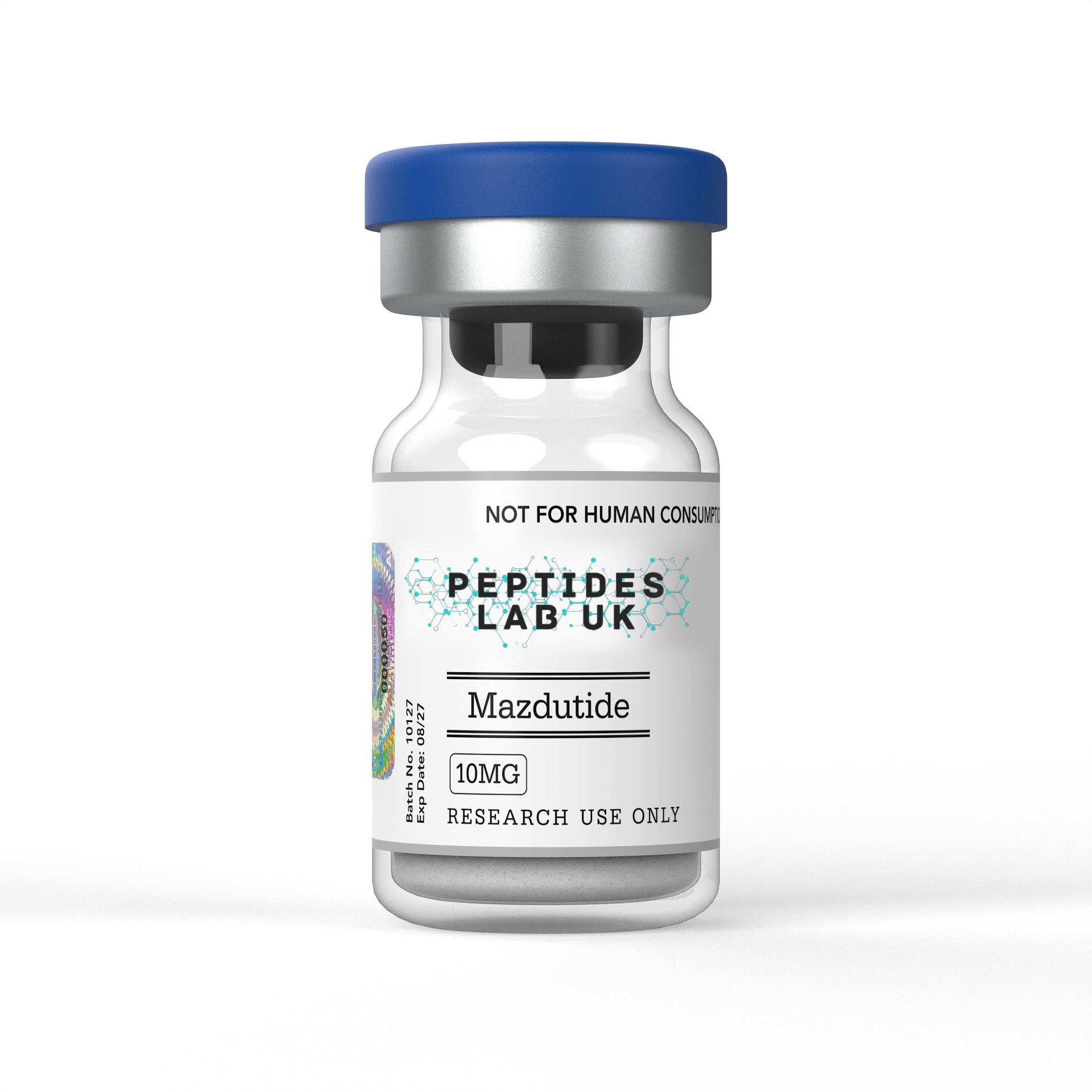
Mazdutide For Lab Research
£140.00
Login for member prices★★★★★
✔︎ Quality checked
✔︎ Third party verified
Mazdutide is a dual GLP-1 and glucagon receptor agonist for laboratory and in vitro research. Produced at >99% purity with a full third-party COA. For laboratory and in vitro research use only. Not for human consumption. Not a medicine.
Looking for a Certificate of Analysis?
If you are looking for a Certificate Of Analysis, please email research@peptideslabuk.com to have it sent to you.
Please Note: Many sites are displaying counterfeit COAs, so ours is provided upon request.
If you are looking for a Certificate Of Analysis, please email research@peptideslabuk.com to have it sent to you.
Please Note: Many sites are displaying counterfeit COAs, so ours is provided upon request.
You may also like…
-
Login for member prices
-
Login for member prices
-
Login for member prices
Product Description
Buy Mazdutide UK – >99% Purity | GLP-1R/GCGR Dual Agonist | Research Use Only
Mazdutide (IBI362 / LY3305677 / OXM3) is a synthetic oxyntomodulin-based dual agonist of the GLP-1 receptor (GLP-1R) and glucagon receptor (GCGR) — currently in Phase 3 clinical development across five global trials and one of the most clinically advanced metabolic research peptides available today. Buy Mazdutide in the UK from Peptides Lab UK with >99% HPLC-verified purity, batch-specific COA, and fast UK dispatch for laboratory and in-vitro research use only.
What is Mazdutide?
Mazdutide (IBI362, also known by Eli Lilly’s development code LY3305677 and the pre-clinical identifier OXM3) is a synthetic peptide modelled on mammalian oxyntomodulin (OXM) — a naturally occurring gut hormone that itself acts as a dual GLP-1R/GCGR agonist. Developed by Innovent Biologics under an exclusive licence agreement with Eli Lilly and Company, Mazdutide is engineered to simultaneously activate both the GLP-1 receptor and the glucagon receptor with optimised affinity and balanced potency at each target.
This dual receptor activation addresses two complementary components of metabolic disease simultaneously: GLP-1R agonism drives appetite suppression, gastric emptying delay, and glucose-dependent insulin secretion, while GCGR activation adds a distinct and meaningful increase in energy expenditure, hepatic fatty acid oxidation, and lipolysis — metabolic effects not achievable through GLP-1R agonism alone.
Mazdutide is currently the most clinically advanced dual GLP-1R/GCGR agonist with completed Phase 3 data, and its NDA for chronic weight management is currently under review by China’s National Medical Products Administration (NMPA) — making it one of the most closely watched research peptides in the global metabolic disease community.
Synonyms: IBI362, LY3305677, OXM3, Mazdutide Mechanism: GLP-1R and GCGR dual agonist (oxyntomodulin analog) Developer: Innovent Biologics / Eli Lilly (licensed) Purity: >99% (HPLC verified) Form: Lyophilised powder Storage: –20°C, protect from light and moisture
How Does Mazdutide Work?
Mazdutide functions through two complementary receptor mechanisms that together produce a broader and more potent metabolic effect than either GLP-1 mono-agonism or glucagon mono-agonism alone:
GLP-1 Receptor (GLP-1R) Activation:
- Suppresses appetite and reduces caloric intake through central hypothalamic satiety signalling
- Slows gastric emptying, prolonging postprandial satiety
- Stimulates glucose-dependent insulin secretion from pancreatic beta cells
- Reduces post-meal blood glucose excursions
- Activates cAMP/PKA and PI3K–Akt signalling pathways in multiple tissues
Glucagon Receptor (GCGR) Activation:
- Increases energy expenditure through hepatic and thermogenic pathways — the key differentiator from GLP-1 mono-agonists
- Promotes hepatic fatty acid oxidation and lipolysis, directly reducing liver fat content
- Reduces hepatic lipid accumulation via direct glucagon-mediated pathways — confirmed to produce liver fat reductions exceeding those of GLP-1 mono-agonists and other dual agonists
- Lowers circulating uric acid levels via uricosuric mechanisms (confirmed across pre-clinical and clinical data)
- May uniquely counteract glutamate excitotoxicity — a neuroprotective pathway separate from those targeted by GLP-1 mono-agonists
The synergy between these two pathways is the core of Mazdutide’s research rationale: GLP-1R reduces energy intake while GCGR increases energy expenditure, creating a dual-sided energy balance intervention that pre-clinical and clinical data suggest is more effective than either mechanism alone.
What Does Mazdutide Do in Research?
In pre-clinical models and Phase 1–3 clinical research, Mazdutide has demonstrated a broad range of significant metabolic effects:
- Bodyweight reduction — Phase 3 GLORY-1 trial (48 weeks, once-weekly subcutaneous dosing) demonstrated 14.8% bodyweight reduction at 6 mg versus 0.5% with placebo in Chinese adults with obesity or overweight
- Superior liver fat reduction — exploratory MRI-PDFF analysis from GLORY-1 showed an 80.2% reduction in liver fat content versus baseline, exceeding results reported for GLP-1 mono-agonists and other dual-target agonists in comparable studies
- HbA1c reduction — Phase 2 trials in Chinese adults with type 2 diabetes demonstrated significant HbA1c reduction, with full results published in Diabetes Care (2024)
- Multiple cardiometabolic improvements — confirmed reductions in waist circumference, blood lipids, blood pressure, serum uric acid, and liver enzymes across Phase 2 and Phase 3 data sets; over 1,500 subjects dosed across 17 clinical trials
- Cognitive function models — eBioMedicine/The Lancet (2025) confirmed Mazdutide significantly outperformed dulaglutide (a GLP-1 mono-agonist) in improving cognitive performance in db/db diabetic mice, with improvements in neuronal structure, brain tissue integrity, synaptic plasticity markers, and restoration of excitatory-inhibitory balance via VGluT2/NMDA/GABA pathways
- Neuroprotection research — GCGR activation shown to uniquely counteract glutamate excitotoxicity in diabetic cognitive dysfunction models — a pathway not addressed by GLP-1 mono-agonist comparators in the same study
- Hyperuricemia models — confirmed uric acid reduction in pre-clinical hyperuricemic rat models and across clinical trial populations; relevant for gout and metabolic syndrome research
- Adolescent metabolic models — case report data confirmed Mazdutide produced 18.89% BMI reduction, 37% uric acid reduction, and 21.88% HbA1c reduction over 36 weeks in an adolescent model with obesity, T2DM, and hyperuricemia
- MAFLD and MASH models — GCGR activation directly targets hepatic lipid metabolism pathways central to metabolic-associated fatty liver disease; Phase 3 liver fat data positions Mazdutide as a particularly relevant research tool for MAFLD and MASH studies
- Pre-clinical obesity models — confirmed robust dose-dependent bodyweight reduction and improved glucose tolerance across multiple DIO and db/db mouse model studies
What Do Studies Say About Mazdutide?
Mazdutide has an exceptionally well-developed and rapidly growing clinical research literature:
- Ji L et al. (2025) — New England Journal of Medicine — GLORY-1 Phase 3 publication. Once-weekly Mazdutide in Chinese adults with obesity or overweight (610 participants, 48 weeks). Primary endpoints and all key secondary endpoints met. DOI: 10.1056/NEJMoa2411528
- Zhang B et al. (2024) — Diabetes Care, 47: 160–168 — Phase 2 randomised, double-blind, placebo-controlled trial confirming efficacy and safety of Mazdutide in Chinese patients with type 2 diabetes. Demonstrated significant HbA1c reduction and bodyweight loss with a well-tolerated safety profile. DOI: 10.2337/dc23-1287
- Ji L et al. (2023) — Nature Communications, 14: 8289 — Phase 2 randomised controlled trial of Mazdutide in Chinese overweight adults or adults with obesity. Confirmed significant bodyweight reduction (–11.3% vs –1% placebo), with improvements across multiple cardiometabolic markers. DOI: 10.1038/s41467-023-44067-4
- eBioMedicine / The Lancet (2025) — PMC12205698 — Pre-clinical multi-omics study demonstrating Mazdutide significantly outperformed dulaglutide on cognitive performance in db/db T2DM mice. Confirmed neuroprotection via GCGR-mediated counteraction of glutamate excitotoxicity, upregulation of BDNF, cAMP/PKA and PI3K–Akt activation, and restoration of synaptic excitatory-inhibitory balance — pathways not accessible via GLP-1 mono-agonism. DOI: 10.1016/S2352-3964(25)00235-X
- Innovent / ADA Scientific Sessions (2024) — GLORY-1 Phase 3 exploratory analysis presented at ADA 84th Scientific Sessions confirming 80.2% liver fat content reduction via MRI-PDFF in participants with baseline liver fat ≥5% — described by lead investigators as exceeding results from GLP-1 mono-agonists and other dual-target agonists in comparable studies.
- Front Endocrinol — Systematic Review & Meta-Analysis (2024) — DOI: 10.3389/fendo.2024.1309118 — Confirmed significant reductions in bodyweight and cardiometabolic parameters across pooled Mazdutide RCT data in both diabetic and non-diabetic populations.
- PMC Review (2025) — PMC12306892 / Drugs in Context — Confirmed Mazdutide as one of four dual GCGR-based agonists to complete Phase 2 trials and the only one with completed Phase 3 data (GLORY-1), with a second Phase 3 trial (GLORY-2) underway and three T2DM Phase 3 trials (DREAMS-1, DREAMS-2, DREAMS-3) ongoing. DREAMS-3 is a head-to-head comparison against semaglutide.Note: Phase 2 and Phase 3 clinical data relate to pharmaceutical development research. Mazdutide is not approved outside China (NDA under NMPA review as of 2025) and is not approved for medical or therapeutic use in the UK. All supply from Peptides Lab UK is for in-vitro and laboratory research use only.
What is Mazdutide Used For in Research?
Researchers purchasing Mazdutide from UK peptides suppliers like Peptides Lab UK typically investigate:
- Dual GLP-1R/GCGR receptor binding, activation, and co-agonism studies
- Obesity and metabolic syndrome pre-clinical and in-vitro models
- Energy expenditure, fatty acid oxidation, and hepatic lipid metabolism research
- Type 2 diabetes and glycaemic control investigation
- Liver steatosis, MAFLD, and MASH model studies
- Hyperuricemia and uric acid metabolism research
- Cognitive function and diabetes-associated cognitive dysfunction (DACD) models
- Neuroprotection: glutamate excitotoxicity, synaptic plasticity, and BDNF pathway research
- Comparative dual agonist research alongside Survodutide, Pemvidutide, and Retatrutide
- DREAMS-3 trial-adjacent research: Mazdutide vs semaglutide comparative models
- Structure–activity relationship (SAR) studies within the oxyntomodulin analog class
- Cardiometabolic comorbidity studies: blood pressure, dyslipidaemia, uric acid
Mazdutide vs Survodutide vs Semaglutide – Research Comparison
| Feature | Mazdutide | Survodutide | Semaglutide |
|---|---|---|---|
| Receptor Targets | GLP-1R + GCGR | GLP-1R + GCGR | GLP-1R only |
| Origin | Oxyntomodulin analog | Glucagon-derived | GLP-1 analog |
| Developer | Innovent / Eli Lilly | Boehringer Ingelheim / Zealand | Novo Nordisk |
| Phase 3 Data | Yes (GLORY-1, NEJM 2025) | Ongoing (SYNCHRONIZE) | Approved |
| Bodyweight Reduction (Ph3) | 14.8% (6 mg, 48 wks) | Ongoing | ~15% (2.4 mg, 68 wks) |
| Liver Fat Reduction | 80.2% (MRI-PDFF, GLORY-1) | Strong (GCGR) | Moderate |
| Cognitive Research | Yes (eBioMedicine 2025) | Limited | Limited |
| Uric Acid Reduction | Yes (confirmed) | Not primary focus | No |
| Regulatory Status | NDA under NMPA review | Phase 3 | Approved (UK, US, EU) |
Mazdutide’s 80.2% liver fat reduction and emerging cognitive research data are two unique differentiators that distinguish it from both Survodutide and approved semaglutide in the research literature.
Quality & Purity Assurance
Every batch of Mazdutide from Peptides Lab UK is:
- >99% pure — HPLC and mass spectrometry verified
- Supplied with a full Certificate of Analysis (COA) on request
- Lyophilised powder for maximum stability and long shelf life
- Manufactured under strict, controlled laboratory conditions
- Consistent batch-to-batch quality for reproducible research results
Why Buy Mazdutide from Peptides Lab UK?
When you buy Mazdutide in the UK from Peptides Lab UK, you receive:
99% purity, HPLC and MS verified, third-party tested
- Full COA documentation per batch
- Fast same-day UK dispatch with tracked delivery
- Competitive pricing with bulk research discounts available
- Trusted by researchers across the UK and Europe
Research Disclaimer: All products supplied by Peptides Lab UK are intended strictly for in-vitro laboratory research and scientific study use only. They are not intended for human consumption, veterinary use, or any medical or therapeutic application. Mazdutide (IBI362) is an investigational compound currently under regulatory review in China and has not been approved by the MHRA, FDA, EMA, or any regulatory authority for human use outside of clinical trial settings. All clinical trial data and research citations on this page are published for scientific reference purposes and do not constitute a claim of safety or therapeutic efficacy for the research compound as supplied. Peptides Lab UK accepts no liability for any misuse of research compounds. By purchasing, you confirm that you are a qualified researcher and that the product will be used solely within a controlled laboratory environment in compliance with all applicable UK laws, regulations, and institutional guidelines.
Related products
-
Login for member prices
-
Login for member prices
-
Login for member prices
