




No products in the cart.

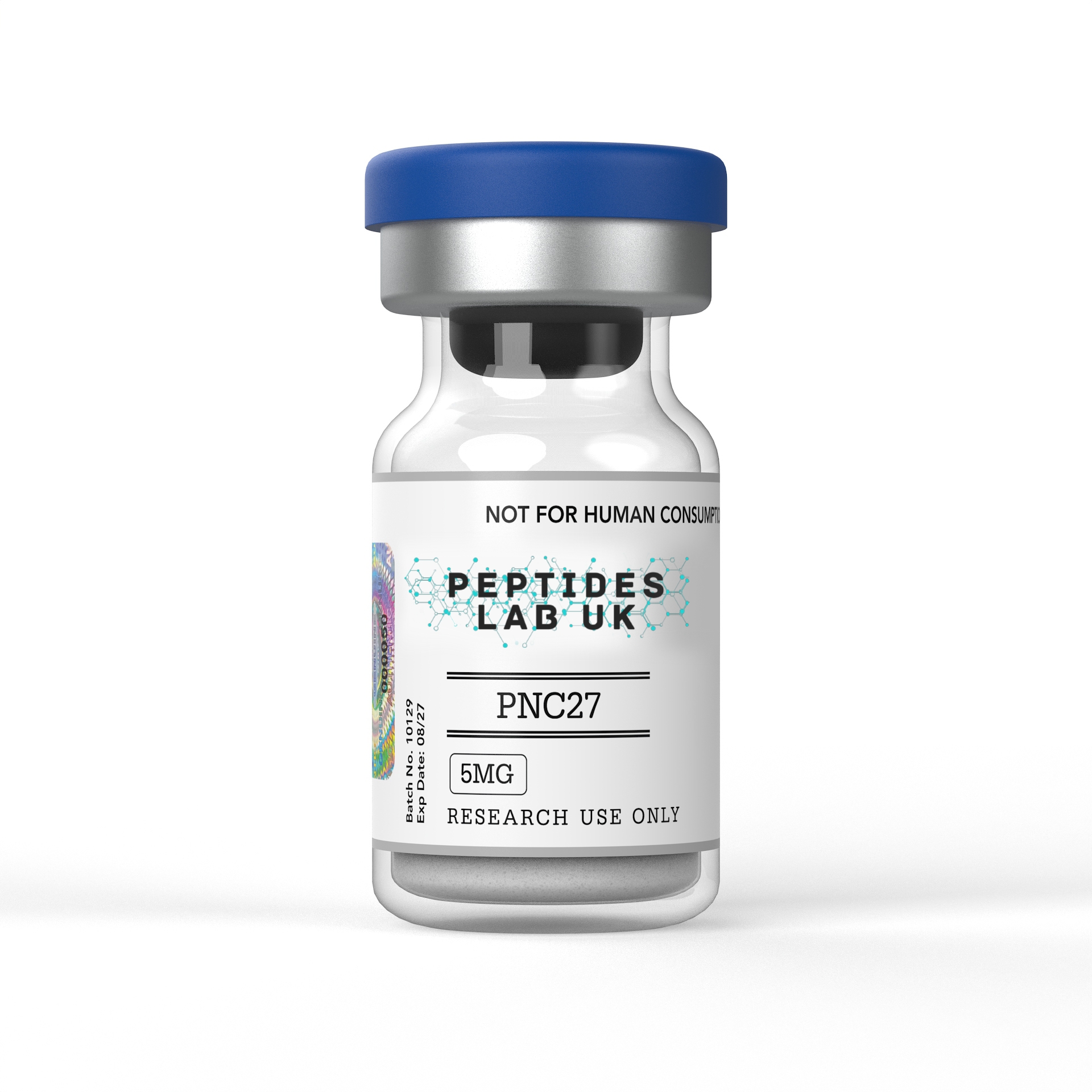
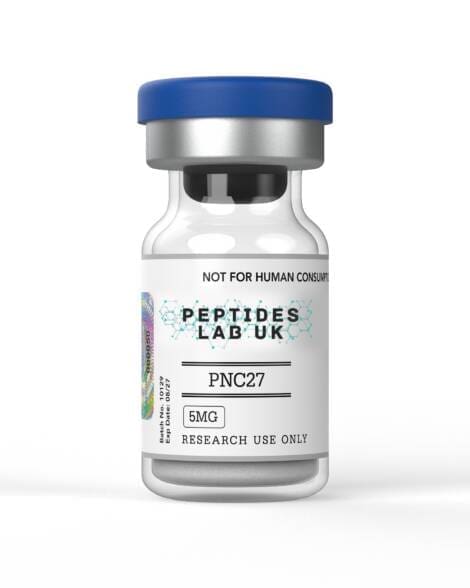
PNC27 For Lab Research
£119.00
Login for member prices★★★★★
✔︎ Quality checked
✔︎ Third party verified
PNC-27 is a p53-derived peptide targeting HDM-2 in cell membranes, used in laboratory and in vitro research. Supplied at high purity with a full COA. For laboratory and in vitro research use only. Not for human consumption. Not a medicine.

Looking for a Certificate of Analysis?
If you are looking for a Certificate Of Analysis, please email research@peptideslabuk.com to have it sent to you.
Please Note: Many sites are displaying counterfeit COAs, so ours is provided upon request.
If you are looking for a Certificate Of Analysis, please email research@peptideslabuk.com to have it sent to you.
Please Note: Many sites are displaying counterfeit COAs, so ours is provided upon request.
You may also like…
-
Login for member prices

-
Login for member prices
-
Login for member prices
-
Login for member prices
Product Description
Buy PNC-27 Peptide UK – >99% Purity | HDM-2 Targeting Anticancer Peptide | Research Use Only
PNC-27 is a synthetic 32-amino acid chimeric anticancer research peptide containing the HDM-2-binding domain of p53 (residues 12–26) fused to a transmembrane-penetrating sequence — studied for its unique ability to selectively induce necrotic cell death in cancer cells expressing membrane-bound HDM-2, while leaving untransformed normal cells unaffected. Buy PNC-27 peptide in the UK from Peptides Lab UK with >99% HPLC-verified purity, batch-specific COA, and fast UK dispatch for laboratory and in-vitro research use only.
What is PNC-27 Peptide?
PNC-27 is a chimeric research peptide first developed by Dr. Matthew Pincus and colleagues at the State University of New York (SUNY) Downstate Medical Center, combining two functional domains into a single 32-residue sequence:
- The HDM-2-binding domain — p53 residues 12–26, derived from the amino-terminal transactivation domain of the p53 tumour suppressor protein that naturally binds to HDM-2 (human double minute 2, also known as MDM2)
- A transmembrane-penetrating (membrane residency) peptide (MRP) — derived from the Antennapedia homeodomain, fused to the C-terminus to enable membrane interaction and insertion upon target engagement
What makes PNC-27 unique among anticancer research peptides is its proposed mechanism of action — rather than triggering intracellular apoptosis pathways (the mechanism of most conventional chemotherapeutic approaches), PNC-27 targets HDM-2 expressed on the outer plasma membranes of cancer cells, forming transmembrane pores that cause rapid necrotic cell death through a process researchers have termed “poptosis” (peptide-induced transmembrane pore formation).
Critically, HDM-2 is not expressed on the outer cell membranes of normal, untransformed cells — making PNC-27’s mechanism inherently selective for cancer cells in laboratory models.
Product Specifications:
| Parameter | Specification |
|---|---|
| Type | 32-residue chimeric anticancer peptide |
| Domains | HDM-2-binding (p53 residues 12–26) + Transmembrane MRP |
| Purity | >99% (HPLC verified) |
| Form | Lyophilised powder |
| Storage | –20°C, protect from light and moisture |
| Solubility | Sterile water, bacteriostatic water, DMSO |
What is HDM-2, and Why Does It Matter in PNC-27 Research?
HDM-2 (Human Double Minute 2, gene MDM2) is a critical oncogenic protein that normally acts as the primary negative regulator of p53 — binding to p53 and targeting it for proteasomal degradation, effectively switching off the tumour suppressor. In normal cells, HDM-2 is primarily found intracellularly and in the nucleus.
However, in many cancer types, HDM-2 is overexpressed and aberrantly localised to the outer plasma membrane — a distinctive molecular feature of malignant cells that is absent in untransformed normal tissue. This membrane-localised HDM-2 serves as PNC-27’s primary binding target, explaining the peptide’s observed cancer selectivity in research models.
HDM-2 membrane overexpression has been confirmed across a wide range of cancer types in pre-clinical literature, including breast cancer, pancreatic cancer, ovarian cancer, lung cancer, colon cancer, cervical cancer, melanoma, osteosarcoma, and several haematological malignancies.
How Does PNC-27 Work? The “Poptosis” Mechanism
PNC-27 kills cancer cells through a four-step membrane-directed mechanism distinct from conventional apoptosis pathways:
Step 1 — Target Recognition: PNC-27’s p53-derived domain (residues 12–26) adopts an HDM-2-binding conformation — confirmed by NMR structural studies to be directly superimposable on the structure of the same p53 residues when bound to HDM-2. This enables specific recognition of membrane-expressed HDM-2 on cancer cell surfaces.
Step 2 — Membrane Binding and Insertion: Upon binding to membrane-localised HDM-2, PNC-27 inserts into the lipid bilayer via its C-terminal transmembrane-penetrating domain, anchoring the PNC-27–HDM-2 complex within the cell membrane.
Step 3 — Oligomeric Pore Assembly: Individual PNC-27–HDM-2 complexes migrate laterally within the membrane and assemble into ring-shaped oligomeric structures. Immuno-scanning electron microscopy has revealed these as approximately 1:1 PNC-27:HDM-2 complexes arranged in layered ring-shaped structures within transmembrane pores near the cell surface.
Step 4 — Necrotic Cell Death (Poptosis): The assembled transmembrane pores cause extrusion of intracellular contents, resulting in rapid tumour cell necrosis. Additionally, PNC-27 has been shown to enter cancer cells and bind to mitochondrial membranes, causing mitochondrial disruption — a secondary cytotoxic mechanism confirmed by immuno-electron microscopy.
This entire mechanism is termed “poptosis” by the research group — a novel, p53-independent pathway for selective cancer cell destruction.
What Does PNC-27 Do in Research?
In pre-clinical in-vitro and animal model studies, PNC-27 has demonstrated a range of significant oncological findings:
- Broad cancer cell selectivity — demonstrated cytotoxicity against human metastatic colon adenocarcinoma, transformed rat brain capillary endothelial cells, cervical carcinoma, metastatic breast carcinoma, non-small cell lung carcinoma, osteosarcoma, pancreatic carcinoma, ovarian cancer, and multiple haematological malignancies — while showing no effect on untransformed normal cell lines or human haematopoietic stem cells from cord blood
- p53-independent activity — PNC-27 kills both MCF-7 breast cancer cells (expressing wild-type p53) and MDA-MB-157 cells (homozygously p53-deficient), as well as K562 leukaemia cells (p53-null) — confirming its mechanism does not require functional p53 signalling
- Mitochondrial disruption — beyond plasma membrane pore formation, PNC-27 enters cancer cells and disrupts mitochondrial membranes, confirmed by IEM with gold-labelled anti-PNC-27 antibody on cancer cell mitochondria; lysosomes remained intact, demonstrating selectivity of organelle targeting
- In vivo tumour eradication — pre-clinical studies have reported tumour eradication in nude mouse xenograft models following PNC-27 treatment
- Ovarian cancer models — intraperitoneal mouse toxicity and maximum tolerated dose studies conducted alongside ex-vivo testing against primary patient-derived epithelial ovarian cancer cultures, demonstrating dose-dependent cytotoxicity including activity against chemotherapy-resistant ovarian cancer lines
- Haematological malignancy models — near-complete cancer cell death reported in leukaemia models, including p53-deficient cells, via HDM-2 membrane binding
- Cervical cancer models — confirmed selective killing of cervical cancer cells with no effect on untransformed cervical cells; research has also examined enhancement of PNC-27 efficacy through combination with ketone bodies (acetoacetate and 3-hydroxybutyrate)
- Combination research — ketone body supplementation (acetoacetate and 3-hydroxybutyrate) has been studied for its capacity to selectively enhance PNC-27’s tumour cell killing in multiple cancer models by preferentially inhibiting tumour cell proliferation
What Do Studies Say About PNC-27 Peptide?
PNC-27 has a well-developed and growing body of peer-reviewed research literature primarily from the Pincus laboratory at SUNY Downstate and Mount Sinai:
- Kanovsky M et al. (2001) — Proceedings of the National Academy of Sciences (PNAS), 98(22): 12438–12443 — Foundational study demonstrating that peptides from the amino-terminal MDM-2 binding domain of p53, designed from conformational analysis, are selectively cytotoxic to transformed cells, establishing the basis for PNC-27’s design. DOI: 10.1073/pnas.221449398
- Sarafraz-Yazdi E et al. (2010) — Proceedings of the National Academy of Sciences (PNAS), 107(5): 1918–1923 — Key mechanistic study confirming that PNC-27 adopts an HDM-2-binding conformation superimposable with p53 residues bound to HDM-2; confirmed significant HDM-2 membrane expression in cancer cells but not untransformed cells; demonstrated that transfection of membrane-localised HDM-2 into untransformed cells renders them susceptible to PNC-27, confirming HDM-2 as the target. PMC: PMC2836618
- Sarafraz-Yazdi E et al. (2022) — Biomedicines, 10(5): 945 — Comprehensive mechanistic study confirming PNC-27 as a chimeric p53-penetratin peptide that binds HDM-2 in a p53 peptide-like structure, induces selective membrane-pore formation, and leads to cancer cell lysis. Provided conformational energy calculations and immuno-scanning electron microscopy of 1:1 PNC-27:HDM-2 oligomeric pore structures. DOI: 10.3390/biomedicines10050945
- Krzesaj P et al. (2024) — Annals of Clinical and Laboratory Science (Icahn School of Medicine at Mount Sinai), 54(2): 137–148 — Most recent primary research paper confirming PNC-27 binds specifically to the p53 binding site of HDM-2 (residues 1–109) in the cancer cell membrane, inducing transmembrane pore formation and cancer cell necrosis. Further confirmed that PNC-27 enters cancer cells and selectively disrupts mitochondrial membranes while leaving lysosomes intact, demonstrating dual cytotoxic mechanisms. PubMed: 38802154
- Pincus MR, Bowne WB, Sarafraz-Yazdi E (2023) — Clinical Oncology, 7(6): 1–13, ISSN: 2640-1037 — Review introducing and defining “Poptosis” as a novel mechanism for selective cancer cell killing via peptide-induced transmembrane pore formation, distinct from apoptosis and independent of p53 status.
- Pincus MR et al. (2024) — Biomedicines, 12: 1144 — Review consolidating the poptosis mechanism, confirming PNC-27 and PNC-28 activity across a broad range of cancer types, and reviewing the role of membrane-expressed HDM-2 as the cancer-selective target. DOI: 10.3390/biomedicines12061144
- Miller AI et al. (2023) — Biomedicines, 11: 2515 — Demonstrated that ketone bodies (acetoacetate and 3-hydroxybutyrate) uniquely inhibit tumour cell proliferation and enhance the anti-cancer efficacy of PNC-27, suggesting metabolic co-treatment as a research strategy for enhancing PNC-27’s selective cytotoxic effect. DOI: 10.3390/biomedicines11092515Note: All cited research relates to pre-clinical in-vitro, ex-vivo, and animal model studies. PNC-27 has not completed human clinical trials and is not approved for any human, medical, or therapeutic use.
What is PNC-27 Used For in Research?
Researchers purchasing PNC-27 from UK peptides suppliers like Peptides Lab UK typically investigate:
- HDM-2 (MDM2) membrane expression and localisation studies across cancer cell lines
- Selective cancer cell necrosis and poptosis mechanism investigation
- Transmembrane pore formation and membrane disruption research
- p53-independent cancer cell killing pathway studies
- Multi-cancer type selectivity and HDM-2 expression profiling
- Combination research: PNC-27 + ketone bodies, chemotherapeutic agents, or metabolic modulators
- Ovarian cancer, pancreatic cancer, breast cancer, and haematological malignancy models
- PNC-27 vs PNC-28 comparative mechanism and selectivity studies
- Novel anticancer peptide structure–activity relationship (SAR) research
- Mitochondrial membrane disruption and organelle-selective cytotoxicity studies
PNC-27 vs Conventional Anticancer Approaches – Research Comparison
| Feature | PNC-27 | Conventional Chemotherapy | p53-Reactivating Agents |
|---|---|---|---|
| Mechanism | Transmembrane pore formation (poptosis) | DNA damage, mitosis disruption, metabolic inhibition | p53 pathway reactivation / MDM2 inhibition |
| p53 Dependency | None — p53-independent | Variable | Yes — requires functional p53 |
| Normal Cell Effect | None in multiple untransformed lines tested | Broad cytotoxicity | Variable |
| Target Location | Membrane-expressed HDM-2 | Intracellular targets | Intracellular HDM-2/p53 axis |
| Cell Death Type | Necrosis (poptosis) | Apoptosis / necrosis | Apoptosis |
| Research Utility | Selective membrane-targeting model | Broad reference compounds | p53 pathway comparators |
PNC-27’s p53-independence is a particularly significant research finding — it means the peptide retains activity in cancer models with p53 mutations or deletions, which represent a large proportion of aggressive cancers.
Quality & Purity Assurance
Every batch of PNC-27 from Peptides Lab UK is:
- >99% pure — HPLC and mass spectrometry verified
- Supplied with a full Certificate of Analysis (COA) on request
- Lyophilised powder for maximum stability and long shelf life
- Manufactured under strict, controlled laboratory conditions
- Consistent batch-to-batch quality for reproducible research results
Why Buy PNC-27 Peptide from Peptides Lab UK?
When you buy PNC-27 peptide UK from Peptides Lab UK, you receive:
99% purity, HPLC and MS verified, third-party tested
- Full COA documentation per batch
- Fast same-day UK dispatch with tracked delivery
- Competitive pricing with bulk research discounts available
- Trusted by researchers across the UK and Europe
Research Disclaimer: All products supplied by Peptides Lab UK are intended strictly for in-vitro laboratory research and scientific study use only. They are not intended for human consumption, veterinary use, or any medical or therapeutic application. PNC-27 has not been evaluated by the MHRA, FDA, or any regulatory authority for safety or efficacy in humans or animals, and has not undergone or completed human clinical trials. All research citations on this page relate exclusively to pre-clinical in-vitro, ex-vivo, and animal model studies and do not constitute evidence of safety or therapeutic efficacy in humans. The term “poptosis” and all mechanistic descriptions refer to proposed research mechanisms under pre-clinical investigation. Peptides Lab UK accepts no liability for any misuse of research compounds. By purchasing, you confirm that you are a qualified researcher and that the product will be used solely within a controlled laboratory environment in compliance with all applicable UK laws, regulations, and institutional guidelines.
Related products
-
Login for member prices
-
Login for member prices
-
Login for member prices
