




No products in the cart.

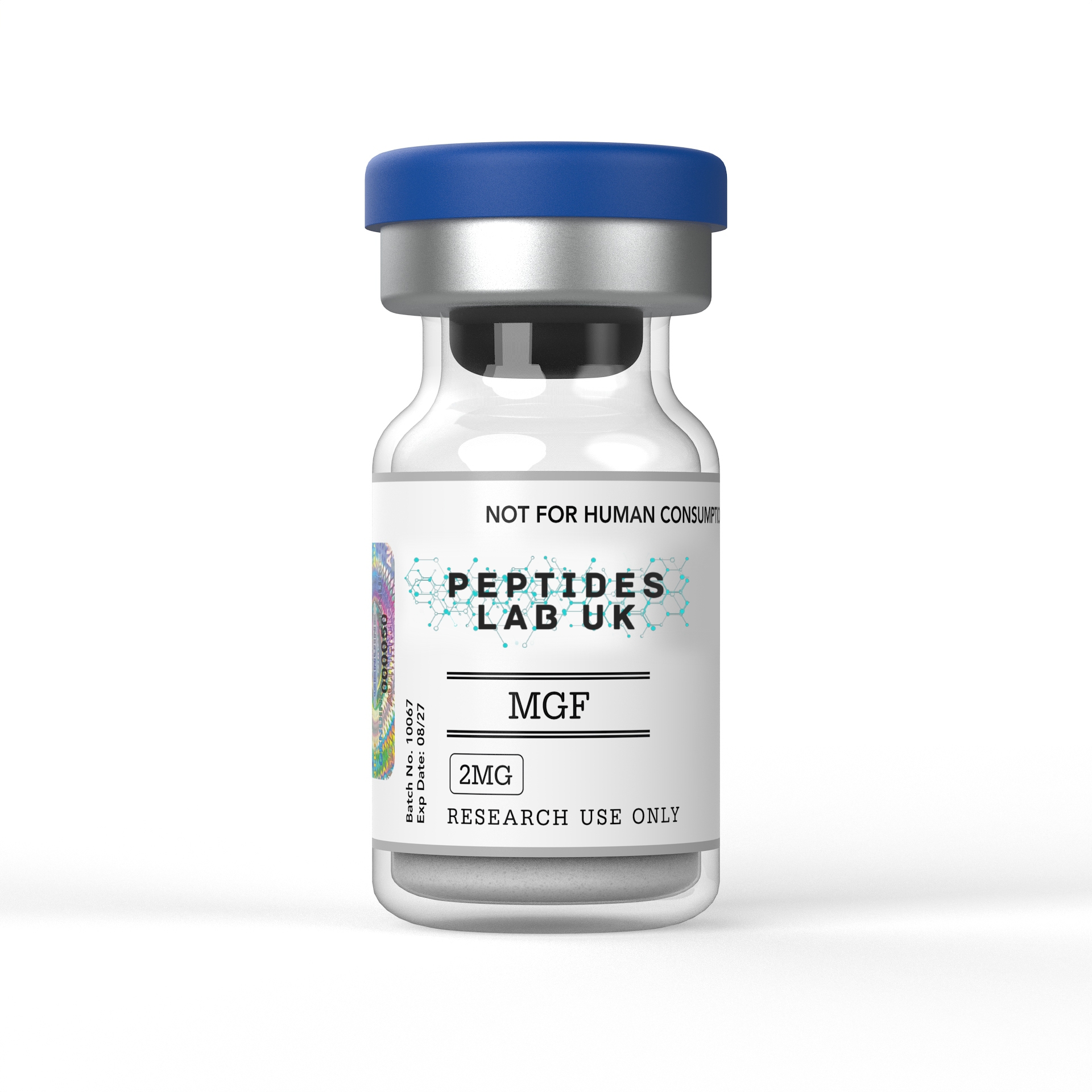
MGF For Lab Research
£27.99
Login for member prices★★★★★
✔︎ Quality checked
✔︎ Third party verified
MGF (Mechano Growth Factor) is an IGF-1 splice variant peptide for laboratory and in vitro research. Supplied at >99% purity with a full third-party COA. For laboratory and in vitro research use only. Not for human consumption. Not a medicine.

Looking for a Certificate of Analysis?
If you are looking for a Certificate Of Analysis, please email research@peptideslabuk.com to have it sent to you.
Please Note: Many sites are displaying counterfeit COAs, so ours is provided upon request.
If you are looking for a Certificate Of Analysis, please email research@peptideslabuk.com to have it sent to you.
Please Note: Many sites are displaying counterfeit COAs, so ours is provided upon request.
You may also like…
-
Login for member prices

-
Login for member prices
-
Login for member prices
Product Description
MGF (Mechano Growth Factor) | Buy MGF UK | IGF-1Ec Splice Variant | Research Use Only
MGF — Mechano Growth Factor, also known as IGF-1Ec in humans and IGF-1Eb in rodents — is a splice variant of the IGF-1 gene produced in response to mechanical stress, injury, and exercise in skeletal muscle, cardiac tissue, and the brain. It is studied in laboratory research for its distinct E-domain biology, satellite cell activation, myoblast proliferation, neuroprotection, cardiac tissue preservation, angiogenesis, and cartilage repair — with a research profile that is entirely separate from, and non-redundant with, full-length IGF-1. Buy MGF in the UK from Peptides Lab UK with >99% HPLC-verified purity, batch-specific COA, and fast UK dispatch for laboratory and in vitro research use only.
Distributed by Peptides Lab UK in a high-purity lyophilised format, for laboratory research use only. This compound is handled in controlled settings for in vitro and pre-clinical studies, with no applications in human or veterinary medicine. Each batch undergoes rigorous quality analysis to ensure >99% purity (HPLC verified).
What Is MGF (Mechano Growth Factor)?
MGF, also called IGF-1Ec, is a splice variant of the IGF-1 gene. The MGF isoform has a unique E domain because of a 49 bp insert in exon 5 (52 bp in the rodent) that results in a reading frame shift and a unique C-terminal peptide — producing a distinct mature isoform that is detectable in tissue specifically after mechanical strain and/or damage, rather than being constitutively expressed like the predominant IGF-1Ea isoform.
Research suggests that after injury to skeletal muscle, the IGF-1Eb mRNA splice variant is up-regulated initially, followed by up-regulation of the IGF-1Ea splice variant at later time points. The MGF hypothesis proposes that the MGF peptide is responsible for activating quiescent satellite cells to enter the cell cycle and develop into mononucleated myoblasts, and then promotes myoblast proliferation — while simultaneously inhibiting differentiation, requiring MGF levels to fall before terminal differentiation and fibre fusion can occur. IGF-1Ea is then responsible for the subsequent differentiation phase.
MGF expression is significantly increased in muscle, bone, and tendon following damage from mechanical stimuli — and in the brain and heart following ischaemia — with expression preceding that of IGF-1Ea after injury, suggesting that the two alternative splice forms serve distinct and sequential roles in tissue research applications and repair.
The research compound supplied by Peptides Lab UK is the synthetic 24-amino acid E-domain peptide of human MGF (MGF-24aa-E) — the C-terminal unique region that has been shown to carry the autonomous biological activity distinct from the mature IGF-1 peptide. As a research compound, MGF UK is one of the most broadly studied IGF-1 splice variant peptides, with published pre-clinical research spanning skeletal muscle, cardiac, neurological, vascular, bone, and cartilage biology.
How Does MGF Work?
MGF’s biological activity is mediated primarily through its unique 24-amino acid C-terminal E-domain peptide (MGF-24aa-E) — a region with no sequence homology to mature IGF-1 or any other IGF-1 isoform, and which has been demonstrated to act through mechanisms independent of the classical IGF-1 receptor (IGF-1R) in several tissue types.
IGF-1R Independent E-Domain Activity
In rat H9c2 myocardial-like cells, the E-domain of MGF exerts autonomous IGF-1 receptor-independent actions — with treatment of cells showing rapid cellular uptake via a mechanism that did not involve IGF-1 receptor activation, but resulted in nuclear localisation. The peptide inhibited the intrinsic apoptotic pathway by preventing the collapse of the mitochondrial membrane potential and inhibiting caspase-3 activation.
Satellite Cell Activation and Sequential IGF-1 Isoform Switching
The MGF hypothesis proposes that MGF is first expressed to activate quiescent satellite cells, driving their proliferation while inhibiting premature differentiation — before declining to allow IGF-1Ea-mediated differentiation and myotube formation. This two-phase, sequential isoform model represents a research framework of considerable interest in understanding the temporal control of muscle repair.
Growth Hormone Regulation of MGF Expression
In C2C12 mouse muscle cell lines, MGF mRNA increased within 1 hour of growth hormone stimulation — preceding the increase in IGF-1Ea mRNA, which required 4 hours — with a parallel increase in MyoD and M-cadherin expression, suggesting that GH directly and preferentially upregulates MGF expression prior to IGF-1Ea, potentially driving the satellite cell activation phase of muscle repair.
Angiogenesis via MAPK/ERK Signalling
Research has demonstrated that the MGF-24aa-E peptide promotes angiogenesis in human vascular endothelial cells by enhancing the expression of angiogenic cytokines — including VEGF and angiopoietin-I — through the MAPK/ERK signalling pathway. Inhibition of ERK via PD98050 pretreatment completely abolished MGF-24aa-E-induced proliferation in these cells, confirming the MAPK/ERK pathway as central to its pro-angiogenic activity.
14-3-3 Protein Interactome and Cardiac Contractility
In silico analysis of the unique C-terminal 24-aa primary sequence of the human MGF E-domain identified a phosphorylation consensus site residing within a putative 14-3-3 binding motif at Ser18. Delivery of phospho-mimetic and phospho-null peptide variants to mice produced opposing effects on cardiac contractility and gene expression in the heart and skeletal muscle — revealing a 14-3-3-dependent regulatory mechanism that governs the E-domain’s cardiovascular signalling activity.
What Does MGF Do in Research?
In laboratory and pre-clinical settings, the MGF-24aa-E peptide has been studied across a remarkably broad range of biological systems. Research has examined its role in:
- Satellite cell activation, proliferation, and myoblast fusion potential in skeletal muscle models
- IGF-1R-independent apoptosis inhibition and mitochondrial membrane protection in cardiac cells
- Cardiac function preservation and pathological hypertrophy prevention in post-MI models
- MAPK/ERK-driven angiogenesis stimulation in vascular endothelial cell studies
- Neuroprotection — blood-brain barrier penetration, neural stem cell proliferation, and neurogenesis
- Mesenchymal stem cell migration, recruitment, and osteoblast biology
- Cartilage regeneration and chondrogenic differentiation in combination with TGF-β3
- Nucleolin-mediated mechanisms in dorsal root ganglion (DRG) neuroprotection research
- HO-1 upregulation and dopaminergic cell protection in Parkinson’s disease models
- Sequential IGF-1 splice variant switching in exercise and injury-induced muscle remodelling studies
MGF and Satellite Cell Biology Research
Research confirmed that the MGF-24aa-E peptide significantly increases the proliferative lifespan and delays senescence of satellite cells isolated from neonatal and young adult muscle — with hypertrophy of human myotubes associated with a significant decrease in the percentage of reserve cells. It is concluded that the MGF-24aa-E peptide has a marked ability to enhance satellite cell activation, proliferation, and fusion for muscle repair and maintenance.
MGF and Porcine Satellite Cell Differentiation Research
Research in porcine satellite cells found that MGF potently stimulated proliferation while inhibiting differentiation — with MGF treatment acutely downregulating myogenic determination factor (MyoD) and the cyclin-dependent kinase inhibitor p21, as well as markedly reducing the overall expression of cyclin B1 and key factors of the myogenic regulatory family including Myogenin and MEF2A. These findings support a molecular model in which MGF inhibits satellite cell differentiation by downregulating factors required for terminal myogenic commitment.
MGF and Cardiac Preservation Research
Systemic delivery of the MGF E-domain peptide at the time of myocardial infarction in mice resulted in significant preservation of cardiac contractility at 2 weeks post-MI, with an inhibition of pathological hypertrophy and significantly fewer apoptotic nuclei in the viable myocardium of E-peptide-treated mice compared to untreated controls — establishing the E-domain as the biologically active region responsible for cardioprotective effects.
MGF and Large Animal Cardiac Research
In sheep treated with the MGF E-domain peptide following microsphere-induced myocardial infarction, cardiac function improved in MGF E-domain-treated animals versus vehicle controls, with 35% less compromised cardiac muscle, absent immunostaining for cleaved caspase-3, and preservation of both systolic and diastolic function — leading the authors to conclude that the E domain of MGF protects the myocardium against ischaemia and improves cardiac function post-MI.
MGF and Neurogenesis Research
In transgenic mice with conditional overexpression of MGF, there was a significant increase in BrdU-positive proliferating cells and BrdU-positive differentiated mature neurons in the olfactory bulbs at 24 months — associated with preserved olfactory function. In vitro, MGF increased the size and number of neurospheres harvested from subventricular zone-derived neural stem cells, indicating that MGF overexpression increases the number of neural progenitor cells and promotes neurogenesis without altering the distribution of adult newborn neurons at post-mitotic stages.
What Do Studies Say About MGF?
MGF has been the subject of peer-reviewed research since the late 1990s, with a published literature spanning skeletal muscle, cardiac biology, neuroscience, and regenerative medicine — alongside important debates about the endogenous existence of the isolated E-domain peptide that make it a uniquely nuanced research tool.
The Research Controversy: A Scientifically Valuable Debate
A critical minireview in Endocrinology noted that while a synthetically manufactured peptide corresponding to the 24 most C-terminal residues of IGF-1Eb has been shown to promote cellular proliferation and survival in multiple cell types, no analogous peptide product of the Igf1 gene has been identified in or isolated from cultured cells, their conditioned medium, or in vivo tissues or biological fluids — concluding that there is inadequate evidence to confirm that mechano-growth factor is a product of Igf1 gene expression in vivo, or that it plays a definitive role not fulfilled by full-length IGF-1 in precursor cell expansion.
This active scientific debate — between strong in vitro evidence for the synthetic peptide’s activity and the absence of confirmed endogenous E-domain peptide production — represents precisely the kind of unresolved biological question that makes MGF a highly valuable and actively studied research compound.
MGF and Muscle Repair — Contradictory Data
A study by two pharmaceutical companies attempting to reproduce claimed satellite cell proliferation effects found that concentrations of MGF peptide up to 500 ng/ml failed to increase the proliferation of C2C12 cells or primary human skeletal muscle myoblasts — while all cell types exhibited a proliferative response to mature IGF-1 or full-length IGF-1Eb — calling into question whether discrete MGF peptide has a physiological role in this process and highlighting the importance of cell type, model system, and peptide formulation in MGF research design.
MGF and Cardiac Function — Cross-Species Validation
Delivery of the MGF E-domain peptide via peptide-eluting polymeric microstructures to post-MI mice decreased mortality, ameliorated the decline in haemodynamics, and delayed cardiac decompensation — with the beneficial cardiovascular effects of the stabilised E-domain peptide confirmed across rodent and large animal models, providing a platform for understanding local tissue IGF-1 autocrine/paracrine modulation in cardiac repair research.
MGF and Cartilage Regeneration Research
MGF acted synergistically with TGF-β3 in silk fibroin scaffolds to induce chemotactic homing and chondrogenic differentiation of mesenchymal stem cells, with the combination increasing cell recruitment up to 1.8-fold in vitro and 2-fold in vivo compared to TGF-β3 alone. In an osteochondral defect rabbit model, the MGF+TGF-β3 scaffold showed the best integration into host tissues, with collagen organisation most closely resembling native hyaline cartilage.
Key cited studies:
- Yang SY & Goldspink G (2002) — Different Roles of the IGF-1 Ec Peptide (MGF) and Mature IGF-1 in Myoblast Proliferation and Differentiation — FEBS Lett 522(1–3):156–160. PubMed ID: 12095636
- Kandalla PK et al. (2011) — Mechano Growth Factor E Peptide Activates Human Muscle Progenitor Cells and Induces Fusion Potential at Different Ages — Exp Gerontol 46(4):320–328. PubMed ID: 21354439
- Zablócka B et al. (2012) — Mechano-Growth Factor: An Important Cog or a Loose Screw in the Repair Machinery? — Front Endocrinol. PMC3485521
- Carpenter V et al. (2008) — Mechano-Growth Factor Reduces Loss of Cardiac Function in Acute Myocardial Infarction — Heart Lung Circ 17(1):33–39. PubMed ID: 17761469
- Doroudian G et al. (2014) — Localised Delivery of MGF E-domain Peptide via Polymeric Microstructures Improves Cardiac Function Post-MI — Biomed Microdevices. PMC4328136
- Mills P et al. (2007) — The E-Domain Region of MGF Inhibits Cellular Apoptosis and Preserves Cardiac Function During MI — PMC3720995
- Deng M et al. (2012) — New Pro-angiogenic Activity of the C-terminal Mechano Growth Factor on Vascular Endothelial Cells — Microcirculation 19(6):507–518. PubMed ID: 22463771
- Quesada A et al. (2017) — MGF Promotes Neurogenesis in the Aging Mouse Brain — PubMed ID: 28683812
MGF vs Related IGF-1 Axis Research Tools
| Feature | MGF (IGF-1Ec E-peptide) | IGF-1 LR3 | IGF-1 DES | Native IGF-1 |
|---|---|---|---|---|
| Sequence Origin | 24aa C-terminal E-domain of IGF-1Ec splice variant | 83aa modified full-length IGF-1 | 67aa N-terminal truncated IGF-1 | 70aa native sequence |
| IGF-1R Dependence | Partially independent (E-domain acts via novel mechanisms) | Full IGF-1R agonist | Full IGF-1R agonist | Full IGF-1R agonist |
| IGFBP Binding | Minimal (E-domain only) | Very low (~70–80% reduced) | Very low (~90–95% reduced) | High (~98% bound) |
| Primary Tissue Response | Mechanical injury/stress-induced | Systemic sustained GH axis | Localised rapid receptor activation | Systemic baseline |
| Satellite Cell Phase | Activation and proliferation (early repair) | Differentiation/anabolic support | Localised receptor activation | Differentiation support |
| Cardiac Research | Extensive (apoptosis inhibition, post-MI) | Limited | Limited | Limited |
| Neurogenesis Research | Confirmed (hippocampus, SVZ, olfactory) | None | None | None |
| Cartilage Research | Published (synergy with TGF-β3) | None | Limited | Limited |
| Research Controversy | Active (endogenous peptide existence debated) | Well established | Well established | Reference |
MGF’s unique E-domain biology — its sequential expression pattern relative to IGF-1Ea, its IGF-1R-independent mechanisms in cardiac and neural tissue, its pro-angiogenic and neuroprotective activities, and the productive scientific debate surrounding its endogenous generation — make it an irreplaceable and uniquely nuanced research tool within the IGF-1 family that cannot be substituted by any other IGF-1 analogue.
Quality & Purity Assurance
Every batch of MGF from Peptides Lab UK is:
- >99% pure — HPLC and mass spectrometry verified
- Supplied with a full Certificate of Analysis (COA) on request
- Lyophilised powder for maximum stability and long shelf life
- Manufactured under strict, controlled laboratory conditions
- Consistent batch-to-batch quality for reproducible research results
Buy MGF UK — Product Specifications
| Property | Detail |
|---|---|
| Full Name | Mechano Growth Factor / IGF-1Ec E-domain Peptide |
| Also Known As | IGF-1Ec (human), IGF-1Eb (rodent), MGF-24aa-E |
| Sequence | Tyr-Gln-Pro-Pro-Ser-Thr-Asn-Lys-Asn-Thr-Lys-Ser-Gln-Arg-Arg-Lys-Gly-Ser-Thr-Phe-Glu-Glu-Arg-Lys (24aa) |
| Molecular Weight | 2,867.22 g/mol |
| Molecular Formula | C₁₁₆H₂₀₃N₄₁O₃₄S |
| Purity | >99% (HPLC verified) |
| Form | Lyophilised powder |
| Storage | Store dry at -20°C; protect from light |
| Solubility | Bacteriostatic water, sterile water, or suitable laboratory solvents |
MGF Research Applications
MGF (Mechano Growth Factor) peptide UK is supplied strictly for the following in vitro and pre-clinical research uses:
- Satellite cell activation, proliferation, and delayed senescence in skeletal muscle biology
- IGF-1R-independent E-domain apoptosis inhibition and mitochondrial membrane preservation
- Cardiac function preservation, post-MI pathological hypertrophy prevention, and caspase-3 inhibition studies
- MAPK/ERK pro-angiogenic pathway research in vascular endothelial cell models
- Neuroprotection research — blood-brain barrier penetration, neural stem cell neurogenesis, and olfactory function preservation
- Mesenchymal stem cell migration, bone marrow stem cell recruitment, and osteoblast biology
- Cartilage regeneration and chondrogenic differentiation research in combination with TGF-β3 and scaffold systems
- HO-1 upregulation and dopaminergic cell neuroprotection in Parkinson’s disease models
- Sequential IGF-1 isoform switching research in exercise and injury-induced muscle remodelling
- Comparative IGF-1 splice variant biology — MGF vs IGF-1Ea — and structure–activity relationship (SAR) studies
- 14-3-3 protein interactome and phosphorylation-dependent E-domain cardiac contractility research
Why Buy MGF from Peptides Lab UK?
Peptides Lab UK is a trusted UK peptides supplier, providing research-grade compounds verified by independent HPLC testing. When you buy MGF in the UK from us, you receive:
- >99% purity, HPLC and MS verified, third-party tested
- Full COA documentation per batch
- Fast same-day UK dispatch with tracked delivery
- Competitive pricing with bulk research discounts available
- Trusted by researchers across the UK and Europe
Research Disclaimer All products supplied by Peptides Lab UK are intended strictly for in vitro laboratory research and scientific study use only. They are not intended for human consumption, veterinary use, or any medical or therapeutic application. MGF (Mechano Growth Factor / IGF-1Ec E-domain peptide) is not a licensed medicine or drug and has not been approved by the MHRA, FDA, or any regulatory authority for use in humans or animals. All research citations on this page relate to pre-clinical studies and peer-reviewed pharmacological research and do not constitute a claim of safety or therapeutic efficacy. Peptides Lab UK accepts no liability for any misuse of research compounds. By purchasing, you confirm that you are a qualified researcher and that the product will be used solely within a controlled laboratory environment in compliance with all applicable UK laws, regulations, and institutional guidelines.
Related products
-
Login for member prices
-
Login for member prices
-
Login for member prices
