




Sermorelin Acetate For Lab Research
£23.99
Login for member prices★★★★★
✔︎ Quality checked
✔︎ Third party verified
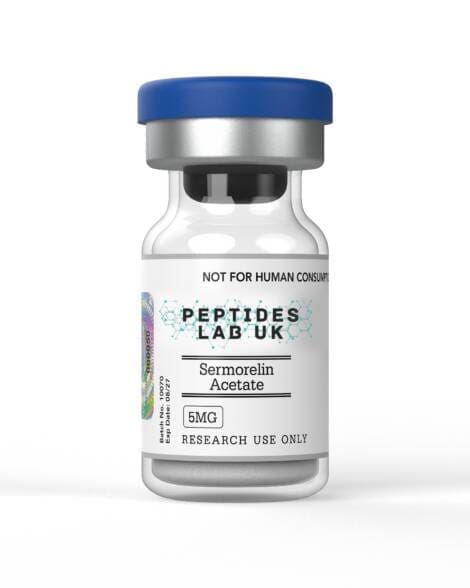
Sermorelin Acetate is a synthetic GHRH(1-29) analogue for laboratory and in vitro research. Produced at >99% purity with a full third-party COA. For laboratory and in vitro research use only. Not for human consumption. Not a medicine.
Looking for a Certificate of Analysis?
If you are looking for a Certificate Of Analysis, please email research@peptideslabuk.com to have it sent to you.
Please Note: Many sites are displaying counterfeit COAs, so ours is provided upon request.
If you are looking for a Certificate Of Analysis, please email research@peptideslabuk.com to have it sent to you.
Please Note: Many sites are displaying counterfeit COAs, so ours is provided upon request.
You may also like…
-
Login for member prices

-
Login for member prices
Product Description
Sermorelin Acetate | Buy Sermorelin UK | GHRH (1-29) Analogue | Research Use Only
Sermorelin Acetate (GRF 1-29 NH₂) is a synthetic 29-amino acid analogue of endogenous human Growth Hormone-Releasing Hormone (GHRH), representing the shortest fully active fragment of the 44-amino acid native sequence — and the prototypical GHRH receptor agonist in growth hormone axis research. It is studied extensively in laboratory research for its role in pulsatile GH secretion, pituitary somatotroph biology, GH axis neuroendocrinology, IGF-1 regulation, sleep architecture modelling, and cognitive function pathway research — available to buy in the UK from Peptides Lab UK in high-purity lyophilised form, >99% HPLC-verified purity, with batch-specific COA and fast UK dispatch for laboratory and in vitro research use only.
Distributed by Peptides Lab UK in a high-purity lyophilised format, for laboratory research use only. This compound is handled in controlled settings for in vitro and pre-clinical studies, with no applications in human or veterinary medicine. Each batch undergoes rigorous quality analysis to ensure >99% purity (HPLC verified).
What Is Sermorelin Acetate?
Sermorelin Acetate, also known as GHRH (1-29), is a synthetic peptide analogue of growth hormone-releasing hormone, representing the 1–29 N-terminal fragment of endogenous human GHRH, and considered the shortest fully functional fragment of GHRH. It is used as a research tool to assess growth hormone secretion via specific stimulation of the anterior pituitary.
Sermorelin is the prototypical GHRH-class growth hormone secretagogue, derived from the first 29 amino acids of the full GHRH protein. Unlike other GH secretagogues which function via the ghrelin/GHS-R1a pathway, Sermorelin acts exclusively on the hypothalamic-pituitary-somatotropic axis through the GHRH receptor.
Sermorelin stimulates pituitary gene transcription of hGH messenger RNA, increasing pituitary reserve and thereby preserving more of the growth hormone neuroendocrine axis — which is the first to decline during ageing. Pituitary recrudescence resulting from sermorelin stimulation helps slow the cascade of hypophyseal hormone decline that occurs with ageing.
What distinguishes Sermorelin within the GHRH analogue class is its position as the reference compound — the shortest sequence retaining full GHRH receptor activity, FDA-approved for diagnostic use in 1997 for growth hormone deficiency assessment, and now one of the most extensively characterised GHRH analogues in the published literature. As a research compound, Sermorelin Acetate UK provides the scientific community with the foundational GHRH-receptor agonist against which all longer and structurally modified analogues such as Tesamorelin and CJC-1295 are compared.
How Does Sermorelin Acetate Work?
Sermorelin binds to the growth hormone-releasing hormone receptor on somatotroph cells of the anterior pituitary, mimicking the effects of native GHRH in promoting growth hormone synthesis and secretion. The receptor, coupled to G proteins, activates adenylyl cyclase, stimulating somatotroph cell growth, growth hormone gene transcription, and pulsatile growth hormone secretion.
Somatostatin-Regulated Feedback and Physiological GH Pulsatility
Sermorelin’s effects are regulated by negative feedback through the inhibitory hormone somatostatin — making it subject to the same hypothalamic checks that govern endogenous GH release. This interaction with somatostatin causes the pituitary to release GH in bursts that mirror natural hormone rhythms, rather than the continuously elevated levels produced by exogenous recombinant GH administration — and thereby avoids the receptor tachyphylaxis associated with supraphysiological GH exposure.
cAMP/PKA and MAPK Signalling
GHRH receptor activation by Sermorelin leads to cAMP production via the Gs protein/adenylate cyclase pathway and mitogen-activated protein kinase signalling, activating a cascade of second messenger events that regulate somatotroph proliferation, GH gene expression, and pulsatile hormone secretion.
Sermorelin vs Direct rhGH Administration
Unlike exogenous recombinant hGH, which directly causes production of bioactive IGF-1 from the liver and bypasses the body’s own regulatory feedback mechanisms, Sermorelin stimulates the patient’s own pituitary gland by binding to specific receptors to increase production and secretion of endogenous hGH — resulting in a more physiological GH secretion pattern that is self-limiting via somatostatin feedback.
Sermorelin and Pituitary Somatotroph Biology
In subcutaneous administration, Sermorelin reaches peak plasma concentrations within 5–20 minutes, with a short half-life of 11–12 minutes after either intravenous or subcutaneous administration. Despite this rapid clearance, Sermorelin specifically stimulates GH secretion from the pituitary gland without producing significant changes in prolactin, LH, FSH, insulin, cortisol, glucose, glucagon, or thyroid hormone levels — establishing a highly specific GHRH-receptor-mediated pharmacological profile.
What Does Sermorelin Acetate Do in Research?
In laboratory and pre-clinical settings, Sermorelin has been studied across a broad range of GH axis and neuroendocrine systems. Research has examined its role in:
- GHRH receptor binding and cAMP/MAPK intracellular signalling pathway studies
- Pulsatile GH secretion modelling and somatotroph biology investigations
- GH and IGF-1 axis regulation and downstream anabolic signalling research
- Pituitary somatotroph reserve, gene transcription, and hGH mRNA upregulation studies
- Sleep architecture and slow-wave sleep modulation in GH axis research models
- Cognitive function pathway research — GABA, NAAG, and neurochemical modulation
- GH axis neuroendocrinology of ageing — somatopause and GHRH pulse amplitude studies
- FSH and LH co-stimulation biology and potential gonadal axis interaction research
- Synergistic GH secretion research in combination with GHS-R1a agonists (GHRP-2, GHRP-6, Ipamorelin)
- Comparative GHRH analogue research against Tesamorelin and CJC-1295
Sermorelin and Pituitary Reserve Research
Research has established that Sermorelin’s ability to stimulate pituitary hGH mRNA transcription makes it a uniquely valuable tool for studying not just acute GH release but the preservation and restoration of pituitary somatotroph reserve — a dimension of GH axis biology that direct exogenous GH administration cannot address, as it operates downstream of the pituitary entirely.
Sermorelin and Sleep Architecture Research
Research investigations into GHRH administration in older adults have examined the relationship between somatotropic stimulation, sleep quality, and body composition, with chronic GHRH treatment studied for its effects on slow-wave sleep depth, somatotrophic hormone secretion patterns, and functional status — reflecting growing scientific interest in the bidirectional relationship between GH pulsatility and restorative sleep architecture.
Sermorelin and Cognitive Function Research
A randomised clinical trial using GHRH (1-29 NH₂) — Sermorelin Acetate — found that 6 months of treatment improved performance on tests of fluid intelligence including working memory, planning and organisation, selective attention, and processing speed in healthy older adults. A subsequent trial replicated and extended these findings to adults with mild cognitive impairment, confirming a GHRH-mediated neuromodulatory effect beyond simple GH axis stimulation.
Sermorelin and Brain Neurochemistry Research
A randomised, double-blind, placebo-controlled neurochemical substudy found that 20 weeks of GHRH administration increased GABA levels across all three brain regions studied, increased NAAG levels in the dorsolateral frontal cortex, and decreased myo-inositol levels in the posterior cingulate — providing the first clinical evidence that somatotropic supplementation modulates inhibitory neurotransmitter levels in humans, and offering a potential neurochemical mechanism for the cognitive effects of GHRH analogue treatment.
Sermorelin and IGF-1 Axis Research
Research evaluating GH secretagogues — including Sermorelin — in men found that thrice-daily dosing produced significant increases in IGF-1 levels during the study period, with IGF-1 serving as the primary pharmacodynamic biomarker of GH axis activation and confirming the downstream hepatic response to GHRH-receptor-mediated pituitary stimulation.
What Do Studies Say About Sermorelin Acetate?
Sermorelin has one of the most extensive published research profiles of any synthetic GHRH analogue, spanning GH axis biology, pituitary pharmacology, cognitive neuroscience, and ageing research.
Sermorelin as the Shortest Fully Active GHRH Fragment
Research has confirmed that Sermorelin is the shortest synthetic peptide with full biological activity of GHRH, with intravenous and subcutaneous administration both specifically stimulating growth hormone secretion from the anterior pituitary. Hormone responses to intravenous Sermorelin at 1 µg/kg body weight have been established as a rapid and relatively specific diagnostic tool for GH deficiency assessment, with fewer false positive responses observed compared to other provocative tests.
Sermorelin and FSH/LH Co-Stimulation Research
A notable study in short children found that Sermorelin — unlike full-length GHRH 1-40 — produced small but acute rises in prolactin, FSH, and LH alongside GH stimulation, implying a potential role in gonadal axis interaction research. A subsequent study in GH-deficient rats showed Sermorelin therapy resulted in an increase in testosterone secretion — findings that have opened a line of research into the gonadotropin-interacting properties of GHRH fragment analogues.
Sermorelin and GH Axis Ageing Research
Research has confirmed that ageing-related decline in GH secretion is most likely the result of both a decrease in endogenous GHRH activity and an increase in somatostatin tone — rather than an intrinsic loss of pituitary capacity — and that stimulation of the somatotropic axis with GHRH analogues such as Sermorelin represents a physiologically sound research approach to studying GH axis dynamics in aged models, yielding a more physiological pulsatile GH response than GH itself.
Sermorelin Selectivity vs GHS-R1a Agonists
Unlike GHS-R1a agonists such as GHRP-2 and Ipamorelin, which stimulate GH release through the ghrelin receptor independently of GHRH pathway status, Sermorelin acts exclusively via the GHRH receptor — making it a selective pharmacological tool for dissecting GHRH-receptor-mediated GH axis biology and studying the distinct contribution of the GHRH pathway relative to the ghrelin/GHS-R axis in combined secretagogue research models.
Sermorelin + GHRP Synergy Research
Research has established that the most significant increases in GH release occur via synergistic action of GHRPs and GHRH acting at the GHS-R and GHRH receptor simultaneously — with GHRH treatment producing a 20-fold increase in pulsatile GH secretion, while combination with GHRP-2 produced a 54-fold increase — confirming the mechanistic independence and additive pharmacodynamics of the two receptor pathways, and establishing Sermorelin as the reference GHRH component in synergy studies.
Key cited studies:
- Prakash A & Goa KL (1999) — Sermorelin: A Review of its Use in the Diagnosis and Treatment of Children with Idiopathic GH Deficiency — BioDrugs 12(2):139–157. PubMed ID: 18031173
- Merriam GR et al. (2001) — Growth Hormone-Releasing Hormone Treatment in Normal Aging — J Anti-Aging Med 4:331–343
- Vitiello MV et al. (2006) — GHRH (1-29 NH₂) Improves Cognitive Function in Healthy Older Adults — Randomised Clinical Trial — University of Washington
- Friedman SD et al. (2013) — GHRH Effects on Brain GABA Levels in MCI and Healthy Aging — PMC3764915. JAMA Neurology. DOI: 10.1001/jamaneurol.2013.4246
- Ishida J et al. (2020) — Growth Hormone Secretagogues: History, Mechanism of Action, and Clinical Development — JCSM Rapid Communications. DOI: 10.1002/rco2.9
- Sigalos JT et al. (2017) — Growth Hormone Secretagogue Treatment in Hypogonadal Men Raises Serum IGF-1 Levels — Andrology 5(4):744–748. DOI: 10.1111/andr.12359
- Walker RF (2006) — Sermorelin: A Better Approach to Management of Adult-Onset GH Insufficiency? — Clin Interv Aging 1(4):307–308. PMC2699646
Sermorelin Acetate vs Other GH Axis Research Peptides
| Feature | Sermorelin | Tesamorelin | CJC-1295 (DAC) | Ipamorelin |
|---|---|---|---|---|
| Receptor Target | GHRH-R | GHRH-R | GHRH-R | GHS-R1a |
| Sequence Length | 29 aa (shortest active GHRH fragment) | 44 aa (full GHRH + N-cap) | 29 aa (modified + DAC) | 5 aa |
| Structural Modification | C-terminal amidation only | trans-3-hexenoyl N-terminal cap | DAC albumin-binding moiety | Aib substitution |
| Half-Life | 11–12 minutes | 26–38 minutes | Days (via DAC albumin binding) | ~2 hours |
| GH Release Pattern | Pulsatile (physiological) | Pulsatile (physiological) | Sustained (blunted pulsatility) | Pulsatile |
| IGF-1 Stimulation | Yes (indirect, via GH) | Yes (indirect, via GH) | Yes (indirect, via GH) | Yes (indirect, via GH) |
| Somatostatin Feedback | Preserved (self-limiting) | Preserved | Partially bypassed | Preserved |
| FSH/LH Co-Stimulation | Observed in research | Not reported | Not reported | Not reported |
| Cognitive Research Data | Clinical trial data published | Clinical trial data (tesamorelin) | None | None |
| Reference Status | Prototypical GHRH-class GHS | Advanced clinical data | Sustained-release model | Selective GH model |
Sermorelin’s status as the shortest fully active GHRH fragment, combined with its well-preserved somatostatin feedback, absence of structural modifications that alter receptor interaction kinetics, and extensive published characterisation across GH axis, cognitive, and sleep biology, make it the essential reference GHRH-class secretagogue in any comparative GH axis research programme.
Quality & Purity Assurance
Every batch of Sermorelin Acetate from Peptides Lab UK is:
- >99% pure — HPLC and mass spectrometry verified
- Supplied with a full Certificate of Analysis (COA) on request
- Lyophilised powder for maximum stability and long shelf life
- Manufactured under strict, controlled laboratory conditions
- Consistent batch-to-batch quality for reproducible research results
Buy Sermorelin Acetate UK — Product Specifications
| Property | Detail |
|---|---|
| Full Name | Sermorelin Acetate (GRF 1-29 NH₂ / GHRH 1-29) |
| Sequence | H-Tyr-Ala-Asp-Ala-Ile-Phe-Thr-Asn-Ser-Tyr-Arg-Lys-Val-Leu-Gly-Gln-Leu-Ser-Ala-Arg-Lys-Leu-Leu-Gln-Asp-Ile-Met-Ser-Arg-NH₂ |
| Amino Acids | 29 (shortest fully active GHRH fragment) |
| Molecular Weight | 3,357.93 g/mol |
| Molecular Formula | C₁₄₉H₂₄₆N₄₄O₄₂S |
| Purity | >99% (HPLC verified) |
| Form | Lyophilised powder |
| Storage | Store dry at -20°C; protect from light |
| Solubility | Bacteriostatic water, sterile water, or suitable laboratory solvents |
Sermorelin Acetate Research Applications
Sermorelin Acetate peptide UK is supplied strictly for the following in vitro and pre-clinical research uses:
- GHRH receptor binding, cAMP/PKA, and MAPK intracellular signalling pathway studies
- Pulsatile GH secretion modelling and somatotroph biology investigations
- GH and IGF-1 axis neuroendocrinology and downstream anabolic signalling research
- Pituitary somatotroph reserve, hGH mRNA gene transcription, and reserve preservation studies
- Somatostatin feedback regulation and GH pulsatility architecture research
- Slow-wave sleep architecture and GH pulsatility interaction modelling
- Cognitive function pathway research — GABA, NAAG, and neurochemical modulation studies
- GH axis ageing and somatopause biology — GHRH pulse amplitude decline modelling
- FSH and LH gonadal axis interaction studies
- Synergistic GH axis research in combination with GHS-R1a agonists (GHRP-2, GHRP-6, Ipamorelin)
- Comparative GHRH analogue SAR studies — reference compound for Tesamorelin and CJC-1295 comparison
Why Buy Sermorelin Acetate from Peptides Lab UK?
Peptides Lab UK is a trusted UK peptides supplier, providing research-grade compounds verified by independent HPLC testing. When you buy Sermorelin Acetate in the UK from us, you receive:
- >99% purity, HPLC and MS verified, third-party tested
- Full COA documentation per batch
- Fast same-day UK dispatch with tracked delivery
- Competitive pricing with bulk research discounts available
- Trusted by researchers across the UK and Europe
Research Disclaimer All products supplied by Peptides Lab UK are intended strictly for in vitro laboratory research and scientific study use only. They are not intended for human consumption, veterinary use, or any medical or therapeutic application. Sermorelin Acetate is not a licensed medicine or drug in this form. While Sermorelin previously held FDA approval as a diagnostic agent, that approval was discontinued in 2008 by the manufacturer for commercial reasons unrelated to safety or efficacy. Peptides Lab UK supplies Sermorelin exclusively as a research compound for in vitro and pre-clinical laboratory use. It has not been approved by the MHRA or any regulatory authority for therapeutic or diagnostic use in this formulation. All research citations on this page relate to pre-clinical studies and peer-reviewed pharmacological research and do not constitute a claim of safety or therapeutic efficacy. Peptides Lab UK accepts no liability for any misuse of research compounds. By purchasing, you confirm that you are a qualified researcher and that the product will be used solely within a controlled laboratory environment in compliance with all applicable UK laws, regulations, and institutional guidelines.
Related products
-
Login for member prices
-
Login for member prices
-
Login for member prices