




No products in the cart.

Up to - 24%

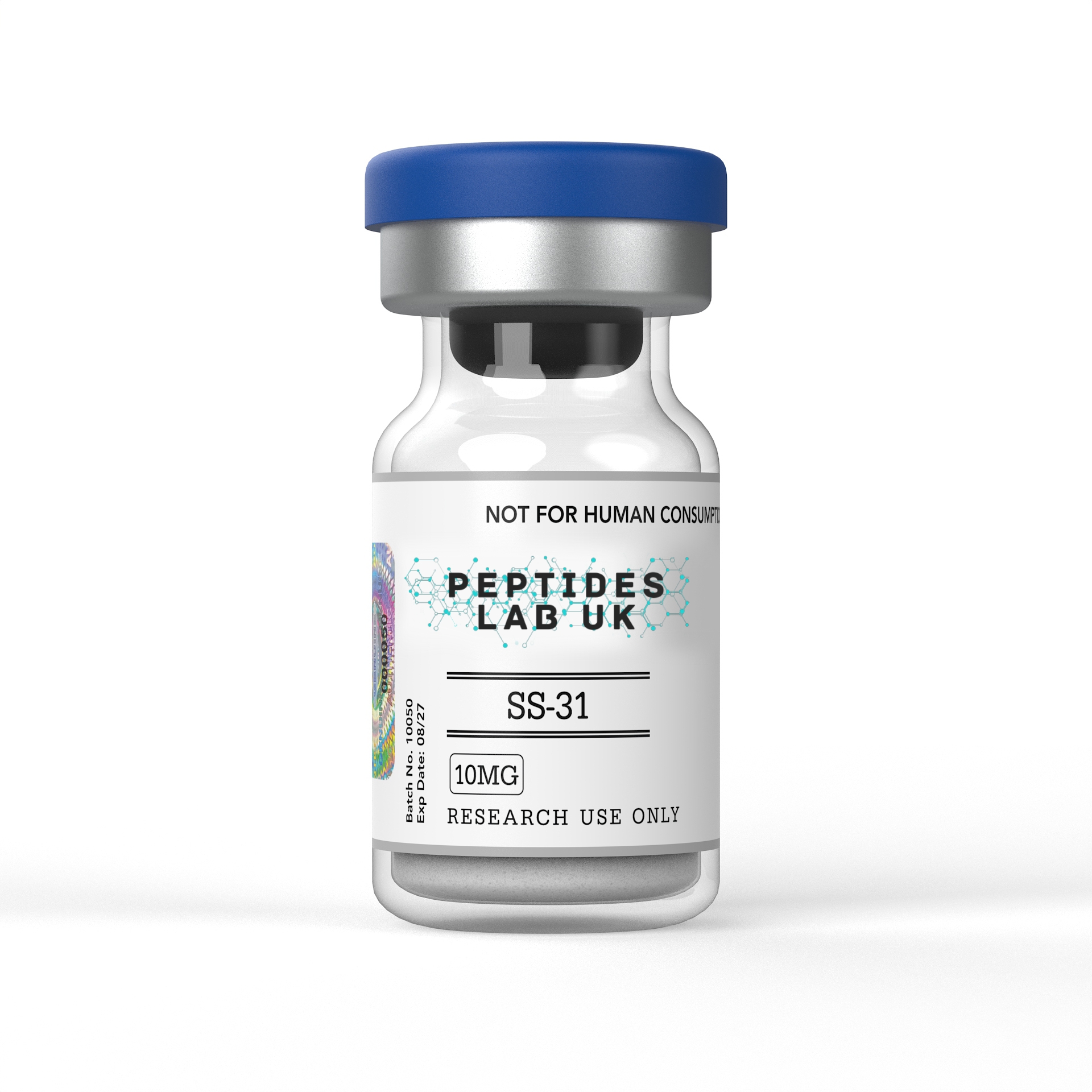
SS-31 For Lab Research
£97.99
Login for member prices★★★★★
✔︎ Quality checked
✔︎ Third party verified
SS-31 is a mitochondria-targeted tetrapeptide for laboratory and in vitro research. Supplied at >99% purity with a full third-party Certificate of Analysis. For laboratory and in vitro research use only. Not for human consumption. Not a medicine.

Looking for a Certificate of Analysis?
If you are looking for a Certificate Of Analysis, please email research@peptideslabuk.com to have it sent to you.
Please Note: Many sites are displaying counterfeit COAs, so ours is provided upon request.
If you are looking for a Certificate Of Analysis, please email research@peptideslabuk.com to have it sent to you.
Please Note: Many sites are displaying counterfeit COAs, so ours is provided upon request.
You may also like…
- Login for member prices
-
Login for member prices
-
Login for member prices
Product Description
SS-31 Peptide | Buy SS-31 UK | Elamipretide | Mitochondria-Targeting Peptide | Research Use Only
SS-31 — also known as Elamipretide, MTP-131, and Bendavia — is a synthetic aromatic-cationic tetrapeptide that selectively targets the inner mitochondrial membrane, where it binds to cardiolipin to support mitochondrial bioenergetics, reduce oxidative stress, and preserve electron transport chain function. Available to buy SS-31 in the UK from Peptides Lab UK with >99% HPLC-verified purity, batch-specific COA, and fast UK dispatch for laboratory and in vitro research use only.
Distributed by Peptides Lab UK in lyophilised format for controlled laboratory research. Each batch is independently verified for purity. This compound is handled strictly in pre-clinical settings with no applications in human or veterinary medicine.
What Is SS-31 Peptide?
SS-31 (H-D-Arg-Dmt-Lys-Phe-NH₂) is a small, water-soluble synthetic tetrapeptide with a molecular weight of 639.8 g/mol, first synthesised by Peter W. Schiller and Hazel H. Szeto. Its structure features an alternating sequence of basic and aromatic amino acids — a design that allows it to cross cell membranes, the blood-brain barrier, and mitochondrial membranes without requiring a receptor or transporter-mediated process.
At physiological pH, SS-31 carries a net charge of 3+, which electrostatically draws it to the highly negative potential of the inner mitochondrial membrane (IMM). Once there, it selectively binds to cardiolipin — a unique phospholipid found almost exclusively on the IMM — concentrating at levels reported to be approximately 5,000-fold higher inside mitochondria than in surrounding tissue.
SS-31 is widely regarded as the most comprehensively characterised mitochondria-targeting peptide in pre-clinical research, with over 150 peer-reviewed publications exploring its mechanisms and applications across a broad range of disease and ageing models.
Also Known As
- Elamipretide
- MTP-131
- Bendavia
- Szeto-Schiller peptide 31
How Does SS-31 Work?
Cardiolipin Binding and Inner Mitochondrial Membrane Stabilisation
The core mechanism of SS-31 begins with its selective interaction with cardiolipin on the inner mitochondrial membrane. Cardiolipin plays a central structural role in supporting electron transport chain (ETC) supercomplex assembly, and its peroxidation is a well-established driver of mitochondrial dysfunction. By binding to cardiolipin, SS-31 helps stabilise the IMM, protect CL from oxidative damage, and preserve the structural integrity of the respiratory chain complexes.
Electron Transport Chain and ATP Production
SS-31 interacts directly with 12 mitochondrial proteins associated with cardiolipin binding — primarily those involved in ATP production through oxidative phosphorylation (OXPHOS) and 2-oxoglutarate metabolic processes. By stabilising these interactions, SS-31 supports more efficient electron flux through the ETC, reduces electron leakage, and enhances ATP synthesis capacity.
Reactive Oxygen Species Reduction
SS-31 inhibits the peroxidase activity of cytochrome c, which is a key driver of mitochondrial ROS generation under dysfunction conditions. This mechanism reduces mitochondrial reactive oxygen species production while simultaneously improving bioenergetic output — a dual action that distinguishes it from conventional antioxidants.
Mitochondrial Dynamics and Membrane Integrity
Research in pre-clinical models has shown SS-31 to support healthy mitochondrial morphology, reduce pro-fission signalling, improve mitophagy, and restore membrane potential in aged and diseased mitochondria. It also reduces proton leakage across the IMM, improving coupling efficiency of oxidative phosphorylation.
What Does SS-31 Peptide Do in Research?
In laboratory and pre-clinical settings, SS-31 (Elamipretide) has been studied as the leading mitochondria-targeting peptide research tool for investigating:
- Cardiolipin biology — IMM stabilisation, CL peroxidation, and ETC supercomplex architecture
- Oxidative phosphorylation and ATP production — OXPHOS efficiency, ADP sensitivity, and mitochondrial coupling
- Reactive oxygen species modulation — mitochondrial ROS production, redox homeostasis, and thiol modification profiling
- Mitochondrial dynamics — fission/fusion balance, mitophagy, cristae morphology, and membrane ultrastructure
- Skeletal muscle and ageing research — sarcopenia models, exercise tolerance, mitochondrial ATPmax decline
- Cardiac biology — cardiomyocyte mitochondrial function, ischaemia-reperfusion models, heart failure models
- Neurological models — cognitive impairment models, neuronal mitochondrial motility, synaptic protection
- Renal research — mitochondrial dysfunction in kidney disease and ischaemia models
- Barth syndrome research — TAFAZZIN knockdown models, CL remodelling dysfunction, mitochondrial ultrastructure
- Metabolic research — glucose homeostasis, lipid oxidation, and anabolic signalling downstream of mitochondrial function
- Ageing biology — somatopause, redox post-translational modifications, and age-related energetic decline
What Do Studies Say About SS-31 Peptide?
Foundational Mechanistic Research
The identification of SS-31’s cardiolipin-binding mechanism has been corroborated by multiple independent research teams. Cross-linking mass spectrometry studies confirmed that SS-31 directly interacts with 12 IMM proteins — all known cardiolipin binders — with the interaction network spanning both the OXPHOS machinery and 2-oxoglutarate metabolic pathways, providing a mechanistic basis for its bioenergetic effects.
Skeletal Muscle Ageing and Exercise Tolerance
An 8-week treatment study in aged mice showed that SS-31 reversed age-related decline in maximum mitochondrial ATP production and improved coupling of oxidative phosphorylation. A robust reversal of cysteine S-glutathionylation modifications was observed across the skeletal muscle proteome, and treated animals demonstrated significantly greater fatigue resistance, muscle mass, and treadmill endurance compared to untreated aged controls.
ADP Sensitivity and ANT Function
Research has demonstrated that SS-31 improves mitochondrial ADP sensitivity in aged muscle by enhancing uptake through the adenine nucleotide translocator (ANT) — linking impaired ADP transport to age-related functional decline and establishing SS-31 as a tool for studying this specific axis of mitochondrial ageing.
Cardiac and Barth Syndrome Models
In TAFAZZIN knockdown mouse models replicating Barth syndrome, SS-31 treatment improved cardiac mitochondrial morphology, reduced vacuole accumulation, and corrected defective mitophagy. Clinical investigation with the elamipretide backbone in Barth syndrome subjects over a 48-week period provided a meaningful dataset for this rare genetic disorder.
Neuroprotection Models
In neuronal cultures from Alzheimer’s disease mouse models, SS-31 restored synaptic viability, mitochondrial motility, and mitochondrial transport — establishing a role for the compound in investigating Aβ toxicity and neuronal mitochondrial dysfunction. Treatment in oxidant-stressed neuronal cell lines significantly reduced intracellular ROS, increased mitochondrial membrane potential, and prevented apoptosis.
Key Cited Studies
- Szeto HH (2014) — First-in-class cardiolipin-protective compound as a therapeutic agent to restore mitochondrial bioenergetics. Br J Pharmacol 171(8):2029–2050. DOI: 10.1111/bph.12461
- Birk AV et al. (2013) — The mitochondrial-targeted compound SS-31 re-energizes ischemic mitochondria by interacting with cardiolipin. J Am Soc Nephrol 24(8):1250–1261. DOI: 10.1681/ASN.2012121216
- Siegel MP et al. (2013) — Mitochondrial-targeted peptide rapidly improves mitochondrial energetics and skeletal muscle performance in aged mice. Aging Cell 12(5):763–771. DOI: 10.1111/acel.12102
- Campbell MD et al. (2019) — Improving mitochondrial function with SS-31 reverses age-related redox stress and improves exercise tolerance in aged mice. Free Radic Biol Med 134:268–281. PMC6588449
- Chavez JD et al. (2020) — Mitochondrial protein interaction landscape of SS-31. PNAS 117(26):15363–15373. DOI: 10.1073/pnas.2002250117
- Russo S et al. (2022) — SS-31 treatment ameliorates cardiac mitochondrial morphology and defective mitophagy in Barth syndrome. Sci Rep 12:19847. DOI: 10.1038/s41598-024-64368-y
- Du X et al. (2024) — Application research of novel peptide mitochondrial-targeted antioxidant SS-31 in mitigating mitochondrial dysfunction. Mitochondrion 75:101846
SS-31 vs Other Mitochondria-Targeting Research Compounds
| Feature | SS-31 (Elamipretide) | MitoQ | MOTS-c | CoQ10 |
|---|---|---|---|---|
| Primary Target | Inner mitochondrial membrane (cardiolipin) | Inner mitochondrial membrane | Nuclear gene regulation via AMPK | Mitochondrial electron transport |
| Mechanism | Cardiolipin binding, ETC stabilisation, ROS reduction | Ubiquinone-mediated ROS scavenging | Mitochondria-nuclear signalling | Electron carrier supplementation |
| Membrane Accumulation | ~5,000-fold concentration in IMM | High (TPP+ conjugate) | Mitochondrially-derived peptide | Limited mitochondrial uptake |
| ROS Reduction | Yes (cytochrome c peroxidase inhibition) | Yes | Indirect (via AMPK) | Yes |
| ETC Supercomplex Support | Yes (cardiolipin-mediated) | Partial | No | Yes |
| Blood-Brain Barrier Penetration | Yes | Limited | Yes | No |
| Water Solubility | High | Moderate | High | Poor |
| Pre-Clinical Evidence Base | Extensive (150+ publications) | Extensive | Growing | Extensive |
| Best Research Application | Mitochondrial dysfunction, ageing, cardiac/neuro models | Oxidative stress models | Metabolic homeostasis, ageing | Respiratory chain supplementation |
Quality & Purity Assurance
Every batch of SS-31 from Peptides Lab UK is:
- >99% pure — HPLC and mass spectrometry verified
- Supplied with a full Certificate of Analysis (COA) on request
- Lyophilised powder for maximum stability and long shelf life
- Manufactured under strict, controlled laboratory conditions
- Consistent batch-to-batch quality for reproducible research results
Buy SS-31 UK — Product Specifications
| Property | Detail |
|---|---|
| Full Name | SS-31 / Elamipretide / MTP-131 |
| Also Known As | Bendavia, Szeto-Schiller Peptide 31 |
| Sequence | H-D-Arg-Dmt-Lys-Phe-NH₂ |
| Amino Acids | 4 (tetrapeptide) |
| Molecular Weight | 639.8 g/mol |
| Net Charge (pH 7) | 3+ |
| Purity | >99% (HPLC verified) |
| Form | Lyophilised powder |
| Storage | Store dry at -20°C; protect from light |
| Solubility | Sterile water or bacteriostatic water |
SS-31 Research Applications
SS-31 (Elamipretide) peptide UK is supplied strictly for the following in vitro and pre-clinical research uses:
- Cardiolipin binding, IMM stabilisation, and ETC supercomplex architecture studies
- Oxidative phosphorylation efficiency, ADP sensitivity, and mitochondrial coupling research
- Reactive oxygen species production, cytochrome c peroxidase activity, and redox homeostasis modelling
- Mitochondrial dynamics — fission/fusion balance, cristae morphology, mitophagy
- Skeletal muscle ageing, sarcopenia biology, and exercise tolerance models
- Cardiac mitochondrial function, ischaemia-reperfusion, and cardiomyocyte energetics
- Neuronal mitochondrial motility, synaptic protection, and neurodegenerative disease models
- Renal mitochondrial dysfunction and kidney disease models
- Barth syndrome and TAFAZZIN-related CL remodelling deficiency research
- Comparative mitochondria-targeting peptide pharmacology and structure-activity studies
- Age-related mitochondrial decline, bioenergetic deficits, and healthspan research
Why Buy SS-31 Peptide UK from Peptides Lab UK?
Peptides Lab UK is a trusted UK peptides supplier providing research-grade compounds verified by independent HPLC testing. When you buy SS-31 in the UK from us, you receive:
99% purity, HPLC and MS verified, third-party tested
- Full COA documentation per batch
- Fast same-day UK dispatch with tracked delivery
- Competitive pricing with bulk research discounts available
- Trusted by researchers across the UK and Europe
Related products: MOTS-c | Humanin | BPC-157 | TB-500 | Ipamorelin | CJC-1295 No DAC
Research Disclaimer
All products supplied by Peptides Lab UK are intended strictly for in vitro laboratory research and scientific study use only. They are not intended for human consumption, veterinary use, or any medical or therapeutic application. SS-31 (Elamipretide) is not a licensed medicine or drug and has not been approved by the MHRA, FDA, or any regulatory authority for use in humans or animals. All research citations on this page relate to pre-clinical studies and peer-reviewed pharmacological research and do not constitute a claim of safety or therapeutic efficacy. Peptides Lab UK accepts no liability for any misuse of research compounds. By purchasing, you confirm that you are a qualified researcher and that the product will be used solely within a controlled laboratory environment in compliance with all applicable UK laws, regulations, and institutional guidelines.
Related products
-
Login for member prices
-
Login for member prices
-
Login for member prices
