




No products in the cart.

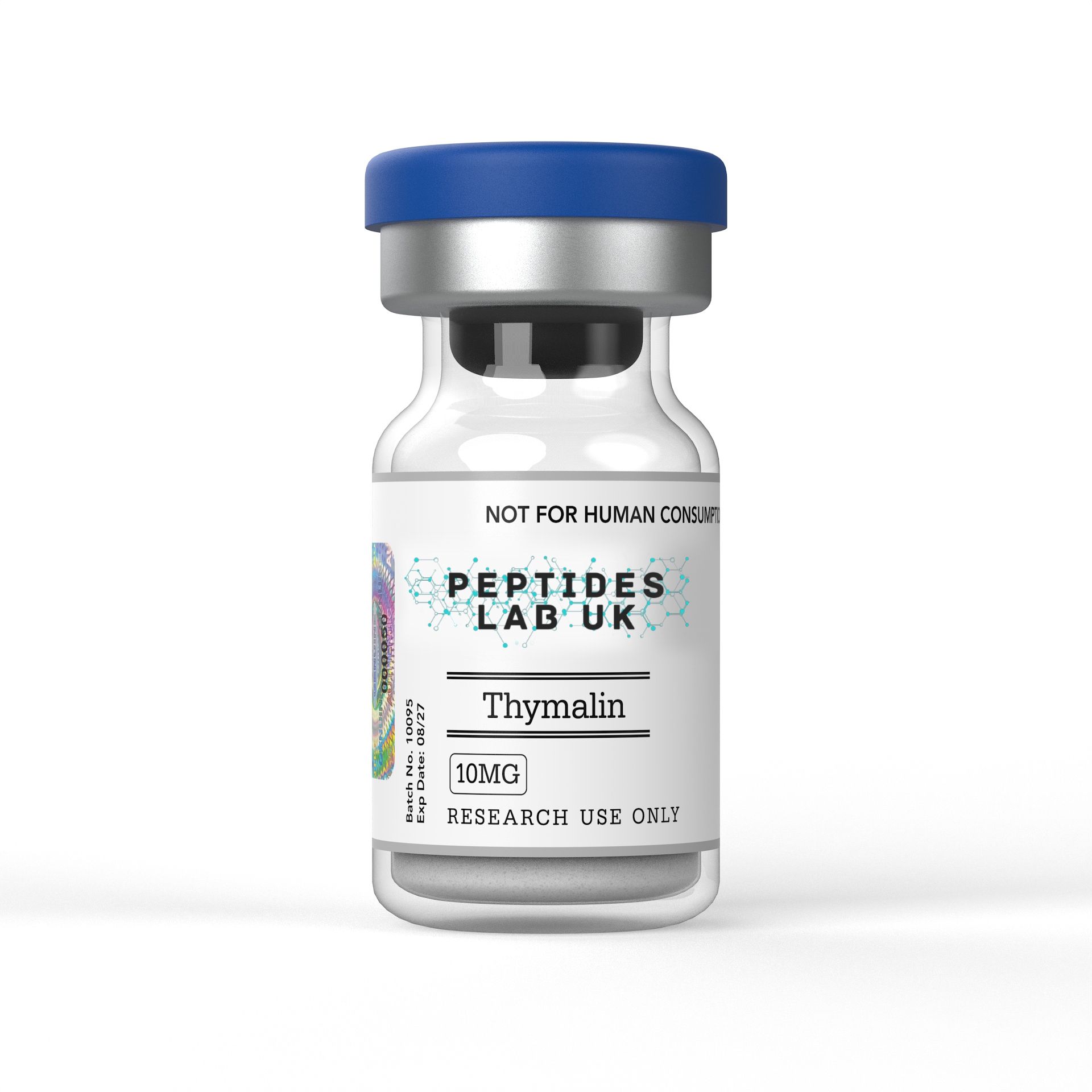
Thymalin For Lab Research
£46.99
Login for member prices★★★★★
✔︎ Quality checked
✔︎ Third party verified
Thymalin is a natural thymic peptide fraction for laboratory and in vitro research. Supplied at high purity with a full third-party COA on request. For laboratory and in vitro research use only. Not for human consumption. Not a medicine.
Looking for a Certificate of Analysis?
If you are looking for a Certificate Of Analysis, please email research@peptideslabuk.com to have it sent to you.
Please Note: Many sites are displaying counterfeit COAs, so ours is provided upon request.
If you are looking for a Certificate Of Analysis, please email research@peptideslabuk.com to have it sent to you.
Please Note: Many sites are displaying counterfeit COAs, so ours is provided upon request.
You may also like…
- Login for member prices
-
Login for member prices

Product Description
Thymalin Peptide | Buy Thymalin UK | High-Purity Research Peptide
Thymalin is a polypeptide complex derived from the thymus gland, widely studied in laboratory research for its role in immune regulation, T-cell differentiation, and cellular ageing — now available to buy in the UK from Peptides Lab UK in high-purity lyophilised form.
Distributed by Peptides Lab UK in a high-purity lyophilised format, for laboratory research use only. This compound is handled in controlled settings for in vitro and pre-clinical studies, with no applications in human or veterinary medicine. Each batch undergoes rigorous quality analysis to ensure >99% purity (HPLC verified).
What Is Thymalin Peptide?
Thymalin is a naturally occurring polypeptide complex isolated from calf thymus tissue. It contains a number of active short peptides — including EW, KE, and EDP — which are the subject of ongoing laboratory research into immune function, gene expression, and cellular ageing. As a research compound, Thymalin UK is one of the most studied thymic peptides available, with a substantial body of published pre-clinical literature behind it.
What Does Thymalin Peptide Do in Research?
In laboratory settings, Thymalin has been studied for its apparent ability to influence several biological pathways. Research has examined its role in:
- Supporting T-lymphocyte differentiation from hematopoietic stem cells
- Modulating gene expression related to immune function
- Influencing cytokine synthesis and heat-shock protein production
- Regulating cell proliferation and reducing apoptosis in lymphoid tissue
- Interacting with DNA and histone proteins at a cellular level
Thymalin and Immune Research
Research suggests that Thymalin’s constituent short peptides — KE, EW, and EDP — can bind to double-stranded DNA and histone proteins, influencing gene expression and the synthesis of immune system proteins. This mechanism has made it a subject of significant interest in immunology-focused laboratory studies.
Thymalin and Cellular Ageing Research
In organotypic cultures of spleen tissue from young and old rats, Thymalin and its short peptides increased the growth zone index of spleen explants by 20–50%, stimulated cell proliferation, and reduced apoptosis by 29–42% compared to controls.
What Do Studies Say About Thymalin Peptide?
Thymalin has been the subject of peer-reviewed research for several decades, particularly out of the St. Petersburg Institute of Bioregulation and Gerontology.
Thymalin and Geroprotection Research
Research from the Russian Academy of Medical Sciences concluded on the high geroprotective potential of Thymalin, with findings suggesting it may support health maintenance and reduce age-related decline in older subjects.
Thymalin and Stem Cell Differentiation
A study published in PMC found that Thymalin reduced the expression of CD44 and CD117 (stem cell markers) by 2–3 times and increased the expression of CD28 — a marker of mature T-lymphocytes — by 6.8 times, suggesting it may stimulate the differentiation of stem cells into mature T-lymphocytes.
Thymalin and Immune Modulation
Published research indicates that Thymalin and its constituent peptides induce differentiation of hematopoietic stem cells into T-lymphocytes, and normalise the hemostasis system — areas that are of significant interest in immune-focused pre-clinical studies.
Key cited studies:
- Khavinson et al. (2021) — The Use of Thymalin for Immunocorrection and Molecular Aspects of Biological Activity — PMC8365293
- Kuznik et al. (2021) — Peptide Drug Thymalin Regulates Immune Status — Advances in Gerontology, DOI: 10.1134/S2079057021040068
- Khavinson et al. (2020) — Thymalin: Activation of Differentiation of Human Hematopoietic Stem Cells — PMC7686446
- Anisimov & Khavinson (2003) — Geroprotective Effect of Thymalin and Epithalamin — PubMed ID: 12577695
Buy Thymalin UK — Product Specifications
| Property | Detail |
|---|---|
| Purity | >99% (HPLC verified) |
| Form | Lyophilised powder |
| Storage | Store dry at -20°C; protect from light |
| Solubility | Bacteriostatic water, sterile water, or suitable laboratory solvents |
Thymalin Research Applications
Thymalin peptide UK is supplied strictly for the following in vitro and pre-clinical research uses:
- In vitro immune pathway and receptor-binding studies
- T-cell differentiation and hematopoietic stem cell research
- Structure–activity relationship (SAR) investigations
- Molecular analysis of ageing and cellular senescence
- Gene expression and epigenetic regulation studies
Why Buy Thymalin from Peptides Lab UK?
Peptides Lab UK is a trusted UK peptides supplier, offering research-grade compounds verified by independent HPLC testing. When you buy Thymalin in the UK from us, you receive:
- >99% purity, batch-tested and verified
- Fast UK dispatch with discreet, secure packaging
- Lyophilised format for maximum compound stability
- Full compliance with UK research compound guidelines
Research Disclaimer: This product is provided by Peptides Lab UK strictly for laboratory research use only. It is not intended for human consumption, medical use, or veterinary applications. Thymalin is not a licensed medicine or drug. It has not been approved by the MHRA, FDA, or any other regulatory body for use in humans or animals. Handling should only be performed by qualified laboratory professionals in a controlled research setting. The information presented here is for scientific reference purposes only and should not be construed as medical advice or guidance.
Related products
-
Login for member prices
-
Login for member prices
-
Login for member prices
