





No products in the cart.

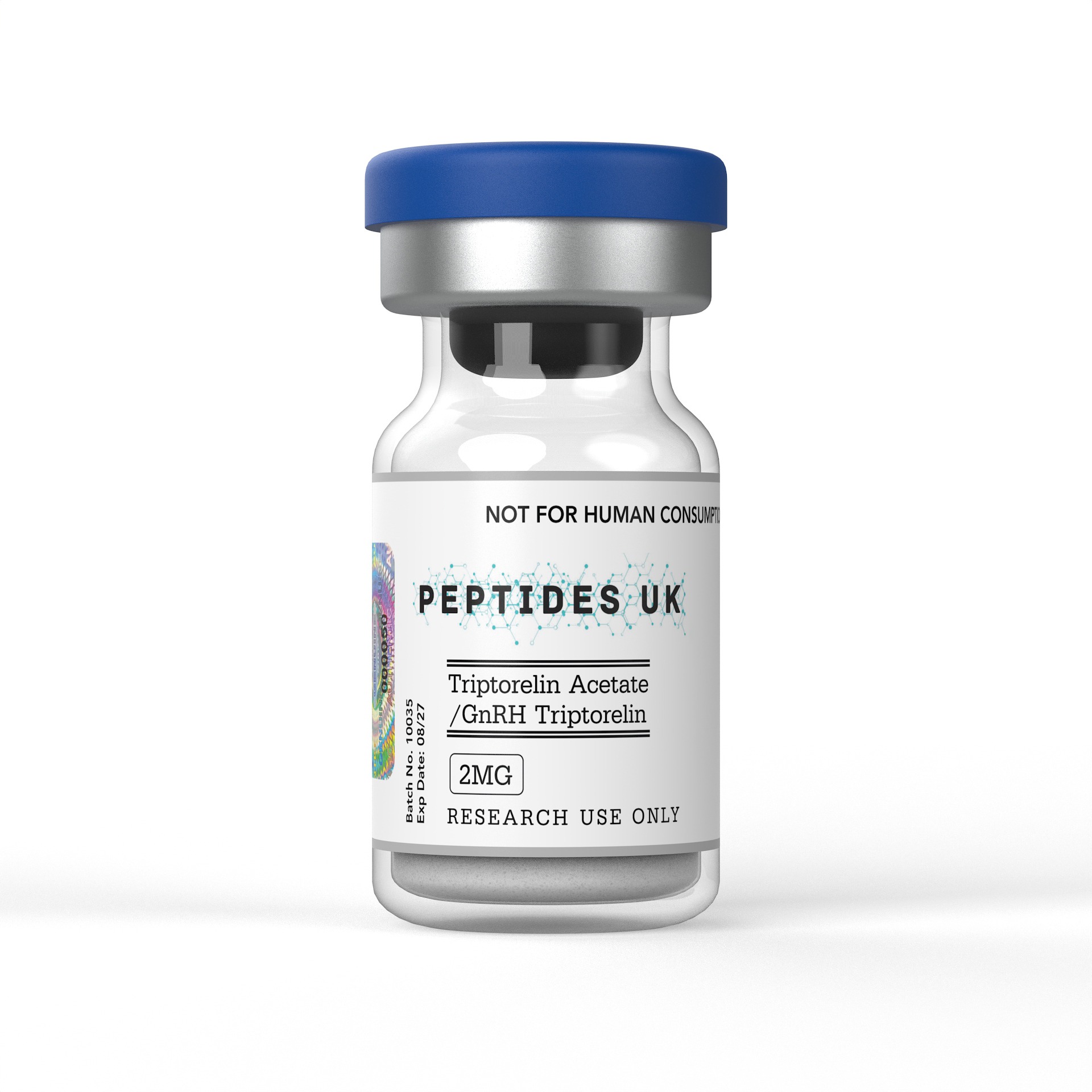
Triptorelin Acetate/GnRH For Lab Research
£20.00
Login for member prices★★★★★
✔︎ Quality checked
✔︎ Third party verified
Triptorelin Acetate is a potent GnRH superagonist peptide for laboratory and in vitro research. Produced at >99% purity with a full third-party COA. For laboratory and in vitro research use only. Not for human consumption. Not a medicine.
Looking for a Certificate of Analysis?
If you are looking for a Certificate Of Analysis, please email research@peptideslabuk.com to have it sent to you.
Please Note: Many sites are displaying counterfeit COAs, so ours is provided upon request.
If you are looking for a Certificate Of Analysis, please email research@peptideslabuk.com to have it sent to you.
Please Note: Many sites are displaying counterfeit COAs, so ours is provided upon request.
You may also like…
-
Login for member prices

-
Login for member prices
-
Login for member prices
Product Description
Triptorelin Acetate | Buy Triptorelin Acetate UK | Research Use Only
Triptorelin Acetate — the acetic acid salt form of the synthetic GnRH superagonist decapeptide D-Trp6-GnRH, also sold under pharmaceutical trade names including Decapeptyl and Gonapeptyl — is the most widely used salt form of triptorelin in short-acting research applications, offering high water solubility, excellent lyophilisation stability, and full pharmacological equivalence to the free base form while providing the more rapid-onset, shorter-duration release profile that makes it the preferred triptorelin salt for in vitro receptor binding studies, pulsatile GnRH stimulation paradigms, and controlled laboratory GnRHR pharmacology experiments — complementing native GnRH (gonadorelin), which is also available from Peptides Lab UK as the unmodified decapeptide reference compound for head-to-head GnRH analogue structure-activity research. Buy Triptorelin Acetate and GnRH in the UK from Peptides Lab UK with >99% HPLC-verified purity, batch-specific COA, and fast UK dispatch for laboratory and in vitro research use only.
Distributed by Peptides Lab UK in lyophilised format for controlled laboratory research. Each batch is independently verified for purity. This compound is handled strictly in pre-clinical and research settings, distinct from any licensed pharmaceutical formulation.
What Is Triptorelin Acetate?
Triptorelin Acetate is the acetate (acetic acid) counter-ion salt form of triptorelin — the synthetic D-Trp6-GnRH decapeptide superagonist. The acetate salt form is chemically identical to triptorelin at the peptide backbone level; the acetate counter-ion does not contribute to pharmacological activity and is exchanged at physiological pH. The difference between triptorelin acetate and triptorelin pamoate (embonate) is therefore not a difference in active peptide but a difference in the counter-ion paired with the peptide during manufacture — with the acetate form being highly water-soluble and fast-releasing, and the pamoate form being used exclusively in pharmaceutical depot microsphere formulations designed for sustained monthly or 3-monthly release.
For laboratory research purposes, triptorelin acetate is the standard salt form — offering immediate solubility in aqueous buffers, quantitatively predictable dosing in solution-based in vitro experiments, and straightforward reconstitution from lyophilised powder, making it the appropriate choice for receptor binding assays, cell culture studies, pituitary explant experiments, and controlled in vivo pulsatile paradigms.
Triptorelin acetate is sold under the pharmaceutical trade names Decapeptyl (Ipsen), Pamorelin, and Gonapeptyl (Ferring Pharmaceuticals) in licensed short-acting formulations — but the research-grade lyophilised compound supplied by Peptides Lab UK is a distinct, non-pharmaceutical research material.
Triptorelin Acetate vs Triptorelin Pamoate — Key Distinctions for Researchers
| Property | Triptorelin Acetate | Triptorelin Pamoate |
|---|---|---|
| Counter-Ion | Acetic acid (acetate) | Pamoic acid (embonate) |
| Solubility | High — freely soluble in water and aqueous buffers | Low — used only in depot microsphere formulations |
| Release Profile | Immediate — fast onset | Sustained depot release — monthly or 3-monthly |
| Research Utility | In vitro assays, solution-based experiments, pulsatile in vivo paradigms | Depot pharmacokinetic and sustained-suppression models |
| Pharmaceutical Trade Names | Decapeptyl, Gonapeptyl, Pamorelin | Trelstar, Triptodur, Decapeptyl SR |
| MW (salt form) | C₆₄H₈₂N₁₈O₁₃ · CH₃COOH | C₆₄H₈₂N₁₈O₁₃ · C₂₃H₁₆O₆ (MW 1,699.9 Da) |
What Is GnRH (Native Gonadorelin)?
GnRH — also known as gonadorelin, LHRH (luteinising hormone-releasing hormone), and Gn-RH — is the endogenous hypothalamic decapeptide (pGlu-His-Trp-Ser-Tyr-Gly-Leu-Arg-Pro-Gly-NH₂) that is the natural regulator of the hypothalamic-pituitary-gonadal (HPG) axis. It is secreted in discrete pulses of approximately 60–120 minutes from GnRH neurons in the hypothalamic arcuate nucleus and preoptic area, reaching the anterior pituitary via the hypophyseal portal vasculature, where it binds the GnRH receptor (GnRHR) on gonadotroph cells to drive pulsatile LH and FSH secretion.
Native GnRH differs from triptorelin at position 6 — where it contains L-glycine (Gly6) rather than D-tryptophan (D-Trp6) — and lacks the C-terminal amide modification that contributes to triptorelin’s resistance to enzymatic cleavage. The result is a peptide with a plasma half-life of approximately 2–10 minutes (vs ~30 minutes for triptorelin) that is highly susceptible to degradation by endogenous peptidases — particularly at the Tyr5-Gly6 and Pro9-Gly10 bonds.
This metabolic lability makes native GnRH the ideal reference compound for:
- Establishing the pulsatile frequency-response relationship at the GnRHR without cumulative receptor desensitisation
- Comparing receptor binding affinity, receptor occupancy kinetics, and downstream signalling versus triptorelin and other GnRH superagonists
- Modelling endogenous hypothalamic GnRH pulse dynamics in anterior pituitary cell culture systems
- Generating the baseline pharmacological data against which all synthetic GnRH analogue potency comparisons (including triptorelin’s 13× LH and 21× FSH superiority) are calculated
GnRH Receptor Binding — Gq/11 Signalling
Both native GnRH and triptorelin acetate bind the same GnRH receptor (GnRHR) — a seven-transmembrane Gq/11-coupled GPCR expressed on anterior pituitary gonadotroph cells. Receptor engagement activates phospholipase C (PLC) to produce inositol trisphosphate (IP3) and diacylglycerol (DAG), driving intracellular calcium mobilisation and PKC activation, which triggers LH and FSH secretory granule exocytosis and gonadotropin gene transcription. Using both GnRH and triptorelin acetate in parallel research designs allows direct comparison of the magnitude, duration, and desensitisation kinetics of this Gq/11 signalling cascade as a function of receptor occupancy time and ligand affinity.
How Does Triptorelin Acetate Work?
The pharmacological mechanism of triptorelin acetate is identical to that of triptorelin at the peptide level — the acetate counter-ion does not alter receptor binding, signalling, or downstream pharmacodynamics. For a detailed mechanistic overview of triptorelin’s GnRHR superagonist mechanism, biphasic flare-then-suppression profile, GnRHR mRNA regulation, direct anti-proliferative activity, and radiolabelled analogue applications, please refer to the Peptides Lab UK Triptorelin product listing.
The specific research contexts in which triptorelin acetate — rather than other triptorelin salt forms or other GnRH analogues — is the appropriate experimental tool are summarised below.
Why Triptorelin Acetate for In Vitro Research?
Triptorelin acetate’s high aqueous solubility makes it directly compatible with standard cell culture media, receptor binding buffers, and anterior pituitary explant superfusion systems — without the need for co-solvent, pH adjustment, or depot-dissolution steps required by pamoate preparations. This makes it the preferred triptorelin form for:
- Receptor binding competition assays — displacing radiolabelled GnRH (¹²⁵I-GnRH or [³H]GnRH) from GnRHR preparations at defined concentrations
- Inositol phosphate (IP) production assays — quantifying Gq/11 pathway activation in GnRHR-expressing cell lines
- Gonadotropin secretion studies in dispersed pituitary cell cultures — measuring LH and FSH release as a function of triptorelin acetate concentration and pulse frequency
- GnRHR desensitisation kinetics — comparing receptor internalisation and recycling rates following short vs prolonged triptorelin acetate exposure
- LHβ and FSHβ mRNA transcription studies — quantitative PCR analysis of gonadotropin gene regulation in pituitary cells exposed to defined triptorelin acetate pulse paradigms
Triptorelin Acetate vs Native GnRH — Parallel Research Design
The most informative experimental designs in GnRH receptor pharmacology use triptorelin acetate and native GnRH in parallel — allowing direct, within-experiment comparison of:
- Receptor affinity (Ki values from competition binding)
- Gq/11 signalling magnitude and duration (IP production, calcium mobilisation)
- Gonadotropin secretory output (LH/FSH release per receptor activation event)
- Desensitisation onset and research applications kinetics
- Receptor mRNA regulation (upregulation under pulsatile vs downregulation under continuous stimulation)
This parallel design is a standard methodology in GnRH pharmacology and is the experimental basis for the well-established potency ratios: triptorelin is 100-fold more active than native GnRH in stimulating LH release from dispersed rat pituitary cells in culture, 20-fold more active in displacing ¹²⁵I-GnRH from pituitary receptor sites in vitro, and 13-fold more active in LH-releasing activity and 21-fold more active in FSH-releasing activity in animal studies.
What Does Triptorelin Acetate/GnRH Do in Research?
Triptorelin Acetate Research Applications
- GnRHR binding kinetics, competition assays, and receptor affinity profiling (Ki determination)
- In vitro pituitary cell stimulation — LH/FSH release, IP production, and cAMP profiling
- GnRHR desensitisation, internalisation, and recycling kinetics under continuous vs pulsatile stimulation
- GnRHR mRNA regulation — pulsatile upregulation vs continuous downregulation research
- LHβ and FSHβ mRNA transcription and gonadotropin gene regulation studies
- Direct anti-proliferative GnRHR activity in tumour cell lines — IP production and growth inhibition assays
- HPG axis suppression in vivo — testosterone and oestradiol castration models
- Triptorelin acetate vs pamoate bioequivalence research — CPP, endometriosis, and prostate cancer models
- Precocious puberty and bone age modulation models
- ART pituitary downregulation and controlled ovarian stimulation paradigms
- Gender-affirming hormone research models — pubertal suppression and GnRHR pharmacology
- GnRH analogue structure-activity relationship studies — D-Trp6 acetate as benchmark
Native GnRH (Gonadorelin) Research Applications
- Endogenous GnRH pulse frequency and amplitude modelling — establishing the physiological reference for all GnRH analogue comparisons
- GnRHR baseline pharmacology — Kd determination, Bmax quantification, and native ligand signalling kinetics
- Pulsatile vs continuous stimulation paradigm reference compound
- GnRH-stimulation testing — LH/FSH surge assay reference compound for pituitary reserve models
- Comparative potency baseline — establishing the denominator against which triptorelin, leuprolide, goserelin, and other GnRH agonist superagonist fold-potency ratios are calculated
- GnRH neuron biology — firing patterns, kisspeptin-GnRH axis, and pulse generator modelling
- HPG axis feedback studies — hypothalamic GnRH pulse response to oestrogen, testosterone, and progesterone in vivo
What Do Studies Say About Triptorelin Acetate?
Acetate vs Pamoate — Clinical Equivalence in CPP
The 2019 retrospective study by Lasorella, Porto et al. published in PubMed directly compared triptorelin acetate (3.75 mg/month) and triptorelin pamoate (3.75 mg/4 weeks) in 60 girls with central precocious puberty over 12 and 24 months. Both formulations produced significant, equivalent reductions in basal and stimulated LH, oestradiol, and breast pubertal stage — confirming pharmacodynamic bioequivalence of the two salt forms for HPG axis suppression. Triptorelin pamoate produced more effective LH peak reduction at 12 months; triptorelin acetate was more effective in reducing ovarian volume and endometrial thickness — differences attributed to pharmacokinetic release profile differences rather than any peptide-level pharmacological distinction.
In Vitro Potency — 100-fold vs Native GnRH
FDA-registered prescribing information for triptorelin (from multiple manufacturers) confirms that comparative in vitro studies in dispersed rat anterior pituitary cell monolayer cultures demonstrated triptorelin to be 100-fold more active than native GnRH in stimulating LH release, and 20-fold more active in displacing ¹²⁵I-GnRH from pituitary receptor sites — data generated using triptorelin acetate as the experimental compound and native GnRH as the reference. These pharmacological benchmarks underpin the complete GnRH analogue comparative pharmacology literature.
GnRH Acetate as Reference — Potency Denominator
The original clinical pharmacology studies that established triptorelin’s 13× LH and 21× FSH superiority over native GnRH used gonadorelin (native GnRH) as the direct comparator in animal studies — making gonadorelin the indispensable reference compound for any replication or extension of this GnRH analogue comparative pharmacology work.
Triptorelin Acetate in ART — Minimal Dose Desensitisation
Controlled dose-finding studies in IVF protocols confirmed that 15 µg/day triptorelin acetate was sufficient to suppress premature LH surges during controlled ovarian stimulation cycles, with 50 µg demonstrating equivalent pituitary desensitisation to 100 µg — establishing that the dose-response relationship for GnRHR saturation plateaus at moderate doses, with implications for receptor biology research on GPCR saturation and spare receptor dynamics.
Key Cited Studies
- Lasorella S, Porto M, Napolitano M, Chioma L, Bernardi S, Moleti M, Pasquino AM (2019) — Comparison of triptorelin acetate vs triptorelin pamoate in the treatment of central precocious puberty: a retrospective study. J Endocrinol Invest 43(3):355–359. DOI: 10.1007/s40618-019-01100-0. PMID: 31441342
- Kovacs M, Schally AV, Csernus B, Rekasi Z (2001) — Comparison of mechanisms of action of LHRH antagonist cetrorelix and LHRH agonist triptorelin on gene expression of pituitary LHRH receptors in rats. PNAS 98(23):13311–13316. DOI: 10.1073/pnas.211442598
- Drieu la Rochelle C et al. (2004) — Minimal daily dose of triptorelin needed to suppress a premature LH surge in IVF. Hum Reprod 19(2):305–310. DOI: 10.1093/humrep/deh072
- FDA Prescribing Information — Trelstar (Triptorelin Pamoate). NDA 020715/021288/022427. Accessed via accessdata.fda.gov
- Padula AM (2005) — GnRH analogues — agonists and antagonists. Anim Reprod Sci 88(1–2):115–126. DOI: 10.1016/j.anireprosci.2005.05.009. PMID: 15927433
Quality & Purity Assurance
Every batch of Triptorelin Acetate and GnRH from Peptides Lab UK is:
- >99% pure — HPLC and mass spectrometry verified
- Supplied with a full Certificate of Analysis (COA) on request
- Lyophilised powder for maximum stability and long shelf life
- Manufactured under strict, controlled laboratory conditions
- Consistent batch-to-batch quality for reproducible research results
Buy Triptorelin Acetate UK — Product Specifications
Triptorelin Acetate
| Property | Detail |
|---|---|
| Full Name | Triptorelin Acetate / D-Trp6-GnRH Acetate |
| Also Known As | Decapeptyl, Gonapeptyl, Pamorelin (pharmaceutical names) |
| Salt Form | Acetate (acetic acid counter-ion) |
| Peptide Sequence | pGlu-His-Trp-Ser-Tyr-D-Trp-Leu-Arg-Pro-Gly-NH₂ |
| Amino Acids | 10 (decapeptide) |
| Peptide MW | 1,311.5 Da |
| CAS Number (free base) | 57773-63-4 |
| Solubility | Freely soluble in water and aqueous buffers |
| Purity | >99% (HPLC verified) |
| Form | Lyophilised powder |
| Storage | Store dry at -20°C; protect from light |
Native GnRH (Gonadorelin)
| Property | Detail |
|---|---|
| Full Name | GnRH / Gonadorelin / LHRH |
| Also Known As | Gonadotropin-Releasing Hormone, Luteinising Hormone-Releasing Hormone |
| Sequence | pGlu-His-Trp-Ser-Tyr-Gly-Leu-Arg-Pro-Gly-NH₂ |
| Position 6 Residue | Gly (vs D-Trp in triptorelin — key structural difference) |
| Amino Acids | 10 (decapeptide) |
| Molecular Weight | 1,182.3 Da |
| CAS Number | 33515-09-2 |
| Plasma Half-Life | ~2–10 minutes (rapidly cleaved by endogenous peptidases) |
| Purity | >99% (HPLC verified) |
| Form | Lyophilised powder |
| Storage | Store dry at -20°C; protect from light |
| Solubility | Freely soluble in water and aqueous buffers |
Why Buy Triptorelin Acetate UK from Peptides Lab UK?
Peptides Lab UK is a trusted UK peptides supplier providing research-grade compounds verified by independent HPLC testing. When you buy Triptorelin Acetate in the UK from us, you receive:
99% purity, HPLC and MS verified, third-party tested
- Full COA documentation per batch
- Fast same-day UK dispatch with tracked delivery
- Competitive pricing with bulk research discounts available
- Both acetate salt and native GnRH available for parallel experimental designs
- Trusted by researchers across the UK and Europe
Research Disclaimer
All products supplied by Peptides Lab UK are intended strictly for in vitro laboratory research and scientific study use only. They are not intended for human consumption, veterinary use, or any medical or therapeutic application. The research-grade lyophilised triptorelin acetate and gonadorelin (GnRH) supplied by Peptides Lab UK are not pharmaceutical products and are distinct from licensed pharmaceutical triptorelin acetate formulations (Decapeptyl, Gonapeptyl) and gonadorelin preparations (Factrel, Lutrepulse) approved by the MHRA, FDA, or other regulatory authorities for clinical use. Triptorelin acetate is a potent GnRH receptor superagonist with significant hormonal activity and must not be self-administered or used outside a controlled laboratory environment. All citations on this page refer to published pre-clinical and peer-reviewed clinical pharmacology research and do not constitute a claim of safety or therapeutic efficacy for the research compounds supplied herein. Peptides Lab UK accepts no liability for any misuse of research compounds. By purchasing, you confirm that you are a qualified researcher and that the product will be used solely within a controlled laboratory environment in compliance with all applicable UK laws, regulations, and institutional guidelines.
Related products
-
Login for member prices
-
Login for member prices£20.00 Select options This product has multiple variants. The options may be chosen on the product page
-
Login for member prices
