




No products in the cart.

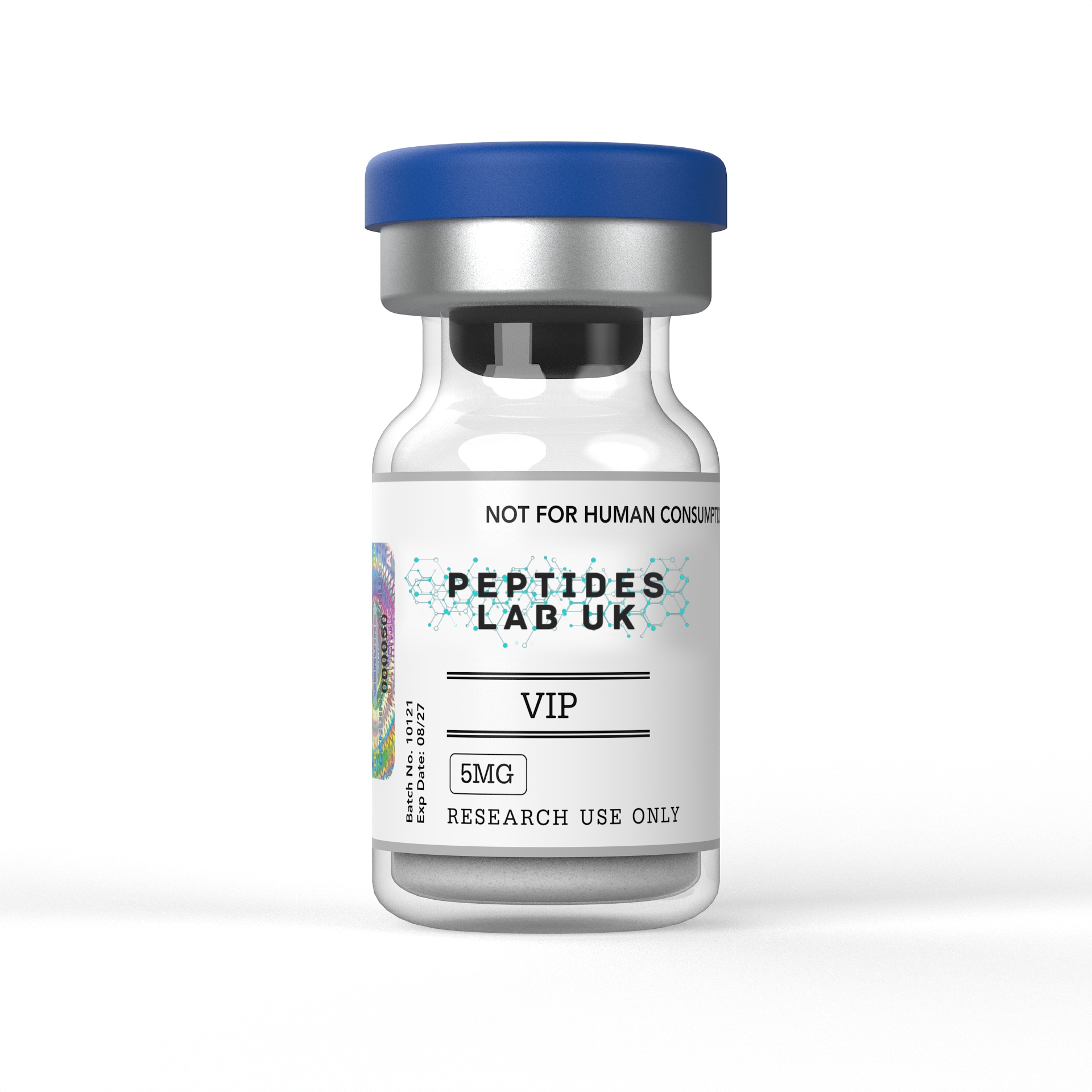
VIP For Lab Research
£67.00
Login for member prices★★★★★
✔︎ Quality checked
✔︎ Third party verified
VIP (Vasoactive Intestinal Peptide) is a 28-amino acid neuropeptide for laboratory and in vitro research. Supplied at >99% purity with a full third-party COA. For laboratory and in vitro research use only. Not for human consumption. Not a medicine.
Looking for a Certificate of Analysis?
If you are looking for a Certificate Of Analysis, please email research@peptideslabuk.com to have it sent to you.
Please Note: Many sites are displaying counterfeit COAs, so ours is provided upon request.
If you are looking for a Certificate Of Analysis, please email research@peptideslabuk.com to have it sent to you.
Please Note: Many sites are displaying counterfeit COAs, so ours is provided upon request.
Product Description
VIP Peptide (Vasoactive Intestinal Peptide) – High-Purity Research Peptide | Peptides Lab UK
VIP Peptide (Vasoactive Intestinal Peptide) is a 28-amino acid neuropeptide with wide-ranging roles in neuroendocrine, immune, and gastrointestinal signalling, supplied by Peptides Lab UK in lyophilised format at >99% purity (HPLC verified) for in vitro and pre-clinical laboratory research use only.
Available to buy in the UK from Peptides Lab UK, VIP is one of the most widely studied neuropeptides in pre-clinical research. Originally isolated in 1970 as a potent vasodilator, it has since been the focus of hundreds of published studies examining its roles across multiple physiological systems. Each batch is independently quality-tested and distributed in controlled lyophilised powder form, suitable for precise laboratory handling and storage.
What is VIP Peptide (Vasoactive Intestinal Peptide)?
VIP is a naturally occurring 28-amino acid neuropeptide belonging to the secretin/glucagon superfamily of peptide hormones — a group that also includes glucagon, GLP-1, GIP, secretin, and growth hormone-releasing hormone (GHRH). First identified by Said and Mutt in 1970, VIP was initially reported as a vasodilator isolated from porcine duodenum. Subsequent decades of research revealed it to be a multifunctional signalling molecule expressed widely across the peripheral and central nervous systems.
In physiological contexts, VIP is found in significant concentrations in the gastrointestinal tract, heart, lungs, thyroid, kidney, urinary bladder, genital organs, and brain, where it functions as a nonadrenergic, noncholinergic (NANC) neurotransmitter and neuromodulator. On a molar basis, VIP has been reported as 50–100 times more potent than acetylcholine as a vasodilator in published cardiovascular research.
VIP Peptide – Key Facts
- Peptide length: 28 amino acids
- Superfamily: Secretin/glucagon/VIP peptide family
- Primary receptors: VPAC1 and VPAC2 (class B G protein-coupled receptors)
- Distribution: CNS, PNS, gastrointestinal tract, cardiovascular system, lungs, immune tissue
- Discovery: First isolated and characterised by Said & Mutt, 1970
- Molecular weight: Approximately 3.326 kDa
What Does VIP Peptide Do in Research?
In laboratory and pre-clinical research settings, VIP is studied across a broad range of biological systems owing to its interactions with VPAC1 and VPAC2 receptors — both of which signal primarily through adenylyl cyclase activation and cyclic AMP (cAMP) production. The downstream effects of VIP–receptor binding are diverse, making it a compound of interest across multiple fields of investigation including neuroendocrinology, immunology, gastroenterology, and cardiovascular research.
Key Research Areas for VIP Peptide
- Immune modulation: VIP has been extensively studied for its inhibitory effects on the production of pro-inflammatory mediators, with research suggesting it may influence T-cell differentiation and cytokine profiles in controlled experimental models
- Gastrointestinal signalling: VIP is studied for its roles in regulating intestinal ion secretion, gut motility, nutrient absorption, and glycaemic control through GI epithelial receptor pathways
- Cardiovascular pathway research: In vitro studies have investigated VIP’s role in vasodilation, cardiac contractility, and regulation of coronary blood flow via nitric oxide and cGMP signalling
- Circadian rhythm and CNS studies: VIP is expressed in the suprachiasmatic nucleus (SCN) of the hypothalamus and is studied in relation to circadian rhythm regulation, learning, memory, and stress response
- Pulmonary and airway research: VIP receptors are characterised in mammalian lung membranes, and the peptide is studied in the context of airway smooth muscle relaxation and pulmonary vascular tone
What Do Studies Say About VIP Peptide?
VIP has an extensive and well-established body of published pre-clinical research spanning more than five decades, with studies covering its receptor pharmacology, immune functions, cardiovascular effects, and gastrointestinal roles.
Gastrointestinal & Physiological Research (PubMed, 2019)
A comprehensive review published on PubMed examined VIP’s multiple physiological and pathological effects on development, growth, and the control of neuronal, epithelial, and endocrine cell functions. The review covered VIP’s regulation of ion secretion, nutrient absorption, gut motility, glycaemic control, carcinogenesis, immune responses, and circadian rhythms. The authors also discussed insights gained from genetic ablation of VIP and its receptors in mouse models, and highlighted its possible investigative relevance in the context of diabetes, autoimmune conditions, and cancer research.
Reference: Umetsu Y et al. & associated review authors (2019). Recent advances in vasoactive intestinal peptide physiology and pathophysiology: focus on the gastrointestinal system. PubMed. PMID: 31559013.
Receptor Pharmacology – IUPHAR Review (PubMed, 2012)
An IUPHAR-commissioned review of VIP and PACAP receptor pharmacology confirmed the nomenclature and documented the roles of VPAC1 and VPAC2 receptors in CNS function — including circadian rhythms, learning, memory, anxiety, and responses to stress and brain injury. In the periphery, the review confirmed VIP’s roles in controlling immunity and inflammation, pancreatic insulin secretion, and catecholamine release. The review also noted emerging genetic studies implicating the VPAC2 receptor in susceptibility to schizophrenia.
Reference: Harmar AJ et al. (2012). Pharmacology and functions of receptors for vasoactive intestinal peptide and pituitary adenylate cyclase-activating polypeptide: IUPHAR Review 1. British Journal of Pharmacology. PubMed PMID: 22289055.
Cardiovascular Effects Research (PubMed, 2000)
A dedicated cardiovascular review documented VIP’s presence in peripheral and central nervous systems as a NANC neurotransmitter. The review confirmed that VIP activates adenylyl cyclase via receptor binding and that its vasodilatory effects may also involve nitric oxide, cyclic GMP, and other signalling agents. VIP was reported to have positive inotropic effects on cardiac muscle and to significantly increase heart rate — with greater potency than norepinephrine in experimental models. The authors concluded that VIP plays important roles in the regulation of coronary blood flow, cardiac contraction, and heart rate.
Reference: Henning RJ & Sawmiller DR (2001). Vasoactive intestinal peptide: cardiovascular effects. Cardiovascular Research. PubMed PMID: 11121793.
Immunomodulation Research (PubMed, 2004)
A focused review on VIP’s immunomodulatory significance confirmed that it exerts an inhibitory effect on the production and action of many different inflammatory mediators. The review gathered evidence supporting VIP’s role as a type 2 cytokine and discussed its potential as a candidate in drug development research. The authors described it as a ‘very important peptide’ in cellular process regulation — a description that has since become widely cited in the field.
Reference: Delgado M & Ganea D (2003). The significance of vasoactive intestinal peptide in immunomodulation. Pharmacological Reviews. PubMed PMID: 15169929.
Lung Receptor Characterisation (PubMed, 1986)
An early but foundational study characterised VIP receptor binding in mammalian lung membranes across multiple species including human, rat, guinea pig, and rabbit. High-affinity VIP binding was confirmed in all species, with the study identifying the lung VIP receptor as a glycoprotein. This work established the basis for subsequent pulmonary VIP research and remains a reference point in receptor characterisation studies.
Reference: Dickinson KE et al. (1986). Characterization of vasoactive intestinal peptide (VIP) receptors in mammalian lung. Peptides. 7(5):791–800. PubMed PMID: 3025822.
VIP Peptide UK – Specifications
Product Details
- Purity:>99% (HPLC verified)
- Form: Lyophilised powder
- Storage: Store dry at –20°C; protect from light
- Solubility: Bacteriostatic water, sterile water, or suitable laboratory solvents
- Distributed by: Peptides Lab UK
- Quality assurance: Rigorous batch-level analysis; certificate of analysis available on request
Research Applications
Suitable Laboratory Uses for VIP Peptide
- In vitro VPAC1 and VPAC2 receptor-binding and pathway studies
- Structure–activity relationship (SAR) investigations within the secretin/glucagon superfamily
- Immune signalling and inflammatory pathway research in controlled laboratory models
- Gastrointestinal motility and secretion studies in vitro
- Cardiovascular and vasodilation signalling cascade research
- Neuroendocrine and circadian rhythm pathway investigations
- Molecular analysis and controlled laboratory experiments
Why Buy VIP Peptide in the UK from Peptides Lab UK?
Peptides Lab UK is a trusted UK-based supplier of research-grade peptides. All products are distributed in lyophilised format with batch-verified purity documentation. Whether you are looking to buy VIP peptide in the UK, sourcing Vasoactive Intestinal Peptide for laboratory research, or searching for a reliable UK peptides supplier, Peptides Lab UK provides consistent quality with rigorous third-party analysis on every batch.
Related Search Terms
Researchers searching for: buy VIP peptide UK, Vasoactive Intestinal Peptide UK, VIP peptide for sale UK, UK peptides research grade, Peptides UK lab supply, VIP neuropeptide UK research, buy VIP UK, VPAC1 VPAC2 peptide UK, neuropeptide research peptide UK, VIP peptide in the UK — Peptides Lab UK supplies this compound for qualified laboratory researchers within the United Kingdom.
Important Notice & Research Disclaimer
⚠️ This product is supplied by Peptides Lab UK strictly for laboratory research use only. VIP Peptide (Vasoactive Intestinal Peptide) as distributed by Peptides Lab UK is not intended for, and must not be used for, human consumption, medical treatment, self-administration, veterinary applications, or any use outside of a controlled laboratory environment. This compound is handled exclusively in controlled research settings for in vitro and pre-clinical studies.
Handling must only be performed by qualified and trained laboratory professionals in accordance with applicable regulations and institutional guidelines. Peptides Lab UK accepts no liability for any use of this compound outside of its intended laboratory research purpose.
References to published research throughout this description are provided for informational and research context only and do not constitute medical claims or endorsements of any therapeutic application of this product.
Related products
-
Login for member prices

-
Login for member prices
-
Login for member prices
