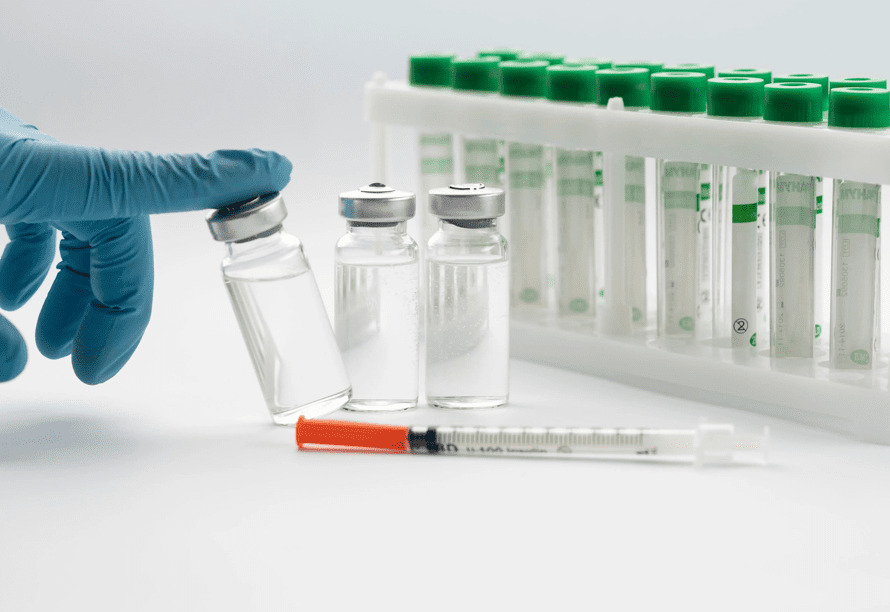
Last updated: April 2026 · UK research-grade reference · For laboratory research use only — not for human consumption
Table of Contents
- 1. Why this is the defining head-to-head of the incretin era
- 2. Dual vs single incretin receptor pharmacology
- 3. The GIP receptor: why adding it matters
- 4. Molecular structure comparison
- 5. Pharmacokinetics side-by-side
- 6. SURMOUNT-5: the head-to-head obesity trial
- 7. T2DM head-to-head data (SURPASS-2)
- 8. Weight-loss comparison across programmes
- 9. Cardiometabolic endpoints: BP, lipids, liver fat
- 10. GI tolerability head-to-head
- 11. Dosing cadence and titration
- 12. Research protocol selection guide
- 13. UK research-grade sourcing
- FAQ
- References
1. Why this is the defining head-to-head of the incretin era
The incretin therapy era that began with exenatide in 2005 has progressed through three mechanistic generations: (1) native or near-native GLP-1 agonists (exenatide, liraglutide), (2) engineered long-acting GLP-1 agonists (dulaglutide, semaglutide), and (3) multi-receptor incretin agonists — of which tirzepatide (GLP-1 + GIP) is the first approved molecule and retatrutide (GLP-1 + GIP + glucagon) is the leading triple candidate in Phase 3.
Semaglutide represents the best-engineered single-incretin agonist. Tirzepatide represents the first clinically validated dual-incretin agonist. The question of whether dual-incretin pharmacology produces superior outcomes to single-incretin pharmacology at maximum clinical doses was answered definitively by SURMOUNT-5 in 2024–2025: yes, and by a substantial margin.
For UK laboratory researchers, this comparison is the benchmark for deciding which molecule to use as the reference peptide in any incretin-related research protocol.
2. Dual vs single incretin receptor pharmacology
Both peptides fully activate the GLP-1 receptor. Tirzepatide additionally activates the GIP (glucose-dependent insulinotropic polypeptide) receptor. Both GLP-1R and GIP-R are class B G-protein-coupled receptors that signal primarily via Gαs → adenylyl cyclase → cAMP → PKA, but they have different tissue distributions:
- GLP-1R: pancreatic β-cells, pancreatic α-cells, enteric neurons, vagal afferents, hypothalamic POMC/AgRP neurons, brainstem nausea circuitry, cardiomyocytes, renal tubules, hepatic sinusoidal cells
- GIP-R: pancreatic β-cells (major), white and brown adipocytes (major), bone osteoblasts/osteoclasts, CNS (hypothalamic and brainstem nuclei distinct from GLP-1R sites), stomach and intestinal mucosa
The adipocyte distribution of GIP-R is mechanistically central. GIP signalling in adipose tissue appears to improve insulin sensitivity at the adipocyte level, suppress lipolysis under fasting conditions, and enhance lipid buffering capacity — which, combined with GLP-1R-driven appetite suppression, produces complementary rather than redundant effects on adiposity.
A practical signal of this complementarity: tirzepatide produces greater weight loss at lower rates of GI tolerability burden per kg lost, suggesting GIP receptor engagement contributes an additional mechanism not routed through the GI-dominant GLP-1 pathway.
3. The GIP receptor: why adding it matters
Native GIP alone has historically been considered a poor therapeutic target in T2DM because, in hyperglycaemic states, GIP receptor signalling is paradoxically impaired at the β-cell. However, several observations support the tirzepatide design rationale:
- GIP receptor function normalises with glycaemic improvement: Once GLP-1R-driven glucose control is established, GIP-R function at the β-cell is restored, and GIP can then add insulinotropic capacity.
- GIP receptor engagement at hypothalamic and adipose sites is not glucose-dependent: The appetite and adipose effects appear to operate independently of glycaemic state.
- GIP receptor engagement may blunt GLP-1-driven nausea: Preclinical and clinical signals suggest GIP-R co-agonism reduces the central nausea signal per unit of weight-loss effect.
Whether tirzepatide’s GIP component is a full agonist, partial agonist, or biased agonist has been a subject of debate in the peptide pharmacology literature. Current consensus from receptor-internalisation and downstream-signalling assays places it as a biased agonist with reduced receptor internalisation compared to native GIP — preserving surface receptor availability during chronic dosing.
4. Molecular structure comparison
Semaglutide: 31-amino-acid GLP-1 analogue with Ala8→Aib substitution, Lys34→Arg substitution, and C18 di-acid fatty-acid chain attached via γ-Glu-(AEEA)2 linker to Lys26. Molecular weight 4113.58 Da.
Tirzepatide: 39-amino-acid unimolecular peptide combining GLP-1 and GIP structural elements. Aib at positions 2 and 13. C20 fatty di-acid (eicosanedioic acid) attached via γ-Glu-(AEEA)2 linker to Lys20. Molecular weight 4813.53 Da.
Both use the same albumin-binding engineering strategy — γ-glutamate + AEEA spacers + fatty di-acid — but tirzepatide’s C20 di-acid is one carbon longer than semaglutide’s C18, giving slightly stronger albumin binding and a fractionally longer half-life.
5. Pharmacokinetics side-by-side
Semaglutide 2.4 mg SC weekly:
- Plasma half-life: ~165–184 hours (~7 days)
- Tmax: 1–3 days
- Steady state: 4–5 weeks
- Bioavailability (SC vs IV): ~89%
- Peak-to-trough ratio at steady state: ~1.3:1
Tirzepatide 15 mg SC weekly:
- Plasma half-life: ~120 hours (~5 days)
- Tmax: 24–72 hours
- Steady state: 4 weeks
- Bioavailability (SC vs IV): ~80%
- Peak-to-trough ratio at steady state: ~1.4:1
Notably, tirzepatide’s half-life is slightly shorter than semaglutide’s despite the longer fatty-acid chain, because tirzepatide has a larger overall molecular volume (39 aa vs 31 aa) and some additional susceptibility to neutral endopeptidase cleavage. Both reach adequate steady state within 4–5 weeks and both sustain receptor occupancy across the weekly dosing interval.
6. SURMOUNT-5: the head-to-head obesity trial
SURMOUNT-5 (NCT05822830) randomised 751 adults with obesity (BMI ≥30, or ≥27 with weight-related comorbidity) and without T2DM to tirzepatide (titrated to maximum tolerated 10 or 15 mg weekly) or semaglutide (titrated to maximum tolerated 1.7 or 2.4 mg weekly) for 72 weeks, with identical lifestyle intervention. Topline results were announced in 2024 and the full publication appeared in 2025.
Primary and key secondary endpoints at 72 weeks:
- Percent body-weight change: tirzepatide −20.2%, semaglutide −13.7% (estimated treatment difference −6.5 percentage points; p < 0.001 for superiority)
- Absolute body-weight change: tirzepatide −22.8 kg, semaglutide −15.0 kg
- ≥10% weight loss: tirzepatide 81.6%, semaglutide 60.5%
- ≥15% weight loss: tirzepatide 64.6%, semaglutide 40.1%
- ≥20% weight loss: tirzepatide 48.4%, semaglutide 27.3%
- ≥25% weight loss: tirzepatide 31.6%, semaglutide 16.1%
- Waist circumference reduction: tirzepatide −18.4 cm, semaglutide −13.0 cm
SURMOUNT-5 is the first randomised head-to-head demonstration of superiority of dual-incretin pharmacology over single-incretin pharmacology for weight loss. The ~6.5 percentage point advantage translates into approximately 50% greater relative weight loss and roughly double the proportion of participants achieving the clinically meaningful ≥25% weight-loss threshold.
7. T2DM head-to-head data (SURPASS-2)
SURPASS-2 (NCT03987919) compared tirzepatide 5, 10, and 15 mg weekly to semaglutide 1.0 mg weekly in 1,879 T2DM participants inadequately controlled on metformin, over 40 weeks. Results published in NEJM 2021:
- HbA1c change: tirzepatide 5 mg −2.01%, 10 mg −2.24%, 15 mg −2.30%; semaglutide 1.0 mg −1.86%
- Body-weight change: tirzepatide 5 mg −7.6 kg, 10 mg −9.3 kg, 15 mg −11.2 kg; semaglutide 1.0 mg −5.7 kg
- HbA1c <7.0% achievement at 15 mg: 86% tirzepatide, 79% semaglutide
- HbA1c <5.7% (normoglycaemia): tirzepatide 15 mg 46%, semaglutide 1.0 mg 27%
Note that SURPASS-2 compared tirzepatide to 1.0 mg semaglutide (the approved T2DM dose at the time), not the 2.0 mg dose subsequently approved. At equal-intensity maximum T2DM doses (tirzepatide 15 mg vs semaglutide 2.0 mg), the margin narrows but tirzepatide retains its edge on weight-loss endpoints.
8. Weight-loss comparison across programmes
A summary table of maximum-dose weight-loss effect at ~68-72 weeks:
- Liraglutide 3.0 mg daily (SCALE Obesity): −8.0%
- Semaglutide 2.4 mg weekly (STEP-1): −14.9%
- Tirzepatide 15 mg weekly (SURMOUNT-1): −20.9%
- Retatrutide 12 mg weekly (TRIUMPH-1 Phase 2, 48 weeks): −24.2%
The progression from single-incretin to dual-incretin to triple-incretin agonism produces approximately linear increments in maximum weight-loss effect, with each generation adding ~5-6 percentage points over the previous at equivalent time points. SURMOUNT-5 confirms this progression within a single randomised head-to-head, not just across separate trials.
9. Cardiometabolic endpoints: BP, lipids, liver fat
Systolic BP: Tirzepatide −6.2 mmHg, semaglutide −4.4 mmHg (SURMOUNT-5 exploratory).
LDL-C: Both peptides produce modest reductions, 5-10% from baseline, largely driven by weight loss rather than a direct lipid-lowering effect.
Triglycerides: Tirzepatide produces larger reductions (−25% to −30%) than semaglutide (−15% to −20%), likely reflecting the GIP-driven adipose lipid-buffering effect.
Liver fat (MASLD endpoints): Tirzepatide reduced liver fat fraction by 51% in MRI-PDFF sub-studies (SURMOUNT-1 sub-study, 72 weeks); semaglutide 2.4 mg reduced liver fat by approximately 35-40% in equivalent sub-studies. Tirzepatide has also demonstrated MASH resolution in the SYNERGY-NASH Phase 2 trial.
HbA1c (in T2DM cohorts): Tirzepatide 15 mg approximately −2.3%; semaglutide 2.0 mg approximately −2.1%. Similar at maximum T2DM doses.
10. GI tolerability head-to-head
From SURMOUNT-5 (obesity doses, 72 weeks):
- Any nausea: tirzepatide 44.2%, semaglutide 50.1%
- Vomiting: tirzepatide 18.3%, semaglutide 21.4%
- Diarrhoea: tirzepatide 27.1%, semaglutide 30.2%
- Constipation: tirzepatide 20.8%, semaglutide 24.3%
- Discontinuation due to AE: tirzepatide 6.2%, semaglutide 8.0%
This is the counterintuitive result of the head-to-head: despite producing roughly 50% greater weight loss, tirzepatide was better tolerated than semaglutide at maximum doses. The most mechanistically plausible explanation is that GIP-R co-agonism at hypothalamic sites blunts the GLP-1-driven nausea signal at equivalent weight-loss efficacy.
11. Dosing cadence and titration
Semaglutide (Wegovy) titration:
- Weeks 1–4: 0.25 mg SC weekly
- Weeks 5–8: 0.5 mg SC weekly
- Weeks 9–12: 1.0 mg SC weekly
- Weeks 13–16: 1.7 mg SC weekly
- Week 17+: 2.4 mg SC weekly
Tirzepatide (Zepbound/Mounjaro) titration:
- Weeks 1–4: 2.5 mg SC weekly
- Weeks 5–8: 5 mg SC weekly
- Weeks 9–12: 7.5 mg SC weekly
- Weeks 13–16: 10 mg SC weekly
- Weeks 17–20: 12.5 mg SC weekly
- Week 21+: 15 mg SC weekly
Both titrations reach maintenance over 16-20 weeks of 4-week dose-step increments, matching the ~4-5 week steady-state time constant for each peptide.
12. Research protocol selection guide
Choose semaglutide when:
- Research question requires clean, isolated GLP-1R pharmacology
- Mechanistic study of GLP-1R downstream signalling, internalisation, or desensitisation
- Reference arm for next-generation GLP-1 mono-agonists in development
- Studying non-diabetic cardiovascular physiology (SELECT-type design)
- Studying diabetic kidney disease (FLOW-type design)
Choose tirzepatide when:
- Research question requires dual GLP-1R/GIP-R pharmacology
- Study focus is adipose tissue biology, where GIP-R engagement is mechanistically central
- Primary outcome is maximum achievable weight-loss effect
- Study focus is MASLD/MASH (SYNERGY-NASH-type design)
- Study focus is obstructive sleep apnoea (SURMOUNT-OSA-type design)
- Reference arm for triple-receptor agonist development (e.g. retatrutide comparator)
13. UK research-grade sourcing
Both peptides should be sourced with full documentation:
- ≥98% HPLC purity (≥99% is the emerging 2026 standard)
- Mass spectrometry identity confirmation (semaglutide 4113.58 Da; tirzepatide 4813.53 Da)
- Batch-specific Certificate of Analysis
- Endotoxin quantification (USP <85> or equivalent)
- Residual solvent and TFA analysis
- Lyophilised powder, cold-chain shipping
Tirzepatide is the more synthetically challenging molecule of the two — longer sequence (39 vs 31 aa), larger peptide, and requires a more complex acylation step. Expect tirzepatide to be priced at a modest premium and to show slightly wider batch-to-batch purity variance than semaglutide. A high-quality COA should specifically address the Lys20 acylation yield and the absence of des-fatty-acid parent peptide.
FAQ
Does tirzepatide fully replace semaglutide in the research toolkit?
No. Tirzepatide’s dual receptor engagement makes it a less clean pharmacological tool for isolated GLP-1R research. Semaglutide remains the reference single-incretin agonist for mechanistic studies, with tirzepatide the reference dual-incretin molecule.
Can GIP-R engagement be blocked to isolate the GLP-1 component of tirzepatide?
Yes, in vitro — GIP-R antagonists (including the orally active oxyntomodulin-derived antagonists in preclinical development) can isolate the GLP-1 component. In vivo, this is typically not done in clinical research, but is a standard approach in rodent receptor-knockout studies to dissect mechanism.
Why is tirzepatide better tolerated despite greater efficacy?
Current best hypothesis: GIP-R co-agonism at hypothalamic and brainstem sites blunts the GLP-1-driven nausea signal. This is an active area of receptor pharmacology research.
What about cardiovascular outcomes?
Semaglutide has SELECT (positive CV outcomes in non-diabetic obesity cohort). Tirzepatide’s SURPASS-CVOT (cardiovascular outcomes in T2DM) is expected to read out in 2026–2027. No direct CV head-to-head exists or is planned.
How should a research protocol handle the GIP-R question?
If the research question is specifically about GIP-R biology, include a GIP-R-only agonist arm (e.g. GIPR-selective analogues in development) alongside tirzepatide and semaglutide. If the research question is incretin receptor biology broadly, the tirzepatide + semaglutide head-to-head design is sufficient to dissect dual vs single.
Are there oral tirzepatide data?
A small-molecule GLP-1R agonist (orforglipron, Lilly) is in Phase 3 but is not tirzepatide — it is a non-peptide GLP-1 mono-agonist. Oral peptide tirzepatide has not reached clinical development.
What about retatrutide — does adding glucagon agonism beat tirzepatide?
Preliminary data from TRIUMPH-1 (Phase 2, 48 weeks, −24.2% at 12 mg) suggest yes. Phase 3 TRIUMPH programme data (including the head-to-head TRIUMPH-5 vs tirzepatide) will confirm whether the trend extends through long-term outcomes. Expected readouts 2026-2028.
References
- Aronne LJ et al. Tirzepatide vs semaglutide in adults with obesity (SURMOUNT-5). N Engl J Med 2025 (pre-publication; topline announced 2024).
- Frías JP et al. Tirzepatide versus semaglutide once weekly in patients with type 2 diabetes (SURPASS-2). N Engl J Med 2021;385:503–515.
- Jastreboff AM et al. Tirzepatide once weekly for the treatment of obesity (SURMOUNT-1). N Engl J Med 2022;387:205–216.
- Wilding JPH et al. Once-weekly semaglutide in adults with overweight or obesity (STEP 1). N Engl J Med 2021;384:989–1002.
- Lincoff AM et al. Semaglutide and cardiovascular outcomes in obesity without diabetes (SELECT). N Engl J Med 2023;389:2221–2232.
- Gasbjerg LS et al. GIP receptor agonism as a therapeutic strategy for obesity and type 2 diabetes. Nat Rev Endocrinol 2023;19:201–216.
- Coskun T et al. LY3298176, a novel dual GIP and GLP-1 receptor agonist for the treatment of type 2 diabetes mellitus: from discovery to clinical proof of concept. Mol Metab 2018;18:3–14.
- Loomba R et al. Tirzepatide for metabolic dysfunction-associated steatohepatitis (SYNERGY-NASH). N Engl J Med 2024;391:299–310.
- Malhotra A et al. Tirzepatide for treatment of obstructive sleep apnea and obesity (SURMOUNT-OSA). N Engl J Med 2024;391:1193–1205.
- Samms RJ, Sloop KW et al. How may GIP enhance the tolerability of GLP-1 receptor agonists? Trends Endocrinol Metab 2020;31:410–421.
UK Research Cluster Hubs
- GLP-1 Research Hub
- Tirzepatide Hub
- Retatrutide Hub
- BPC-157 Research Hub
- TB-500 Research Hub
- Growth-Hormone Peptides Hub
- Research-Grade Buyer’s Guide
Disclaimer: All peptides referenced are sold strictly for in vitro laboratory research use. Not for human consumption, veterinary use, food additive, cosmetic, or household purpose. Nothing in this article is medical advice. UK researchers are responsible for compliance with the Human Medicines Regulations 2012 and Misuse of Drugs Regulations 2001 where applicable.