




No products in the cart.

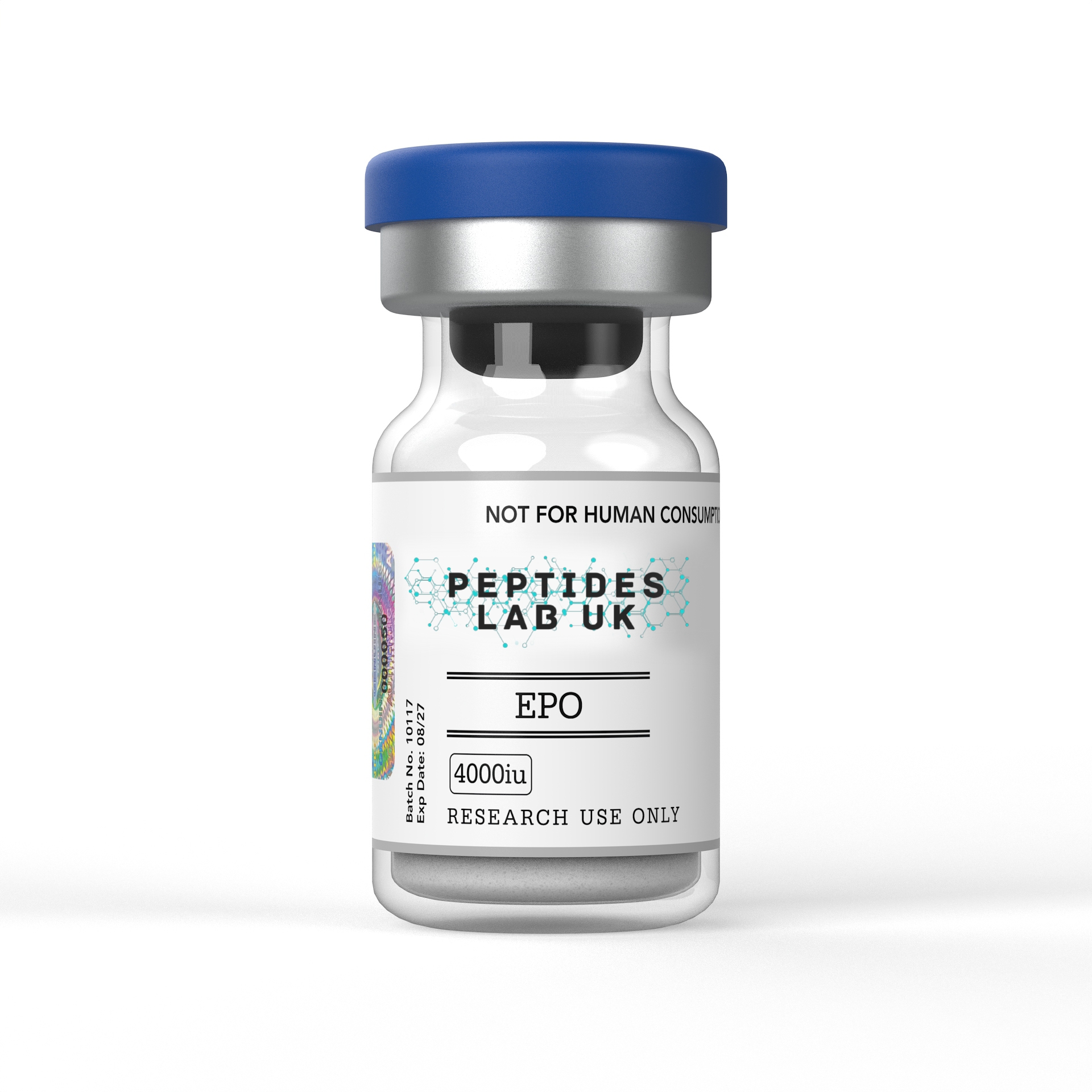
EPo – 4000iu | High Purity Research Peptide
£98.00
Login for member prices★★★★★
✔︎ Quality checked
✔︎ Third party verified
EPO (Erythropoietin) 4000iu is a glycoprotein hormone for laboratory and in vitro research. Supplied at high purity with a full third-party COA. For laboratory and in vitro research use only. Not for human consumption. Not a medicine.

Looking for a Certificate of Analysis?
If you are looking for a Certificate Of Analysis, please email research@peptideslabuk.com to have it sent to you.
Please Note: Many sites are displaying counterfeit COAs, so ours is provided upon request.
If you are looking for a Certificate Of Analysis, please email research@peptideslabuk.com to have it sent to you.
Please Note: Many sites are displaying counterfeit COAs, so ours is provided upon request.
You may also like…
-
Login for member prices

-
Login for member prices
-
Login for member prices
Product Description
EPO 4000iu (Erythropoietin) – High-Purity Research Glycoprotein | Peptides Lab UK
EPO 4000iu (Erythropoietin) is a recombinant human glycoprotein hormone and key regulator of erythropoiesis — the production of red blood cells — that acts via the erythropoietin receptor (EPOR) to activate downstream JAK2/STAT5, PI3K/Akt, and MAPK/ERK signalling cascades, supplied by Peptides Lab UK at 4000 international units (IU) in lyophilised format at >99% purity (HPLC verified) for in vitro and pre-clinical laboratory research use only.
Available to buy in the UK from Peptides Lab UK, Erythropoietin (EPO) is one of the most extensively researched glycoprotein hormones in biomedical science, with a published literature base encompassing erythropoiesis, neuroprotection, cardioprotection, regenerative medicine, and mesenchymal stem cell biology across more than 180 independent pre-clinical studies. Each batch is independently quality-tested and distributed in a controlled lyophilised powder form, suitable for precise laboratory handling and standardised dose preparation.
What is EPO (Erythropoietin)?
Erythropoietin (EPO) is a glycoprotein cytokine and the principal endogenous regulator of erythropoiesis — the physiological process by which erythroid progenitor cells in the bone marrow are stimulated to differentiate and mature into circulating red blood cells. In structural terms, mature human EPO consists of 165 amino acids (following cleavage of the 27-amino acid N-terminal signal peptide from the 193-amino acid precursor) and is heavily glycosylated, with carbohydrate chains accounting for approximately 40% of its molecular weight.
EPO is produced endogenously in the peritubular interstitial cells of the kidneys in response to hypoxic conditions, with the hypoxia-inducible transcription factor (HIF) pathway serving as the primary molecular switch governing EPO gene expression. Under hypoxic stress, HIF-1α and HIF-2α escape prolyl hydroxylase-mediated degradation, translocate to the nucleus, and upregulate EPO transcription — a pathway that has itself become a major area of pharmaceutical research through HIF-stabiliser compounds.
Beyond erythropoiesis, recombinant human EPO (rhEPO) has been documented to signal through both the classical homodimeric EPOR and a proposed heterodimeric receptor complex comprising EPOR and CD131 (the common β-subunit of cytokine receptors for IL-3, IL-5, and GM-CSF). It is through this heterodimeric receptor that EPO is believed to exert its pleiotropic, non-haematopoietic tissue-protective effects — including neuroprotection, cardioprotection, and modulation of mesenchymal stem cell differentiation — in brain, heart, and skeletal muscle tissue in pre-clinical models.
EPO 4000iu – Key Research Facts
- Classification: Glycoprotein cytokine and haematopoietic growth factor
- Molecular weight: ~30.4 kDa (mature glycoprotein form)
- Primary receptor: Homodimeric EPOR (JAK2/STAT5, PI3K/Akt, MAPK/ERK signalling)
- Secondary receptor: Heterodimeric EPOR/CD131 (tissue-protective, non-erythropoietic signalling)
- Endogenous production site: Peritubular interstitial cells of the kidneys
- Gene regulation: Hypoxia-inducible factor (HIF) pathway — HIF-1α and HIF-2α
- Research dose unit: 4000 International Units (IU) per vial — standardised to international reference preparations
- First recombinant form: Epoetin alfa (Epogen®), FDA approved 1989 for chronic renal failure
- Research scope: Erythropoiesis, neuroprotection, cardioprotection, MSC biology, angiogenesis, bone remodelling
What Does EPO Do in Research?
In laboratory and pre-clinical research settings, recombinant human EPO (rhEPO) is studied across multiple biological systems owing to its dual receptor engagement profile and its role as both a haematopoietic growth factor and a pleiotropic tissue-protective cytokine. Its standardised IU-based dosing makes it well suited for reproducible, quantitative in vitro assays and dose-response studies.
When EPO binds to the homodimeric EPOR on erythroid progenitor cells, it initiates receptor dimerisation and activation of JAK2 kinase, which phosphorylates STAT5. Activated STAT5 translocates to the nucleus to drive transcription of genes promoting cell survival, proliferation, and differentiation along the erythroid lineage — inhibiting apoptosis of erythroid progenitors through upregulation of anti-apoptotic proteins including Bcl-xL. Parallel activation of PI3K/Akt and MAPK/ERK signalling cascades further supports progenitor cell survival and mitogenesis.
Via the heterodimeric EPOR/CD131 complex, EPO research has documented non-erythropoietic effects in brain, heart, and skeletal muscle tissue in pre-clinical models, including neuronal survival under hypoxic/ischaemic stress, attenuation of inflammatory mediators, promotion of angiogenesis, and support for mesenchymal stem cell osteogenic and endothelial transdifferentiation. The 4000 IU formulation supplied by Peptides Lab UK allows researchers to prepare a wide range of research concentrations for standardised pathway and receptor studies.
Key Research Areas for EPO 4000iu
- EPOR homodimer receptor-binding, JAK2/STAT5 phosphorylation, and downstream erythropoiesis pathway studies
- EPOR/CD131 heterodimer tissue-protective signalling research
- PI3K/Akt and MAPK/ERK anti-apoptotic signalling cascade investigations
- Erythroid progenitor cell survival, proliferation, and differentiation assays
- Neuroprotection and neurodegeneration pathway studies in pre-clinical models
- Cardioprotection and ischaemia-reperfusion pathway research
- Mesenchymal stem cell (MSC) osteogenic and endothelial transdifferentiation studies
- HIF pathway and hypoxia-inducible erythropoietin gene regulation research
- Angiogenesis and bone remodelling pathway investigations
- Comparative erythropoiesis-stimulating agent (ESA) research — epoetin vs. darbepoetin vs. CERA
What Do Studies Say About EPO (Erythropoietin)?
EPO has one of the most extensive and well-established research literature bases of any recombinant protein compound in biomedical science, with published evidence spanning erythropoiesis biology, neuroprotection, cardioprotection, regenerative medicine, and stem cell research.
Comprehensive Neuroprotection Review — 180+ Pre-Clinical Studies (PubMed, 2011)
A landmark review published on PubMed summarised more than 12 years of pre-clinical and clinical EPO neuroprotection research, covering studies performed by independent research groups worldwide. The review documented that almost all of the more than 180 pre-clinical studies conducted over this period yielded positive results for EPO as a neuroprotective compound. Indications studied included stroke, traumatic brain injury, spinal cord injury, neurodegeneration, and psychiatric disorders. Early clinical trials were reported as producing positive and stimulating results. The authors described EPO as a highly attractive candidate for neuroprotection/neuroregeneration research, noting its safety record from decades of approved erythropoietic use and its documented ability to cross the blood-brain barrier in pre-clinical models.
Reference: Ehrenreich H et al. (2011). Erythropoietin as neuroprotective and neuroregenerative treatment strategy: comprehensive overview of 12 years of preclinical and clinical research. Best Practice & Research Clinical Anaesthesiology. PubMed PMID: 21619868.
EPO Physiology, Pharmacology & Receptor Review (PMC, 2013)
A comprehensive review of EPO’s physiology and pharmacology published in PMC documented the characterisation of the homodimeric EPOR and its signalling through protein kinases, anti-apoptotic proteins, and transcription factors. The review confirmed that EPO exerts pleiotropic effects via the heterodimeric EPOR/CD131 complex in non-haematopoietic tissues. It also reviewed EPO derivatives with prolonged half-life — including darbepoetin alfa and methoxy PEG-epoetin beta — alongside EPO mimetic peptides, HIF stabilisers, and EPO gene transfer approaches, contextualising the broader landscape of erythropoiesis-stimulating agent (ESA) research. The review confirmed the in vivo bioassay standard: one international unit (IU) produces the same erythropoietic response in animals as 5 μmol cobalt chloride.
Reference: Jelkmann W (2013). Physiology and Pharmacology of Erythropoietin. Transfusion Medicine and Hemotherapy. PMC Article PMC3822280.
EPO as Key Regulator of Erythropoiesis, Bone Remodelling & MSC Biology (PMC, 2021)
A detailed review published in PMC examined EPO’s broader roles beyond erythropoiesis, focusing on its functions as a regulator of bone remodelling and endothelial transdifferentiation of multipotent mesenchymal stem cells (MSCs). The review documented that EPO signals through EPOR/CD131 in brain, heart, and skeletal muscle tissue to produce tissue-protective effects, and confirmed that EPO induces osteogenic and endothelial transdifferentiation of MSCs via EPOR signalling, leading to bone remodelling, induction of angiogenesis, and secretion of trophic factors. The authors concluded that EPO’s diverse receptor-mediated properties make it a valuable research compound in regenerative medicine models.
Reference: Papadaki HA et al. (2021). Erythropoietin (EPO) as a Key Regulator of Erythropoiesis, Bone Remodeling and Endothelial Transdifferentiation of Multipotent Mesenchymal Stem Cells (MSCs): Implications in Regenerative Medicine. International Journal of Molecular Sciences. PMC Article PMC8391952.
EPO Neuroprotective Peptide Derivatives Review (PubMed, 2018)
A focused review published on PubMed examined the development of EPO-derived peptides and non-erythropoietic EPO analogues for neuroprotection research. The review documented accumulated evidence for EPO’s neuroprotective effects in pre-clinical models of acute and chronic degenerative disorders, while also identifying the limitations of full-length EPO for this research application — specifically thromboembolic risk and erythrocytosis when applied at neuroprotective doses. The authors reviewed EPO mimetic peptides (EMPs) as research alternatives, noting their high potency, selectivity, and reduced immunogenicity as favourable properties for in vitro and pre-clinical pathway studies. Results from clinical trial investigation of EPO derivatives in neuropathic pain were described as promising.
Reference: Ghasemi M et al. (2018). Peptide Derivatives of Erythropoietin in the Treatment of Neuroinflammation and Neurodegeneration. Neurochemical Research. PubMed PMID: 29680240.
Century of EPO Research — Receptor Characterisation & HIF Pathway (PubMed, 2007)
A landmark review marking a century of EPO research, published on PubMed, summarised major advances in understanding EPO gene regulation — particularly the identification of hypoxia-inducible transcription factors (HIF-1α and HIF-2α) regulated by prolyl hydroxylase dioxygenases as the primary molecular switch for EPO expression. With respect to EPO’s mechanism of action, the review confirmed characterisation of the homodimeric EPOR and its signalling through JAK2/STAT5 as well as anti-apoptotic proteins and transcription factors. The review confirmed that EPOR expression in non-haematopoietic tissues indicates EPO functions as a pleiotropic viability and growth factor, and reviewed the cardioprotective and neuroprotective research landscape alongside EPO mimetics and orally active HIF-stabilising agents.
Reference: Jelkmann W (2007). Erythropoietin after a century of research: younger than ever. European Journal of Haematology. PubMed PMID: 17253966.
EPO 4000iu UK – Specifications
Product Details
- Quantity: 4000 International Units (IU) per vial
- Purity:>99% (HPLC verified)
- Form: Lyophilised powder
- Storage: Store dry at –20°C; protect from light
- Solubility: Bacteriostatic water, sterile water, or suitable laboratory solvents
- Distributed by: Peptides Lab UK
- Quality assurance: Rigorous batch-level analysis; certificate of analysis available on request
Research Applications
Suitable Laboratory Uses for EPO 4000iu
- EPOR homodimer receptor-binding assays and JAK2/STAT5 phosphorylation studies
- EPOR/CD131 heterodimer tissue-protective pathway research
- Erythroid progenitor cell proliferation, survival, and differentiation assays in vitro
- PI3K/Akt and MAPK/ERK signalling cascade investigations
- Neuroprotection pathway studies under hypoxic or oxidative stress conditions
- Cardioprotection and ischaemia-reperfusion injury pathway research
- MSC osteogenic and endothelial transdifferentiation studies
- HIF pathway regulation and hypoxia-inducible gene expression research
- Dose-response and comparative ESA research — standardised IU format
- Angiogenesis, bone remodelling, and trophic factor secretion studies
- Structure–activity relationship (SAR) investigations for EPO-derived peptide analogues
Why Buy EPO 4000iu in the UK from Peptides Lab UK?
Peptides Lab UK is a trusted UK-based supplier of research-grade peptides and recombinant proteins. All products are distributed in lyophilised format with batch-verified purity documentation. Whether you are looking to buy EPO 4000iu in the UK, sourcing recombinant human erythropoietin for laboratory research, or searching for a verified UK peptides supplier with documented quality control, Peptides Lab UK provides consistent quality with rigorous third-party analysis on every batch.
The standardised 4000 IU format aligns with established reference preparation standards used in pre-clinical and comparative ESA research, making it well suited for both single-concentration pathway studies and multi-point dose-response experiments.
Related Search Terms
Researchers searching for: buy EPO 4000iu UK, EPO peptide UK, Erythropoietin research UK, recombinant EPO UK, buy erythropoietin UK, UK peptides research grade, Peptides UK lab supply, EPO 4000iu for sale UK, erythropoietin 4000iu UK, rhEPO research peptide UK, EPOR pathway research UK, haematopoietic growth factor UK research — Peptides Lab UK supplies this compound for qualified laboratory researchers within the United Kingdom.
Important Notice & Research Disclaimer
⚠️ This product is supplied by Peptides Lab UK strictly for laboratory research use only. EPO 4000iu (Erythropoietin) as distributed by Peptides Lab UK is not intended for, and must not be used for, human consumption, medical treatment, self-administration, veterinary applications, or any use outside of a controlled laboratory environment. This compound is handled exclusively in controlled research settings for in vitro and pre-clinical studies.
Handling must only be performed by qualified and trained laboratory professionals in accordance with applicable regulations and institutional guidelines. Peptides Lab UK accepts no liability for any use of this compound outside of its intended laboratory research purpose.
References to clinical trials and published research throughout this description are provided for informational and research context only and do not constitute medical claims or endorsements of any therapeutic application of this product.
Related products
-
Login for member prices
-
Login for member prices
-
Login for member prices
