




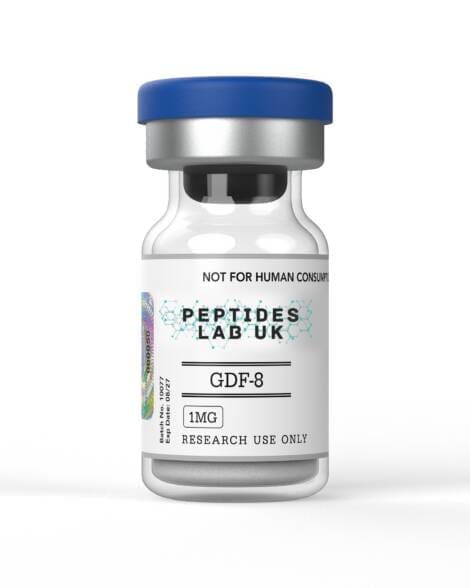

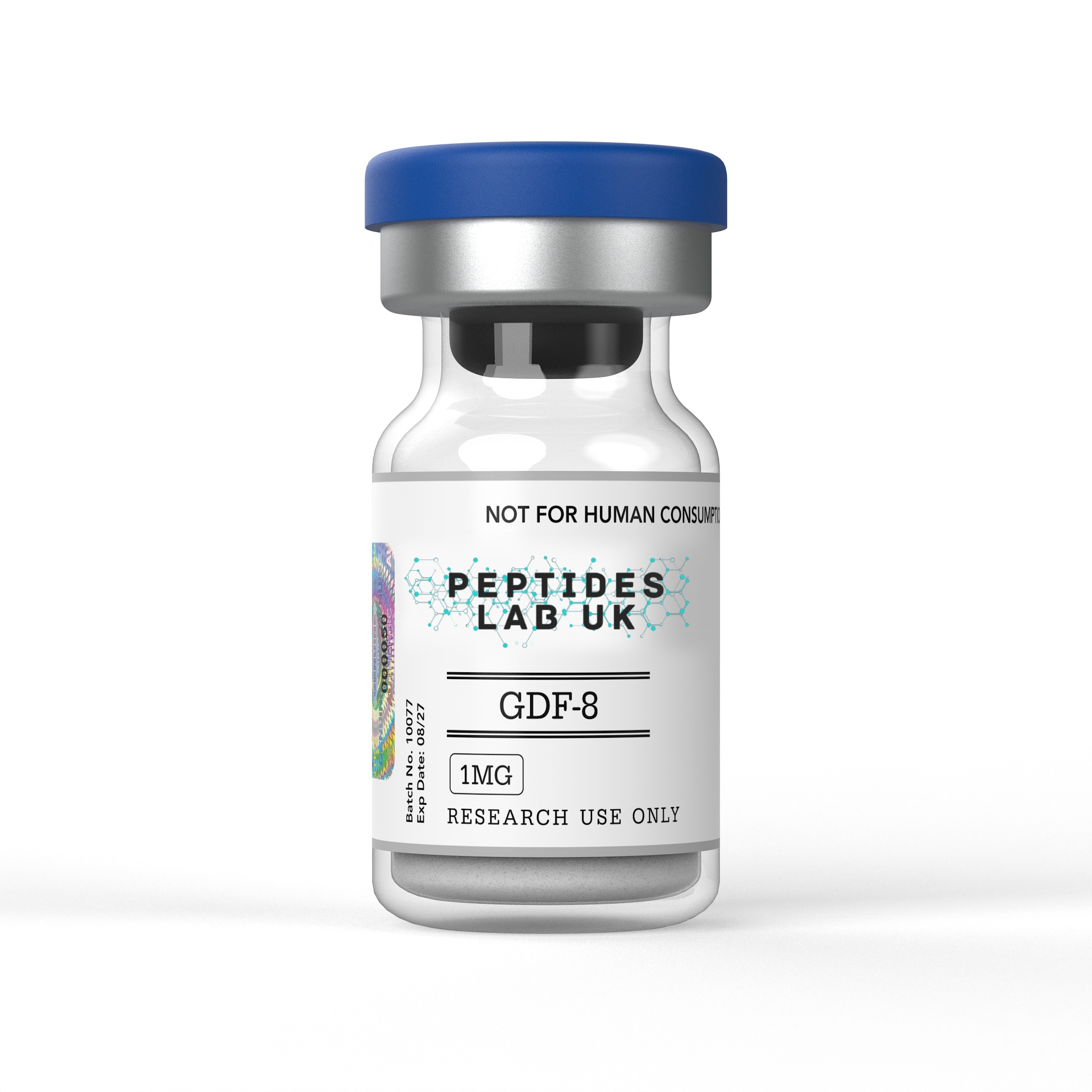
GDF-8 For Lab Research
£169.99
Login for member prices★★★★★
✔︎ Quality checked
✔︎ Third party verified
GDF-8 (Myostatin) is a TGF-beta family protein for laboratory and in vitro research. Supplied at high purity with a full third-party COA. For laboratory and in vitro research use only. Not for human consumption. Not a medicine.

Looking for a Certificate of Analysis?
If you are looking for a Certificate Of Analysis, please email research@peptideslabuk.com to have it sent to you.
Please Note: Many sites are displaying counterfeit COAs, so ours is provided upon request.
If you are looking for a Certificate Of Analysis, please email research@peptideslabuk.com to have it sent to you.
Please Note: Many sites are displaying counterfeit COAs, so ours is provided upon request.
You may also like…
-
Login for member prices

-
Login for member prices
Product Description
GDF-8 (Myostatin) | Buy GDF-8 UK | Recombinant Myostatin Protein | Research Use Only
GDF-8 — more widely known as myostatin — is a member of the TGF-β superfamily of secreted growth and differentiation factors, and the most potent endogenous negative regulator of skeletal muscle mass identified in mammals. It is studied extensively in laboratory research for its role in muscle atrophy, satellite cell suppression, bone-muscle crosstalk, cardiac biology, cancer cachexia, and metabolic dysfunction — available to buy in the UK from Peptides Lab UK in high-purity lyophilised form, >99% HPLC-verified purity, with batch-specific COA and fast UK dispatch for laboratory and in vitro research use only.
Distributed by Peptides Lab UK in a high-purity lyophilised format, for laboratory research use only. This compound is handled in controlled settings for in vitro and pre-clinical studies, with no applications in human or veterinary medicine. Each batch undergoes rigorous quality analysis to ensure >99% purity (HPLC verified).
What Is GDF-8 (Myostatin)?
Initial scientific interest in GDF-8 (growth/differentiation factor 8) as an inhibitor of skeletal muscle was based on the observation that the GDF-8 gene in double-muscled Belgian Blue and Piedmontese cattle was mutated, creating a non-functional protein — and subsequent studies in mice confirmed these findings, with GDF-8 null animals displaying a super-muscular phenotype with abnormal muscle mass. GDF-8 is a member of the TGF-β superfamily, demonstrating a characteristic cysteine knot configuration with extremely high amino acid conservation across species.
Human myostatin consists of two identical subunits, each with 109 amino acid residues in its mature active form, giving a total molecular weight of approximately 25.0 kDa. The protein is inactive until a protease cleaves the NH₂-terminal pro-domain, producing the active COOH-terminal dimer. Myostatin binds to the activin type II receptor, which recruits co-receptor Alk-3 or Alk-4, initiating a signalling cascade involving transcription factors SMAD2 and SMAD3 that directly regulates muscle-specific gene expression.
Myostatin, also known as GDF-8, is a negative regulator of muscle mass and a member of the TGF-β superfamily, with regulatory roles now discovered in ageing, cancer cachexia, insulin sensitivity, diabetes, and cardiac tissue where myostatin influences inflammation.
As a research compound, GDF-8 UK is supplied in recombinant active form for use as a positive control, a direct pathway agonist, or as a tool for studying downstream ActRIIB signalling — the complementary counterpart to the myostatin inhibitor research in which follistatin, propeptides, and neutralising antibodies are employed.
How Does GDF-8 Work?
GDF-8 functions as a high-affinity ligand for the type IIB activin receptor (ActRIIB), initiating a canonical TGF-β/Smad signalling cascade that suppresses skeletal muscle growth at the transcriptional level.
ActRIIB Receptor Binding and Smad Signalling
Active myostatin binds to its receptor, type IIB activin receptor (ActRIIB), with high affinity and regulates the expression of its target genes through the TGF-β signalling pathway. Myostatin circulates in blood in a latent form bound to a propeptide, which is cleaved by BMP1/Tolloid matrix metalloproteinase to release the active dimer.
Dual Suppression of Anabolic and Activation of Catabolic Pathways
Myostatin acts through two complementary mechanisms in mature muscle: by inhibiting Akt-induced protein synthesis, and by stimulating ubiquitin-regulated protein degradation. When applied to myoblasts, myostatin inhibits their proliferation and either initiates differentiation or stimulates quiescence, reducing the pool of activated satellite cells available for muscle repair and growth.
GDF-8 and SMAD2/3 Transcriptional Regulation
GDF-8 activates SMAD2/3 signalling to affect transcriptional activity, where — in addition to promoting muscle atrophy — it can inhibit osteogenic differentiation and chondrocyte proliferation, reflecting the broad multi-tissue scope of the myostatin signalling axis.
GDF-8 and Cardiac Expression
Myostatin mRNA and protein are not restricted to skeletal muscle — myostatin expression is also detected in fetal and adult heart muscle, localised in Purkinje fibres and cardiomyocytes, and is significantly upregulated in cardiomyocytes surrounding the infarct area following myocardial infarction — suggesting an important role in cardiac development and physiology.
What Does GDF-8 Do in Research?
In laboratory settings, recombinant GDF-8 is used across a wide range of experimental contexts — both as a direct pathway agonist and as a control condition in inhibitor studies. Research has examined its role in:
- ActRIIB receptor binding and downstream Smad2/3 transcriptional pathway studies
- Skeletal muscle atrophy induction in C2C12 myoblast and myotube cell culture models
- Satellite cell quiescence and inhibition of myogenic differentiation research
- Ubiquitin-proteasome pathway and protein degradation mechanism studies
- Bone-muscle crosstalk and osteoprogenitor cell proliferation/differentiation investigations
- Cardiac biology research — post-infarct upregulation, cardiomyopathy, and cardiac cachexia
- Cancer cachexia, sarcopenia, and wasting disease pathway modelling
- Insulin resistance and metabolic dysfunction mechanistic research
- ACL, tendon, and ligament fibroblast biology studies
- Positive control use in myostatin inhibitor (follistatin, propeptide, antibody) validation assays
GDF-8 and Skeletal Muscle Atrophy Research
Functional recombinant GDF-8 has been shown to directly inhibit the growth and proliferation of mouse C2C12 skeletal muscle cells — the most widely used in vitro model for skeletal muscle biology — confirming its value as a direct agonist tool for studying the myostatin pathway in controlled cell culture settings.
GDF-8 and Satellite Cell Biology
Myostatin inhibits satellite cell proliferation, muscle differentiation, and reduces myotube diameter through the downregulation of essential muscle regulatory factors — findings that position recombinant GDF-8 as an indispensable tool in satellite cell biology research, where it can be used to establish a suppressed baseline against which experimental interventions are measured.
GDF-8 and Bone Biology Research
Myostatin is a key regulator of mesenchymal stem cell proliferation and differentiation, and research in myostatin-deficient mice has demonstrated a generalised increase in bone density and strength across the limbs, spine, and jaw. Myostatin is also expressed in the early phases of fracture healing, and myostatin deficiency leads to increased fracture callus size and strength.
GDF-8 and Tendon/Ligament Research
Recombinant myostatin treatment of primary ACL fibroblasts increased fibroblast proliferation and the expression of tenascin C, type 1 collagen, and TGF-β1 — with myostatin-deficient mice showing downregulation of both tenascin C and type 1 collagen in ACL tissue — suggesting myostatin is a pro-fibrogenic factor in tendon and ligament biology, with potential applications in connective tissue engineering research.
GDF-8 and Cardiac Cachexia Research
Myostatin is expressed in the myocardium where it exerts anti-hypertrophic but pro-fibrotic effects. Circulating and local myostatin is elevated in chronic heart failure, and it has been proposed as a major mediator of cardiac cachexia — with an intriguing pre-clinical study in mice suggesting that myostatin produced by the heart may be a key driver of skeletal muscle wasting in heart failure patients.
What Do Studies Say About GDF-8?
GDF-8 has one of the most extensively published research profiles of any endogenous regulatory protein in musculoskeletal biology, with peer-reviewed literature spanning cell biology, metabolic disease, cardiovascular science, and drug discovery.
The Landmark 1997 Discovery
In 1997, McPherron et al. created the so-called Mighty Mouse — owing to the knockout of a new TGF-β superfamily member, this mouse line was extremely hypermuscular and characterised by very low body fat. The new peptide, named myostatin, was established as a powerful negative muscle regulator in this landmark study.
GDF-8 Loss-of-Function and Human Muscle Hypertrophy
Myostatin loss-of-function leads to doubling of skeletal muscle mass, and a clinically documented myostatin mutation in a child resulted in gross muscle hypertrophy — providing some of the first evidence of the direct relevance of GDF-8 signalling to human muscle biology.
GDF-8 and Fat Suppression Research
Mice lacking the myostatin gene show not only doubled skeletal muscle mass but also decreased body fat and a generalised increase in bone density and strength — findings that have stimulated research interest in the GDF-8 pathway as a target in metabolic disease, obesity, and osteosarcopenia research.
GDF-8 and Insulin Resistance Research
Research has confirmed that myostatin causes insulin resistance, and that the advantageous metabolic profile achieved by myostatin inhibition is primarily attributable to its effects on skeletal muscle — positioning GDF-8 as a research target of significant interest in type 2 diabetes and metabolic syndrome models.
GDF-8 and Dominant Co-Regulation with Activin A
A randomised Phase 1 trial in postmenopausal females confirmed that GDF-8 and activin A are the dominant negative regulators of muscle mass in humans — with combined blockade of both ligands matching the muscle growth achieved by pan-ActRIIA/B blockade, and GDF-8 blockade alone producing approximately half that effect — establishing the dual GDF-8/activin A axis as the primary therapeutic and research target for muscle mass regulation.
GDF-8 Drug Discovery Research
Since its discovery in 1997, extensive effort has been directed at understanding the cellular and physiological mechanisms underlying GDF-8 activity, with numerous biologics tested in clinical trials for muscular dystrophy, sporadic inclusion body myositis, spinal muscular atrophy, cachexia, age-related muscle loss, obesity, and type 2 diabetes — underscoring the enduring significance of GDF-8 as a target in translational research.
Key cited studies:
- McPherron AC, Lawler AM, Lee SJ (1997) — Regulation of Skeletal Muscle Mass in Mice by a New TGF-β Superfamily Member — Nature 387:83–90. DOI: 10.1038/387083a0
- Schuelke M et al. (2004) — Myostatin Mutation Associated with Gross Muscle Hypertrophy in a Child — N Engl J Med 350(26):2682–2688. PubMed ID: 15215484
- Elkasrawy MN & Hamrick MW (2010) — Myostatin (GDF-8) as a Key Factor Linking Muscle Mass and Bone Structure — PMC3753581. DOI: 10.1111/j.1541-0420.2009.01260.x
- Hamrick MW et al. (2009) — GDF-8 Deficiency Increases Fracture Callus Size, Sox-5 Expression, and Callus Bone Volume — Bone 44(1):17–23. PubMed ID: 18835568
- Biesemann N et al. (2014) — Myostatin Regulates Energy Metabolism in Cardiac Muscle — Eur Heart J. DOI: 10.1093/eurheartj/ehu086
- Lee SJ (2021) — Targeting the Myostatin Signalling Pathway to Treat Muscle Loss and Metabolic Dysfunction — PMC8087205
- Loh RJC et al. (2025) — GDF8 and Activin A are the Key Negative Regulators of Muscle Mass in Postmenopausal Females — Nat Commun. DOI: 10.1038/s41467-025-59380-3
- Hamrick MW et al. (2010) — Role of GDF-8 Signalling in the Human Anterior Cruciate Ligament — PMC3755889
GDF-8 as a Research Tool: Agonist vs Inhibitor Studies
| Research Context | GDF-8 Role | Paired Research Tools |
|---|---|---|
| Muscle atrophy pathway modelling | Direct agonist — induces Smad2/3 suppression of MyoD/Myf-5 | Follistatin, myostatin propeptide, anti-GDF-8 antibody as inhibitors |
| Satellite cell quiescence studies | Suppresses C2C12 proliferation and differentiation | IGF-1 LR3, IGF-DES as countervailing anabolic controls |
| Inhibitor validation assays | Positive control — establishes suppressed baseline | All myostatin pathway inhibitors require recombinant GDF-8 as control |
| Bone-muscle crosstalk | Inhibits osteoprogenitor differentiation via Smad | Compared against BMP-2, BMP-7 in osteogenic models |
| Cardiac and cachexia models | Upregulated in heart failure, promotes skeletal muscle wasting | Assessed alongside activin A and GDF-11 |
| Metabolic research | Promotes insulin resistance; suppressed by exercise | Studied alongside FGF21, IGF-1, and insulin signalling tools |
Recombinant GDF-8 is an indispensable positive control and direct pathway agonist for the full spectrum of myostatin biology research — including any study employing follistatin, myostatin antibodies, propeptide constructs, or ActRIIB inhibitors, where establishing a GDF-8-activated baseline condition is essential for valid experimental comparison.
Quality & Purity Assurance
Every batch of GDF-8 from Peptides Lab UK is:
- >99% pure — HPLC and mass spectrometry verified
- Supplied with a full Certificate of Analysis (COA) on request
- Lyophilised powder for maximum stability and long shelf life
- Manufactured under strict, controlled laboratory conditions
- Consistent batch-to-batch quality for reproducible research results
Buy GDF-8 UK — Product Specifications
| Property | Detail |
|---|---|
| Full Name | Growth Differentiation Factor 8 (Myostatin) |
| Molecular Weight | ~25.0 kDa (mature active homodimer) |
| Structure | Disulfide-linked homodimer; cysteine knot configuration |
| Receptor Target | ActRIIB (Type IIB Activin Receptor) → Alk-4/Alk-5 → Smad2/3 |
| Purity | >99% (HPLC verified) |
| Form | Lyophilised powder |
| Storage | Store dry at -20°C; protect from light |
| Solubility | Bacteriostatic water, sterile water, or suitable laboratory solvents |
GDF-8 Research Applications
GDF-8 (Myostatin) UK is supplied strictly for the following in vitro and pre-clinical research uses:
- ActRIIB receptor binding and Smad2/3 transcriptional suppression pathway studies
- Skeletal muscle atrophy induction in C2C12 and primary myoblast/myotube models
- Satellite cell quiescence and myogenic differentiation inhibition studies
- Ubiquitin-proteasome protein degradation pathway research
- Bone-muscle crosstalk and osteoprogenitor cell biology investigations
- Cardiac biology research — post-infarct upregulation, cardiomyopathy, and cardiac cachexia modelling
- Cancer cachexia, age-related sarcopenia, and wasting disease pathway research
- Insulin resistance and metabolic dysfunction mechanistic studies
- Tendon, ACL, and connective tissue fibroblast biology research
- Positive control use in myostatin inhibitor validation assays (follistatin, propeptide, antibody)
- Comparative GDF-8/activin A dual-pathway muscle regulation research
Why Buy GDF-8 from Peptides Lab UK?
Peptides Lab UK is a trusted UK peptides supplier, providing research-grade compounds verified by independent HPLC testing. When you buy GDF-8 in the UK from us, you receive:
- >99% purity, HPLC and MS verified, third-party tested
- Full COA documentation per batch
- Fast same-day UK dispatch with tracked delivery
- Competitive pricing with bulk research discounts available
- Trusted by researchers across the UK and Europe
Research Disclaimer All products supplied by Peptides Lab UK are intended strictly for in vitro laboratory research and scientific study use only. They are not intended for human consumption, veterinary use, or any medical or therapeutic application. GDF-8 (Myostatin) is not a licensed medicine or drug and has not been approved by the MHRA, FDA, or any regulatory authority for use in humans or animals. All research citations on this page relate to pre-clinical studies and peer-reviewed pharmacological research and do not constitute a claim of safety or therapeutic efficacy. Peptides Lab UK accepts no liability for any misuse of research compounds. By purchasing, you confirm that you are a qualified researcher and that the product will be used solely within a controlled laboratory environment in compliance with all applicable UK laws, regulations, and institutional guidelines.
Related products
-
Login for member prices
-
Login for member prices
-
Login for member prices
