
No products in the cart.

Up to - 26%

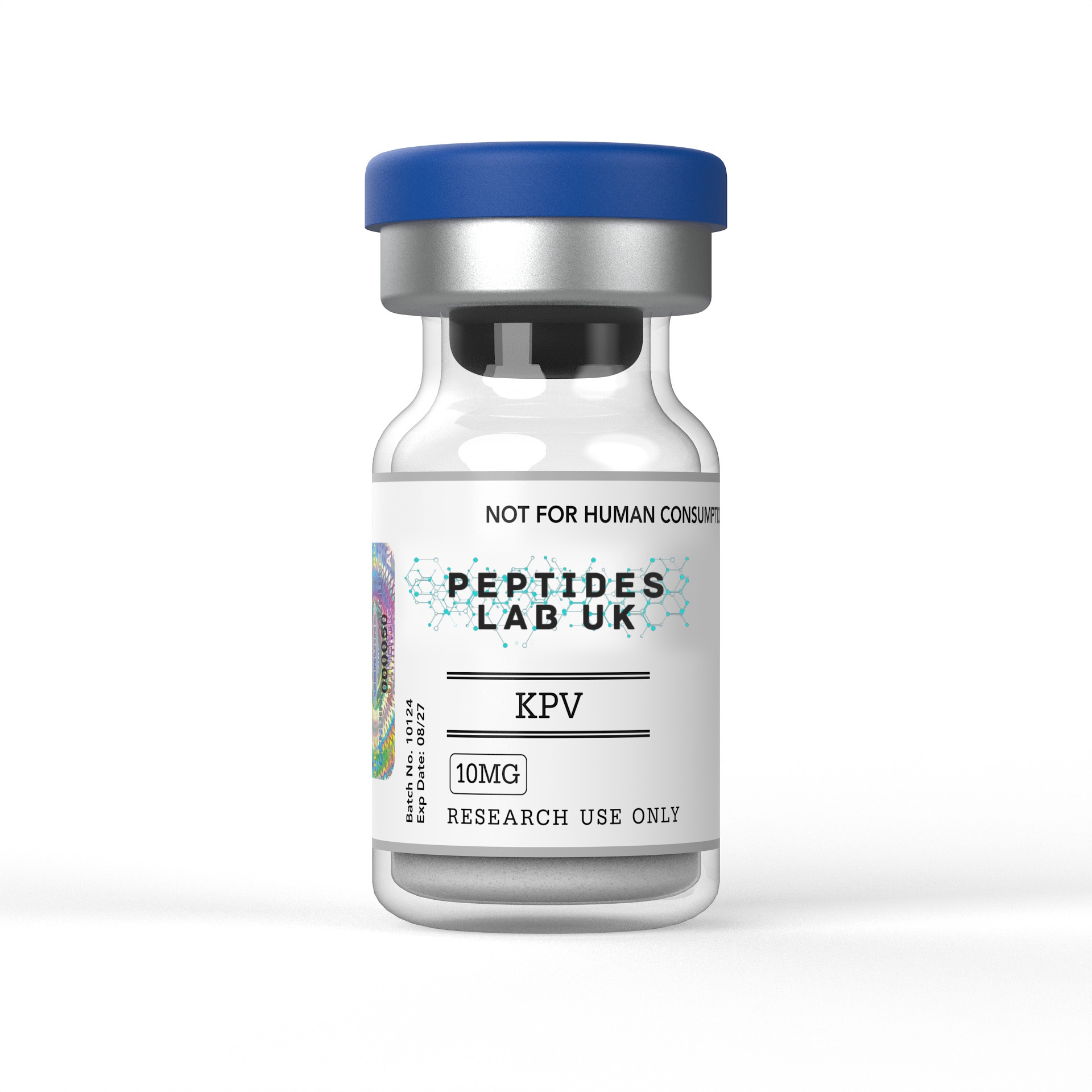
KPV For Lab Research
£68.99
Login for member prices★★★★★
✔︎ Quality checked
✔︎ Third party verified
KPV is an alpha-MSH-derived tripeptide (Lys-Pro-Val) for laboratory and in vitro research. Supplied at >99% purity with a full third-party COA. For laboratory and in vitro research use only. Not for human consumption. Not a medicine.
Looking for a Certificate of Analysis?
If you are looking for a Certificate Of Analysis, please email research@peptideslabuk.com to have it sent to you.
Please Note: Many sites are displaying counterfeit COAs, so ours is provided upon request.
If you are looking for a Certificate Of Analysis, please email research@peptideslabuk.com to have it sent to you.
Please Note: Many sites are displaying counterfeit COAs, so ours is provided upon request.
You may also like…
-
Login for member prices
-
Login for member prices
Product Description
Buy KPV Peptide UK – >99% Purity | Lys-Pro-Val | α-MSH Tripeptide | Research Use Only
KPV (Lysine-Proline-Valine) is a naturally occurring anti-inflammatory tripeptide derived from the C-terminal end of α-melanocyte-stimulating hormone (α-MSH) — studied across more than two decades of peer-reviewed research for its potent NF-κB inhibition, intestinal mucosal repair, skin inflammation modulation, and antimicrobial activity. Buy KPV peptide in the UK from Peptides Lab UK with >99% HPLC-verified purity, batch-specific COA, and fast UK dispatch for laboratory and in-vitro research use only.
What is KPV Peptide?
KPV (Lys-Pro-Val) is the C-terminal tripeptide of α-melanocyte-stimulating hormone (α-MSH) — a 13-amino-acid neuropeptide produced by the pituitary gland and various immune cells throughout the body. α-MSH has been studied for decades as a potent endogenous anti-inflammatory agent, and KPV represents its biologically active core.
What makes KPV particularly significant in research is a critical distinction from its parent hormone: while full-length α-MSH binds to melanocortin receptors (MC1R–MC5R), triggering both anti-inflammatory effects and melanotropic (skin-pigmenting) activity, KPV lacks the binding sequence required to activate MC receptors. This means KPV retains the full anti-inflammatory capacity of α-MSH — and in multiple studies has demonstrated even stronger intracellular anti-inflammatory activity than the full-length hormone — without any melanotropic effects, making it a far more tractable and specific research tool.
Research has confirmed that KPV exerts an even stronger anti-inflammatory effect than α-MSH itself, with its activity mediated by direct internalisation into cells via the PepT1 peptide transporter, where it inactivates inflammatory pathways intracellularly.
Product Specifications:
| Parameter | Specification |
|---|---|
| Sequence | Lys-Pro-Val (KPV) |
| Origin | C-terminal tripeptide of α-MSH (residues 11–13) |
| Molecular Weight | ~342.4 g/mol |
| Purity | >99% (HPLC verified) |
| Form | Lyophilised powder |
| Storage | –20°C, protect from light and moisture |
| Solubility | Sterile water, bacteriostatic water, PBS |
What is α-MSH, and Why Does KPV Matter in Research?
α-MSH (α-Melanocyte-Stimulating Hormone) is one of the body’s endogenous anti-inflammatory regulators, produced during inflammatory responses to help modulate and resolve immune activation. Most of the anti-inflammatory activities of α-MSH can be attributed to its C-terminal tripeptide KPV, which exhibits a similar or even more pronounced anti-inflammatory activity than the full-length hormone across multiple experimental models.
KPV’s research significance stems from three factors:
- Mechanistic independence from melanocortin receptors — KPV’s anti-inflammatory mechanism is confirmed to operate via a non-MCR pathway (PepT1-mediated cellular uptake and intracellular NF-κB/MAPK inhibition), making it research-complementary to studies examining MCR-targeted compounds
- Cell-penetrating activity — KPV enters target cells directly via the PepT1 oligopeptide transporter, achieving intracellular anti-inflammatory effects that purely extracellular peptides cannot replicate
- Minimal side-effect profile in pre-clinical models — as a fragment of an endogenous hormone, KPV has consistently demonstrated low toxicity across a broad range of pre-clinical research models
How Does KPV Work?
KPV’s anti-inflammatory mechanism is primarily intracellular and NF-κB centred, with additional MAPK, caspase-1, and antimicrobial pathways confirmed across the research literature:
PepT1-Mediated Cellular Uptake: Nanomolar concentrations of KPV inhibit NF-κB and MAP kinase inflammatory signalling pathways and reduce pro-inflammatory cytokine secretion. KPV acts via PepT1 expressed in immune and intestinal epithelial cells. PepT1 (the H⁺/peptide cotransporter SLC15A1) is constitutively expressed in the small intestine and is significantly upregulated in inflamed colonic tissue during inflammatory bowel disease — creating a selective uptake advantage in inflamed tissue.
NF-κB Inhibition: Once inside cells, KPV directly inhibits the nuclear translocation of the active p65/p50 NF-κB heterodimer — the master transcription factor driving expression of TNF-α, IL-1β, IL-6, IL-8, and other pro-inflammatory cytokines. KPV reduces the nuclear migration of the active NF-κB heterodimer in both endothelial cells and keratinocytes, consistent with the pronounced inhibitory activity attributed to the lysine residue within the KPV sequence.
MAPK Pathway Suppression: KPV inhibits MAP kinase signalling pathways, specifically reducing ERK and p38 MAPK activation — two convergent inflammatory kinase pathways that amplify cytokine production and sustain chronic inflammation.
Caspase-1 and ROS Suppression: KPV effectively blocks ROS-mediated caspase-1 activation, reducing IL-1β secretion in response to particulate matter-induced inflammation in keratinocytes, with activity confirmed in a three-dimensional 3D skin model system.
Antimicrobial Activity: KPV, as the carboxy-terminal tripeptide of α-MSH, demonstrated antimicrobial activity against Staphylococcus aureus and Candida albicans across a broad concentration range including the physiological picomolar range. Importantly, KPV peptides did not reduce pathogen killing by neutrophils but rather enhanced it — combining anti-inflammatory and antimicrobial effects without immunosuppression.
What Does KPV Do in Research?
In pre-clinical in-vitro and animal model studies, KPV has demonstrated significant activity across intestinal, dermatological, wound healing, and antimicrobial research applications:
Intestinal Inflammation and IBD Models:
- Orally administered KPV significantly decreased inflammation in both DSS- and TNBS-induced colitis models. KPV reduced loss of body weight, colonic MPO activity, and markedly decreased histological signs of inflammation and pro-inflammatory cytokine mRNA levels.
- HA-functionalized KPV nanoparticles (~272 nm) mediated targeted delivery to colonic epithelial cells and macrophages, accelerating mucosal healing and alleviating inflammation both in vitro and in vivo. The HA-KPV-NP/hydrogel system showed superior therapeutic efficacy against ulcerative colitis versus non-functionalized controls.
- Viennois E et al. (2016, Cellular and Molecular Gastroenterology and Hepatology) confirmed KPV via PepT1 reduced tumour development in a murine colitis-associated colon cancer model, suggesting chronic intestinal inflammation reduction may interrupt colitis-to-cancer progression
- PepT1 upregulation during IBD creates a selective delivery mechanism that concentrates KPV activity in inflamed tissue — a pharmacokinetic advantage studied extensively as a novel targeted delivery strategy
Skin Inflammation and Dermatology Research:
- KPV has been studied in psoriasis, contact dermatitis, atopic dermatitis, and acne pre-clinical models as an MCR-independent anti-inflammatory agent
- KPV treatment restored cell viability at 50 μg/mL and reduced IL-1β secretion disrupted by PM10 exposure in human HaCaT keratinocytes, suggesting protective potential against environmental pollutant-related skin damage with applications in functional cosmetics and dermatological research.
- KPV permeation across dermatomed human skin increased by 35-fold when combining microneedle pre-treatment with iontophoresis versus microneedle treatment alone, with FITC-labelled KPV confirmed to penetrate beyond 100 μm depth through stratum corneum microchannels.
- Corneal epithelial wound healing models: KPV has been studied for nitric oxide-mediated corneal repair following ocular injury
Wound Healing and Mucosal Repair:
- KPV incorporated into in situ mucoadhesive hydrogels (KPV@PPP_E) restored tissue morphology of ulcerated gingival mucosa in rats with chemotherapy-induced oral mucositis by upregulating anti-inflammatory IL-10 and inhibiting IL-1β and TNF-α. The system additionally demonstrated antibacterial properties against MRSA-infected gingival wound sites.
- KPV-loaded hydrogel formulations have demonstrated accelerated wound closure, reduced inflammatory infiltration, and improved re-epithelialisation in multiple pre-clinical wound models
Respiratory and Systemic Inflammation Research:
- KPV has been investigated in allergic asthma, airway inflammation, and pulmonary inflammatory models as part of the broader α-MSH anti-inflammatory research landscape
- Rheumatoid arthritis and ocular inflammation models have also featured KPV as an anti-inflammatory comparator compound
What Do Studies Say About KPV Peptide?
KPV has one of the most well-established pre-clinical research records of any tripeptide in the anti-inflammatory field:
- Dalmasso G et al. (2008) — Gastroenterology, 134(3): 857–869 — Foundational PepT1 mechanism study confirming KPV is transported into intestinal epithelial and immune cells via hPepT1, inhibits NF-κB and MAPK pathways at nanomolar concentrations, reduces pro-inflammatory cytokine secretion, and significantly reduces DSS- and TNBS-induced colitis in vivo. PubMed: 18061177. DOI: 10.1053/j.gastro.2007.12.005
- Luger TA & Brzoska T (2007) — Annals of the Rheumatic Diseases, 66(Suppl 3): iii52–iii55 — Comprehensive review confirming that most anti-inflammatory effects of α-MSH are attributable to KPV, confirming its NF-κB inhibitory activity across endothelial cells and keratinocytes, and reviewing its research potential in skin, bowel, and arthritic inflammatory disease models. PMC: PMC2095288
- Getting SJ et al. (2003) — Journal of Immunology, 170(7): 3323–3330 (PubMed: 12750433) — Confirmed KPV significantly reduces accumulation of polymorphonuclear leukocytes in a crystal-induced peritonitis model via MC3/4-R-independent pathways, establishing that KPV’s anti-migratory activity does not require functional melanocortin receptor engagement.
- Xiao B et al. (2017) — Molecular Therapy, 25(7): 1628–1640 — Confirmed HA-functionalized KPV nanoparticles (~272 nm) mediate targeted delivery to colonic epithelial cells and macrophages, with significantly enhanced uptake by CD11b+ F4/80 macrophages, reduced TNF-α expression, and superior therapeutic efficacy in DSS-induced ulcerative colitis mouse models versus non-functionalized controls. PMC: PMC5498804
- Cutuli M et al. (2000) — Journal of Leukocyte Biology, 67(2): 233–239 — Confirmed antimicrobial activity of KPV against S. aureus and C. albicans at picomolar-to-physiological concentrations, with enhanced rather than reduced pathogen killing by neutrophils in co-treatment models. PubMed: 10670585
- ScienceDirect / Toxicology (2025) — doi: 10.1016/j.tox.2025. — Confirmed KPV protects HaCaT keratinocytes from PM10-induced pyroptosis, blocking ROS-mediated caspase-1 activation and reducing IL-1β secretion in a 3D skin model system, with confirmed MAPK and NF-κB pathway modulation.
- International Journal of Medical Sciences (2025) — PMC12595317 — Comprehensive wound healing and skin regeneration review confirming KPV-loaded hydrogels promote tissue repair, combat MRSA infections in gingival wound models, and modulate inflammation across multiple tissue repair stages.Note: All cited research relates to in-vitro, ex-vivo, and animal model studies. KPV has not completed human clinical trials for any indication and is not approved for any human, medical, or therapeutic use.
What is KPV Used For in Research?
Researchers purchasing KPV from UK peptides suppliers like Peptides Lab UK typically investigate:
- NF-κB and MAPK inflammatory pathway inhibition studies
- Inflammatory bowel disease (IBD): ulcerative colitis and Crohn’s disease pre-clinical models
- PepT1 transporter-mediated peptide delivery and targeted intestinal delivery research
- Colitis-associated cancer (CAC) and inflammation-driven carcinogenesis models
- Skin inflammation: psoriasis, atopic dermatitis, contact dermatitis, and keratinocyte models
- Environmental pollutant (PM10/PM2.5)-induced skin damage and pyroptosis research
- Wound healing, mucosal repair, and oral mucositis models
- Transdermal peptide delivery: microneedle, iontophoresis, and nanoparticle delivery studies
- Antimicrobial activity against S. aureus, C. albicans, and MRSA
- Comparative α-MSH peptide studies: KPV vs KdPT vs full-length α-MSH
- Multi-peptide blend research alongside BPC-157, TB-500, and GHK-Cu
- Corneal epithelial wound healing and ocular inflammation models
KPV vs α-MSH vs KdPT – Research Comparison
| Feature | KPV | Full-Length α-MSH | KdPT |
|---|---|---|---|
| Amino Acids | 3 | 13 | 3 |
| MCR Binding | None | Yes (MC1R–MC5R) | Partial (IL-1RI) |
| Melanotropic Activity | None | Yes | None |
| NF-κB Inhibition | Strong | Strong | Strong |
| PepT1 Transport | Yes | No | Related |
| Anti-inflammatory Potency | Equal or greater than α-MSH | Reference | Comparable |
| Antimicrobial Activity | Yes | Yes | Limited |
| Research Utility | Preferred isolated anti-inflammatory tool | Full-length reference | KPV derivative comparator |
KPV’s MCR-independence and PepT1-mediated delivery make it the preferred research tool when studying pure intracellular anti-inflammatory signalling pathways without melanocortin receptor confounds.
Quality & Purity Assurance
Every batch of KPV from Peptides Lab UK is:
- >99% pure — HPLC and mass spectrometry verified
- Supplied with a full Certificate of Analysis (COA) on request
- Lyophilised powder for maximum stability and long shelf life
- Manufactured under strict, controlled laboratory conditions
- Consistent batch-to-batch quality for reproducible research results
Why Buy KPV Peptide from Peptides Lab UK?
When you buy KPV peptide UK from Peptides Lab UK, you receive:
99% purity, HPLC and MS verified, third-party tested
- Full COA documentation per batch
- Fast same-day UK dispatch with tracked delivery
- Competitive pricing with bulk research discounts available
- Trusted by researchers across the UK and Europe
Research Disclaimer: All products supplied by Peptides Lab UK are intended strictly for in-vitro laboratory research and scientific study use only. They are not intended for human consumption, veterinary use, or any medical or therapeutic application. KPV (Lys-Pro-Val) has not been evaluated by the MHRA or any regulatory authority for safety or efficacy in humans or animals, and has not completed human clinical trials for any indication. All research citations on this page relate exclusively to pre-clinical in-vitro and animal model studies and do not constitute evidence of safety or therapeutic efficacy in humans. Peptides Lab UK accepts no liability for any misuse of research compounds. By purchasing, you confirm that you are a qualified researcher and that the product will be used solely within a controlled laboratory environment in compliance with all applicable UK laws, regulations, and institutional guidelines.
Related products
-
Login for member prices
-
Login for member prices
-
Login for member prices